Department of Intensive Care Medicine, University Medical Center Utrecht, Utrecht University, Utrecht, The Netherlands.
Department of Palliative Medicine, 1st Faculty of Medicine, Charles University and General University Hospital in Prague, Prague, Czechia.
Intensive Care Med. 2024 Nov;50(11):1740-1766. doi: 10.1007/s00134-024-07579-1. Epub 2024 Oct 3.
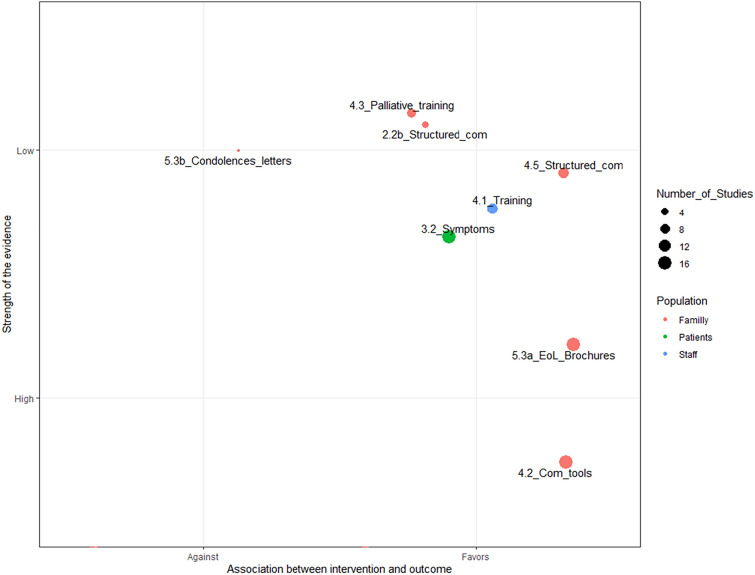
The European Society of Intensive Care Medicine (ESICM) has developed evidence-based recommendations and expert opinions about end-of-life (EoL) and palliative care for critically ill adults to optimize patient-centered care, improving outcomes of relatives, and supporting intensive care unit (ICU) staff in delivering compassionate and effective EoL and palliative care. An international multi-disciplinary panel of clinical experts, a methodologist, and representatives of patients and families examined key domains, including variability across countries, decision-making, palliative-care integration, communication, family-centered care, and conflict management. Eight evidence-based recommendations (6 of low level of evidence and 2 of high level of evidence) and 19 expert opinions were presented. EoL legislation and the importance of respecting the autonomy and preferences of patients were given close attention. Differences in EoL care depending on country income and healthcare provision were considered. Structured EoL decision-making strategies are recommended to improve outcomes of patients and relatives, as well as staff satisfaction and mental health. Early integration of palliative care and the use of standardized tools for symptom assessment are suggested for patients at high risk of dying. Communication training for ICU staff and printed communication aids for families are advocated to improve outcomes and satisfaction. Methods for enhancing family-centeredness of care include structured family conferences and culturally sensitive interventions. Conflict-management protocols and strategies to prevent burnout among healthcare professionals are also considered. The work done to develop these guidelines highlights many areas requiring further research.
欧洲危重病医学会(ESICM)制定了关于危重病成人临终关怀和姑息治疗的循证建议和专家意见,以优化以患者为中心的护理,改善亲属的结局,并为重症监护病房(ICU)工作人员提供富有同情心和有效的临终关怀和姑息治疗提供支持。一个由临床专家、方法学家以及患者和家属代表组成的国际多学科小组,审查了关键领域,包括国家间的差异、决策、姑息治疗的整合、沟通、以家庭为中心的护理以及冲突管理。提出了 8 项循证建议(6 项低水平证据和 2 项高水平证据)和 19 项专家意见。临终关怀立法以及尊重患者自主权和偏好的重要性受到密切关注。还考虑了因国家收入和医疗保健提供情况而异的临终关怀护理差异。建议采用结构化的临终决策策略,以改善患者和亲属的结局,以及工作人员的满意度和心理健康。建议高危死亡患者早期整合姑息治疗并使用标准化工具进行症状评估。提倡为 ICU 工作人员提供沟通培训和为家属提供印刷沟通辅助工具,以改善结局和满意度。增强以家庭为中心的护理方法包括结构化的家庭会议和文化敏感的干预措施。还考虑了冲突管理协议和预防医疗保健专业人员倦怠的策略。为制定这些指南所做的工作突出了许多需要进一步研究的领域。