Kumasi Centre for Collaborative Research in Tropical Medicine (KCCR), Kwame Nkrumah University of Science and Technology (KNUST), Kumasi, Ghana.
Department of Clinical Microbiology, Kwame Nkrumah University of Science and Technology (KNUST), Kumasi, Ghana.
Am J Trop Med Hyg. 2024 Oct 1;111(4_Suppl):66-82. doi: 10.4269/ajtmh.24-0313.
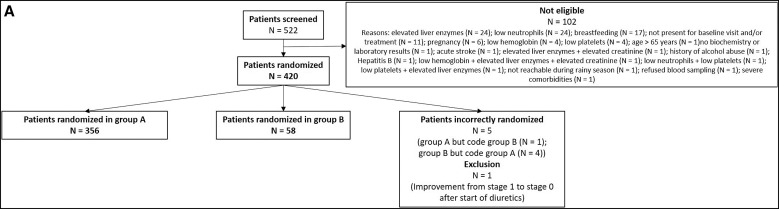
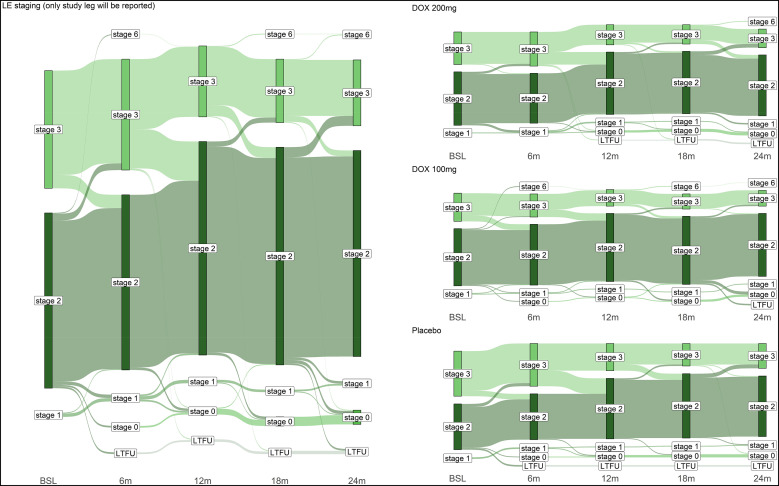
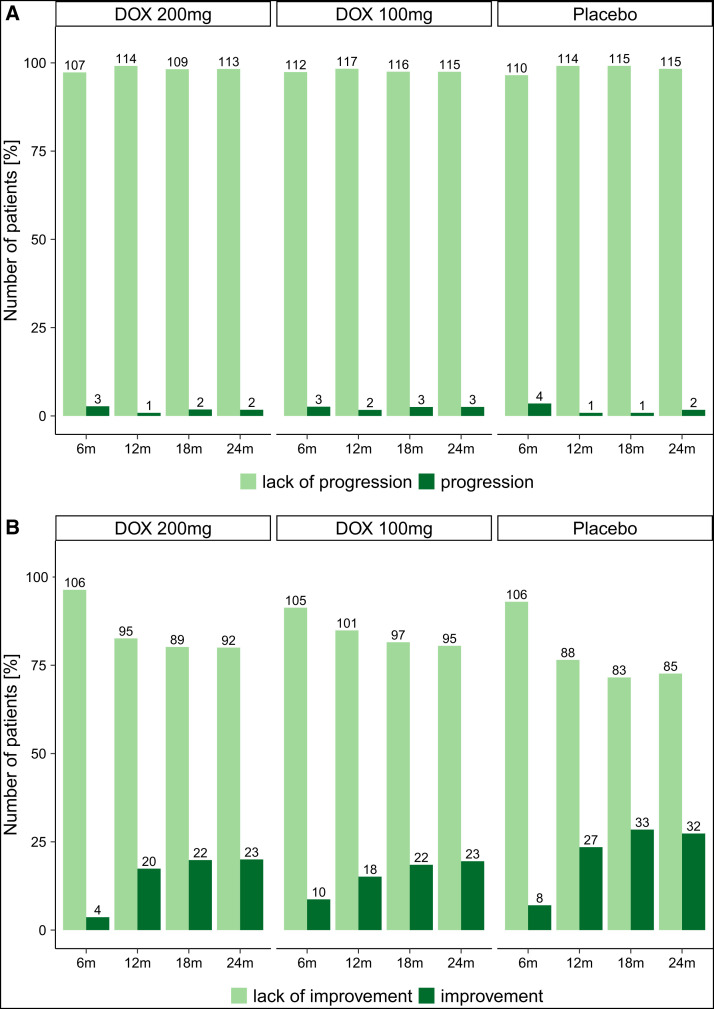
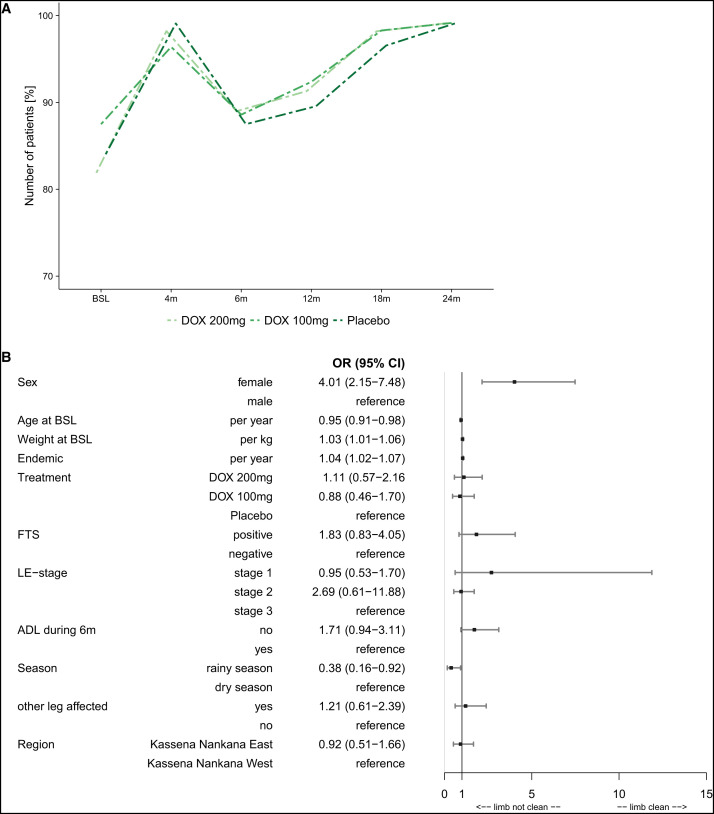
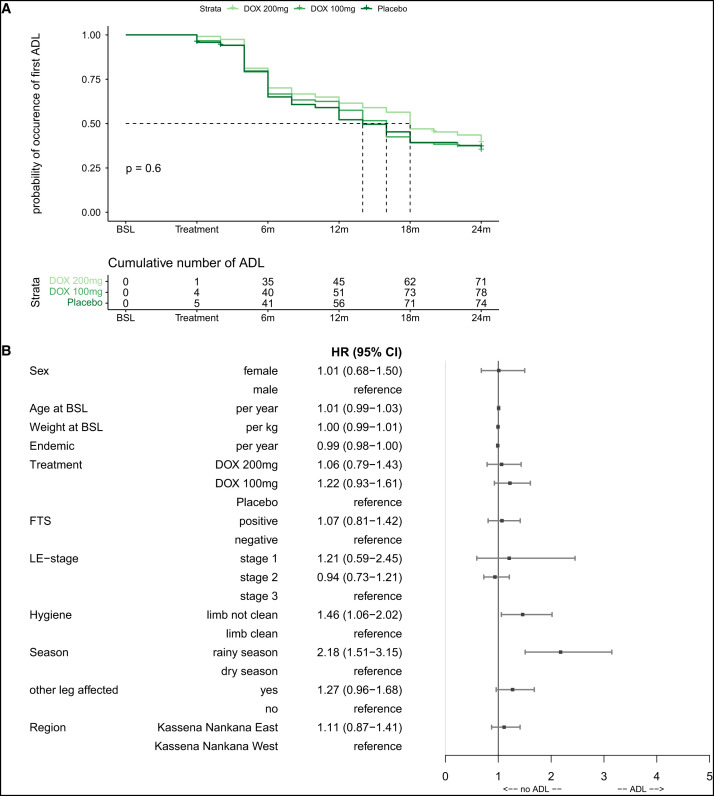
Filarial lymphedema (LE) remains a significant global problem despite the progress made toward elimination of lymphatic filariasis (LF). In Ghana, the main approach to LF is preventive chemotherapy, but this has minimal impact on individuals who have already developed LE. In 2018-2020, a 24-month randomized, double-blind, placebo-controlled trial was conducted to evaluate the efficacy of stringent hygiene measures using the Essential Package of Care with or without additional administration of doxycycline (DOX) to improve filarial leg LE. This study enrolled 356 participants with LE stages 1-3 from two districts in the Upper East Region of Ghana. In addition to regular training on appropriate care for their affected legs, participants were randomized to receive 6 weeks of either 200 mg/day DOX (n = 117), 100 mg/day DOX (n = 120), or matching placebo (n = 119). Participants were seen every 2 months, with clinical measurements done at 6, 12, 18, and 24 months to assess the status of affected legs. There was a trend toward later appearance of acute attacks after DOX, but surprisingly, DOX showed no effect on LE stage progression. In all groups, leg LE improvement was more common (DOX 200 mg: n = 23 [20%]; DOX 100 mg: n = 23 [19.5%]; placebo: n = 32 [27.4%]) than LE worsening (DOX 200 mg: n = 2 [1.7%]; DOX 100 mg: n = 3 [2.5%]; placebo: n = 2 [1.7%]). Overall, these data show a strong benefit from adherence to a strict hygiene protocol, with some added potential benefit for DOX in preventing acute attacks.
淋巴丝虫病性淋巴水肿(LE)仍然是一个重大的全球问题,尽管在消除淋巴丝虫病(LF)方面取得了进展。在加纳,LF 的主要方法是预防性化疗,但这对已经患有 LE 的人影响很小。2018-2020 年,进行了一项为期 24 个月的随机、双盲、安慰剂对照试验,以评估严格的卫生措施使用基本护理包的疗效,或联合或不联合多西环素(DOX)治疗,以改善丝虫性腿部 LE。该研究纳入了来自加纳上东部两个区的 356 名 1-3 期 LE 患者。除了定期接受有关受影响腿部适当护理的培训外,参与者还被随机分为接受以下治疗的三组:6 周 200mg/天 DOX(n=117)、6 周 100mg/天 DOX(n=120)或匹配安慰剂(n=119)。参与者每 2 个月就诊一次,在 6、12、18 和 24 个月时进行临床测量,以评估受影响腿部的状况。DOX 后急性发作出现的时间有推迟的趋势,但令人惊讶的是,DOX 对 LE 分期进展没有影响。在所有组中,腿部 LE 改善更为常见(200mg DOX:n=23[20%];100mg DOX:n=23[19.5%];安慰剂:n=32[27.4%]),而 LE 恶化较少(200mg DOX:n=2[1.7%];100mg DOX:n=3[2.5%];安慰剂:n=2[1.7%])。总的来说,这些数据表明严格遵守卫生方案有很强的益处,DOX 对预防急性发作有一些额外的潜在益处。