Department of Integrated Biomedical and Life Science, Korea University, Seoul, Republic of Korea.
L-HOPE Program for Community-Based Total Learning Health Systems, Korea University, Seoul, Republic of Korea.
Exp Mol Med. 2024 Oct;56(10):2271-2282. doi: 10.1038/s12276-024-01328-6. Epub 2024 Oct 3.
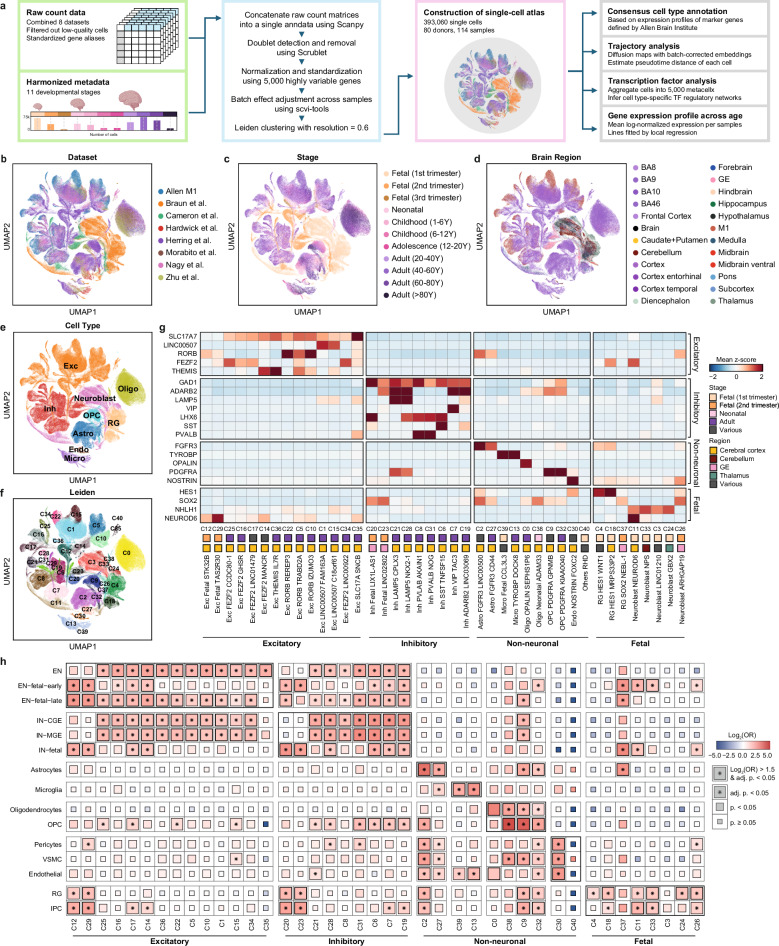
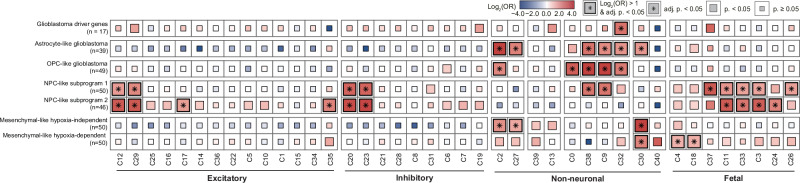
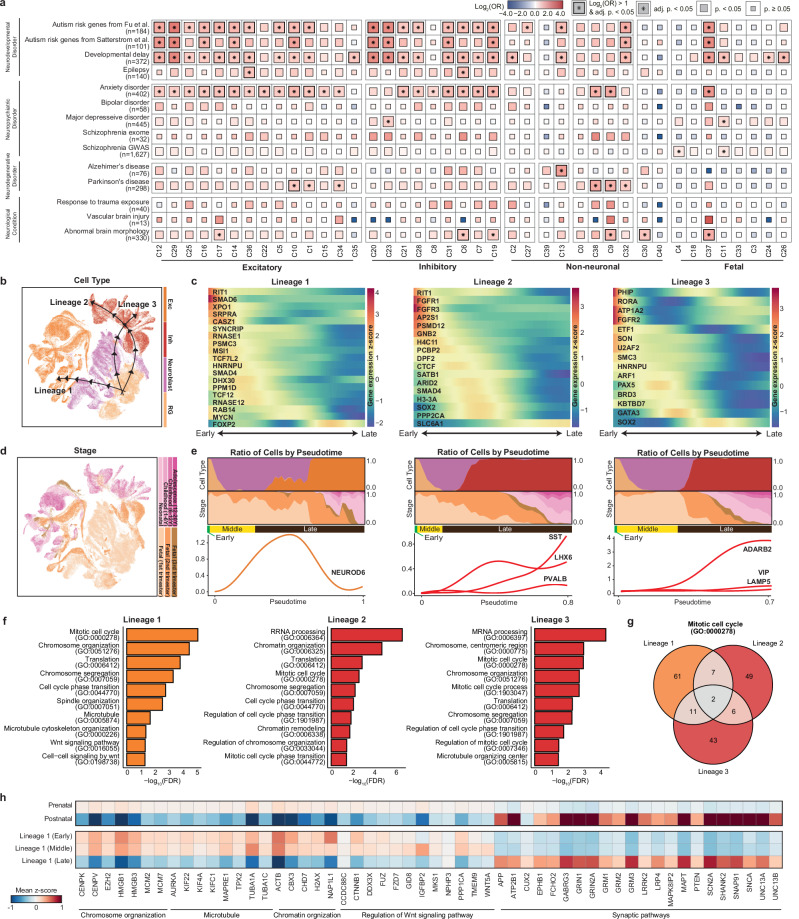
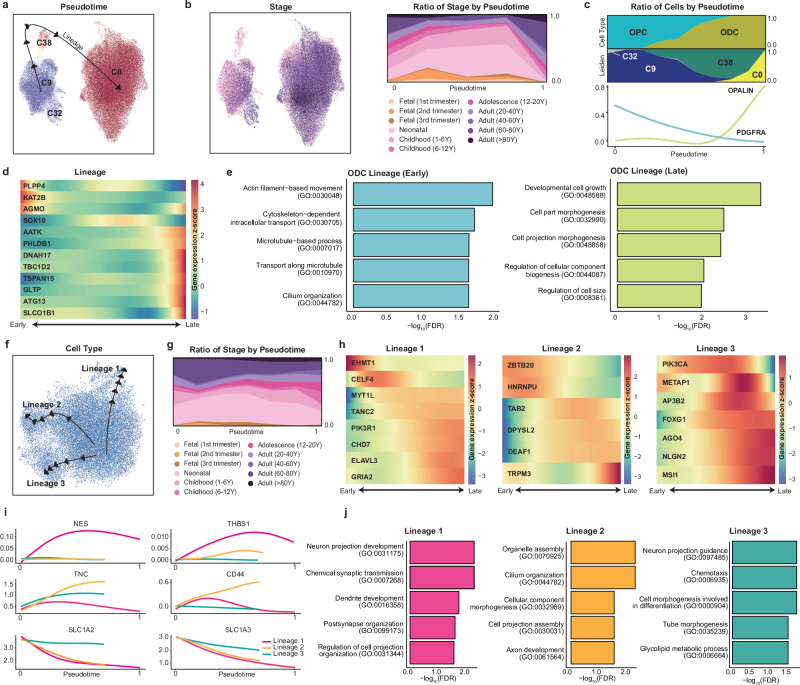
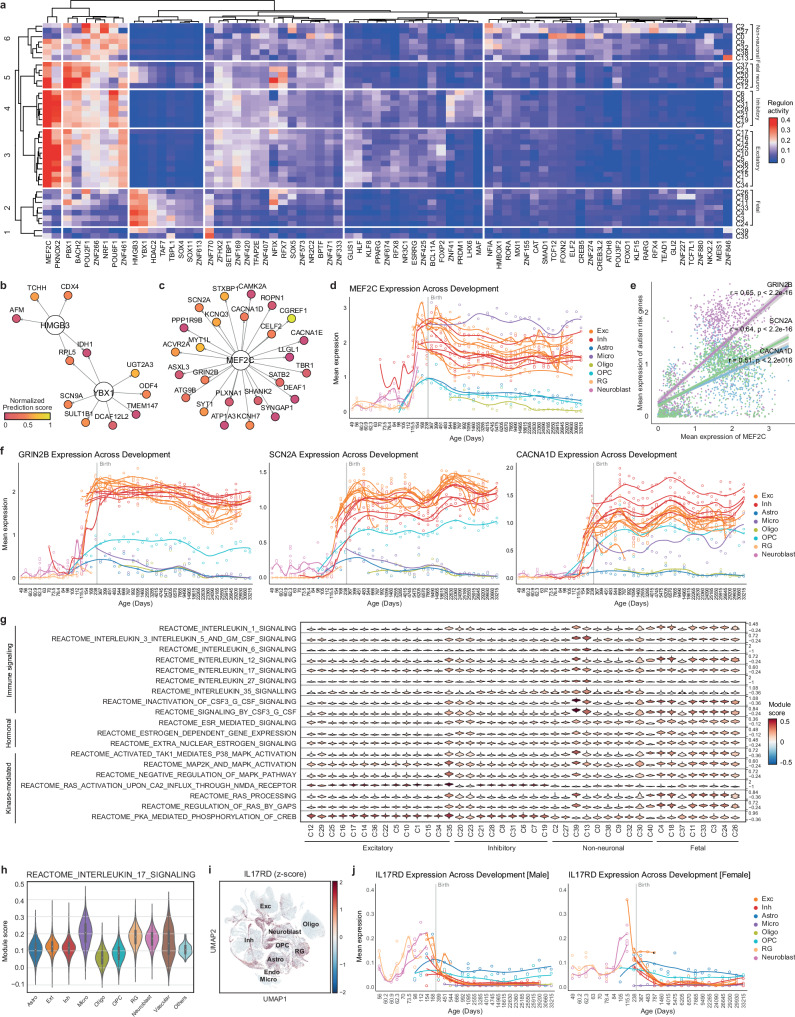
Single-cell technologies have enhanced comprehensive knowledge regarding the human brain by facilitating an extensive transcriptomic census across diverse brain regions. Nevertheless, understanding the cellular and temporal specificity of neurological disorders remains ambiguous due to developmental variations. To address this gap, we illustrated the dynamics of disorder risk gene expression under development by integrating multiple single-cell RNA sequencing datasets. We constructed a comprehensive single-cell atlas of the developing human brain, encompassing 393,060 single cells across diverse developmental stages. Temporal analysis revealed the distinct expression patterns of disorder risk genes, including those associated with autism, highlighting their temporal regulation in different neuronal and glial lineages. We identified distinct neuronal lineages that diverged across developmental stages, each exhibiting temporal-specific expression patterns of disorder-related genes. Lineages of nonneuronal cells determined by molecular profiles also showed temporal-specific expression, indicating a link between cellular maturation and the risk of disorder. Furthermore, we explored the regulatory mechanisms involved in early brain development, revealing enriched patterns of fetal cell types associated with neuronal disorders indicative of the prenatal stage's influence on disease determination. Our findings facilitate unbiased comparisons of cell type‒disorder associations and provide insight into dynamic alterations in risk genes during development, paving the way for a deeper understanding of neurological disorders.
单细胞技术通过对不同脑区进行广泛的转录组普查,增强了人们对人类大脑的全面认识。然而,由于发育变化,理解神经疾病的细胞和时间特异性仍然不清楚。为了解决这一差距,我们通过整合多个单细胞 RNA 测序数据集,说明了发育过程中疾病风险基因表达的动态。我们构建了一个全面的人类大脑单细胞图谱,包含了跨越不同发育阶段的 393060 个单细胞。时间分析揭示了疾病风险基因的独特表达模式,包括与自闭症相关的基因,突出了它们在不同神经元和神经胶质谱系中的时间调控。我们确定了不同的神经元谱系在发育阶段发生分歧,每个谱系都表现出与疾病相关的基因的特定时间表达模式。通过分子谱确定的非神经元细胞谱系也表现出时间特异性表达,表明细胞成熟与疾病风险之间存在联系。此外,我们还探索了早期大脑发育中涉及的调控机制,揭示了与神经元疾病相关的胎儿细胞类型的富集模式,表明产前阶段对疾病确定的影响。我们的研究结果促进了对细胞类型与疾病关联的无偏比较,并深入了解了发育过程中风险基因的动态变化,为深入了解神经疾病铺平了道路。