Allen Jawara, Evans Carlton A, Datta Sumona
School of Medicine, Johns Hopkins University, Baltimore, Maryland, 21205, USA.
IFHAD: Innovation For Health and Development, Laboratory of Research and Development, Universidad Peruana Cayetano Heredia, Lima, 15102, Peru.
Wellcome Open Res. 2022 Dec 5;7:292. doi: 10.12688/wellcomeopenres.18526.1. eCollection 2022.
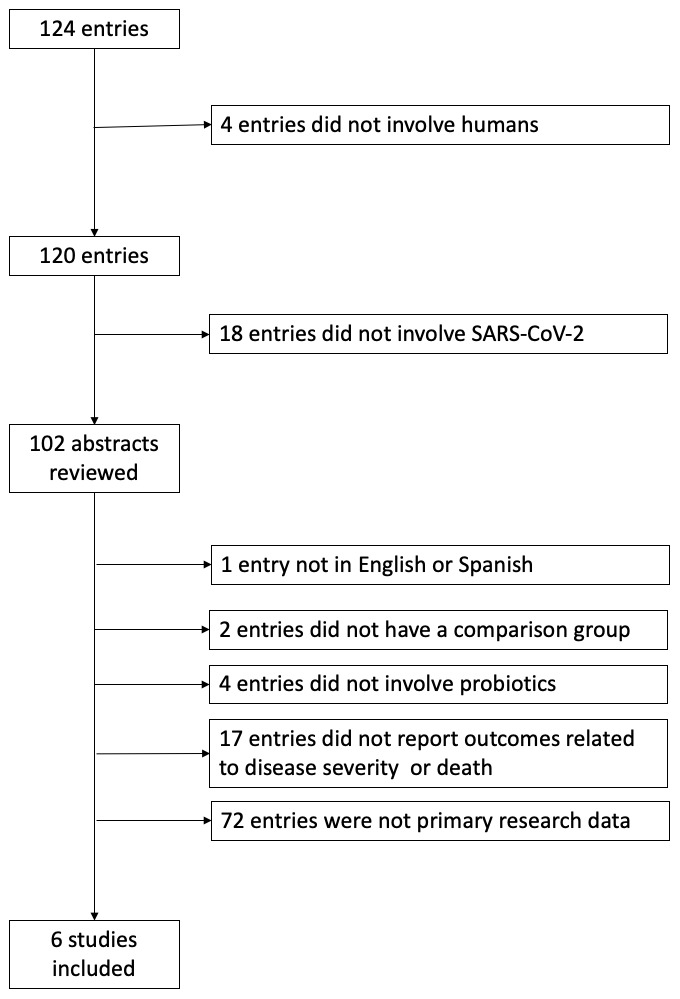
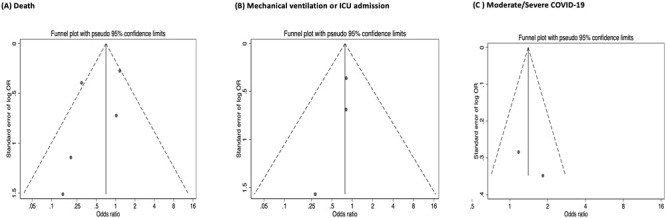
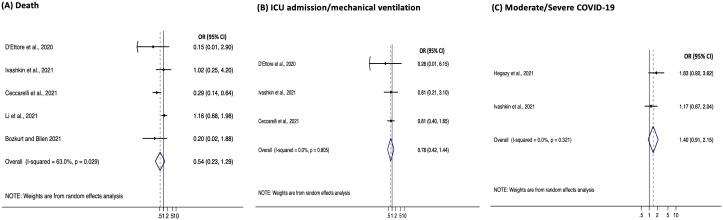
COVID-19 variants threaten health globally. Despite improving vaccines and treatments, there is an urgent need for alternative strategies to prevent or reduce the severity of COVID-19. Potential strategies include probiotics, which are safe, inexpensive, globally available and have been studied previously in relation to respiratory infections. We performed a systematic review and meta-analyses of experimental, trial or observational research evidence evaluating probiotics compared with control groups for preventing or treating COVID-19. We searched PubMed, ProQuest, Google Scholar and Web of Science bibliographic databases for studies published until December 6, 2021. We then performed meta-analyses for outcomes reported consistently across studies. Outcomes reported inconsistently or not amenable to meta-analysis were compared descriptively. We identified six eligible studies, which were all published in 2020 and 2021: one randomized controlled trial and five retrospective cohort studies. The only randomized controlled trial reported that groups that ingested probiotics compared with control groups that did not ingest probiotics did not differ significantly with respect to death, severe disease requiring admission to an intensive care unit or disease progression (all p>0.5). The five retrospective cohort studies reported various apparently beneficial and harmful COVID-19 outcome associations with probiotic ingestion. Meta-analyses revealed no significant associations between probiotic use and death, severe disease, or disease progression caused by COVID-19. Descriptive data revealed that probiotic ingestion was associated with a trend towards worsened duration of hospital stay, improvements in measures of respiratory condition and worsened disease duration. The evidence for these contradictory associations was weak because all studies were prone to bias and none were considered to be of high quality. Current evidence does not suggest that probiotics affect COVID-19 severity or mortality. However, additional higher quality studies need to be conducted to definitively determine if probiotics would be a useful adjunctive treatment for COVID-19.
新冠病毒变种对全球健康构成威胁。尽管疫苗和治疗方法在不断改进,但迫切需要替代策略来预防或减轻新冠病毒感染的严重程度。潜在策略包括益生菌,其安全、廉价、全球可得,并且此前已针对呼吸道感染进行过研究。我们对评估益生菌与对照组相比预防或治疗新冠病毒的实验性、试验性或观察性研究证据进行了系统综述和荟萃分析。我们在PubMed、ProQuest、谷歌学术和科学网文献数据库中搜索截至2021年12月6日发表的研究。然后,我们对各项研究中一致报告的结果进行了荟萃分析。对报告不一致或不适用于荟萃分析的结果进行了描述性比较。我们确定了六项符合条件的研究,均发表于2020年和2021年:一项随机对照试验和五项回顾性队列研究。唯一的随机对照试验报告称,摄入益生菌的组与未摄入益生菌的对照组在死亡、需要入住重症监护病房的严重疾病或疾病进展方面无显著差异(所有p>0.5)。五项回顾性队列研究报告了摄入益生菌与新冠病毒感染的各种明显有益和有害结果之间的关联。荟萃分析显示,使用益生菌与新冠病毒导致的死亡、严重疾病或疾病进展之间无显著关联。描述性数据显示,摄入益生菌与住院时间延长、呼吸状况指标改善和疾病持续时间延长的趋势相关。这些相互矛盾的关联证据薄弱,因为所有研究都容易产生偏倚,且均未被认为是高质量的。目前的证据并不表明益生菌会影响新冠病毒感染的严重程度或死亡率。然而,需要进行更多高质量研究,以明确确定益生菌是否会成为新冠病毒感染的有效辅助治疗方法。