Department of Clinical Neurophysiology, University of Twente, Enschede 7522 NB, the Netherlands.
Department of Clinical Neurophysiology, University of Twente, Enschede 7522 NB, the Netherlands.
Stem Cell Reports. 2024 Nov 12;19(11):1583-1597. doi: 10.1016/j.stemcr.2024.09.001. Epub 2024 Oct 3.
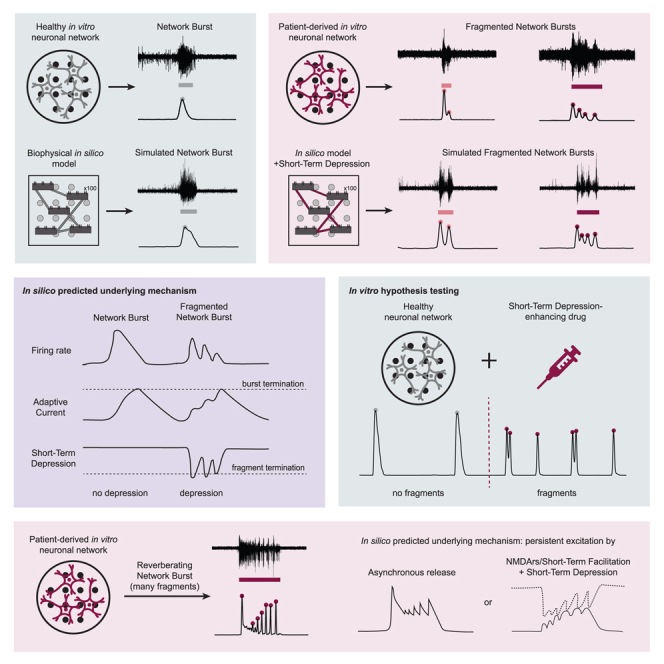
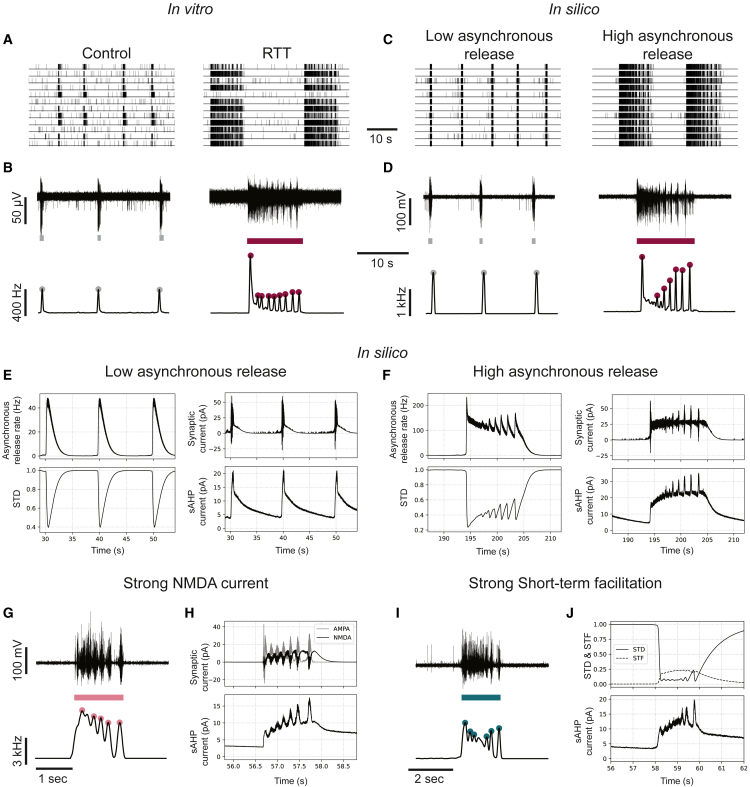
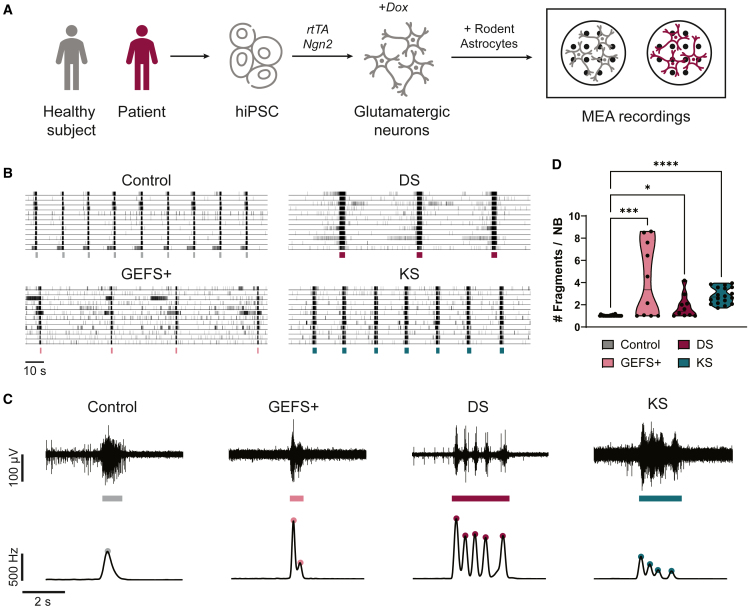
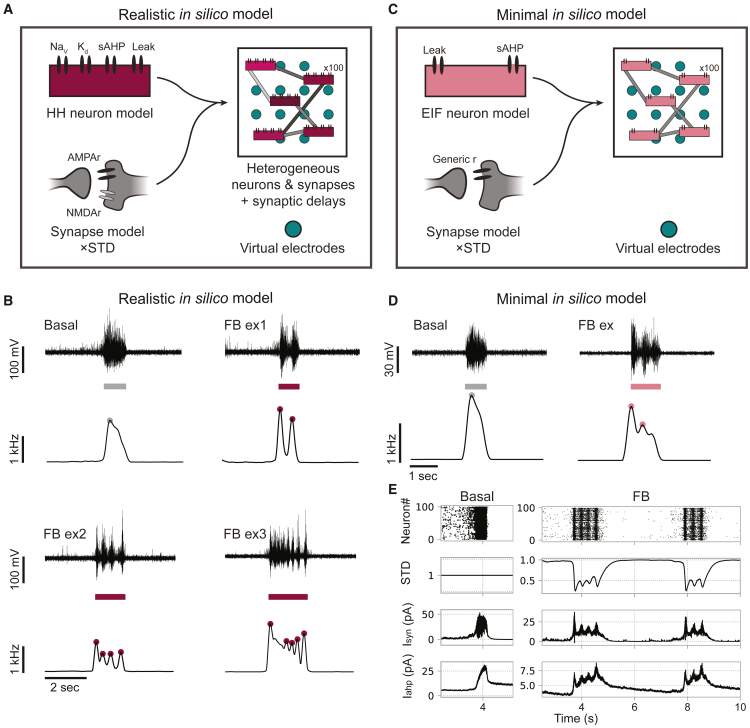
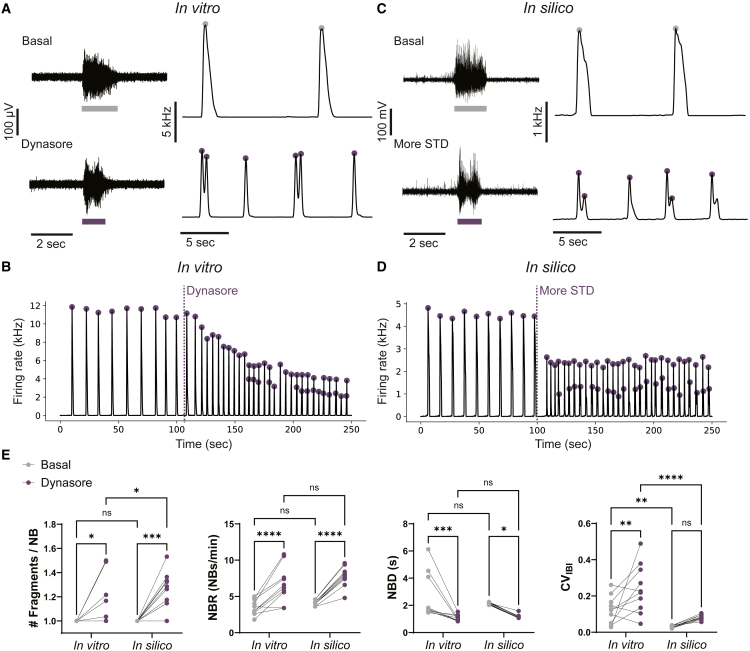
Fragmented network bursts (NBs) are observed as a phenotypic driver in many patient-derived neuronal networks on multi-electrode arrays (MEAs), but the pathophysiological mechanisms underlying this phenomenon are unknown. Here, we used our previously developed biophysically detailed in silico model to investigate these mechanisms. Fragmentation of NBs in our model simulations occurred only when the level of short-term synaptic depression (STD) was enhanced, suggesting that STD is a key player. Experimental validation with Dynasore, an STD enhancer, induced fragmented NBs in healthy neuronal networks in vitro. Additionally, we showed that strong asynchronous neurotransmitter release, NMDA currents, or short-term facilitation (STF) can support the emergence of multiple fragments in NBs by producing excitation that persists after high-frequency firing stops. Our results provide important insights into disease mechanisms and potential pharmaceutical targets for neurological disorders modeled using human induced pluripotent stem cell (hiPSC)-derived neurons.
在多电极阵列 (MEA) 上的许多患者来源神经元网络中,观察到碎片化网络爆发 (NBs) 是一种表型驱动因素,但这种现象背后的病理生理机制尚不清楚。在这里,我们使用之前开发的生物物理详细的计算机模型来研究这些机制。在我们的模型模拟中,只有当短期突触抑制 (STD) 水平增强时,NBs 才会发生碎片化,这表明 STD 是一个关键因素。使用 Dynasore(一种 STD 增强剂)进行的实验验证导致体外健康神经元网络中出现碎片化 NBs。此外,我们还表明,强烈的异步神经递质释放、NMDA 电流或短期易化 (STF) 可以通过产生高频放电停止后持续存在的兴奋来支持 NBs 中多个片段的出现。我们的研究结果为使用人类诱导多能干细胞 (hiPSC) 衍生神经元建模的神经紊乱疾病机制和潜在药物靶点提供了重要的见解。