Department of Clinical Neurophysiology, University of Twente, 7522 NB Enschede, the Netherlands.
Department of Neurology, Academic Center for Epileptology Kempenhaeghe, 5591 VE Heeze, the Netherlands; Department of Human Genetics, Radboudumc, 6500 HB Nijmegen, the Netherlands; Department of Cognitive Neurosciences, Radboudumc, Donders Institute for Brain Cognition and Behaviour, 6525 HR Nijmegen, the Netherlands.
Stem Cell Reports. 2023 Aug 8;18(8):1686-1700. doi: 10.1016/j.stemcr.2023.06.003. Epub 2023 Jul 6.
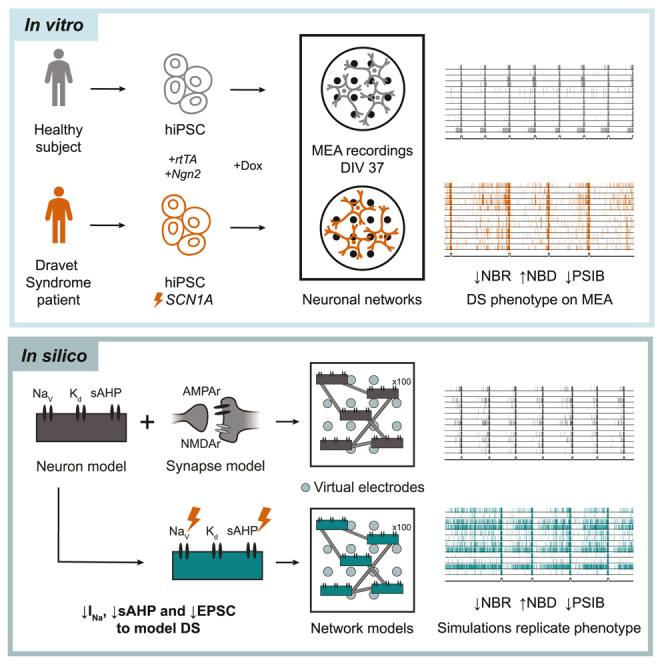
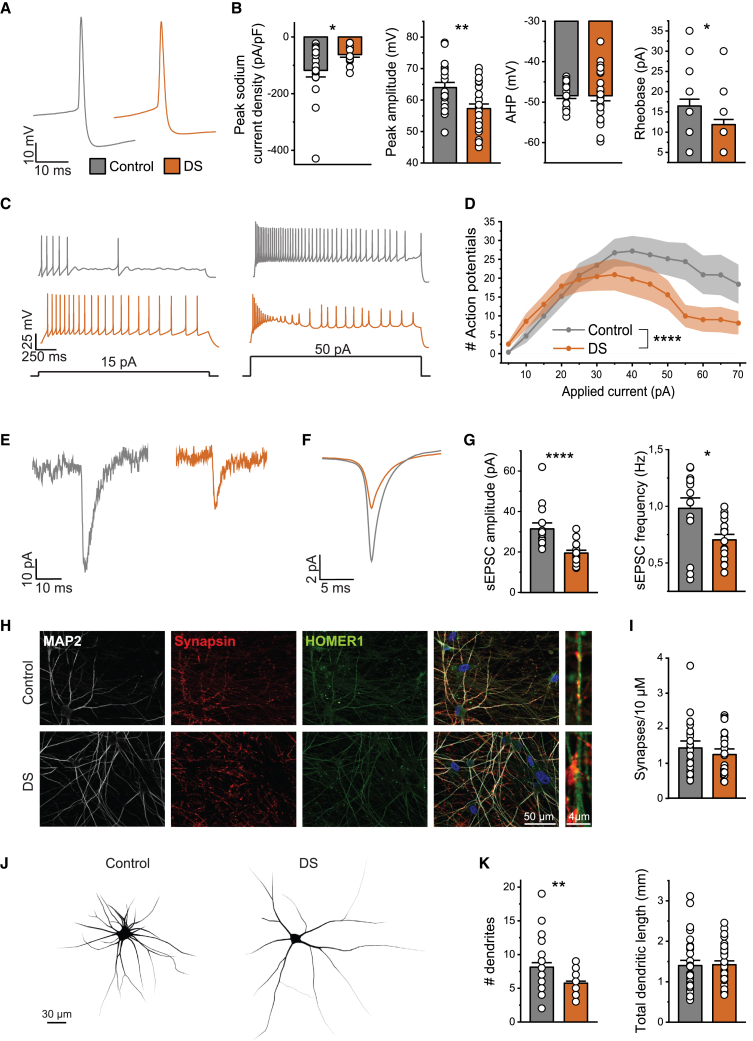
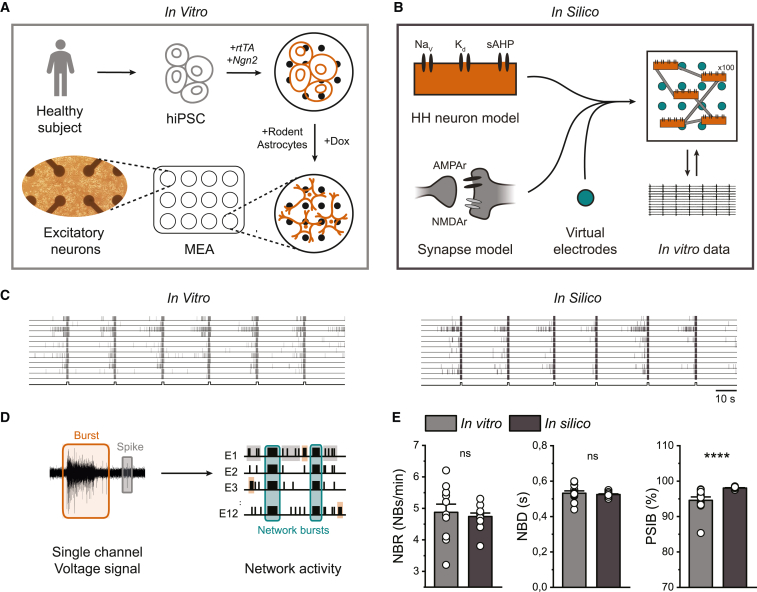
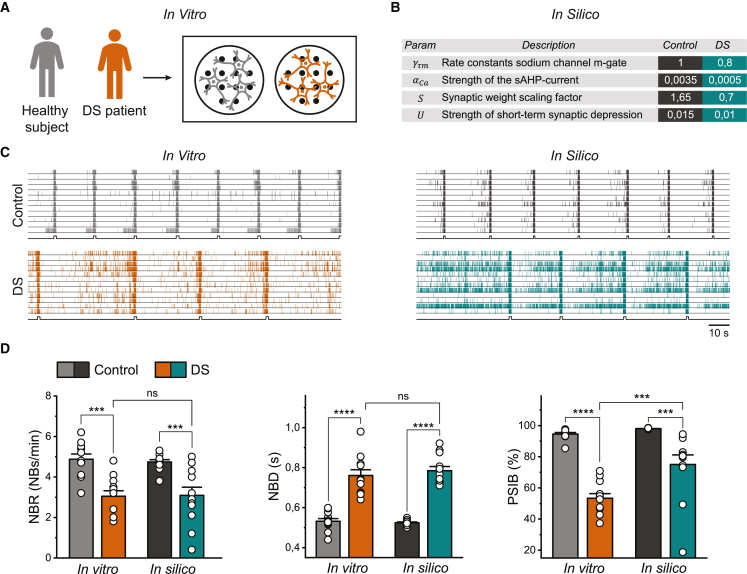
Human induced pluripotent stem cell (hiPSC)-derived neuronal networks on multi-electrode arrays (MEAs) provide a unique phenotyping tool to study neurological disorders. However, it is difficult to infer cellular mechanisms underlying these phenotypes. Computational modeling can utilize the rich dataset generated by MEAs, and advance understanding of disease mechanisms. However, existing models lack biophysical detail, or validation and calibration to relevant experimental data. We developed a biophysical in silico model that accurately simulates healthy neuronal networks on MEAs. To demonstrate the potential of our model, we studied neuronal networks derived from a Dravet syndrome (DS) patient with a missense mutation in SCN1A, encoding sodium channel Na1.1. Our in silico model revealed that sodium channel dysfunctions were insufficient to replicate the in vitro DS phenotype, and predicted decreased slow afterhyperpolarization and synaptic strengths. We verified these changes in DS patient-derived neurons, demonstrating the utility of our in silico model to predict disease mechanisms.
人诱导多能干细胞(hiPSC)衍生的神经元网络在多电极阵列(MEA)上提供了一种独特的表型分析工具,可用于研究神经紊乱。然而,很难推断这些表型背后的细胞机制。计算模型可以利用 MEA 产生的丰富数据集,推进对疾病机制的理解。然而,现有的模型缺乏生物物理细节,或者与相关实验数据的验证和校准。我们开发了一种生物物理的计算机模型,可以准确地模拟 MEA 上健康的神经元网络。为了展示我们模型的潜力,我们研究了来自 Dravet 综合征(DS)患者的神经元网络,该患者 SCN1A 中的错义突变,该基因编码钠离子通道 Na1.1。我们的计算机模型表明,钠离子通道功能障碍不足以复制体外 DS 表型,并预测了缓慢后超极化和突触强度的降低。我们在 DS 患者来源的神经元中验证了这些变化,证明了我们的计算机模型在预测疾病机制方面的实用性。