Faculty of Arts and Sciences, Holy Spirit University of Kaslik (USEK), P.O. Box 446, Jounieh, Lebanon.
Omics Center of Excellence, G42 Laboratory LLC, M42, Khalifa City, Abu Dhabi, United Arab Emirates.
Sci Rep. 2024 Oct 5;14(1):23184. doi: 10.1038/s41598-024-73700-5.
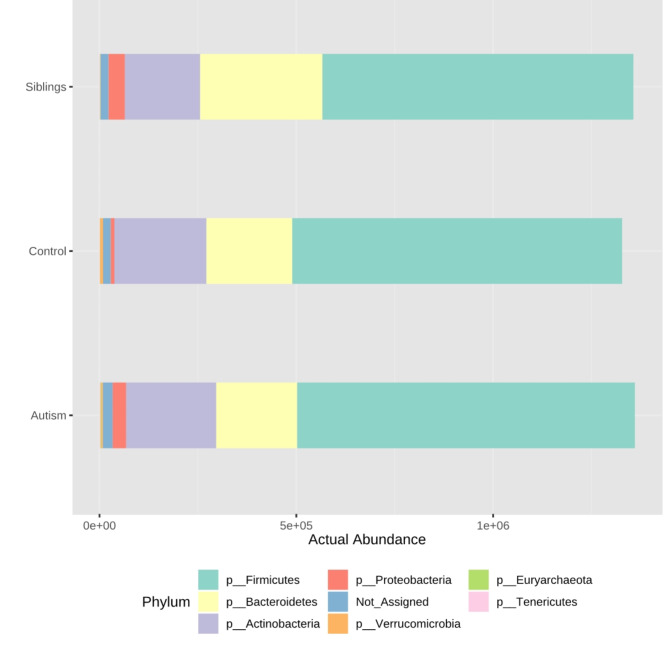
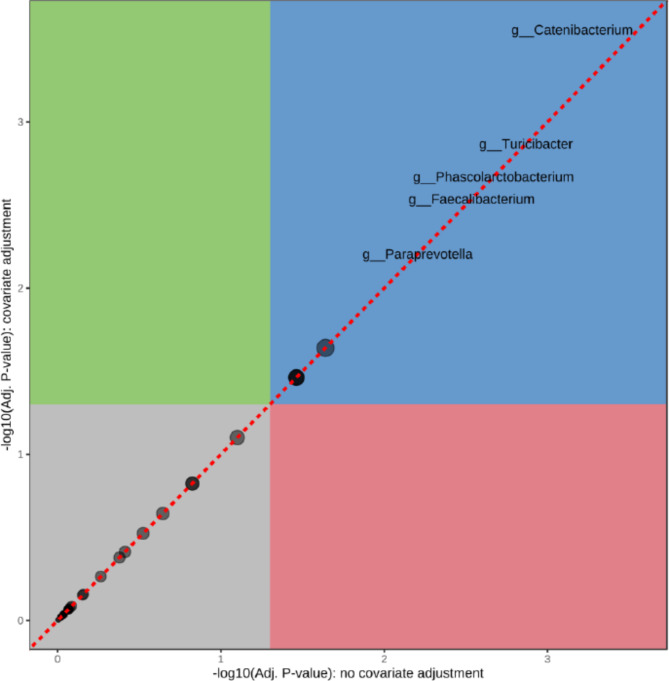
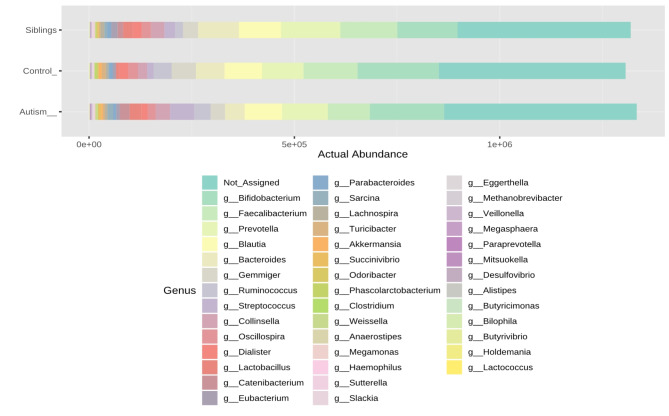
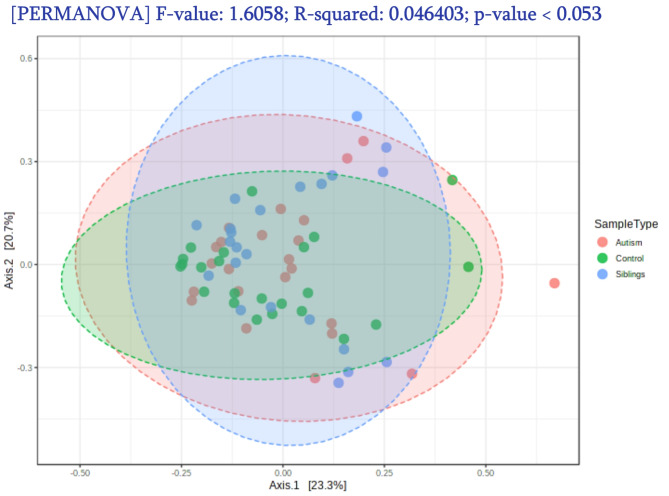
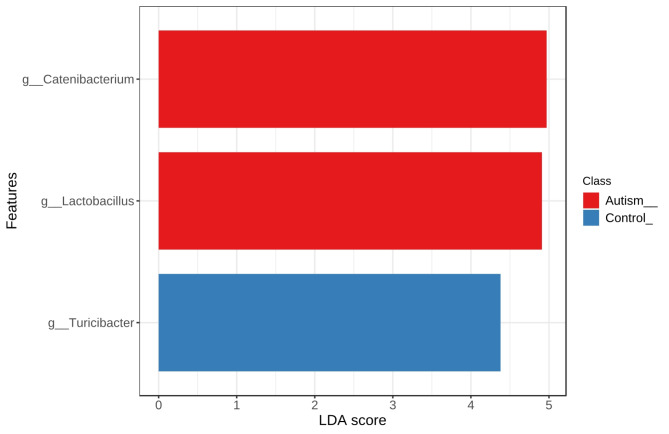
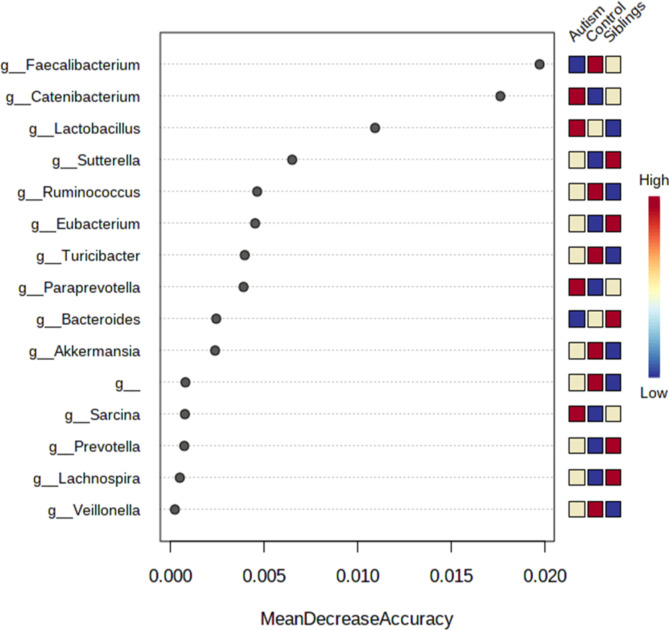
Autism spectrum disorders (ASD) are neurodevelopmental disorders characterized by social, behavioral, and cognitive impairments. Several comorbidities, including gastrointestinal (GI) dysregulations, are frequently reported in ASD children. Although studies in animals have shown the crucial role of the microbiota in key aspects of neurodevelopment, there is currently no consensus on how the alteration of microbial composition affects the pathogenesis of ASD. Moreover, disruption of the gut-brain axis (GBA) has been reported in ASD although with limited studies conducted on the Mediterranean population. In our study, we aimed to investigate gut microbiota composition in Lebanese ASD subjects, their unaffected siblings, and a control group from various regions in Lebanon using the 16 S-rRNA sequencing (NGS). Our study revealed a lower abundance of Turicibacter and a significant enrichment on Proteobacteria in the ASD and siblings' groups compared to the controls, indicating that gut microbiota is probably affected by dietary habits, living conditions together with host genetic factors. The study also showed evidence of changes in the gut microbiome of ASD children compared to their siblings and the unrelated control. Bacteroidetes revealed a lower abundance in the ASD group compared to controls and siblings, conversely, Catenibacterium and Tenericutes revealed an increased abundance in the ASD group. Notably, our study identifies alterations in the abundance of Turicibacter and Catenibacterium in ASD children suggesting a possible link between these bacterial taxa and ASD and contributing to the growing body of evidence linking the microbiome to ASD.
自闭症谱系障碍(ASD)是一种神经发育障碍,其特征为社交、行为和认知障碍。许多合并症,包括胃肠道(GI)失调,在 ASD 儿童中经常被报道。尽管动物研究表明微生物群在神经发育的关键方面起着至关重要的作用,但目前对于微生物组成的改变如何影响 ASD 的发病机制还没有共识。此外,尽管在 ASD 中已经报道了肠道-大脑轴(GBA)的中断,但在以地中海人群为对象的研究中还很有限。在我们的研究中,我们旨在使用 16S-rRNA 测序(NGS)调查来自黎巴嫩不同地区的 ASD 患者、未受影响的兄弟姐妹和对照组的肠道微生物群落组成。我们的研究表明,与对照组相比,ASD 和兄弟姐妹组中 Turicibacter 的丰度较低,而 Proteobacteria 的丰度显著增加,这表明肠道微生物群可能受到饮食习惯、生活条件以及宿主遗传因素的影响。该研究还表明,与兄弟姐妹和无关对照组相比,ASD 儿童的肠道微生物组发生了变化。与对照组和兄弟姐妹相比,Bacteroidetes 在 ASD 组中的丰度较低,相反,Catenibacterium 和 Tenericutes 在 ASD 组中的丰度增加。值得注意的是,我们的研究确定了 ASD 儿童中 Turicibacter 和 Catenibacterium 丰度的改变,这表明这些细菌类群与 ASD 之间可能存在关联,并为将微生物组与 ASD 联系起来的越来越多的证据做出了贡献。