Hospital of Stomatology, Guanghua School of Stomatology, Sun Yat-Sen University, 56 Lingyuan Road West, Guangzhou, 510055, China.
Guangdong Provincial Key Laboratory of Stomatology, Guangzhou, 510080, China.
Microbiome. 2024 Oct 5;12(1):193. doi: 10.1186/s40168-024-01907-9.
Oral squamous cell carcinoma (OSCC) remains a major death cause in head and neck cancers, but the exact pathogenesis mechanisms of OSCC are largely unclear.
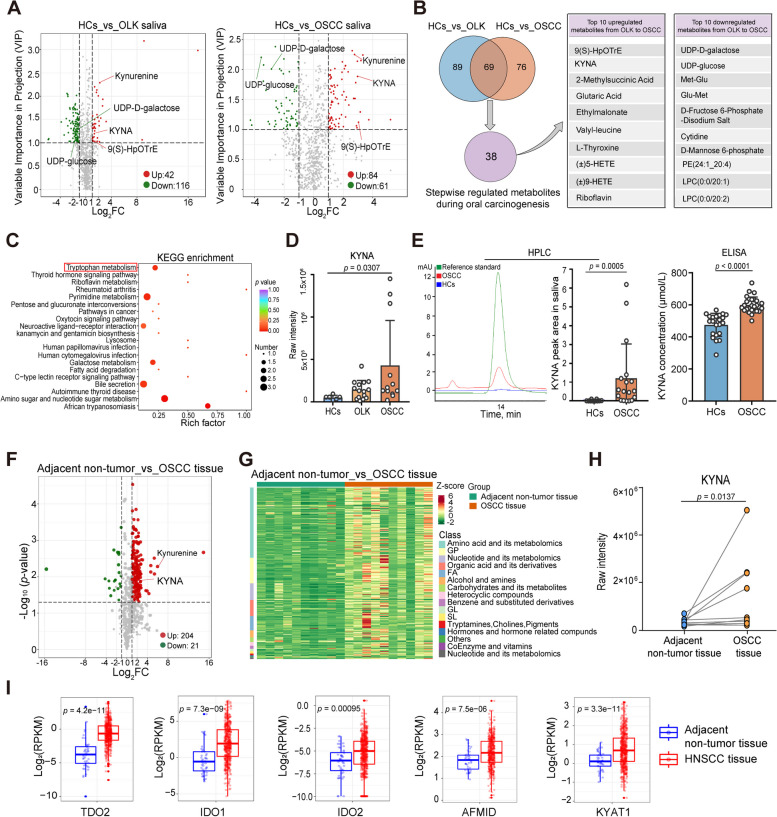
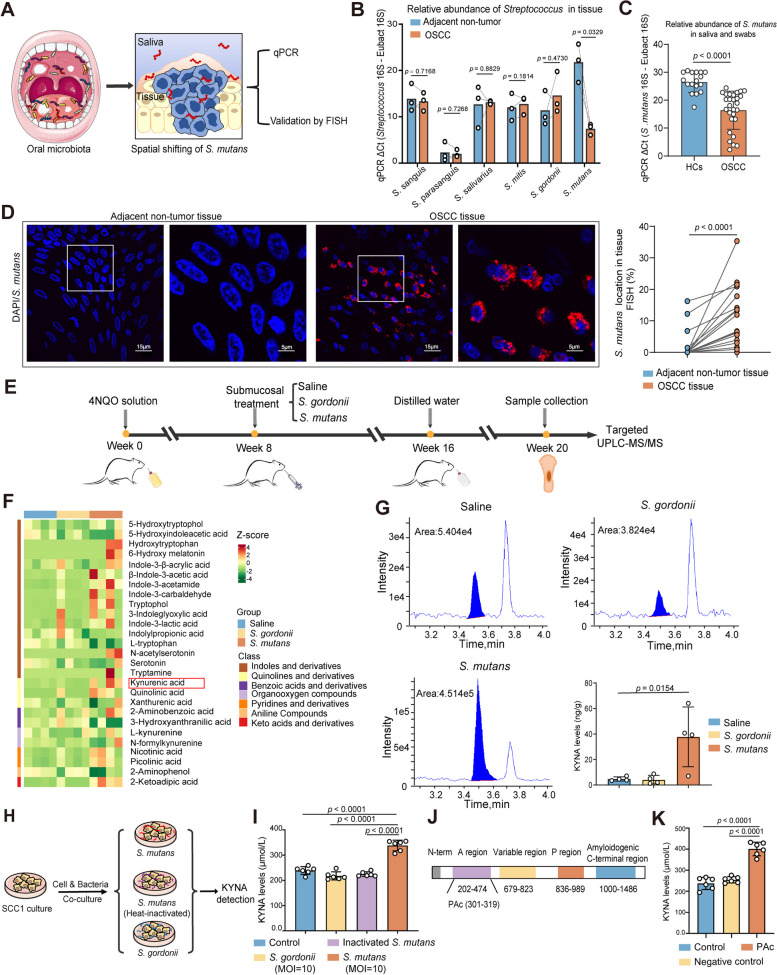
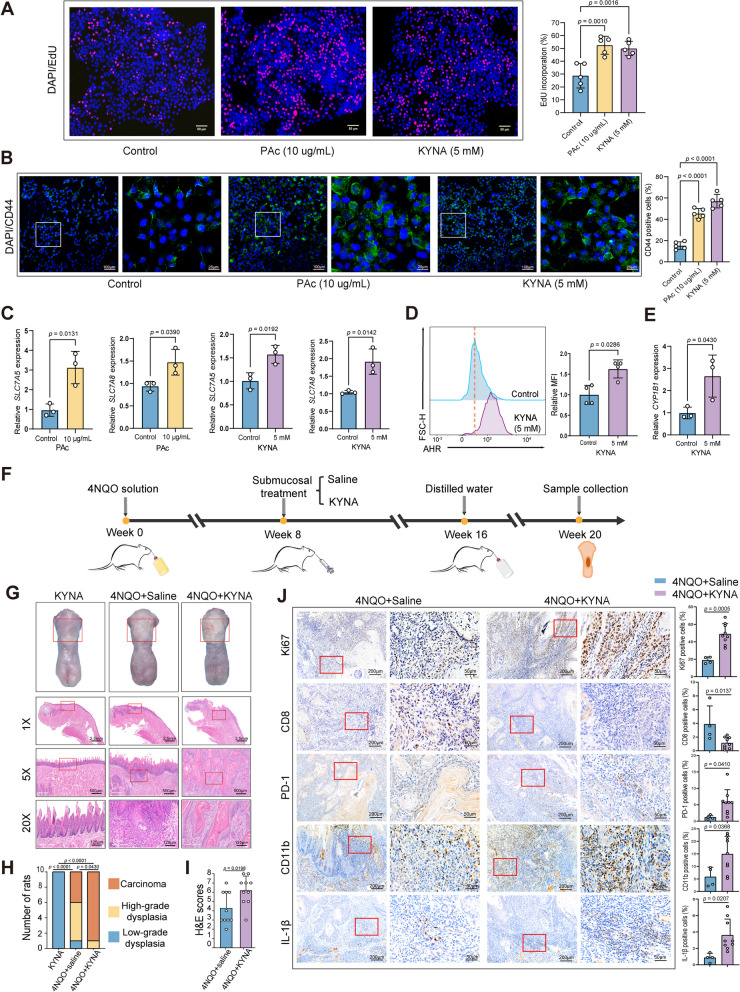
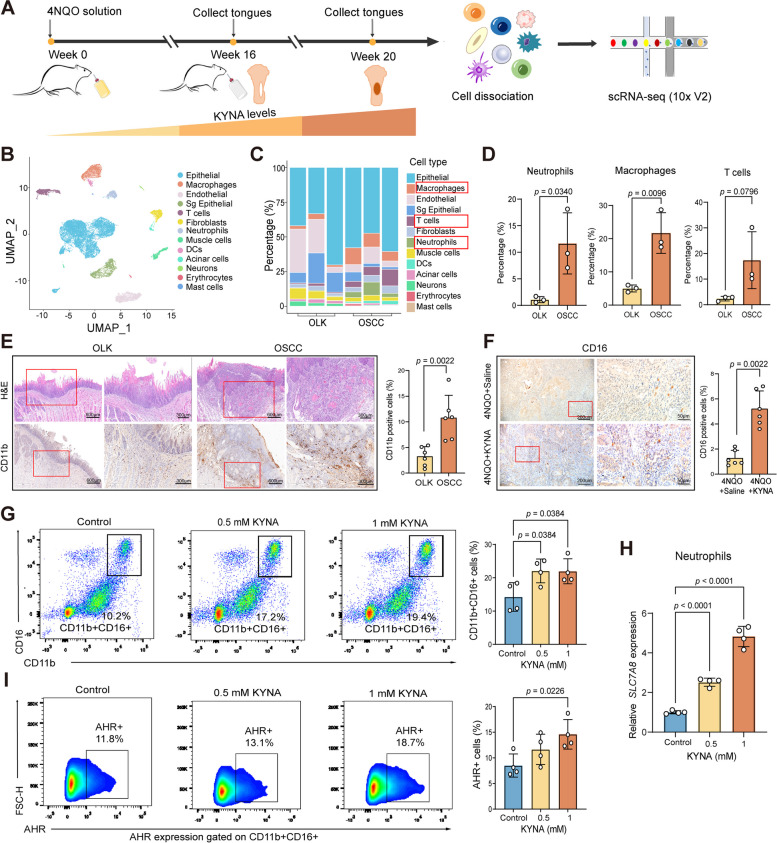
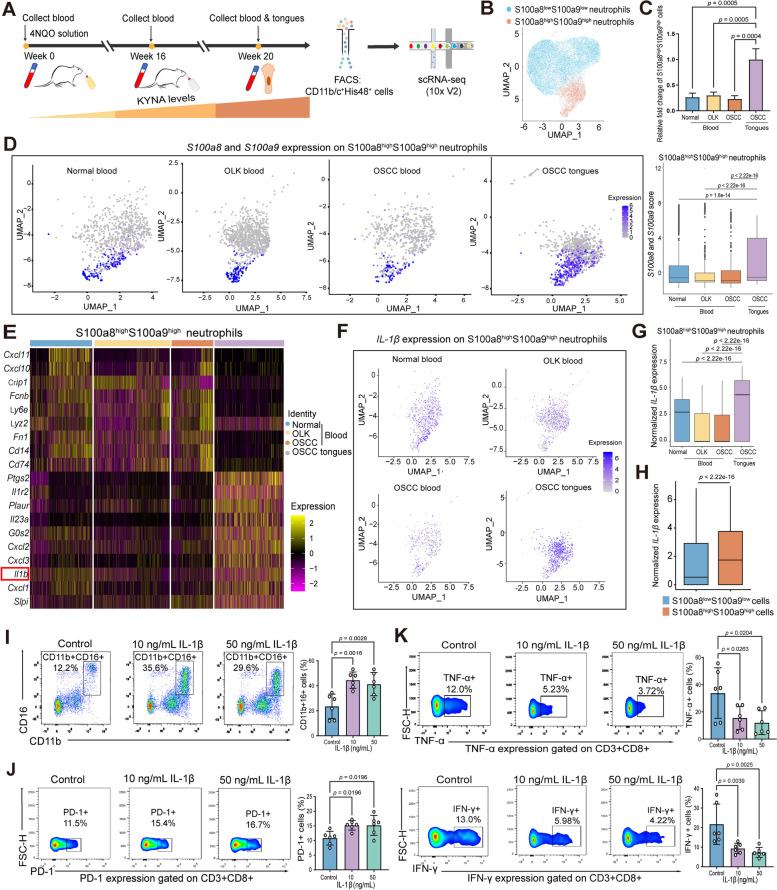
Saliva derived from OSCC patients but not healthy controls (HCs) significantly promotes OSCC development and progression in rat models, and metabolomic analyses reveal saliva of OSCC patients but not HCs and OSCC tissues but not adjacent non-tumor tissues contain higher levels of kynurenic acid (KYNA). Furthermore, large amounts of Streptococcus mutans (S. mutans) colonize in OSCC tumor tissues, and such intratumoral S. mutans mediates KYNA overproductions via utilizing its protein antigen c (PAc). KYNA shifts the cellular types in the tumor microenvironment (TME) of OSCC and predominantly expedites the expansions of S100a8S100a9 neutrophils to produce more interleukin 1β (IL-1β), which further expands neutrophils and induces CD8 + T cell exhaustion in TME and therefore promotes OSCC. Also, KYNA compromises the therapeutic effects of programmed cell death ligand 1 (PD-L1) and IL-1β blockades in oral carcinogenesis model. Moreover, KYNA-mediated immunosuppressive program and aryl hydrocarbon receptor (AHR) expression correlate with impaired anti-tumor immunity and poorer survival of OSCC patients.
Thus, aberration of oral microbiota and intratumoral colonization of specific oral bacterium such as S. mutans may increase the production of onco-metabolites, exacerbate the oral mucosal carcinogenesis, reprogram a highly immunosuppressive TME, and promote OSCC, highlighting the potential of interfering with oral microbiota and microbial metabolism for OSCC preventions and therapeutics. Video Abstract.
口腔鳞状细胞癌(OSCC)仍然是头颈部癌症的主要死亡原因,但 OSCC 的确切发病机制在很大程度上尚不清楚。
来自 OSCC 患者而非健康对照(HC)的唾液显著促进了大鼠模型中 OSCC 的发展和进展,代谢组学分析显示 OSCC 患者而非 HCs 的唾液以及 OSCC 组织而非相邻非肿瘤组织中含有更高水平的犬尿氨酸(KYNA)。此外,大量变形链球菌(S. mutans)定植于 OSCC 肿瘤组织中,并且这种肿瘤内 S. mutans 通过利用其蛋白抗原 c(PAc)介导 KYNA 的过度产生。KYNA 改变了 OSCC 肿瘤微环境(TME)中的细胞类型,并主要促进 S100a8S100a9 中性粒细胞的扩增,以产生更多的白细胞介素 1β(IL-1β),从而进一步扩增中性粒细胞并诱导 TME 中的 CD8+T 细胞耗竭,从而促进 OSCC。此外,KYNA 会损害程序性细胞死亡配体 1(PD-L1)和 IL-1β 阻断在口腔癌变模型中的治疗效果。此外,KYNA 介导的免疫抑制程序和芳香烃受体(AHR)表达与抗肿瘤免疫受损和 OSCC 患者生存率降低相关。
因此,口腔微生物组的异常和特定口腔细菌(如 S. mutans)的肿瘤内定植可能会增加致癌代谢物的产生,加剧口腔黏膜癌变,重新编程高度免疫抑制的 TME,并促进 OSCC,这凸显了干扰口腔微生物组和微生物代谢以预防和治疗 OSCC 的潜力。视频摘要。