Govind Chinju, Balanikas Evangelos, Sanil Gana, Gryko Daniel T, Vauthey Eric
Department of Physical Chemistry, University of Geneva 30 Quai Ernest-Ansermet CH-1211 Geneva 4 Switzerland
Institute of Organic Chemistry, Polish Academy of Sciences 01-224 Warsaw Poland.
Chem Sci. 2024 Sep 26;15(42):17362-71. doi: 10.1039/d4sc05419a.
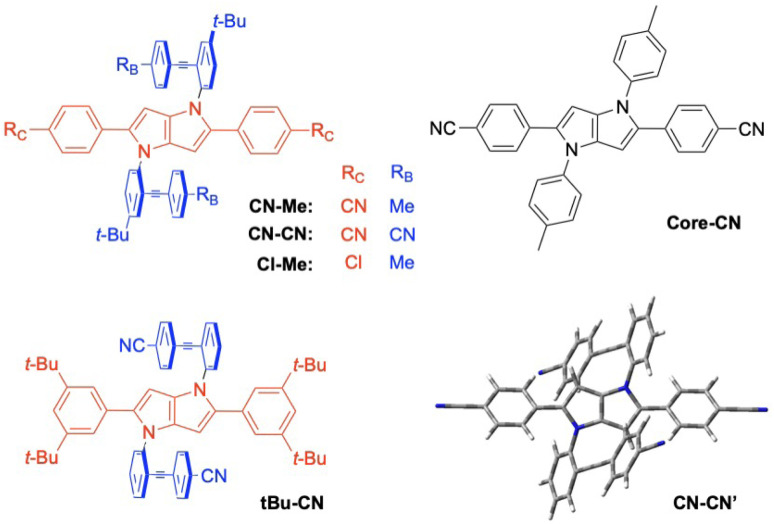
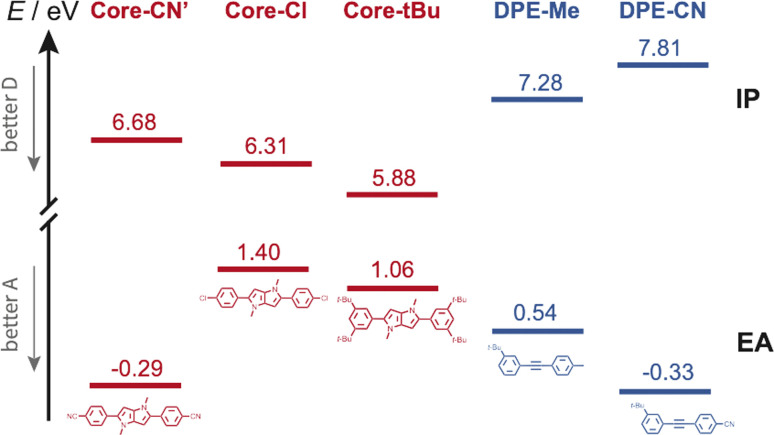
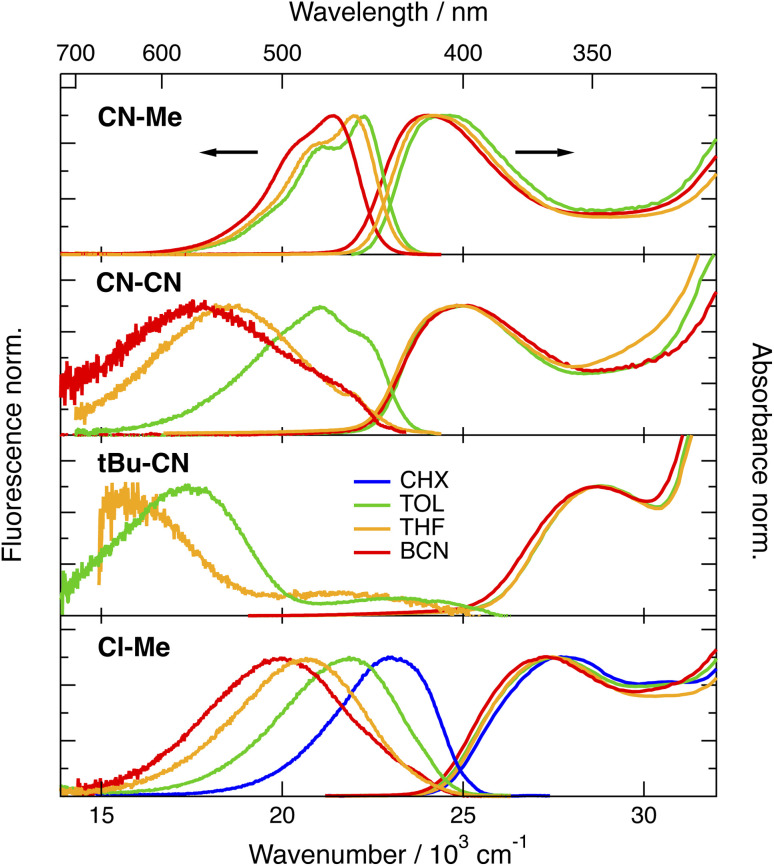
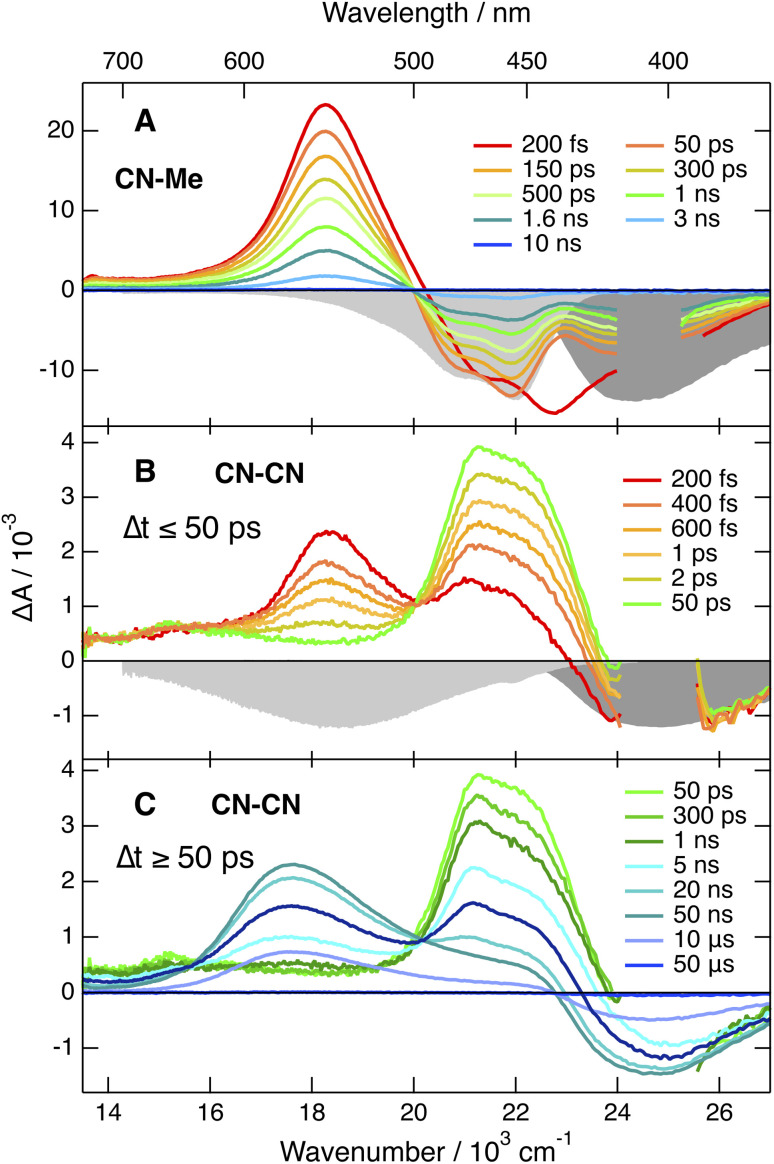
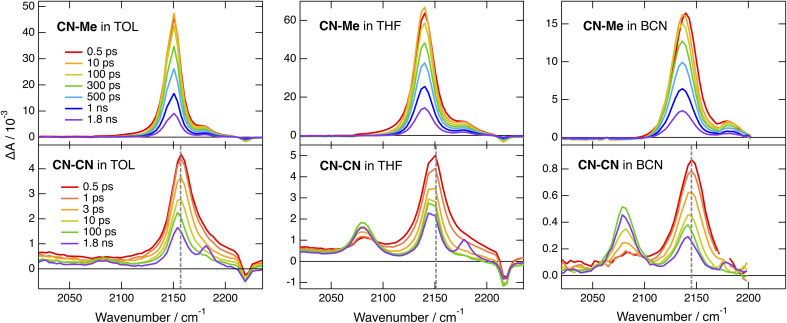
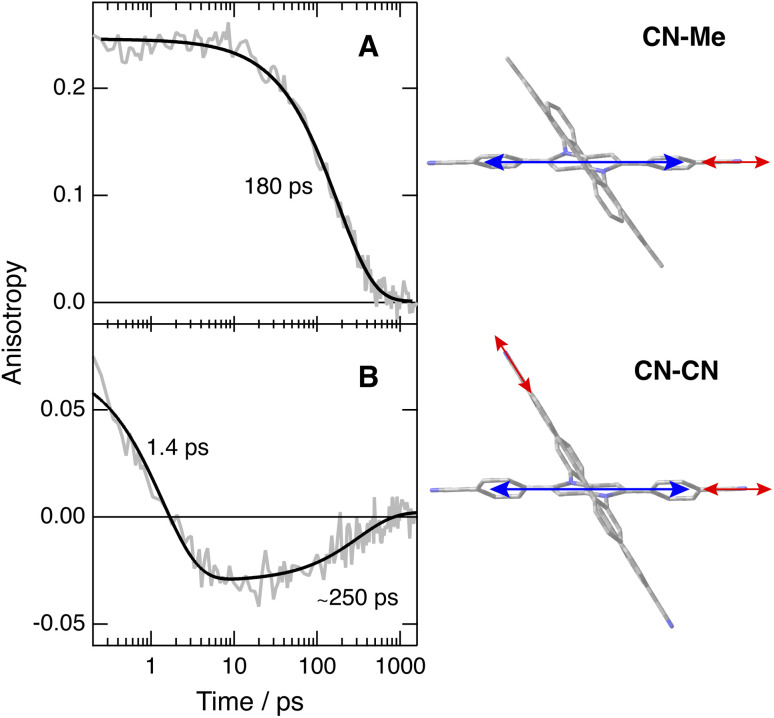
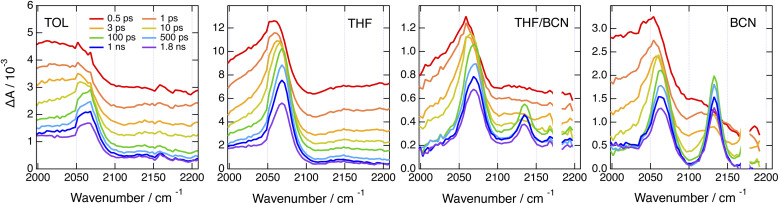
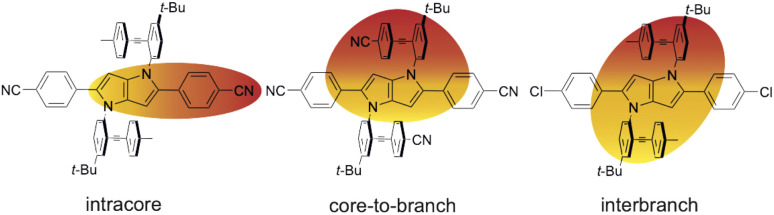
Whereas the photoinduced charge-transfer properties of electron donor-acceptor dyads are now well understood, those of symmetric conjugated architectures containing several identical donor-acceptor branches have started to be scrutinised much more recently. Here, we report on our investigation of the charge-transfer dynamics of a series of formally centrosymmetric triads consisting of a quadrupolar dihydropyrrolopyrrole core substituted with two identical diphenylethynyl lateral branches. Using a combination of time-resolved electronic and vibrational spectroscopies, we show that these molecules exhibit rich excited-state dynamics, which includes three different types of symmetry-breaking charge-transfer processes depending on the nature of the end substituents on the core and branches as well as on the solvent: (i) excited-state symmetry breaking within the core; (ii) charge transfer from the core to one of the two branches; (iii) charge transfer between the two branches. This investigation illustrates how the excited-state properties of symmetric conjugated molecules, including the nature and location of the exciton, can be controlled by fine tuning structural as well as environmental parameters.
虽然电子供体-受体二元体系的光致电荷转移特性现已得到充分理解,但含有几个相同供体-受体分支的对称共轭结构的光致电荷转移特性直到最近才开始受到更多审视。在此,我们报告了对一系列由一个四极二氢吡咯并吡咯核心组成、该核心被两个相同的二苯乙炔基侧链取代的形式上中心对称的三元体系的电荷转移动力学的研究。通过结合时间分辨电子光谱和振动光谱,我们表明这些分子展现出丰富的激发态动力学,这包括三种不同类型的对称性破缺电荷转移过程,具体取决于核心和侧链上末端取代基的性质以及溶剂:(i) 核心内的激发态对称性破缺;(ii) 电荷从核心转移到两个侧链之一;(iii) 两个侧链之间的电荷转移。这项研究说明了如何通过微调结构和环境参数来控制对称共轭分子的激发态性质,包括激子的性质和位置。