Jayousi Tameem M, Taha Magdeldin G, Jaan Sara M, Aljabri Afrah F, Banaji Samaher I, Ishqi Raha Z
Obstetrics and Gynecology, Taibah University Faculty of Medicine, Madinah, SAU.
Internal Medicine, Taibah University Faculty of Medicine, Madinah, SAU.
Cureus. 2024 Sep 5;16(9):e68737. doi: 10.7759/cureus.68737. eCollection 2024 Sep.
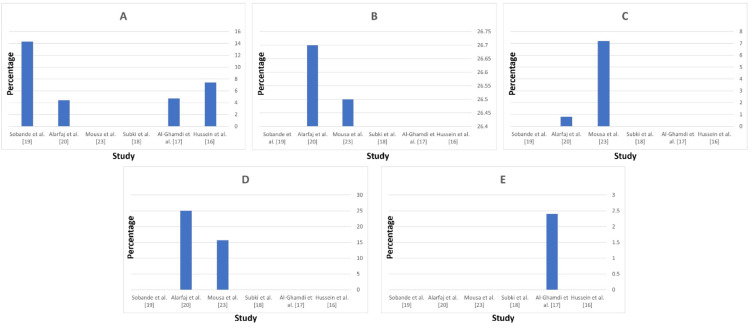
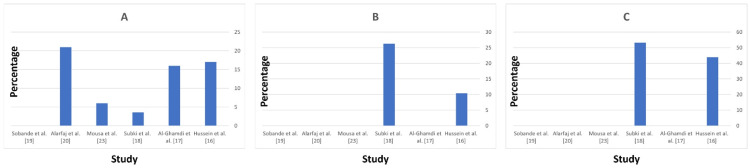
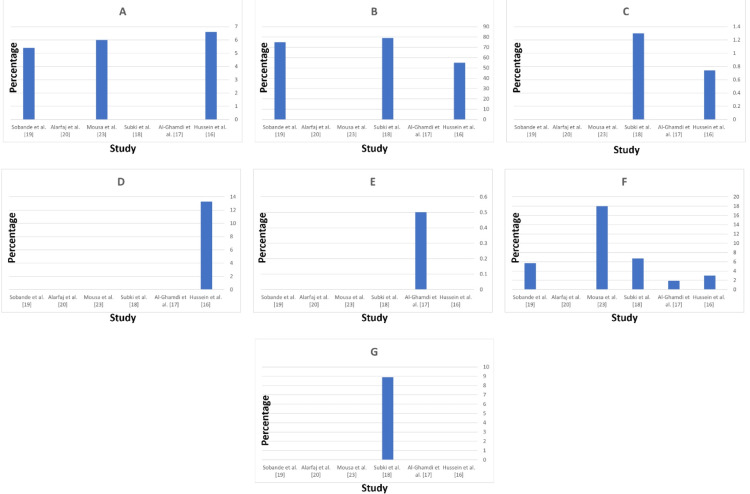
Hypertensive disorders during pregnancy, including pre-eclampsia and eclampsia, pose significant risks to both maternal and neonatal health. This review article evaluates the prevalence, maternal and neonatal outcomes, and the efficacy of aspirin prophylaxis in managing these conditions in Saudi Arabia. Utilizing data from multiple retrospective studies and recent guidelines, we highlight the regional variations in the outcomes of hypertensive disorders of pregnancy. Severe complications such as Hemolysis, Elevated Liver enzymes and Low Platelets (HELLP) syndrome occurred in 6.6% of cases, while eclampsia was reported in 6.7% of cases. Cesarean sections were notably high, with rates reaching up to 79% among affected pregnancies. Maternal risk factors identified include chronic hypertension (prevalence 17%), diabetes (ranging from 10.4% to 26.3%), and advanced maternal age. Neonatal complications often involve preterm birth, reported in 26.5% to 26.7% of cases, intrauterine growth restriction (ranging from 15.7% to 25%), and increased NICU admissions, reported in 2.4% of cases. No data were found in the included studies to evaluate the prophylactic use of low-dose aspirin in reducing the incidence of pre-eclampsia or improving fetomaternal outcomes. Despite the effectiveness of aspirin, awareness and implementation of prophylaxis guidelines remain suboptimal among healthcare providers in Saudi Arabia. A national survey revealed that only a fraction of obstetrical care providers were fully knowledgeable about aspirin prophylaxis guidelines. This review underscores the necessity for enhanced educational programs and standardized guidelines to improve maternal and neonatal outcomes in hypertensive pregnancies within the region.
妊娠期高血压疾病,包括子痫前期和子痫,对孕产妇和新生儿健康均构成重大风险。这篇综述文章评估了沙特阿拉伯这些疾病的患病率、孕产妇和新生儿结局以及阿司匹林预防措施在管理这些疾病方面的疗效。利用多项回顾性研究的数据和最新指南,我们强调了妊娠期高血压疾病结局的区域差异。严重并发症如溶血、肝酶升高和血小板减少(HELLP)综合征发生在6.6%的病例中,而子痫报告发生率为6.7%。剖宫产率显著较高,在受影响的妊娠中高达79%。确定的孕产妇风险因素包括慢性高血压(患病率17%)、糖尿病(范围为10.4%至26.3%)和高龄孕产妇。新生儿并发症通常包括早产,报告发生率为26.5%至26.7%,宫内生长受限(范围为15.7%至25%),以及新生儿重症监护病房(NICU)入院率增加,报告发生率为2.4%。在所纳入的研究中未发现评估低剂量阿司匹林预防性使用以降低子痫前期发生率或改善母胎结局的数据。尽管阿司匹林有效,但沙特阿拉伯医疗保健提供者对预防指南的知晓率和实施情况仍不理想。一项全国性调查显示,只有一小部分产科护理提供者完全了解阿司匹林预防指南。这篇综述强调了加强教育项目和标准化指南以改善该地区高血压妊娠孕产妇和新生儿结局的必要性。