Alghadeer Sultan, Alwhaibi Abdulrahman M, Alhossan Abdulaziz, Babelghaith Salmeen D, Mubarak Abdullah M, Samreen Sana, Alameel Nouf N, Aljabali Noura N, Al-Arifi Mohamed N
Department of Clinical Pharmacy, College of Pharmacy, King Saud University, Riyadh, Saudi Arabia.
Department of Basic Sciences, PSCEMS, King Saud University, Riyadh, Saudi Arabia.
Saudi Pharm J. 2022 Apr;30(4):340-346. doi: 10.1016/j.jsps.2022.02.003. Epub 2022 Feb 11.
Despite the public routine use of aspirin as cardio-prophylaxis agent, its use is only recommended in particular situations, and not as usual primary prevention. Only few local studies investigate the use of aspirin in patients with certain diseases, but not within the public population. The purpose of this study was to evaluate the prevalence of aspirin use and identify the demographic and clinical characteristics among Saudi users.
A cross-sectional study targeting Saudi adults in Saudi Arabia was conducted over a period of four months in 2021 using online Google forms. The study collected data to assess the prevalence of use, use of aspirin according to prevention type, users' characteristics and comorbidities. Additionally, a self-assessment of knowledge, perception, reasons and attitude towards aspirin use among Saudi adults was conducted. A chi-square test was used to determine the association between the variables. A P-value ≤ 0.05 was considered statistically significant.
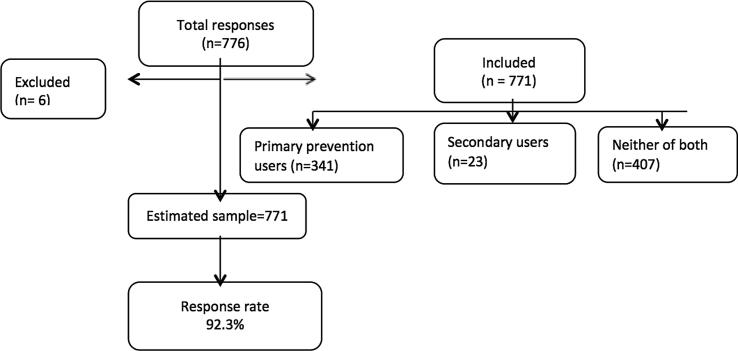
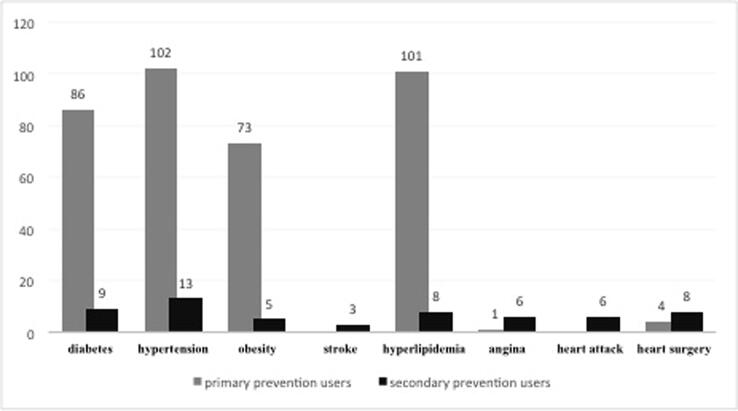
The prevalence of aspirin use was 47%. Regarding the self-assessed aspirin knowledge, the majority of the respondents (n = 481; 62.4 %) found to have good knowledge. Less than half of the participants (n = 341; 44%) use aspirin as primary prevention agent while only 23 participants (2.9%) use aspirin as secondary prevention agent. There was a significant difference between gender and user type (p = 0.001). With regards to comorbidities, hypertension, hyperlipidemia, diabetes, and obesity were common among the primary users of aspirin. Significant associations were found (p = 0.001) between participant's user type and the following characteristics such as smoking status, past medical history, presence of comorbidities.
Aspirin use is commonly prevalent Saudi population with good level of knowledge of the therapy; however, its popular use as primary preventive agent for CVD may necessitate medical advice based on the level of cardiovascular risk.
尽管阿司匹林作为心脏预防药物已在公众中常规使用,但其使用仅在特定情况下被推荐,而非通常的一级预防。仅有少数本地研究调查了阿司匹林在某些疾病患者中的使用情况,而非在普通人群中的使用情况。本研究的目的是评估沙特使用者中阿司匹林的使用 prevalence,并确定其人口统计学和临床特征。
2021年,使用在线谷歌表单,对沙特阿拉伯的沙特成年人进行了为期四个月的横断面研究。该研究收集了数据,以评估使用 prevalence、根据预防类型使用阿司匹林的情况、使用者的特征和合并症。此外,还对沙特成年人对阿司匹林使用的知识、认知、原因和态度进行了自我评估。使用卡方检验来确定变量之间的关联。P值≤0.05被认为具有统计学意义。
阿司匹林的使用 prevalence为47%。关于自我评估的阿司匹林知识,大多数受访者(n = 481;62.4%)被发现具有良好的知识。不到一半的参与者(n = 341;44%)将阿司匹林用作一级预防药物,而只有23名参与者(2.9%)将阿司匹林用作二级预防药物。性别与使用者类型之间存在显著差异(p = 0.001)。关于合并症,高血压、高脂血症、糖尿病和肥胖在阿司匹林的主要使用者中很常见。在参与者的使用者类型与以下特征(如吸烟状况、既往病史、合并症的存在)之间发现了显著关联(p = 0.001)。
阿司匹林在沙特人群中普遍使用,对该疗法的了解程度良好;然而,其作为心血管疾病一级预防药物的广泛使用可能需要根据心血管风险水平提供医学建议。