Lu Stephen, de Sousa Paula Lucas C, Ribeiro Jose M C, Tirloni Lucas
Vector Biology Section, Laboratory of Malaria and Vector Research, National Institute of Allergy and Infectious Diseases, Bethesda, MD, USA.
Tick-Pathogen Transmission Unit, Laboratory of Bacteriology, National Institute of Allergy and Infectious Diseases, Hamilton, MT, USA.
bioRxiv. 2024 Sep 24:2024.09.20.614175. doi: 10.1101/2024.09.20.614175.
Female ticks remain attached to their host for multiple days to complete a blood meal. This prolonged feeding period is accompanied by a significant increase in the tick's size and body weight, paralleled by noteworthy changes to the tick midgut. While the midgut is recognized for its established role in blood storage and processing, its importance extends to playing a crucial role in the acquisition, survival, and proliferation of pathogens. Despite this, our overall understanding of tick midgut biology is limited.
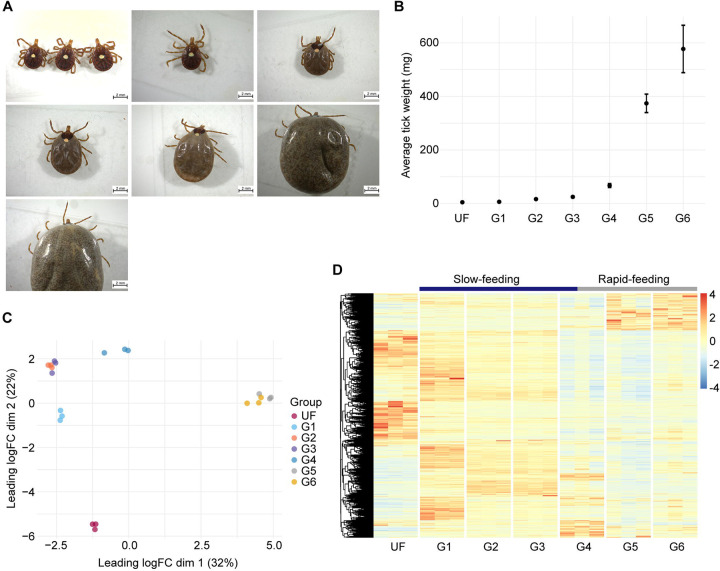
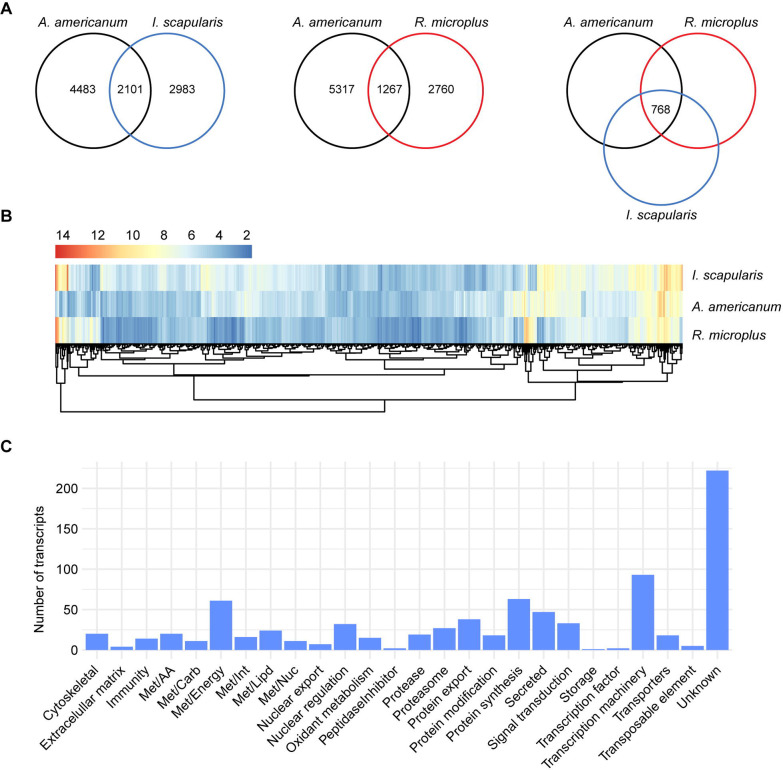
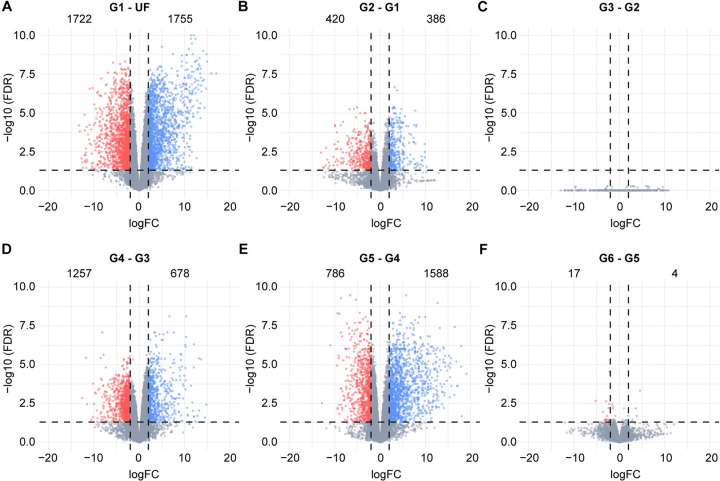
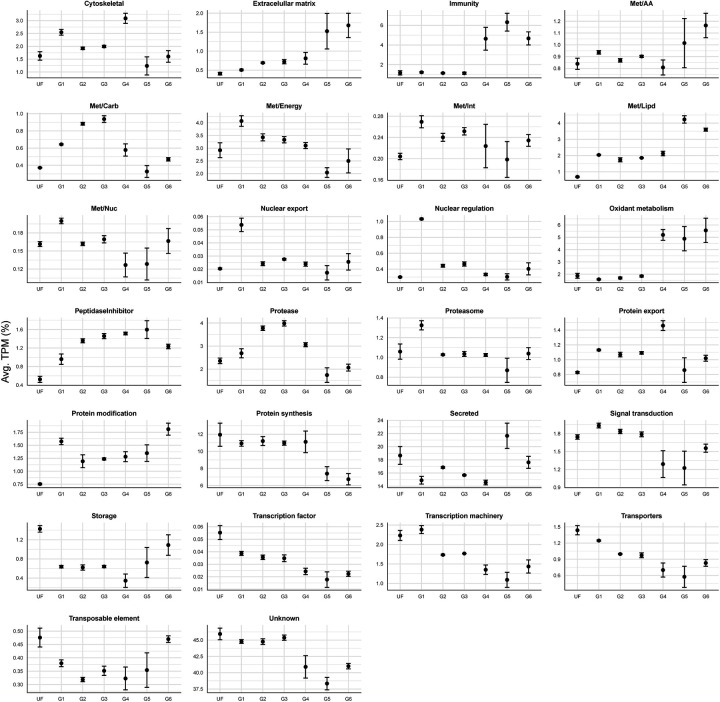
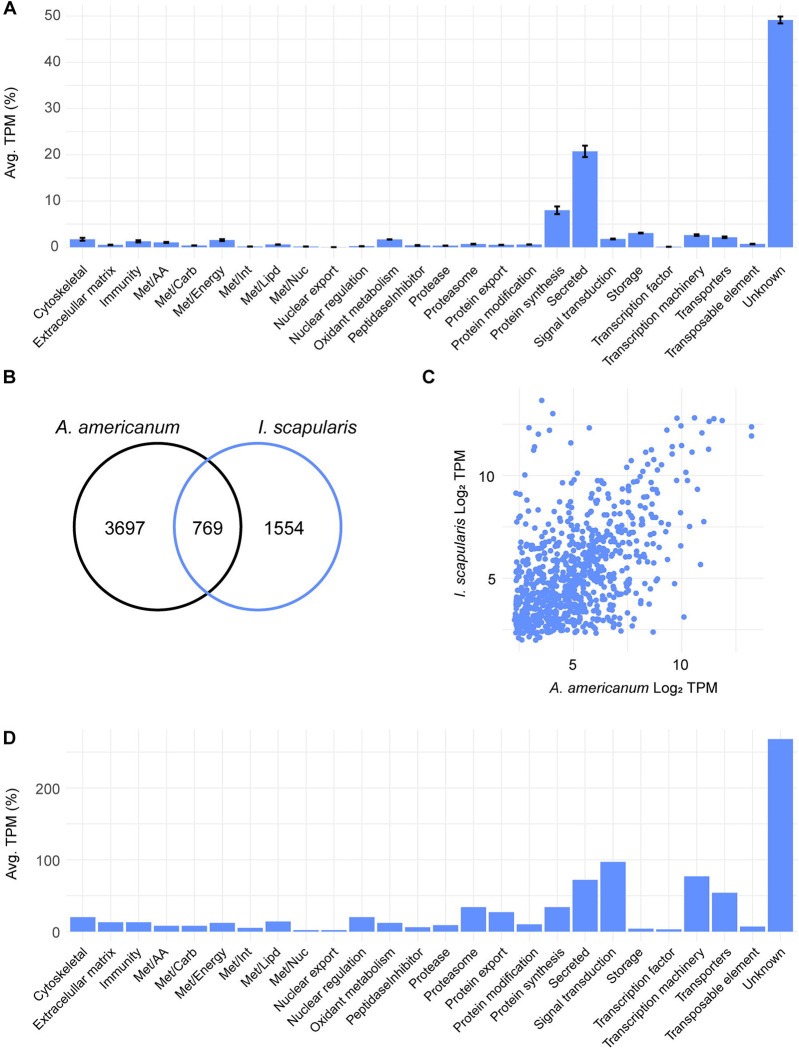
We conducted a comprehensive longitudinal transcriptome analysis of the midgut in adult female ticks across various feeding stages, including unfed, slow-feeding, and rapid-feeding phases. Our analysis revealed 15,599 putative DNA coding sequences (CDS) classified within 26 functional groups. Dimensional and differential expression analysis highlighted the dynamic transcriptional changes in the tick midgut as feeding progresses, particularly during the initial period of feeding and the transition from the slow-feeding to the rapid-feeding phase. Additionally, we performed an orthology analysis comparing our dataset with midgut transcriptomes from other hard ticks, such as and . This comparison allowed us to identify transcripts commonly expressed during different feeding phases across these three species.
Our findings provide a detailed temporal resolution of numerous metabolic pathways in , emphasizing the dynamic transcriptional changes occurring in the tick midgut throughout the feeding process. Furthermore, we identified conserved transcripts across three different tick species that exhibit similar expression patterns. This knowledge has significant implications for future research aimed at deciphering the physiological pathways relevant within the tick midgut. It also offers potential avenues for developing control methods that target multiple tick species.
雌性蜱虫会在宿主身上附着数天以完成一次血餐。这种延长的进食期伴随着蜱虫大小和体重的显著增加,同时蜱虫中肠也发生了值得注意的变化。虽然中肠在血液储存和处理方面的既定作用已得到认可,但其重要性还体现在对病原体的获取、存活和增殖起着关键作用。尽管如此,我们对蜱虫中肠生物学的整体了解仍然有限。
我们对成年雌性蜱虫在不同进食阶段(包括未进食、缓慢进食和快速进食阶段)的中肠进行了全面的纵向转录组分析。我们的分析揭示了15599个推定的DNA编码序列(CDS),它们被归类在26个功能组中。维度和差异表达分析突出了随着进食进展,蜱虫中肠的动态转录变化,特别是在进食初期以及从缓慢进食阶段到快速进食阶段的转变过程中。此外,我们进行了直系同源分析,将我们的数据集与其他硬蜱(如 和 )的中肠转录组进行比较。这种比较使我们能够识别这三个物种在不同进食阶段共同表达的转录本。
我们的研究结果提供了对 中众多代谢途径的详细时间分辨率,强调了蜱虫中肠在整个进食过程中发生的动态转录变化。此外,我们在三种不同的蜱虫物种中鉴定出了具有相似表达模式的保守转录本。这些知识对未来旨在破译蜱虫中肠内相关生理途径的研究具有重要意义。它还为开发针对多种蜱虫物种的控制方法提供了潜在途径。