Department of Mechanical Engineering, University College London, London, United Kingdom.
Centre for the Developing Brain, School of Biomedical Engineering and Imaging Sciences, King's College London, London, United Kingdom.
PLoS Comput Biol. 2024 Oct 7;20(10):e1012470. doi: 10.1371/journal.pcbi.1012470. eCollection 2024 Oct.
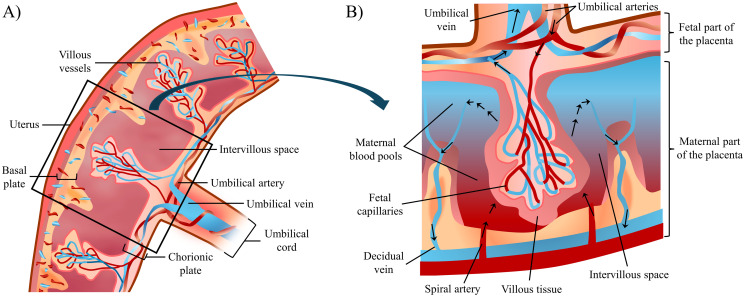
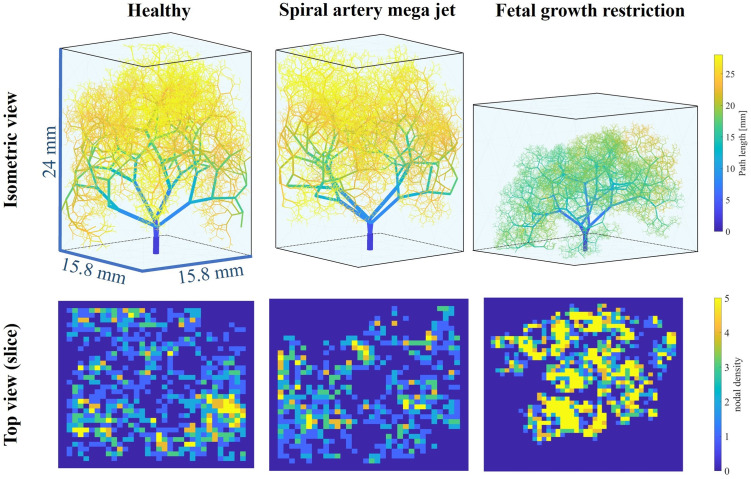
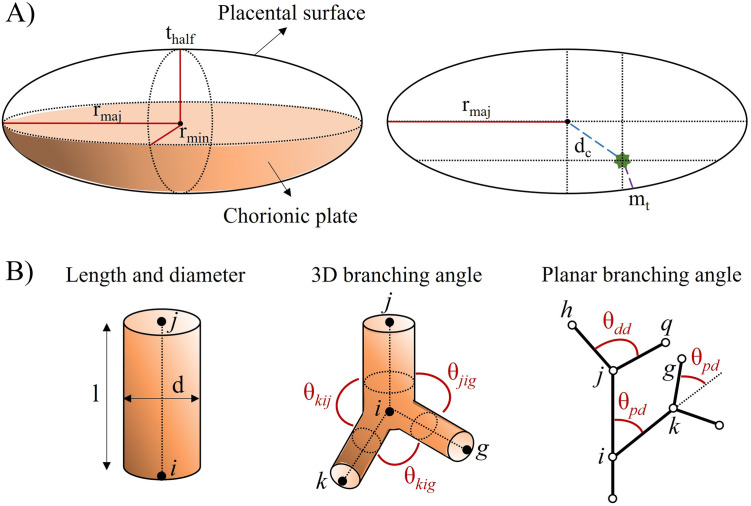
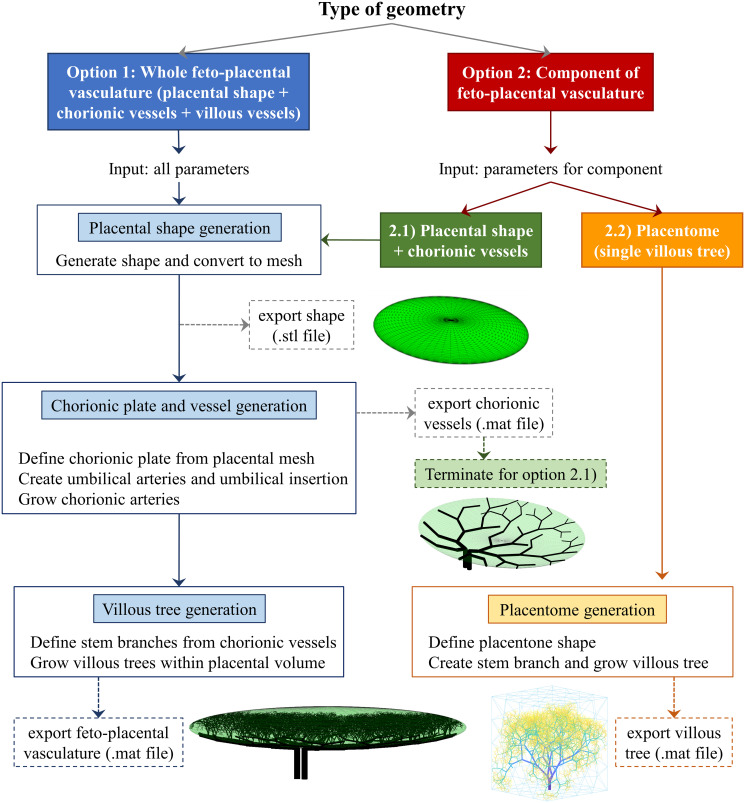
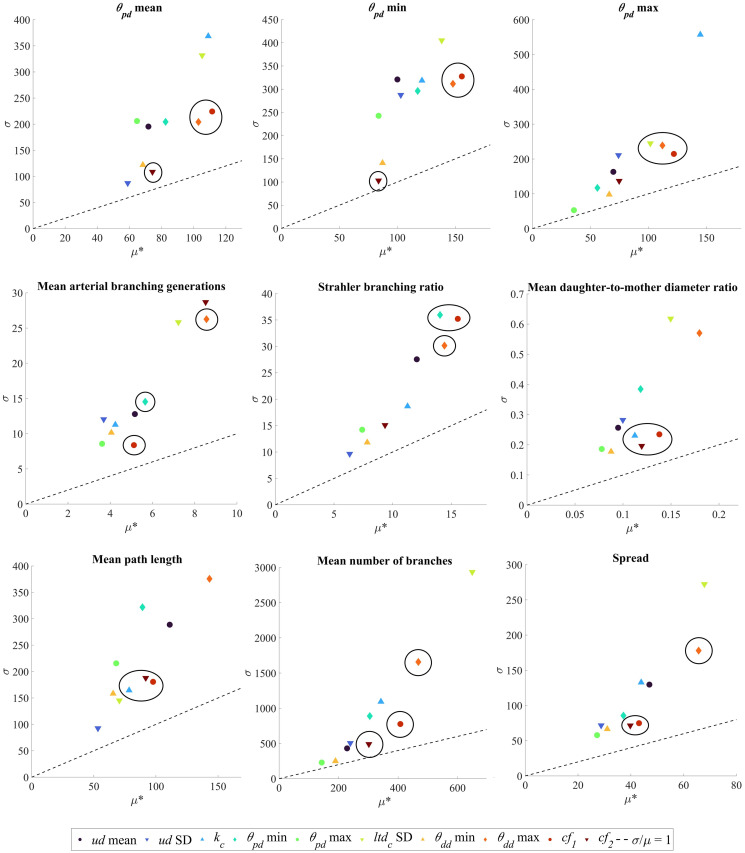
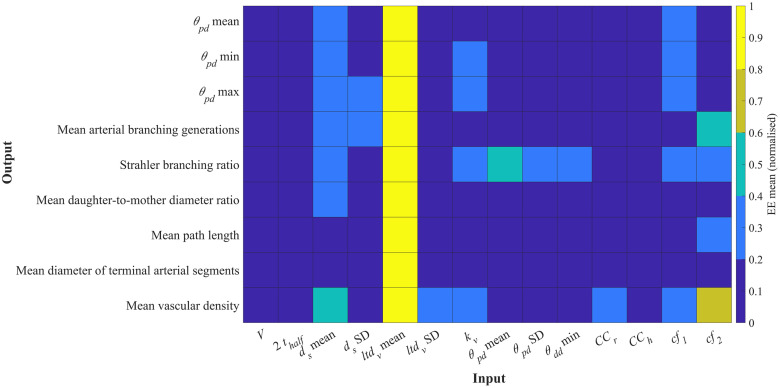
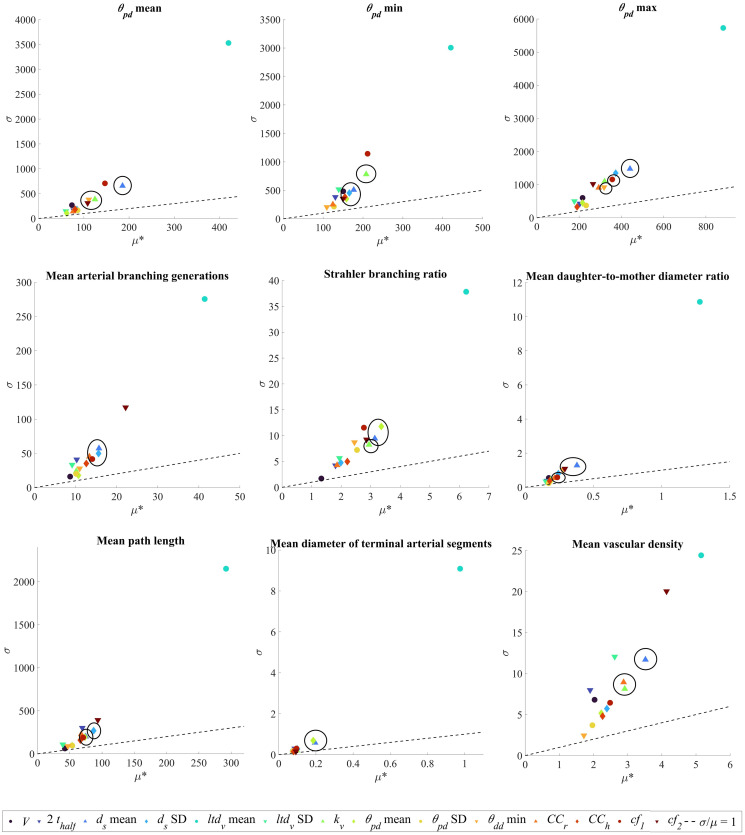
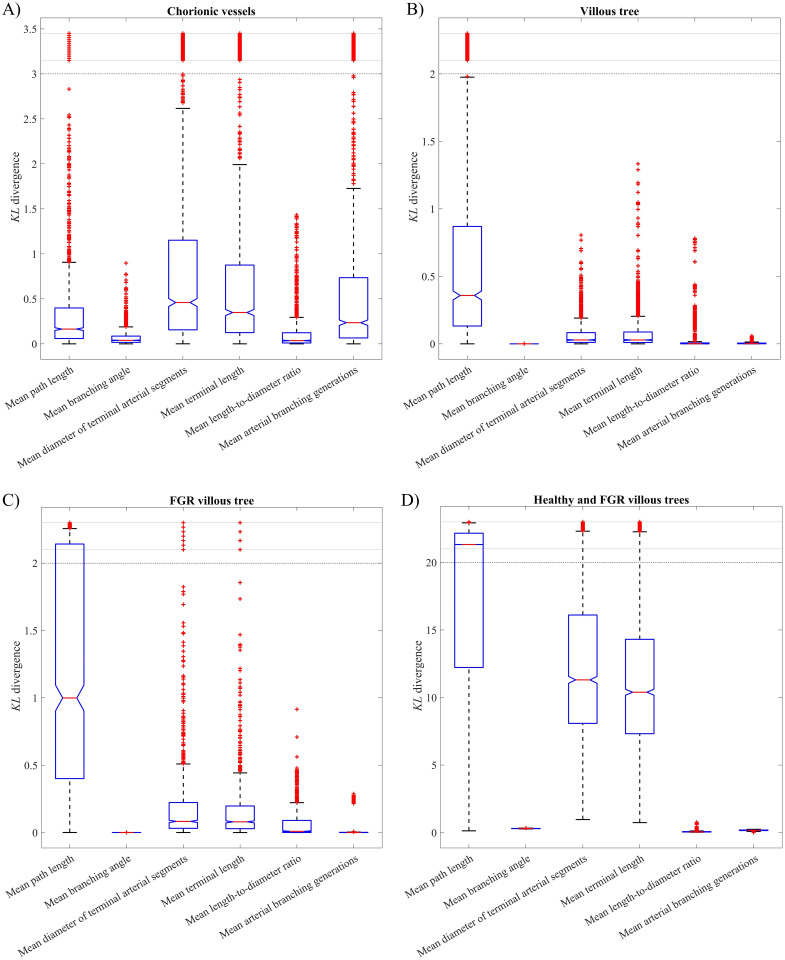
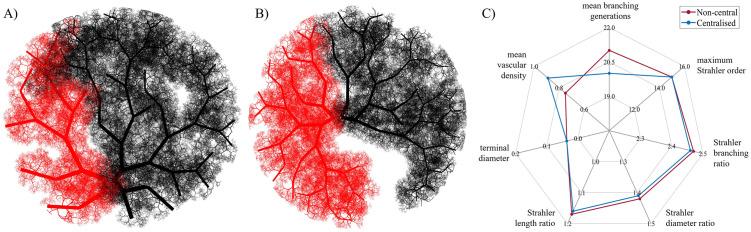
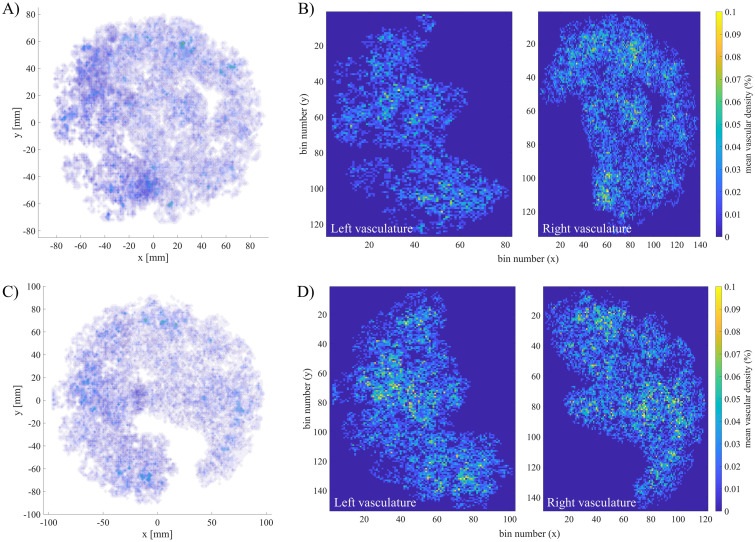
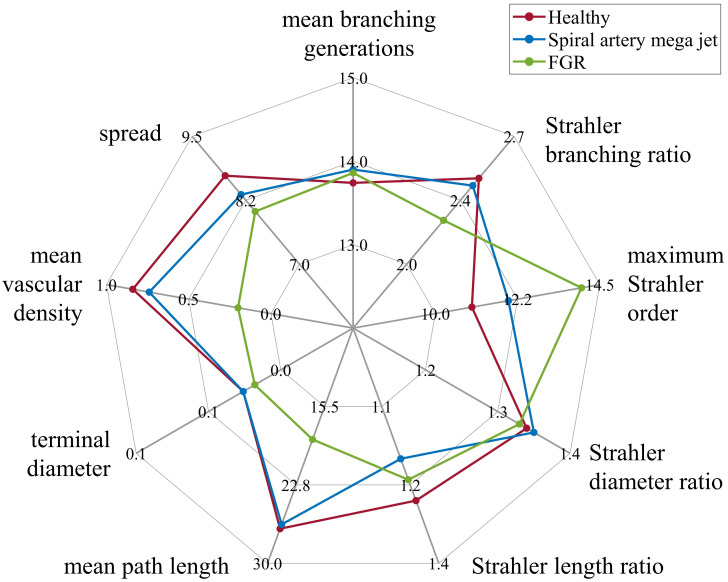
The placenta is crucial for a successful pregnancy, facilitating oxygen exchange and nutrient transport between mother and fetus. Complications like fetal growth restriction and pre-eclampsia are linked to placental vascular structure abnormalities, highlighting the need for early detection of placental health issues. Computational modelling offers insights into how vascular architecture correlates with flow and oxygenation in both healthy and dysfunctional placentas. These models use synthetic networks to represent the multiscale feto-placental vasculature, but current methods lack direct control over key morphological parameters like branching angles, essential for predicting placental dysfunction. We introduce a novel generative algorithm for creating in silico placentas, allowing user-controlled customisation of feto-placental vasculatures, both as individual components (placental shape, chorionic vessels, placentone) and as a complete structure. The algorithm is physiologically underpinned, following branching laws (i.e. Murray's Law), and is defined by four key morphometric statistics: vessel diameter, vessel length, branching angle and asymmetry. Our algorithm produces structures consistent with in vivo measurements and ex vivo observations. Our sensitivity analysis highlights how vessel length variations and branching angles play a pivotal role in defining the architecture of the placental vascular network. Moreover, our approach is stochastic in nature, yielding vascular structures with different topological metrics when imposing the same input settings. Unlike previous volume-filling algorithms, our approach allows direct control over key morphological parameters, generating vascular structures that closely resemble real vascular densities and allowing for the investigation of the impact of morphological parameters on placental function in upcoming studies.
胎盘对于成功妊娠至关重要,促进了母体和胎儿之间的氧气交换和营养物质运输。胎儿生长受限和子痫前期等并发症与胎盘血管结构异常有关,这凸显了早期发现胎盘健康问题的重要性。计算模型提供了关于血管结构如何与健康和功能失调胎盘中的血流和氧合相关联的深入了解。这些模型使用合成网络来表示多尺度的胎儿胎盘血管系统,但目前的方法缺乏对关键形态参数的直接控制,例如分支角度,这对于预测胎盘功能障碍至关重要。我们引入了一种新的生成算法,用于创建计算机模拟胎盘,允许用户控制胎儿胎盘血管系统的定制,包括单个组件(胎盘形状、绒毛膜血管、胎盘)和完整结构。该算法具有生理学基础,遵循分支定律(即默里定律),并由四个关键形态统计学定义:血管直径、血管长度、分支角度和不对称性。我们的算法生成的结构与体内测量和离体观察一致。我们的敏感性分析强调了血管长度变化和分支角度如何在定义胎盘血管网络结构中发挥关键作用。此外,我们的方法本质上是随机的,当施加相同的输入设置时,会产生具有不同拓扑度量的血管结构。与以前的体积填充算法不同,我们的方法可以直接控制关键形态参数,生成与真实血管密度非常相似的血管结构,并允许在即将进行的研究中调查形态参数对胎盘功能的影响。