Afshari A S, Howes G G, Shuster J R, Klein K G, McGinnis D, Martinović M M, Boardsen S A, Brown C R, Huang R, Hartley D P, Kletzing C A
Department of Physics and Astronomy, University of Iowa, Iowa City, IA, 52242, USA.
Space Science Center, Institute for the Study of Earth, Oceans, and Space and University of New Hampshire, Durham, NH, 03824, USA.
Nat Commun. 2024 Oct 7;15(1):7870. doi: 10.1038/s41467-024-52125-8.
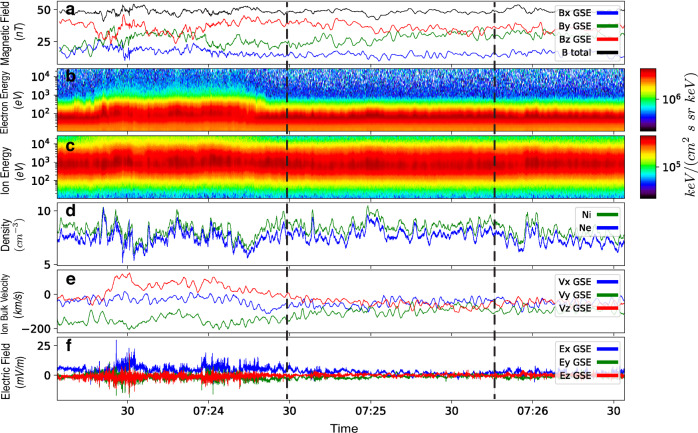
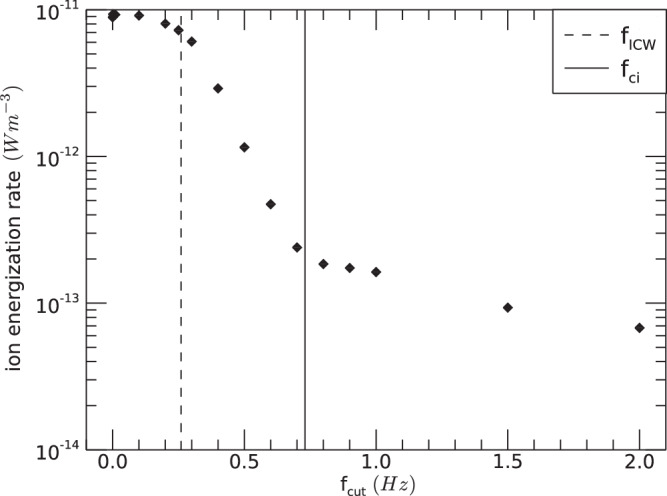
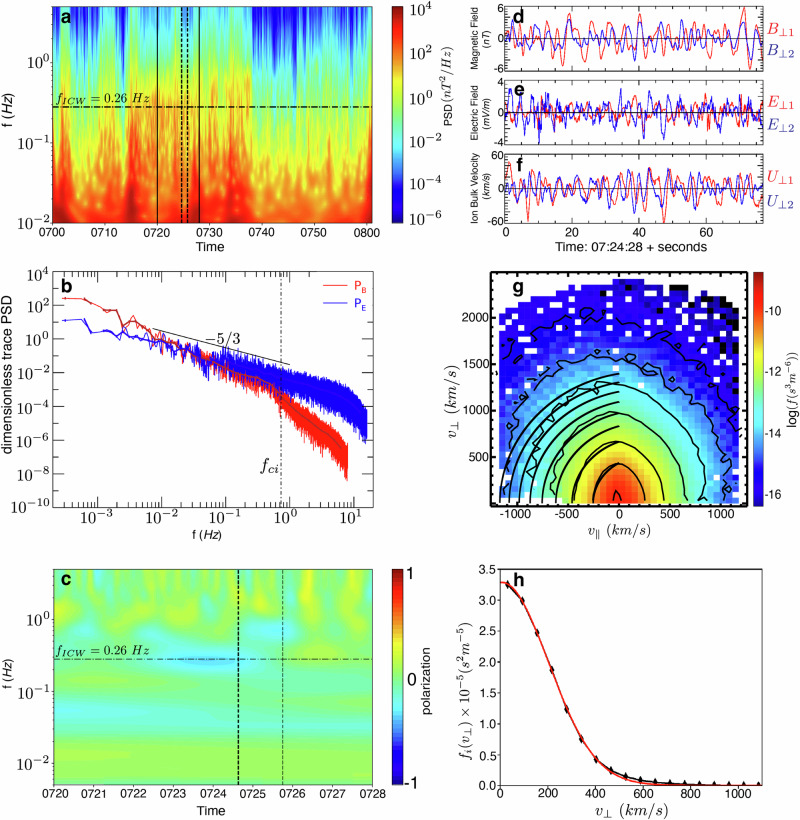
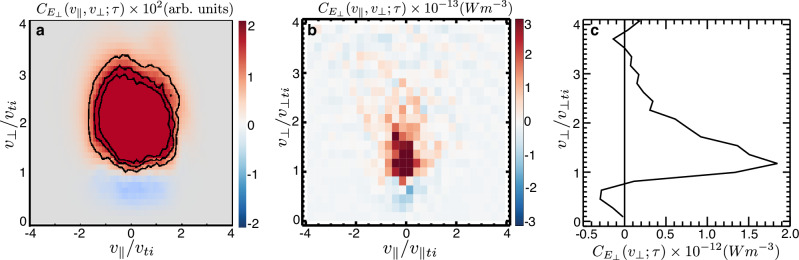
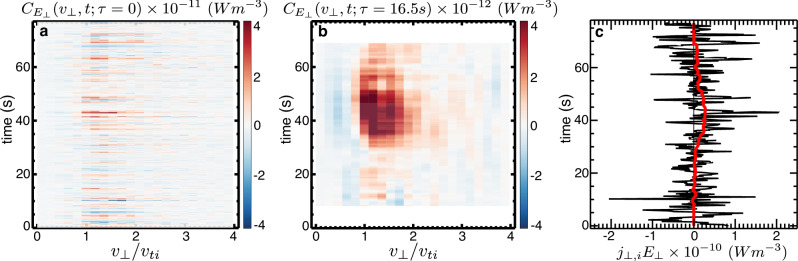
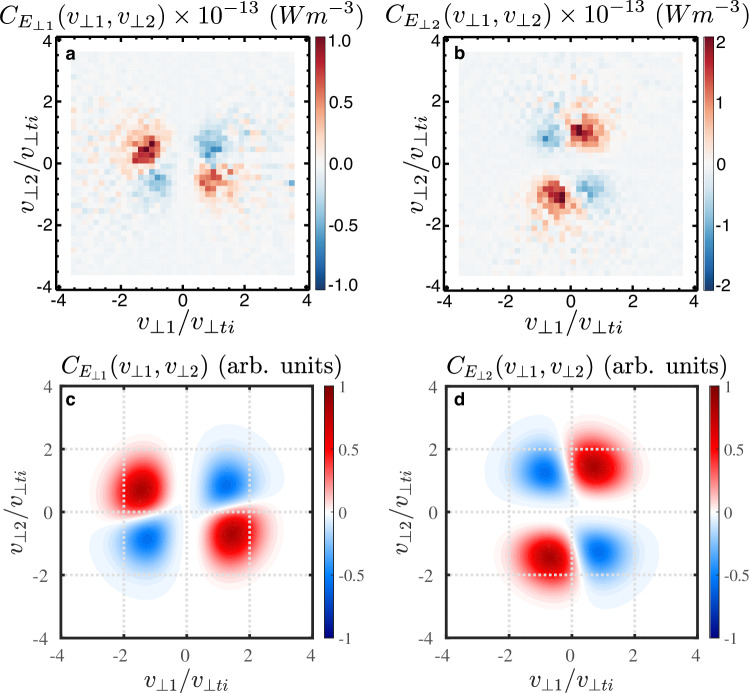
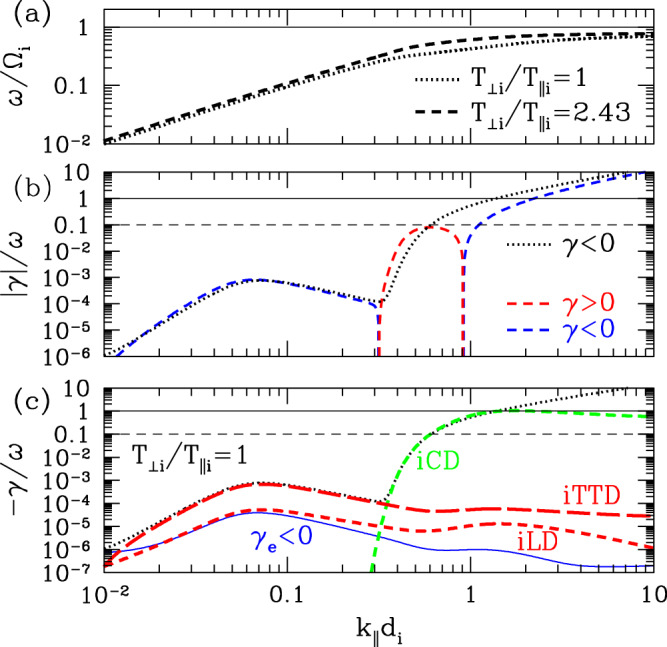
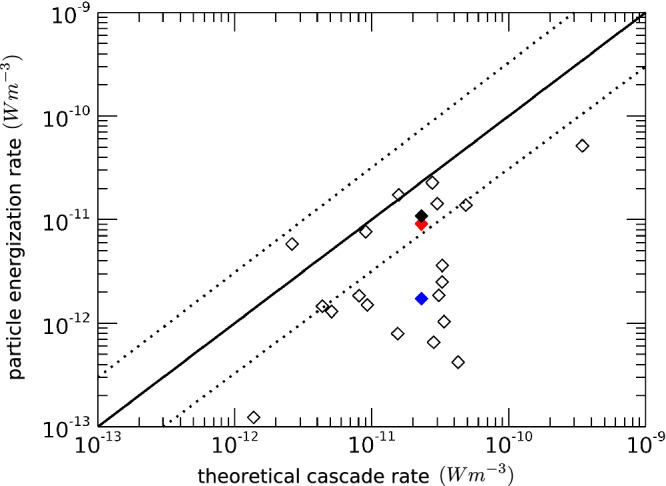
Plasma turbulence plays a key role in space and astrophysical plasma systems, enabling the energy of magnetic fields and plasma flows to be transported to particle kinetic scales at which the turbulence dissipates and heats the plasma. Identifying the physical mechanisms responsible for the dissipation of the turbulent energy is a critical step in developing the predictive capability for the turbulent heating needed by global models. In this work, spacecraft measurements of the electromagnetic fields and ion velocity distributions by the Magnetospheric Multiscale (MMS) mission are used to generate velocity-space signatures that identify ion cyclotron damping in Earth's turbulent magnetosheath, in agreement with analytical modeling. Furthermore, the rate of ion energization is directly quantified and combined with a previous analysis of the electron energization to identify the dominant channels of turbulent dissipation and determine the partitioning of energy among species in this interval.
等离子体湍流在空间和天体物理等离子体系统中起着关键作用,它能使磁场和等离子体流的能量传输到粒子动力学尺度,在该尺度下湍流耗散并加热等离子体。确定导致湍流能量耗散的物理机制是开发全球模型所需的湍流加热预测能力的关键一步。在这项工作中,磁层多尺度(MMS)任务对电磁场和离子速度分布进行的航天器测量被用于生成速度空间特征,以识别地球湍流磁鞘中的离子回旋阻尼,这与解析模型一致。此外,直接量化了离子加速率,并将其与先前对电子加速的分析相结合,以识别湍流耗散的主要通道,并确定该区间内各物种之间的能量分配。