School of Physics and Astronomy, Queen Mary University of London, London, E1 4NS, UK.
Lunar and Planetary Laboratory, University of Arizona, Tucson, AZ, 85719, USA.
Nat Commun. 2019 Feb 14;10(1):740. doi: 10.1038/s41467-019-08435-3.
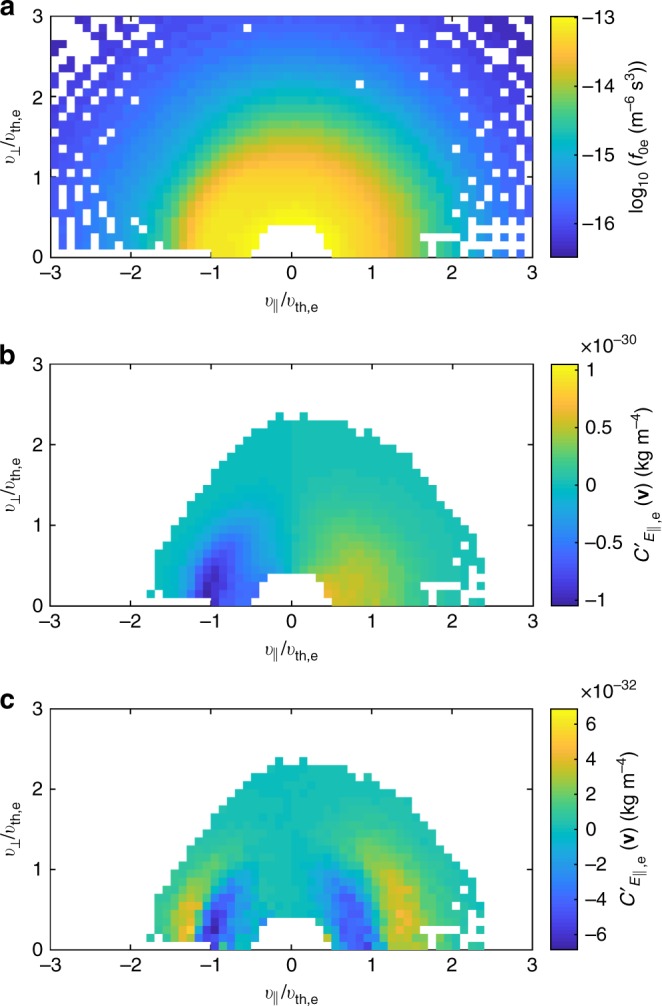
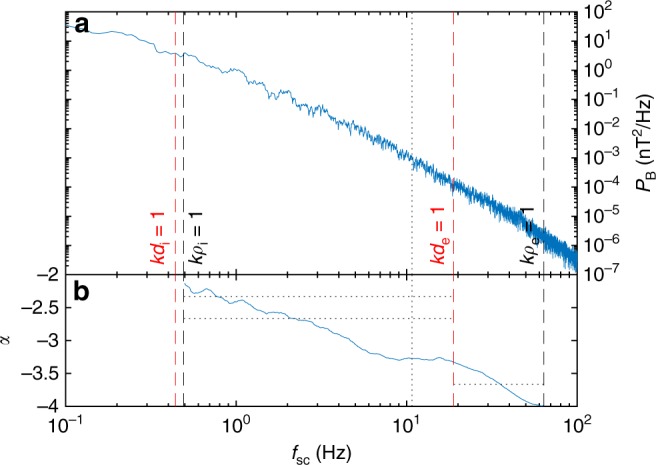
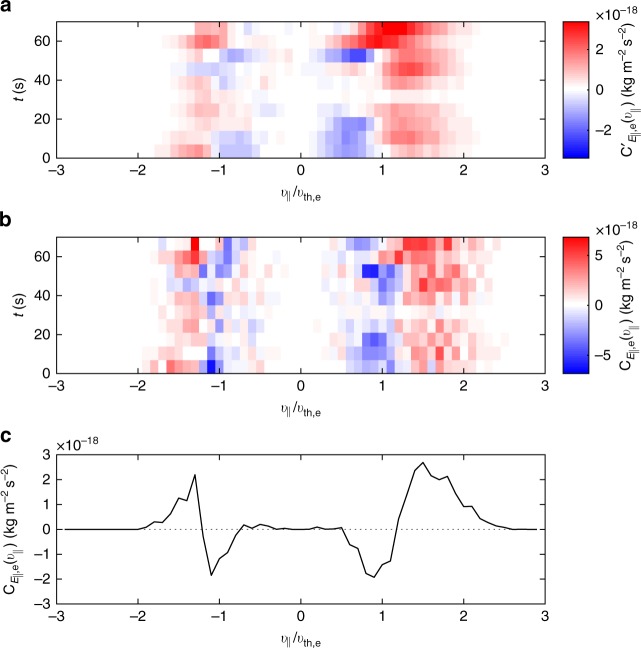
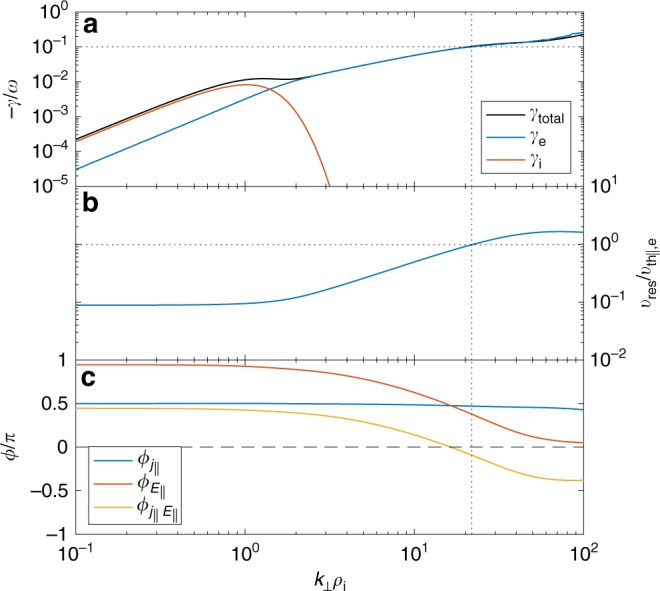
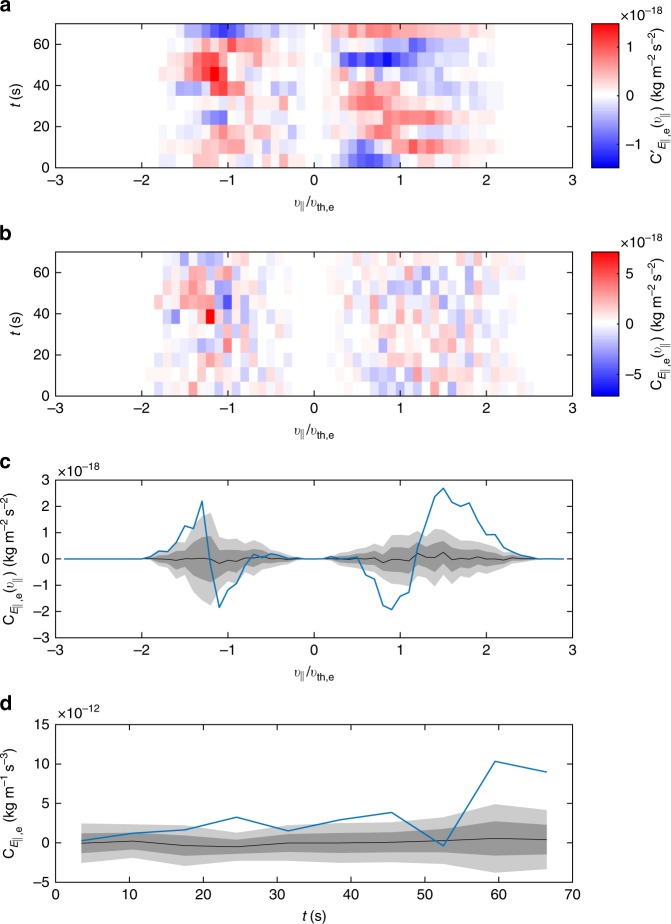
How turbulent energy is dissipated in weakly collisional space and astrophysical plasmas is a major open question. Here, we present the application of a field-particle correlation technique to directly measure the transfer of energy between the turbulent electromagnetic field and electrons in the Earth's magnetosheath, the region of solar wind downstream of the Earth's bow shock. The measurement of the secular energy transfer from the parallel electric field as a function of electron velocity shows a signature consistent with Landau damping. This signature is coherent over time, close to the predicted resonant velocity, similar to that seen in kinetic Alfven turbulence simulations, and disappears under phase randomisation. This suggests that electron Landau damping could play a significant role in turbulent plasma heating, and that the technique is a valuable tool for determining the particle energisation processes operating in space and astrophysical plasmas.
在弱碰撞空间和天体物理等离子体中,湍能耗散机制是一个重大的开放性问题。在这里,我们提出了一种场-粒子相关技术的应用,该技术可直接测量地球磁鞘中湍电磁场所携带的能量与电子之间的能量传递,地球磁鞘是太阳风在地球弓形激波下游的区域。对平行电场的长期能量传递作为电子速度函数的测量显示出与朗道阻尼一致的特征。该特征具有时间相干性,接近预测的共振速度,与在动力阿尔芬湍流模拟中看到的特征相似,并且在相位随机化下消失。这表明电子朗道阻尼可能在湍流动能加热中起重要作用,并且该技术是确定在空间和天体物理等离子体中起作用的粒子激励过程的有效工具。