The Second Surgical Department of Breast Cancer, Tianjin Medical University Cancer Institute & Hospital, Key Laboratory of Cancer Prevention and Therapy, National Clinical Research Center for Cancer, Tianjin, China.
School of Medicine, Nankai University, Tianjin, China.
Cell Commun Signal. 2024 Oct 7;22(1):478. doi: 10.1186/s12964-024-01861-x.
Cellular senescence can be induced in mammalian tissues by multiple stimuli, including aging, oncogene activation and loss of tumor suppressor genes, and various types of stresses. While senescence is a tumor suppressing mechanism when induced within premalignant or malignant tumor cells, senescent cells can promote cancer development through increased secretion of growth factors, cytokines, chemokines, extracellular matrix, and degradative enzymes, collectively known as senescence-associated secretory phenotype (SASP). Previous studies indicated that senescent cells, through SASP factors, stimulate tumor cell invasion that is a critical step in cancer cell metastasis.
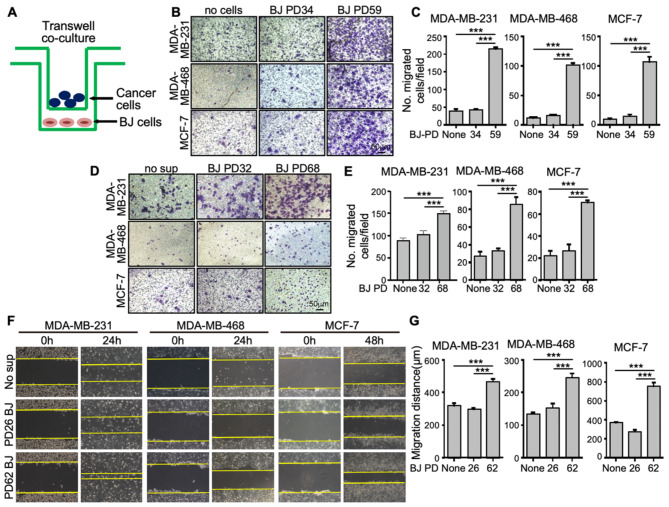
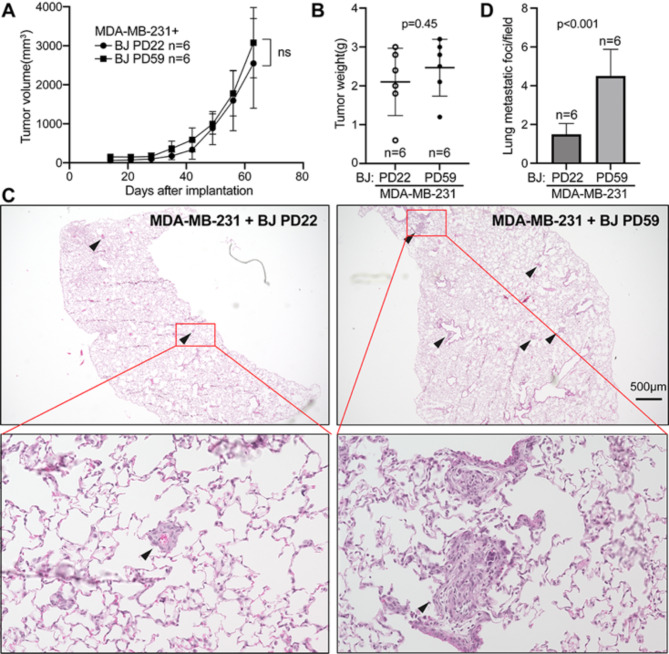
In the current study, we investigated the effect of senescent cells on the motility of breast cancer cells, which is another key step in cancer cell metastasis. We analyzed the motility of breast cancer cells co-cultured with senescent cells in vitro and metastasis of the breast cancer cells co-injected with senescent cells in orthotopic xenograft models. We also delineated the signaling pathway mediating the effect of senescent cells on cancer cell motility.
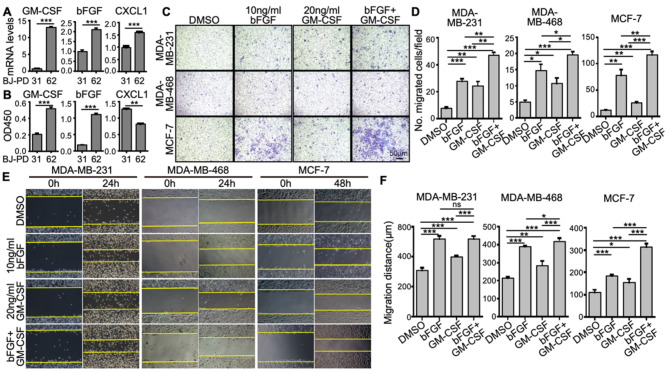
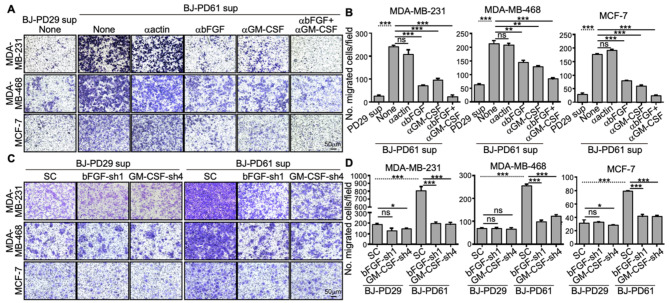
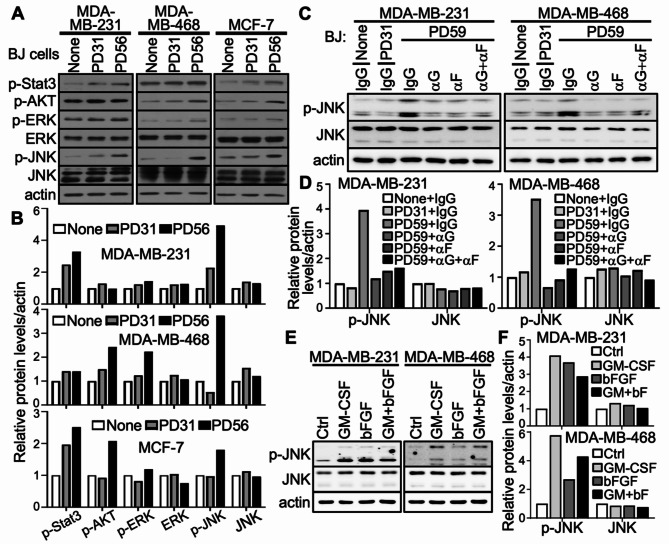
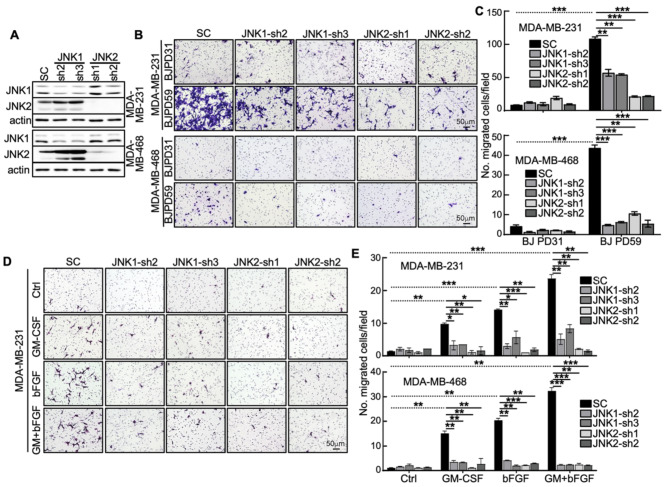
Our results indicate that senescent cells stimulated the migration of breast cancer cells through secretion of GM-CSF and bFGF, which in turn induced activation of the JNK pathway in cancer cells. More importantly, senescent cells promoted breast cancer metastasis, with a minimum effect on the primary tumor growth, in orthotopic xenograft mouse models.
These results have revealed an additional mechanism by which senescent cells promote tumor cell metastasis and tumor progression, and will potentially lead to identification of novel targets for cancer therapies that suppress metastasis, the major cause of cancer mortality.
哺乳动物组织中的细胞衰老可由多种刺激诱导,包括衰老、癌基因激活和肿瘤抑制基因丢失以及各种类型的应激。虽然衰老在诱导前恶性或恶性肿瘤细胞中是一种肿瘤抑制机制,但衰老细胞可以通过增加生长因子、细胞因子、趋化因子、细胞外基质和降解酶的分泌,共同称为衰老相关分泌表型(SASP),促进癌症发展。先前的研究表明,衰老细胞通过 SASP 因子刺激肿瘤细胞侵袭,这是癌细胞转移的关键步骤。
在本研究中,我们研究了衰老细胞对乳腺癌细胞迁移的影响,这是癌细胞转移的另一个关键步骤。我们分析了体外共培养衰老细胞和共注射衰老细胞的乳腺癌细胞的迁移以及乳腺癌细胞的转移。我们还描绘了介导衰老细胞对癌细胞迁移影响的信号通路。
我们的结果表明,衰老细胞通过 GM-CSF 和 bFGF 的分泌刺激乳腺癌细胞的迁移,进而诱导癌细胞中 JNK 通路的激活。更重要的是,衰老细胞在原位异种移植小鼠模型中促进了乳腺癌转移,对原发性肿瘤生长的影响最小。
这些结果揭示了衰老细胞促进肿瘤细胞转移和肿瘤进展的另一种机制,并可能导致鉴定出抑制转移的癌症治疗新靶点,转移是癌症死亡的主要原因。