Oyake Kazuaki, Watanabe Shota, Takeuchi Ayano, Yoshida Taiki, Shigematsu Takashi, Natsume Yuuki, Tsuzuku Shigeki, Kondo Kunitsugu, Fujishima Ichiro, Otaka Yohei, Tanaka Satoshi
Department of Physical Therapy, School of Health Sciences, Shinshu University, Nagano, Japan.
Department of Rehabilitation Medicine, Tokyo Bay Rehabilitation Hospital, Chiba, Japan.
Arch Rehabil Res Clin Transl. 2024 May 14;6(3):100344. doi: 10.1016/j.arrct.2024.100344. eCollection 2024 Sep.
To investigate the feasibility of poststroke interventions using a motivational instructional design model with occupational therapy (OT) and swallowing therapy (ST) and the model's potential physical and mental health effects.
An open-label, single-arm, feasibility study on the Attention, Relevance, Confidence, and Satisfaction model.
Two convalescent rehabilitation wards.
Twenty-five patients with stroke (N=25) (19 men; mean age, 62.4±11.9y; 61.9±36.8d from the first stroke) were recruited.
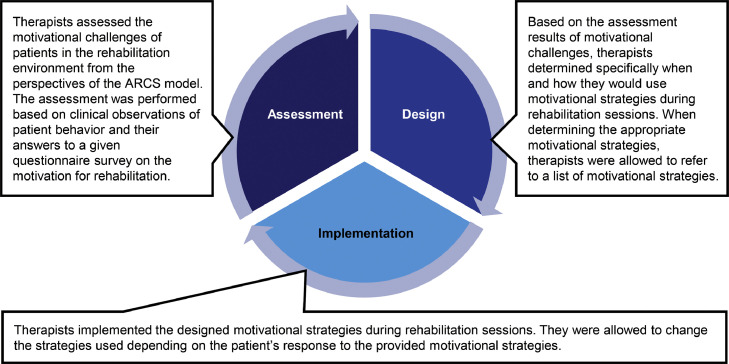
Twelve participants received a motivational approach based on the Attention, Relevance, Confidence, and Satisfaction model during OT (OT group), and 13 received it during ST (ST group). The intervention lasted 40-60 minutes daily, 5 days weekly, for 4 weeks.
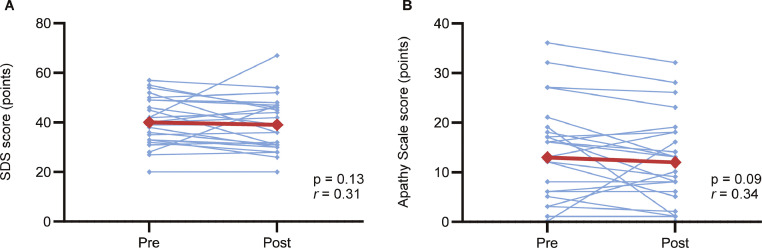
The primary outcomes included the dropout rate, an adverse event, and the participants' acceptability of the intervention. Paretic arm function was assessed in the OT group; swallowing ability was assessed in the ST group; and activities of daily living, depressive symptoms, and apathy were assessed in both groups.
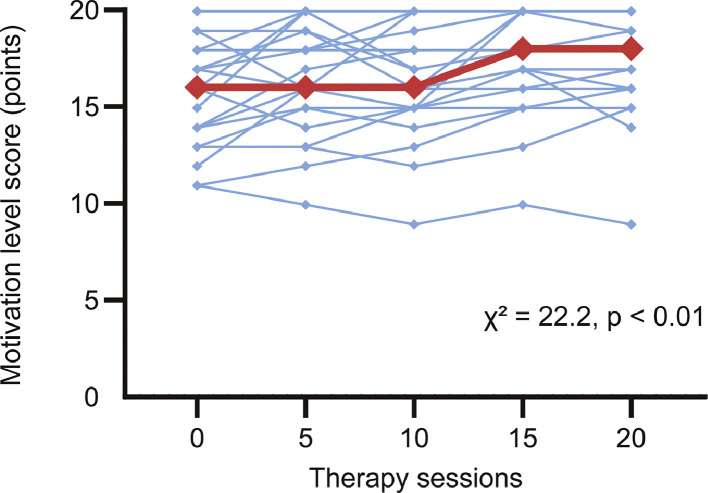
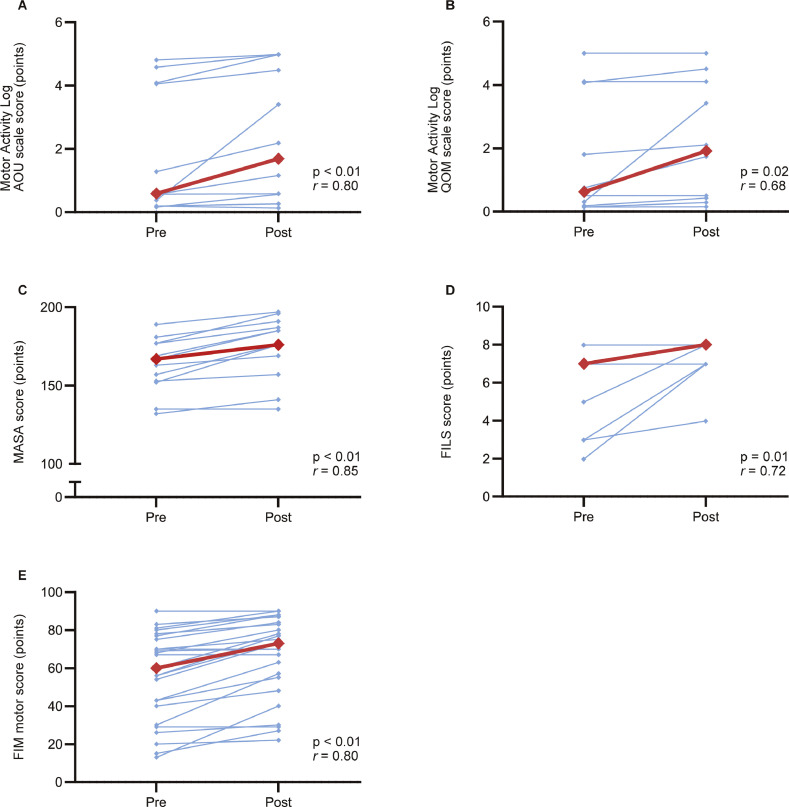
No participants dropped out of the intervention or experienced an adverse event. Twenty-one participants (84%) were satisfied with the intervention, and 19 (76%) hoped to continue receiving it. The OT group showed statistically significant improvements in paretic arm function and activities of daily living (Cohen's =0.68-0.77), whereas the ST group improved in swallowing ability, activities of daily living, and depressive symptoms (Cohen's =0.62-0.85).
The interventions using the motivational instructional model with OT and ST were feasible and could improve poststroke paretic arm function, swallowing ability, and activities of daily living after stroke.
探讨采用动机性教学设计模型结合职业治疗(OT)和吞咽治疗(ST)进行中风后干预的可行性以及该模型对身心健康的潜在影响。
一项关于注意力、关联性、信心和满意度模型的开放标签、单臂可行性研究。
两个康复疗养病房。
招募了25名中风患者(N = 25)(19名男性;平均年龄62.4±11.9岁;距首次中风61.9±36.8天)。
12名参与者在职业治疗期间接受基于注意力、关联性、信心和满意度模型的动机性方法(OT组),13名参与者在吞咽治疗期间接受该方法(ST组)。干预每天持续40 - 60分钟,每周5天,共4周。
主要结局包括脱落率、不良事件以及参与者对干预的可接受性。OT组评估患侧上肢功能;ST组评估吞咽能力;两组均评估日常生活活动、抑郁症状和冷漠情况。
没有参与者退出干预或经历不良事件。21名参与者(84%)对干预满意,19名(76%)希望继续接受干预。OT组在患侧上肢功能和日常生活活动方面有统计学显著改善(科恩效应量=0.68 - 0.77),而ST组在吞咽能力、日常生活活动和抑郁症状方面有所改善(科恩效应量=0.62 - 0.85)。
采用动机性教学模型结合OT和ST的干预措施是可行的,并且可以改善中风后的患侧上肢功能、吞咽能力和日常生活活动。