Jerom Jenat Pazheparambil, Jalal Ajmal, Sajan Ann Liya, Soman Reshma, Nair Raveendran Harikumaran, Narayanan Sunilkumar Puthenpurackal
School of Biosciences, Mahatma Gandhi University, Kottayam, 686560, Kerala, India.
NMR Facility, Institute for Integrated Programmes and Research in Basic Sciences. Mahatma Gandhi University, Kottayam, 686560, Kerala, India.
Heliyon. 2024 Sep 19;10(18):e38127. doi: 10.1016/j.heliyon.2024.e38127. eCollection 2024 Sep 30.
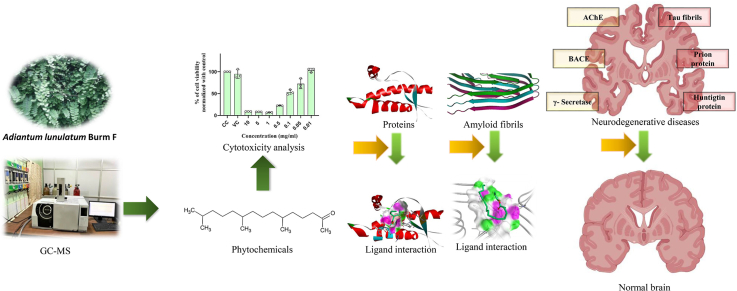
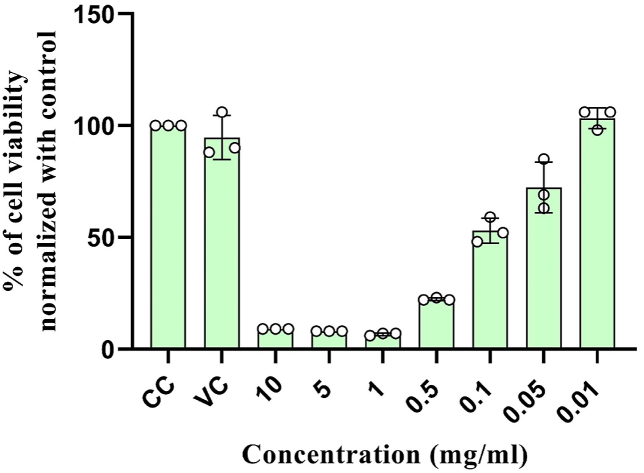
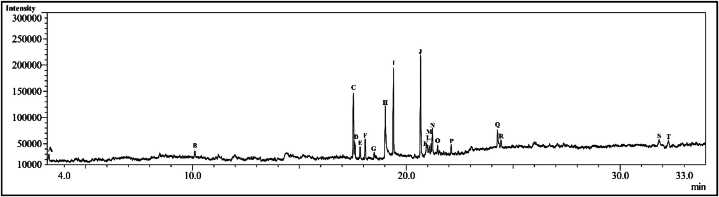
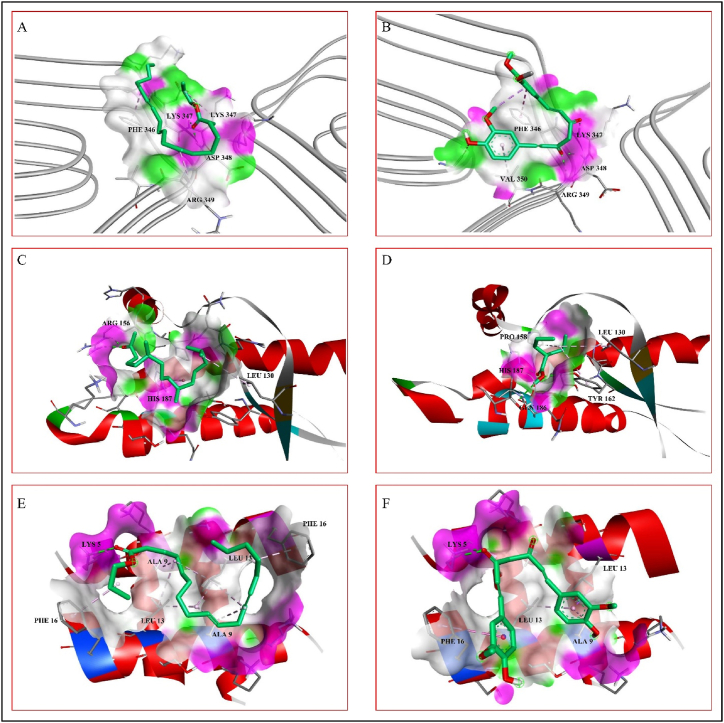
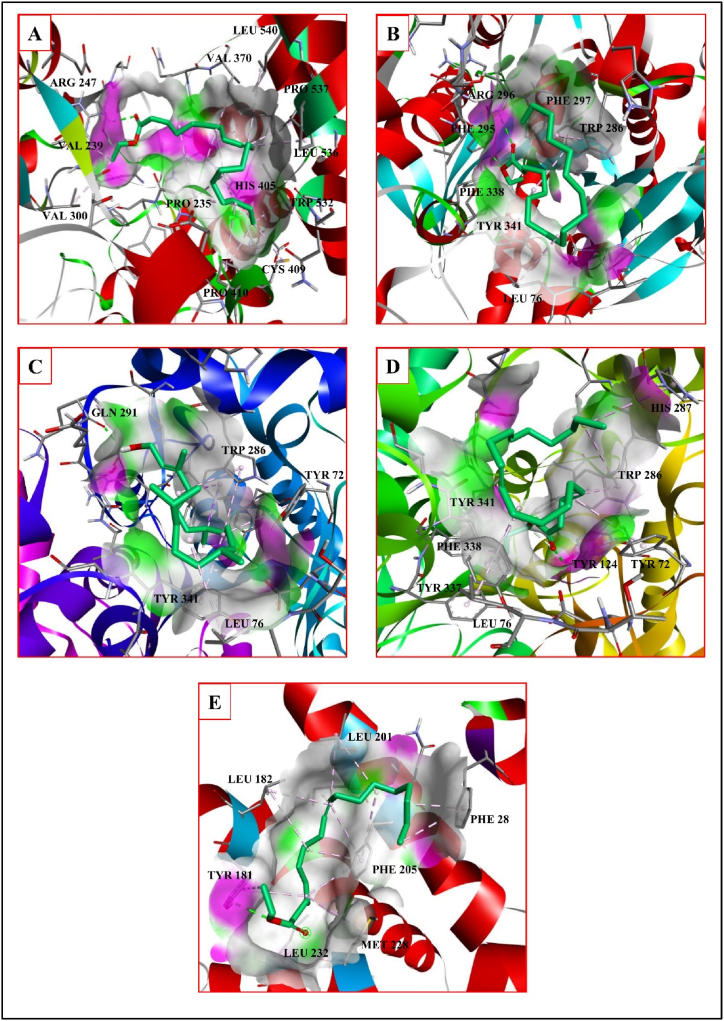
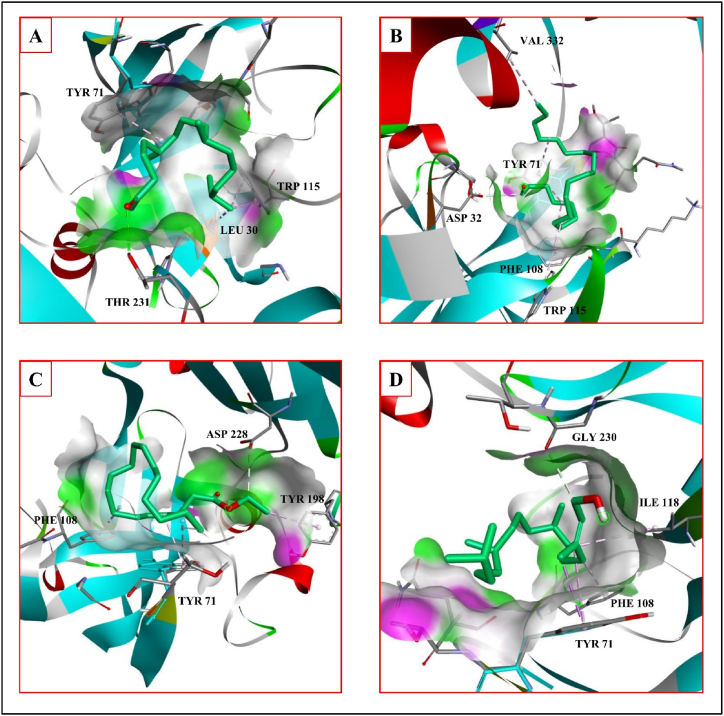
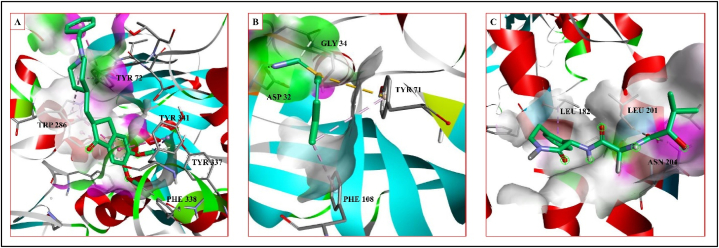
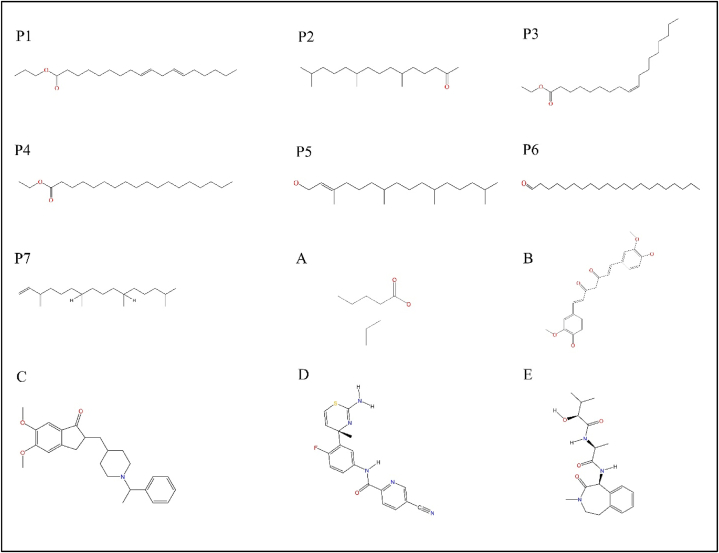
In neurodegenerative diseases, amyloid formation by some proteins cause neuronal damage and loss. To prevent this neuronal damage and loss certain pharmaceuticals are available. Many of these pharmaceuticals act on the neurodegenerative disease symptoms but not on the root cause. This study helps to detect more effective agents which directly act on the root cause and reduce the risk of neurodegenerative diseases. To identify new anti-amyloid agents, the folk medicinally important plant was collected, authenticated, dried, extracted with ethanol and analyzed by GC-MS method. The screening of the identified phytochemicals was done using the webservers swissADME and ProTox-II. MTT assay using Neuro-2a cell lines was carried out to determine the cytotoxicity of the extract. The interactions of these phytochemicals with the amyloid forming peptides and proteins were predicted using the molecular docking tools such as AutoDock Vina and BIOVIA discovery studio visualizer 2020. Through GC-MS analysis, 18 different volatile phytochemicals were identified from the ethanol extract. From this, 7 phytochemicals were selected based on the computational non-toxicity prediction. cytotoxicity analysis of the ethanol extract using Neuro-2a cell lines detected the IC value of 0.09 mg/ml. Of these, the phytochemical (trans, trans-9, 12-Octadecadienoic acid, propyl ester) interacts with tau, and huntingtin proteins, (2-Pentadecanone, 6, 10, 14-trimethyl-) interacts with prion protein. The phytochemicals , (Ethyl oleate), (Octadecanoic acid, ethyl ester), and Phytol) interact with acetylcholinesterase. , , and (Henicosanal), interact with BACE-1. The phytochemical interacts with γ- Secretase. The interaction of P2 and P5 with BACE-1 and P3 with γ- Secretase show better inhibition in inhibitory constant ( ) analysis. These phytochemicals have been predicted to show significant potential against the formation or breakdown of peptide/protein amyloids, and further studies are necessary to develop them into anti-amyloid agents.
在神经退行性疾病中,某些蛋白质形成淀粉样蛋白会导致神经元损伤和丧失。为防止这种神经元损伤和丧失,有一些药物可供使用。这些药物中的许多作用于神经退行性疾病的症状,而非根本原因。本研究有助于检测更有效的药物,这些药物直接作用于根本原因并降低神经退行性疾病的风险。为了鉴定新的抗淀粉样蛋白药物,收集了具有重要民间药用价值的植物,进行了鉴定、干燥、用乙醇提取,并通过气相色谱 - 质谱联用(GC - MS)方法进行分析。使用swissADME和ProTox - II网络服务器对鉴定出的植物化学物质进行筛选。使用Neuro - 2a细胞系进行MTT试验以确定提取物的细胞毒性。使用诸如AutoDock Vina和BIOVIA discovery studio visualizer 2020等分子对接工具预测这些植物化学物质与形成淀粉样蛋白的肽和蛋白质之间的相互作用。通过GC - MS分析,从乙醇提取物中鉴定出18种不同的挥发性植物化学物质。据此,基于计算无毒预测选择了7种植物化学物质。使用Neuro - 2a细胞系对乙醇提取物进行细胞毒性分析,检测到IC值为0.09 mg/ml。其中,植物化学物质(反式,反式 - 9,12 - 十八碳二烯酸丙酯)与tau蛋白和亨廷顿蛋白相互作用,(2 - 十五烷酮,6,10,14 - 三甲基 - )与朊病毒蛋白相互作用。植物化学物质(油酸乙酯)、(十八烷酸乙酯)和叶绿醇与乙酰胆碱酯酶相互作用。(二十一烷醛)与β - 分泌酶1(BACE - 1)相互作用。植物化学物质与γ - 分泌酶相互作用。在抑制常数(Ki)分析中,P2和P5与BACE - 1以及P3与γ - 分泌酶的相互作用显示出更好的抑制作用。这些植物化学物质预计对肽/蛋白质淀粉样蛋白的形成或分解具有显著潜力,进一步的研究有必要将它们开发成抗淀粉样蛋白药物。