Istituto Nazionale di Genetica Molecolare "Romeo ed Enrica Invernizzi" (INGM), Milan 20122, Italy.
Department of Biosciences, University of Milan, Milan 20133, Italy.
Sci Adv. 2024 Oct 11;10(41):eado2134. doi: 10.1126/sciadv.ado2134. Epub 2024 Oct 9.
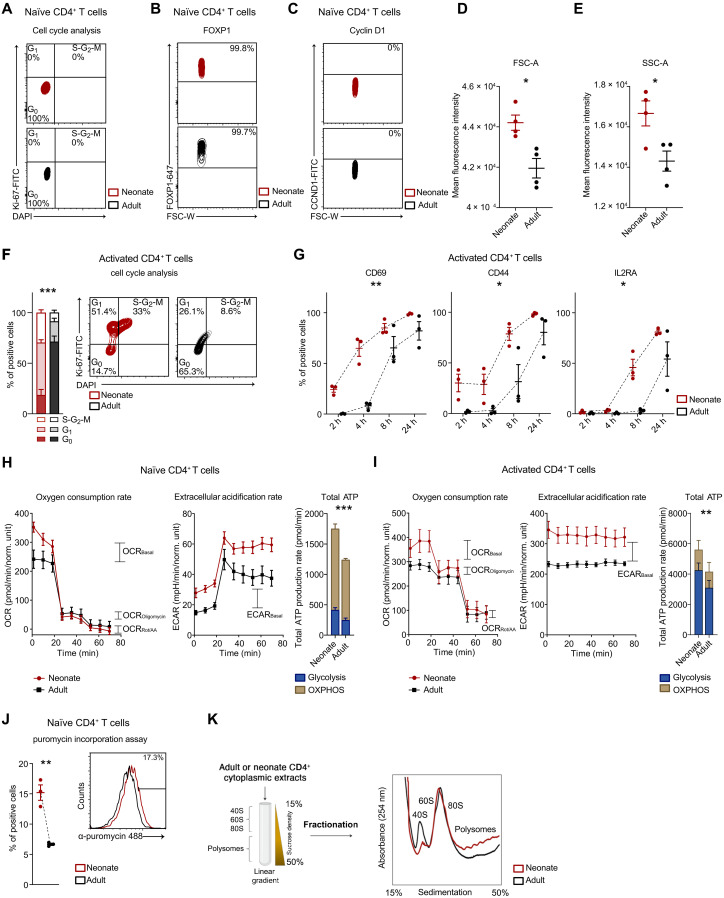
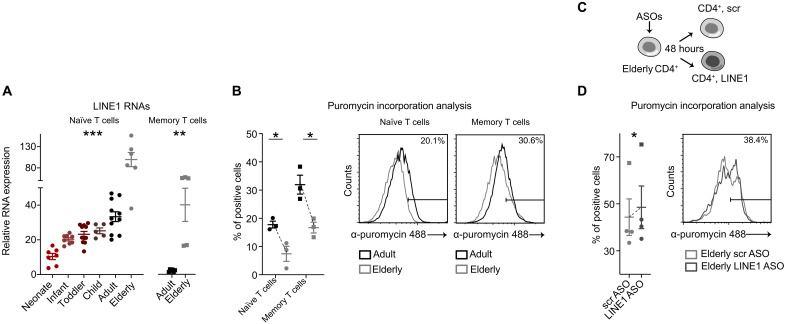
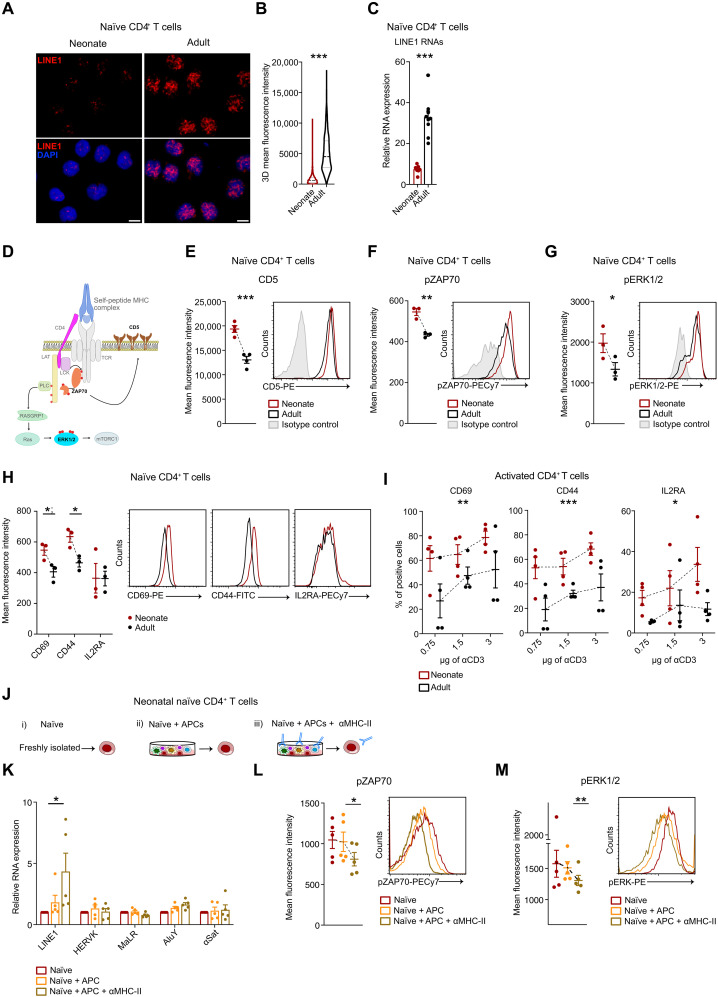
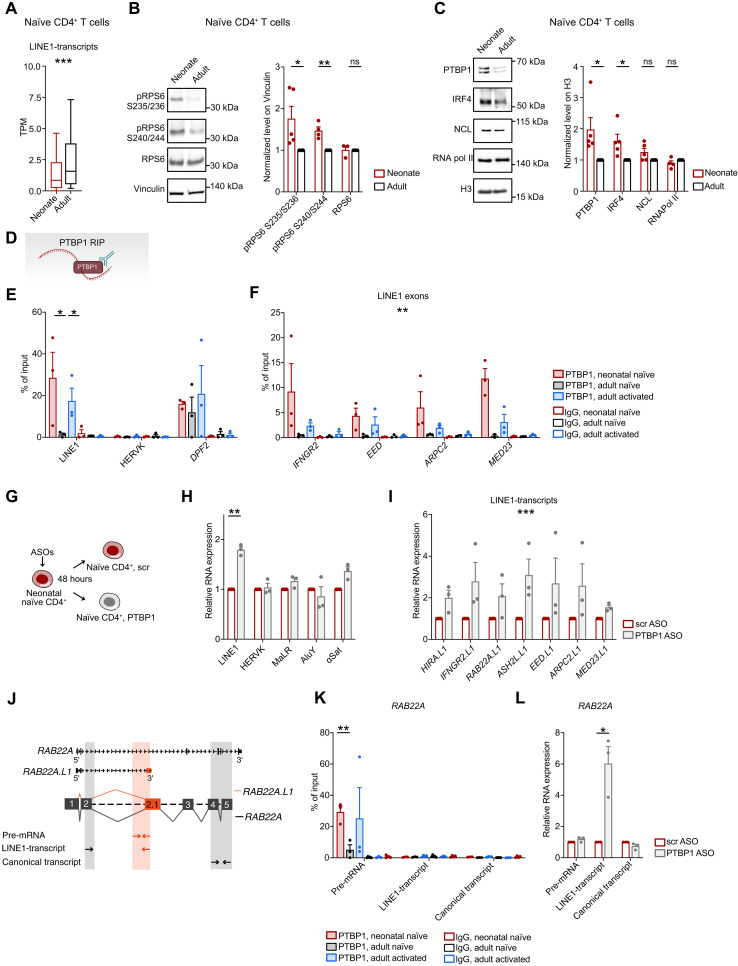
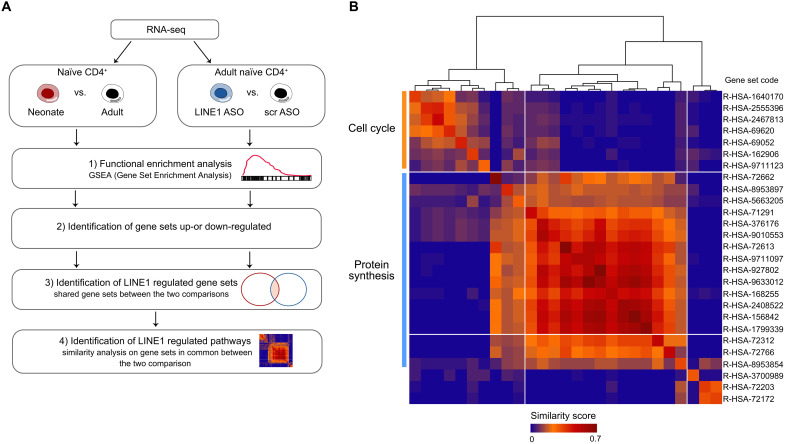
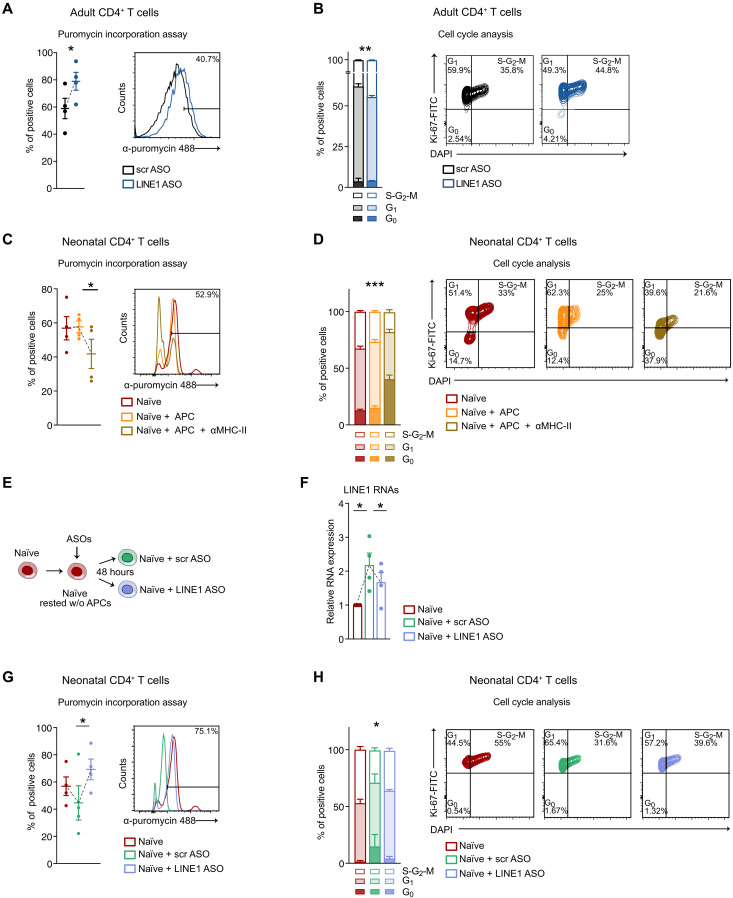
The molecular mechanisms responsible for the heightened reactivity of quiescent T cells in human early life remain largely elusive. Our previous research identified that quiescent adult naïve CD4 T cells express LINE1 (long interspersed nuclear elements 1) spliced in previously unknown isoforms, and their down-regulation marks the transition to activation. Here, we unveil that neonatal naïve T cell quiescence is characterized by enhanced energy production and protein synthesis. This phenotype is associated with the absence of LINE1 expression attributed to tonic T cell receptor/mTOR complex 1 (mTORC1) signaling and (polypyrimidine tract-binding protein 1 (PTBP1)-mediated LINE1 splicing suppression. The absence of LINE1 expression primes these cells for rapid execution of the activation program by directly regulating protein synthesis. LINE1 expression progressively increases in childhood and adults, peaking in elderly individuals, and, by decreasing protein synthesis, contributes to immune senescence in aging. Our study proposes LINE1 as a critical player of human T cell function across the human life span.
静止 T 细胞在人类生命早期反应性增强的分子机制在很大程度上仍难以捉摸。我们之前的研究表明,静止的成人幼稚 CD4 T 细胞表达以先前未知的剪接异构体形式剪接的 LINE1(长散布核元件 1),其下调标志着向激活的转变。在这里,我们揭示了新生儿幼稚 T 细胞静止的特征是增强的能量产生和蛋白质合成。这种表型与 LINE1 表达的缺失有关,归因于紧张的 T 细胞受体/mTOR 复合物 1(mTORC1)信号和(多嘧啶 tract 结合蛋白 1(PTBP1)介导的 LINE1 剪接抑制。LINE1 表达的缺失通过直接调节蛋白质合成,为这些细胞快速执行激活程序做好准备。LINE1 表达在儿童和成人中逐渐增加,在老年人中达到峰值,并通过降低蛋白质合成,导致衰老中的免疫衰老。我们的研究提出 LINE1 是人类 T 细胞在整个生命跨度中功能的关键参与者。