Pontifícia Universidade Católica do Paraná, PPGO-PUCPR (Curitiba/PR, Brazil).
Harvard University, School of Dentistry, Department of Orthodontics (Boston, USA).
Dental Press J Orthod. 2024 Oct 7;29(5):e24spe5. doi: 10.1590/2177-6709.29.5.e24spe5. eCollection 2024.
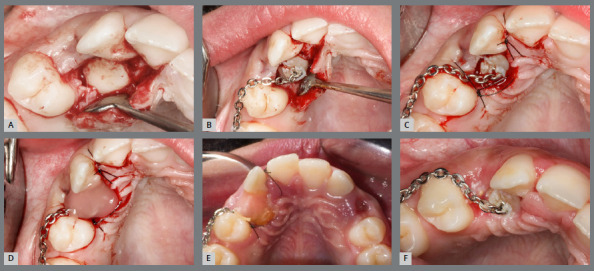
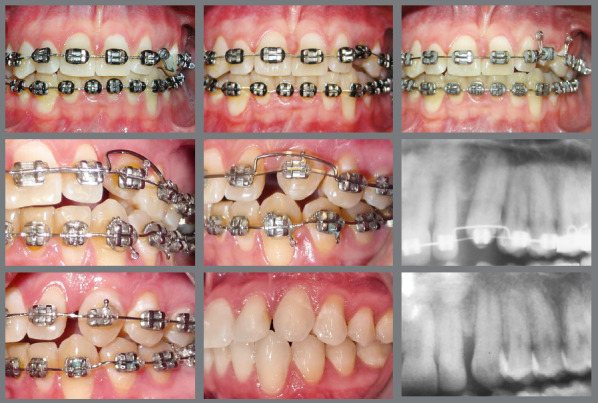
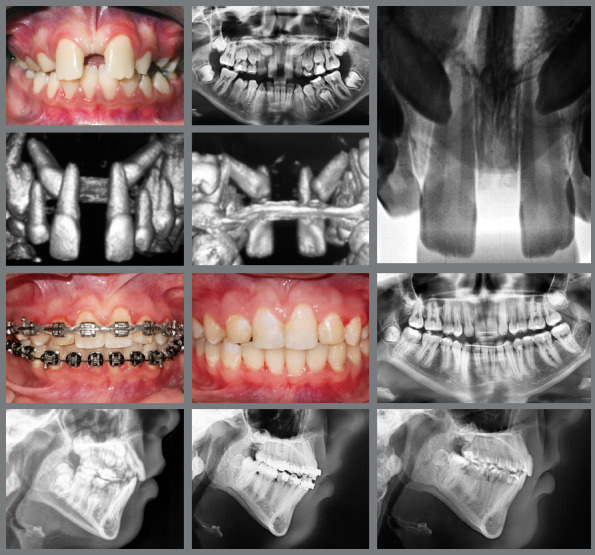
The long pathway that the canines take as they emerge into the maxillary arch makes them vulnerable to disruption during their natural emergence time. The process of planning treatment for impacted maxillary canine (IMC) presents significant challenges, underscoring the need for careful consideration and expertise.
The aim of this article was to shed light on these complexities by discussing clinical case studies involving IMC, providing insights into the intricacies of their management.
The management of IMC within orthodontics presents a multifaceted challenge that include the necessity for precise diagnostic processes, prudent use of cone beam computed tomography (CBCT), the strategic selection between open and closed exposure techniques, a in-depth understanding of the specific orthodontic biomechanics involved, and a keen awareness of potential adverse outcomes such as ankylosis, prolonged treatment times, root resorption, and additional complications.
犬齿在进入上颌弓时所走的长路径使它们在自然萌出过程中容易受到干扰。规划埋伏上颌尖牙(IMC)的治疗过程具有重大挑战,这凸显了需要仔细考虑和专业知识。
本文旨在通过讨论涉及 IMC 的临床病例研究,深入了解其管理的复杂性,阐明这些复杂性。
正畸中 IMC 的管理是一个多方面的挑战,包括需要精确的诊断过程、谨慎使用锥形束计算机断层扫描 (CBCT)、在开放和闭合暴露技术之间进行战略选择、深入了解涉及的特定正畸生物力学,以及敏锐地意识到潜在的不良后果,如骨粘连、治疗时间延长、牙根吸收和其他并发症。