Department of Genetic Epidemiology in Psychiatry, Central Institute of Mental Health, Medical Faculty Mannheim, Heidelberg University, Mannheim, Germany.
Department of Psychiatry, Yale University School of Medicine, New Haven, CT, USA.
Transl Psychiatry. 2024 Oct 9;14(1):428. doi: 10.1038/s41398-024-03139-9.
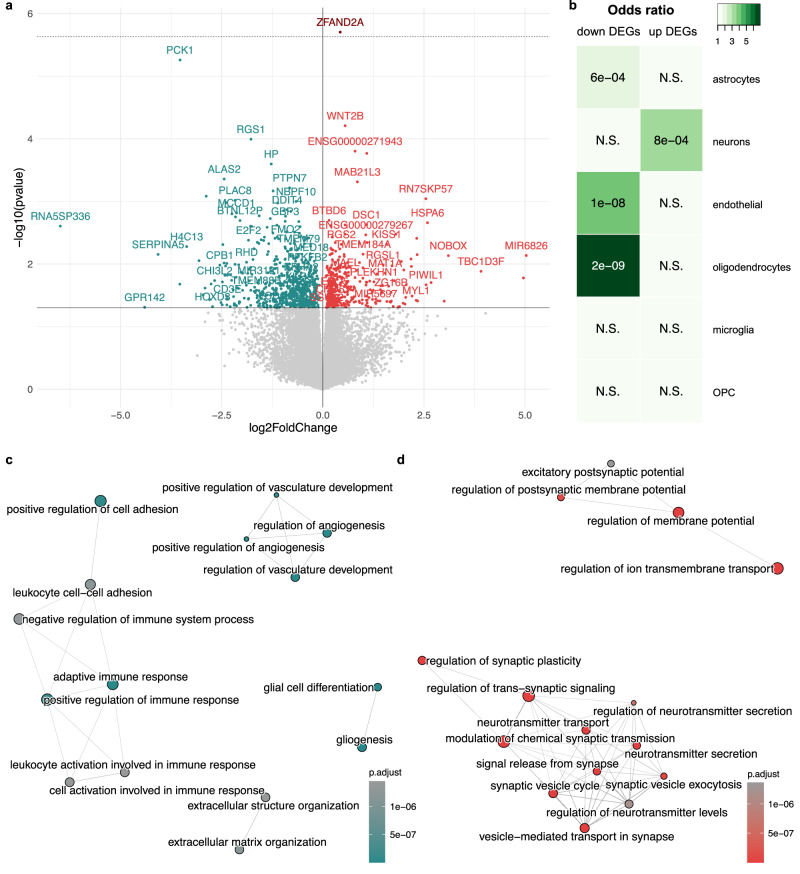
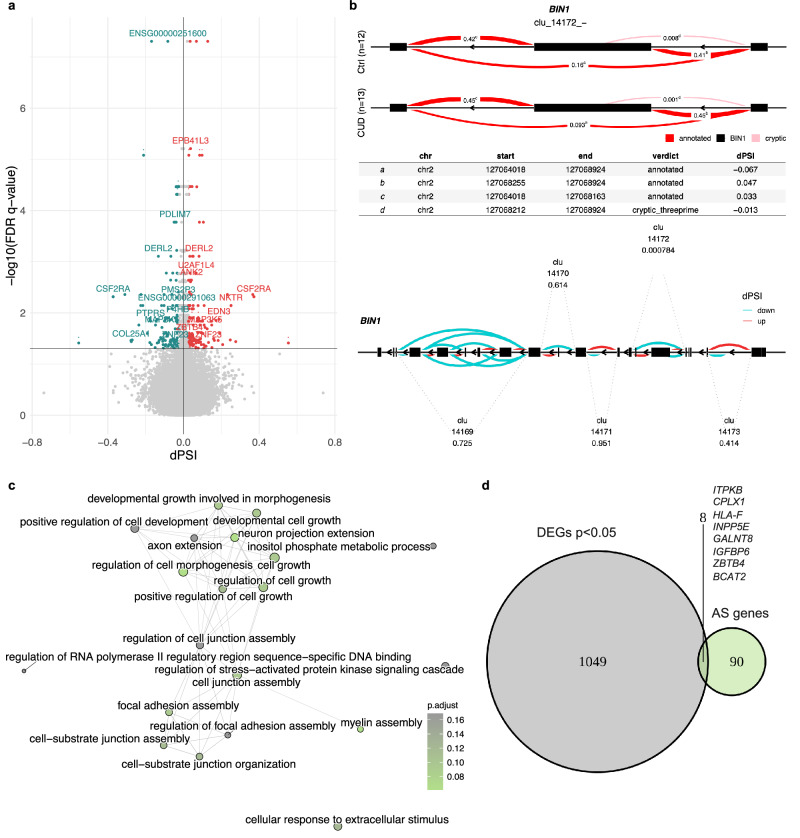
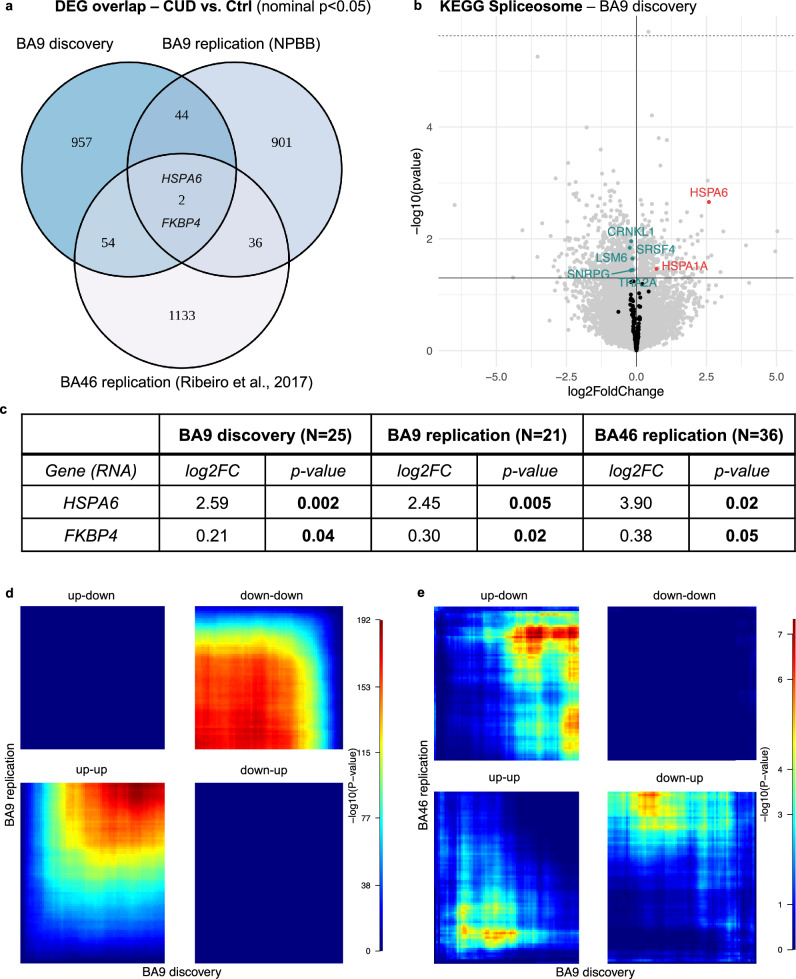
Structural and functional changes of the brain are assumed to contribute to excessive cocaine intake, craving, and relapse in cocaine use disorder (CUD). Epigenetic and transcriptional changes were hypothesized as a molecular basis for CUD-associated brain alterations. Here we performed a multi-omics study of CUD by integrating epigenome-wide methylomic (N = 42) and transcriptomic (N = 25) data from the same individuals using postmortem brain tissue of Brodmann Area 9 (BA9). Of the N = 1 057 differentially expressed genes (p < 0.05), one gene, ZFAND2A, was significantly upregulated in CUD at transcriptome-wide significance (q < 0.05). Differential alternative splicing (AS) analysis revealed N = 98 alternatively spliced transcripts enriched in axon and dendrite extension pathways. Strong convergent overlap in CUD-associated expression deregulation was found between our BA9 cohort and independent replication datasets. Epigenomic, transcriptomic, and AS changes in BA9 converged at two genes, ZBTB4 and INPP5E. In pathway analyses, synaptic signaling, neuron morphogenesis, and fatty acid metabolism emerged as the most prominently deregulated biological processes. Drug repositioning analysis revealed glucocorticoid receptor targeting drugs as most potent in reversing the CUD expression profile. Our study highlights the value of multi-omics approaches for an in-depth molecular characterization and provides insights into the relationship between CUD-associated epigenomic and transcriptomic signatures in the human prefrontal cortex.
大脑的结构和功能变化被认为是导致可卡因使用障碍(CUD)过度摄入、渴望和复发的原因。表观遗传和转录变化被假设为 CUD 相关大脑改变的分子基础。在这里,我们通过整合来自同一个体的全基因组甲基化(N=42)和转录组(N=25)数据,对 CUD 进行了多组学研究,使用的是死后大脑的 Brodmann 区域 9(BA9)组织。在 N=1057 个差异表达基因(p<0.05)中,有一个基因 ZFAND2A 在转录组水平上显著上调(q<0.05)。差异剪接(AS)分析显示,N=98 个在轴突和树突延伸途径中富集的选择性剪接转录本。我们在 BA9 队列中发现了与独立复制数据集之间存在强烈的一致性表达失调的重叠。BA9 中的表观遗传、转录组和 AS 变化在两个基因 ZBTB4 和 INPP5E 处汇聚。在通路分析中,突触信号、神经元形态发生和脂肪酸代谢成为最明显失调的生物学过程。药物再定位分析表明,糖皮质激素受体靶向药物在逆转 CUD 表达谱方面最有效。我们的研究强调了多组学方法对于深入分子特征描述的价值,并提供了关于人类前额叶皮层中 CUD 相关表观遗传和转录特征之间关系的见解。