Adekunbi Daniel A, Huber Hillary F, Benavides Gloria A, Tian Ran, Li Cun, Nathanielsz Peter W, Zhang Jianhua, Darley-Usmar Victor, Cox Laura A, Salmon Adam B
Department of Molecular Medicine and Barshop Institute for Longevity and Aging Studies, University of Texas Health Science Center at San Antonio, Texas, USA.
Southwest National Primate Research Center, Texas Biomedical Research Institute, San Antonio, Texas, USA.
bioRxiv. 2024 Sep 24:2024.09.19.613684. doi: 10.1101/2024.09.19.613684.
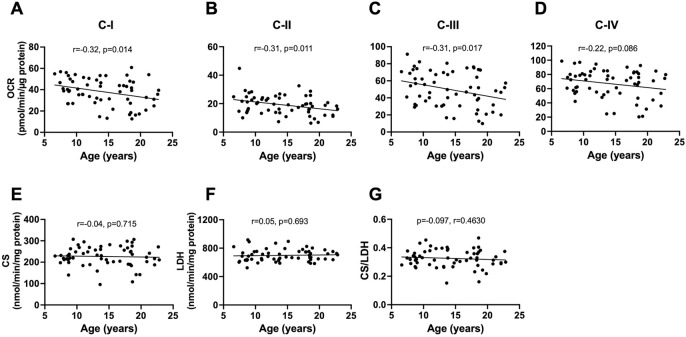
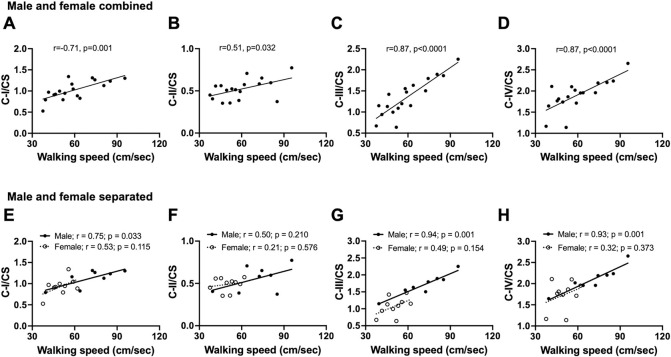
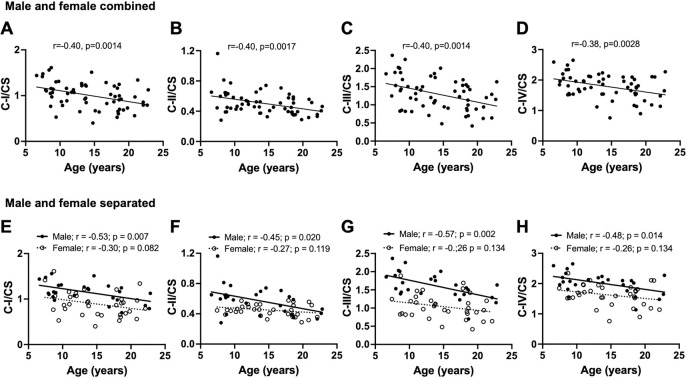
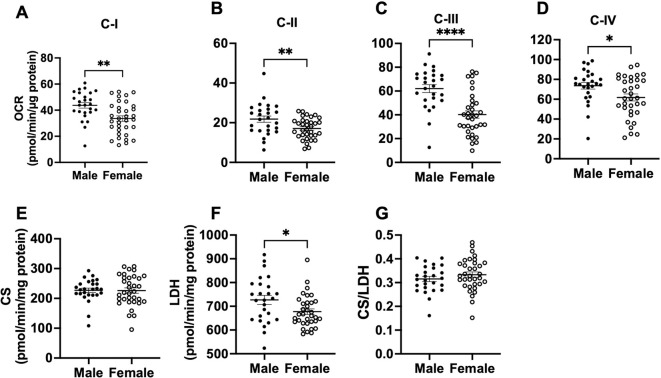
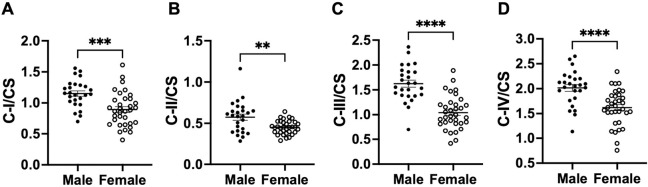
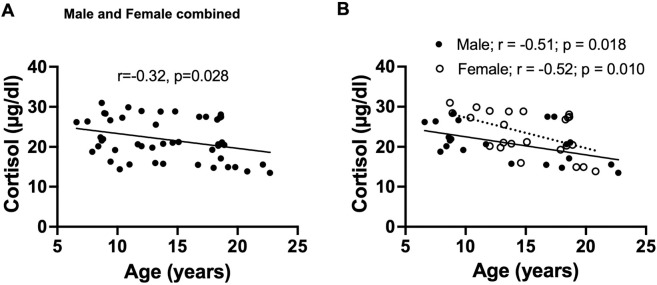
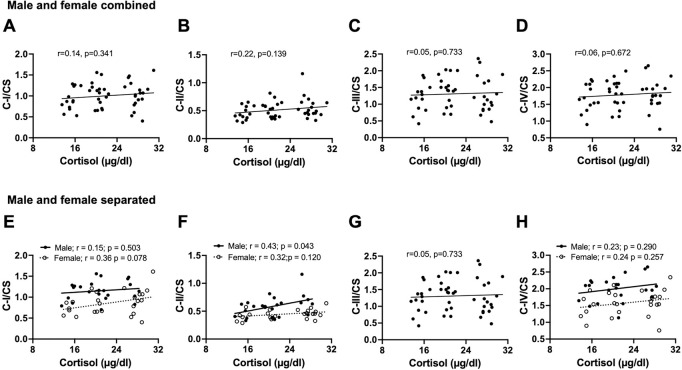
Mitochondria play a crucial role in brain aging due to their involvement in bioenergetics, neuroinflammation and brain steroid synthesis. Mitochondrial dysfunction is linked to age-related neurodegenerative diseases, including Alzheimer's disease and Parkinson's disease. We investigated changes in the activities of the electron transport chain (ETC) complexes in normally aging baboon brains and determined how these changes relate to donor sex, morning cortisol levels, and walking speed. Using a novel approach, we assessed mitochondrial bioenergetics from frozen prefrontal cortex (PFC) tissues from a large cohort (60 individuals) of well-characterized aging baboons (6.6-22.8 years, approximately equivalent to 26.4-91.2 human years). Aging was associated with a decline in mitochondrial ETC complexes in the PFC, which was more pronounced when activities were normalized for citrate synthase activity, suggesting that the decline in respiration is predominantly driven by changes in the specific activity of individual complexes rather than changes in mitochondrial number. Moreover, when donor sex was used as a covariate, we found that mitochondrial respiration was preserved with age in females, whereas males showed significant loss of ETC activity with age. Males had higher activities of each individual ETC complex and greater lactate dehydrogenase activity relative to females. Circulating cortisol levels correlated only with complex II-linked respiration in males. We also observed a robust positive predictive relationship between walking speed and respiration linked to complexes I, III, and IV in males but not in females. This data reveals a previously unknown link between aging and bioenergetics across multiple tissues linking frailty and bioenergetic function. This study highlights a potential molecular mechanism for sexual dimorphism in brain resilience and suggests that in males changes in PFC bioenergetics contribute to reduced motor function with age.
线粒体在大脑衰老过程中起着至关重要的作用,因为它们参与生物能量学、神经炎症和脑类固醇合成。线粒体功能障碍与年龄相关的神经退行性疾病有关,包括阿尔茨海默病和帕金森病。我们研究了正常衰老狒狒大脑中电子传递链(ETC)复合物活性的变化,并确定了这些变化与供体性别、早晨皮质醇水平和步行速度之间的关系。我们采用一种新方法,从一大群(60只个体)特征明确的衰老狒狒(6.6 - 22.8岁,大约相当于人类的26.4 - 91.2岁)的冷冻前额叶皮质(PFC)组织中评估线粒体生物能量学。衰老与PFC中线粒体ETC复合物的活性下降有关,当将活性标准化为柠檬酸合酶活性时,这种下降更为明显,这表明呼吸作用的下降主要是由各个复合物的比活性变化而非线粒体数量变化驱动的。此外,当将供体性别作为协变量时,我们发现女性的线粒体呼吸随年龄保持稳定,而男性则显示出ETC活性随年龄显著丧失。相对于女性,男性每个个体ETC复合物的活性更高,乳酸脱氢酶活性也更高。循环皮质醇水平仅与男性中与复合物II相关的呼吸作用相关。我们还观察到男性步行速度与与复合物I、III和IV相关的呼吸作用之间存在强烈的正预测关系,而女性则不存在。这些数据揭示了衰老与多个组织中的生物能量学之间以前未知的联系,这种联系将身体虚弱与生物能量功能联系起来。这项研究突出了大脑弹性中性别差异潜在的分子机制,并表明在男性中,PFC生物能量学的变化导致随着年龄增长运动功能下降。