Aher Pritish, Zughul Raed, Samtani Sameer, Priya Sarv, Siegel Yoel, Schettino Chris
Radiology, University of Miami Miller School of Medicine, Miami, FL, USA.
Radiology, University of Iowa Hospitals and Clinics, Iowa City, IA, USA.
Radiol Case Rep. 2024 Sep 25;19(12):6390-6393. doi: 10.1016/j.radcr.2024.09.077. eCollection 2024 Dec.
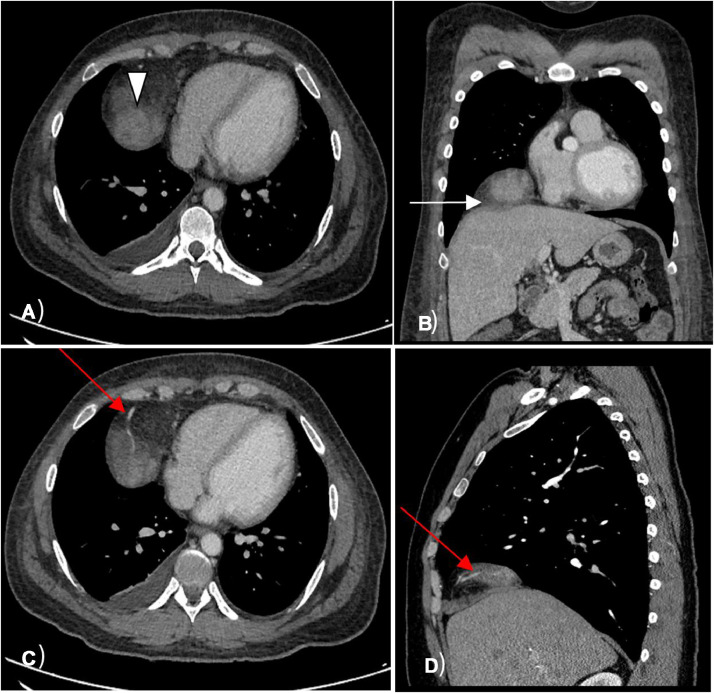
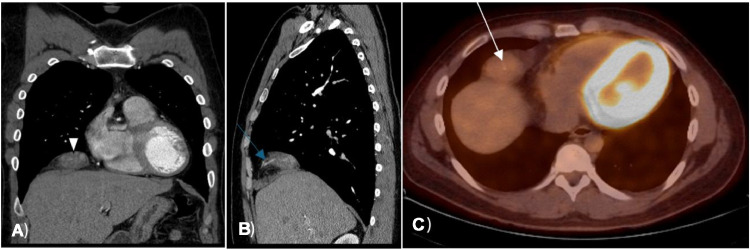
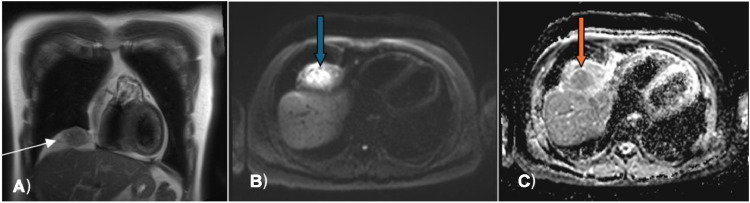
Castleman's disease (CD) is a rare, benign nonclonal lymphoproliferative disorder with an unclear etiology, presenting significant diagnostic challenges due to its nonspecific features. CD is categorized into unicentric (UCD) and multicentric (MCD) types, with MCD further divided into HHV-8-associated and idiopathic (iMCD) forms. Clinical manifestations include fever, weight loss, night sweats, and organomegaly, with specific symptoms depending on the subtype. Diagnostic criteria for CD involve a combination of major criteria-histopathologic examination and minor criteria. Imaging techniques, including CT, MRI, and PET-CT, play a crucial role in diagnosis, staging, and differentiation from other diseases. This paper discusses the pathophysiology, clinical features, diagnostic criteria, and imaging findings of CD, illustrated by a case of a patient with renal disease with incidentally detected a right cardiophrenic mass. The case highlights the importance of comprehensive imaging and clinical evaluation in managing CD.
卡斯尔曼病(CD)是一种罕见的良性非克隆性淋巴增殖性疾病,病因不明,因其非特异性特征而面临重大诊断挑战。CD分为单中心型(UCD)和多中心型(MCD),MCD又进一步分为HHV-8相关型和特发性(iMCD)型。临床表现包括发热、体重减轻、盗汗和器官肿大,具体症状取决于亚型。CD的诊断标准包括主要标准(组织病理学检查)和次要标准的组合。包括CT、MRI和PET-CT在内的成像技术在诊断、分期以及与其他疾病的鉴别中起着关键作用。本文讨论了CD的病理生理学、临床特征、诊断标准和影像学表现,并以一例肾病患者偶然发现右心膈角肿块为例进行说明。该病例强调了综合成像和临床评估在CD管理中的重要性。