Shiba Ayano, de Goede Paul, Tandari Roberta, Foppen Ewout, Korpel Nikita L, Coopmans Tom V, Hellings Tom P, Jansen Merel W, Ruitenberg Annelou, Ritsema Wayne I G R, Yi Chun-Xia, Mul Joram D, Stenvers Dirk Jan, Kalsbeek Andries
Netherlands Institute for Neuroscience, An Institute of the Royal Netherlands Academy of Arts and Sciences (KNAW), Meibergdreef 47, 1105BA, Amsterdam, the Netherlands.
Amsterdam UMC, University of Amsterdam, Laboratory of Endocrinology, Department of Laboratory Medicine, Meibergdreef 9, Amsterdam, the Netherlands.
Neurobiol Sleep Circadian Rhythms. 2024 Sep 19;17:100106. doi: 10.1016/j.nbscr.2024.100106. eCollection 2024 Nov.
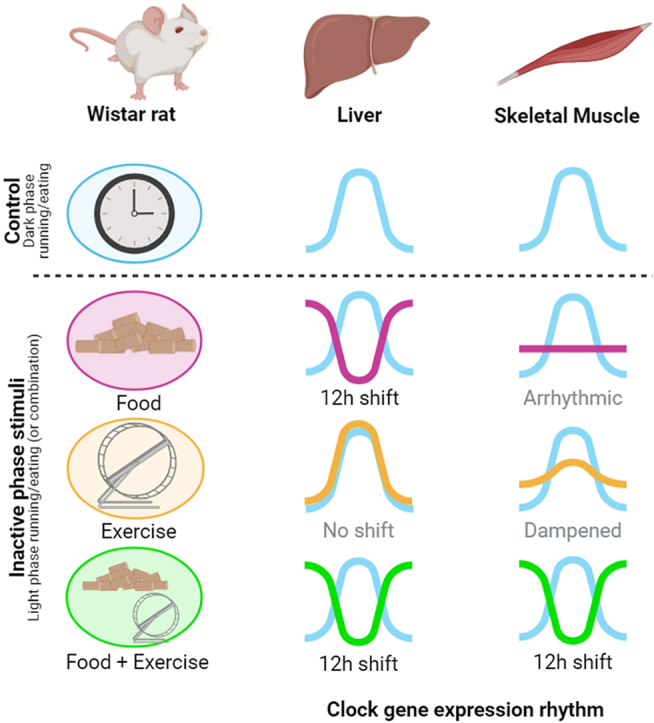
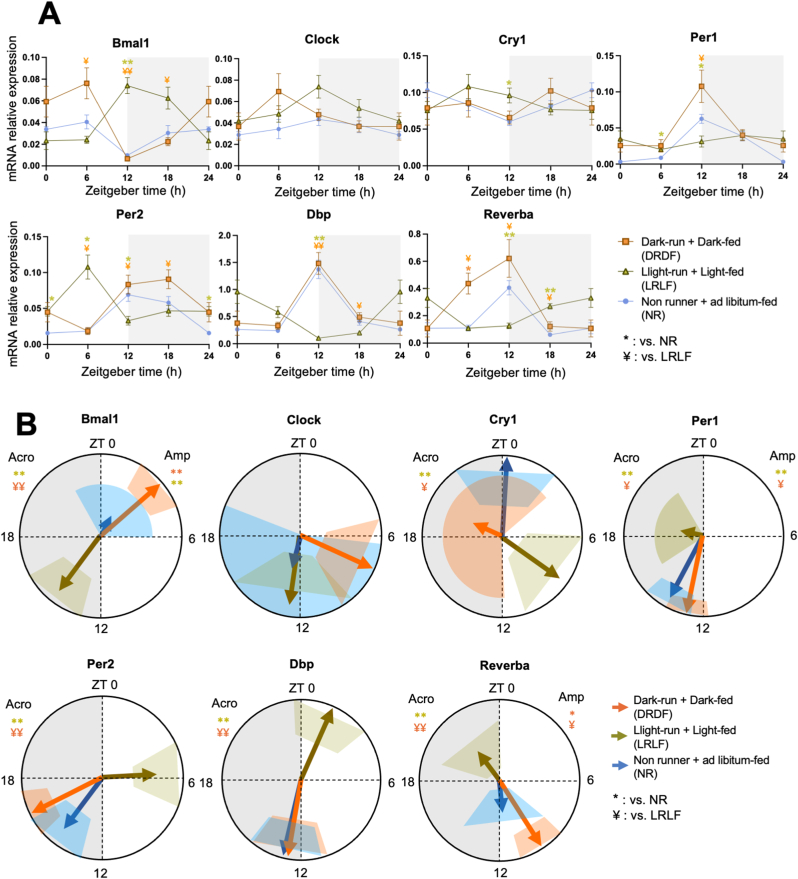
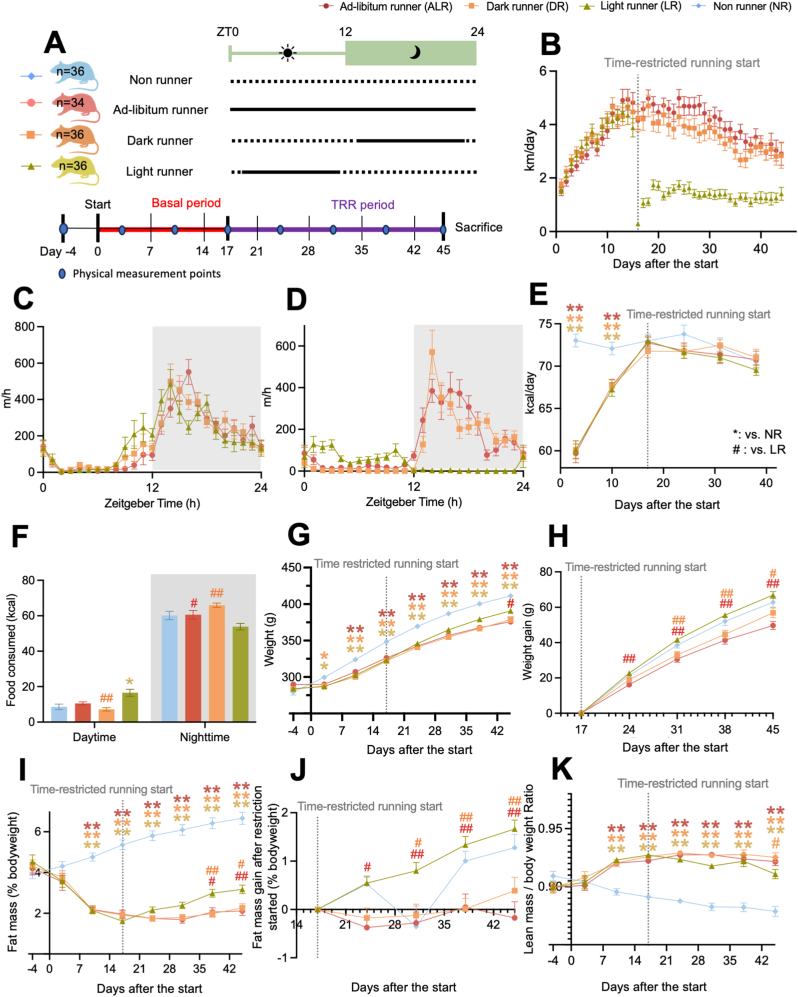
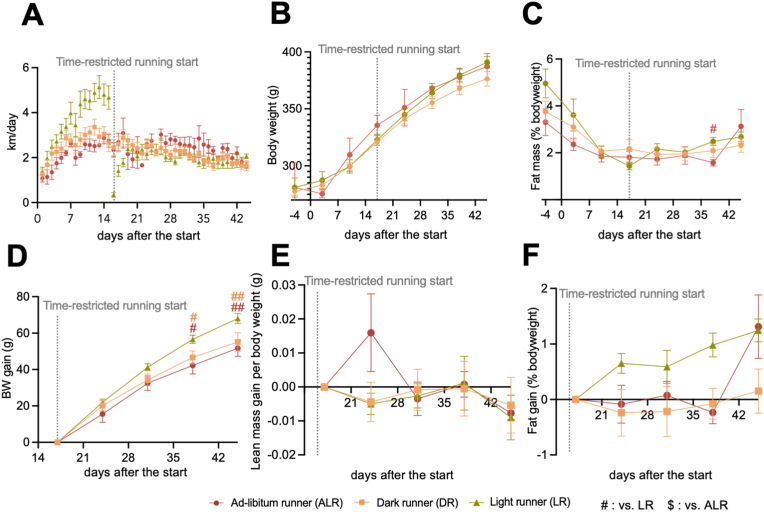
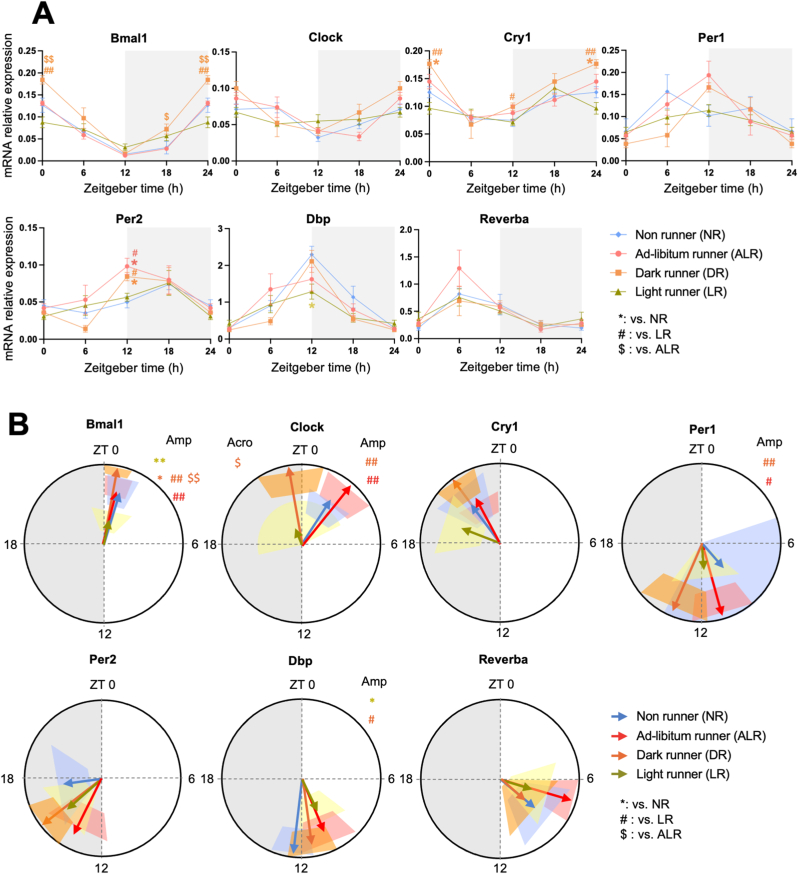
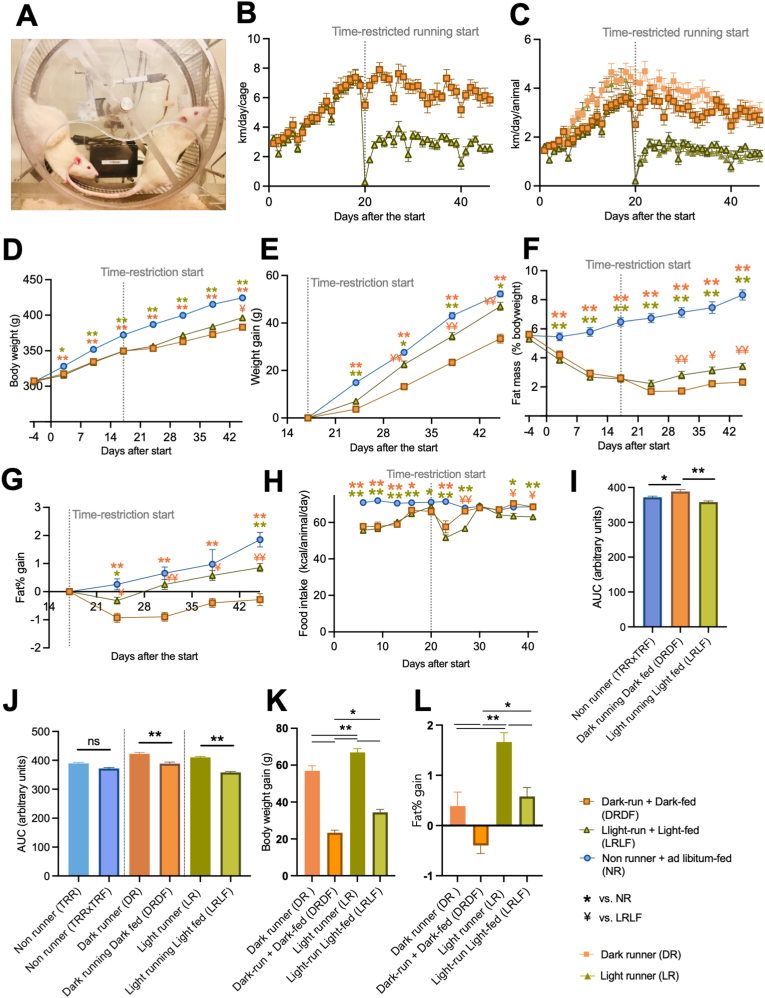
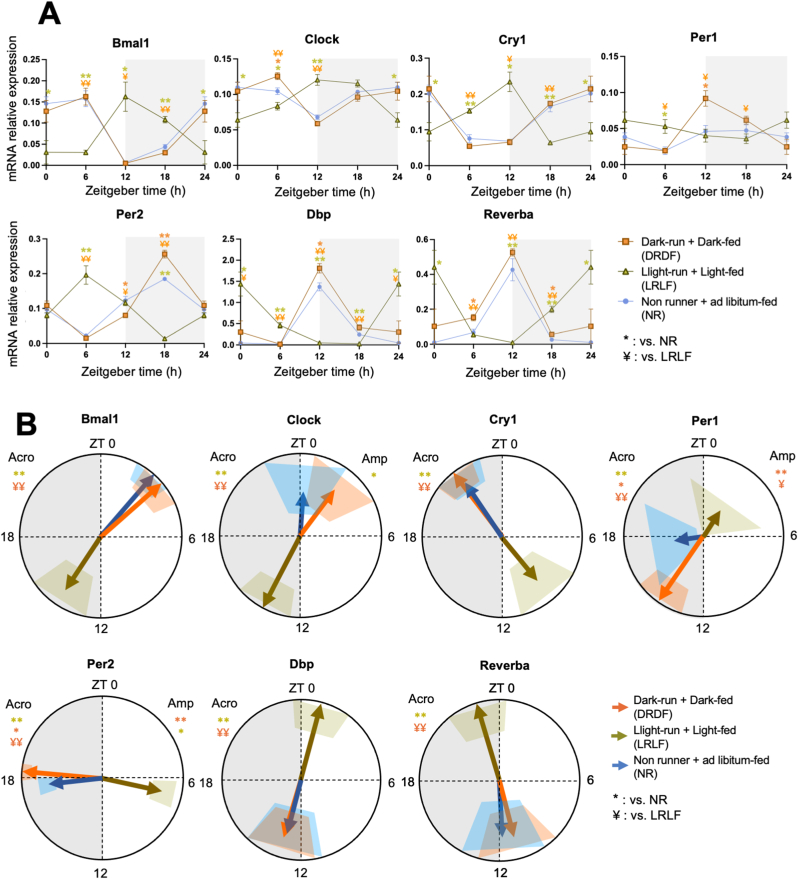
Circadian disruption is an important factor driving the current-day high prevalence of obesity and type-2 diabetes. While the impact of incorrect timing of caloric intake on circadian disruption is widely acknowlegded, the contribution of incorrect timing of physical activity remains relatively understudied. Here, we modeled the incorrect timing of physical activity in nightshift workers in male Wistar rats, by restricting running wheel access to the innate inactive (light) phase (LR). Controls included no wheel access (NR); access only during the innate active (dark) period (DR); or unrestricted () access (ALR). LR did not shift the phase of the muscle or liver clock, but dampened the muscle clock amplitude. As our previous study demonstrated that light-phase restricted feeding did shift the liver clock, but made the muscle clock arrhythmic, we next combined the time restriction of wheel and food access to either the light phase (LRLF) or dark phase (DRDF). LRLF produced a ∼12 h shift in the majority of clock gene rhythms in both skeletal muscle and liver. On the other hand, DRDF was most effective in reducing body weight and the accumulation of fat mass. Therefore, in order to shift the muscle clock in male Wistar rats, synergy between the timing of feeding and physical activity is necessary. These findings may contribute to further improve the design of lifestyle strategies that try to limit metabolic misalignment caused by circadian disruption.
昼夜节律紊乱是导致当今肥胖和2型糖尿病高患病率的一个重要因素。虽然热量摄入时间不当对昼夜节律紊乱的影响已得到广泛认可,但体育活动时间不当的影响仍相对研究不足。在此,我们通过限制雄性Wistar大鼠夜班工人的跑轮使用时间至天生不活跃(光照)阶段(LR),模拟体育活动时间不当的情况。对照组包括不使用跑轮(NR);仅在天生活跃(黑暗)期使用跑轮(DR);或无限制使用跑轮(ALR)。LR并未改变肌肉或肝脏生物钟的相位,但减弱了肌肉生物钟的振幅。正如我们之前的研究表明,光照阶段限制进食确实改变了肝脏生物钟的相位,但使肌肉生物钟出现节律紊乱,接下来我们将跑轮和食物获取的时间限制组合为光照阶段(LRLF)或黑暗阶段(DRDF)。LRLF使骨骼肌和肝脏中大多数生物钟基因节律产生了约12小时的相位偏移。另一方面,DRDF在减轻体重和脂肪量积累方面最为有效。因此,为了改变雄性Wistar大鼠的肌肉生物钟,进食时间和体育活动时间之间的协同作用是必要的。这些发现可能有助于进一步优化生活方式策略的设计,以试图限制昼夜节律紊乱引起的代谢失调。