Biomechanics Laboratory, Dong-A University, Saha-gu, Busan, Republic of Korea.
Department of Mechanical Engineering, College of Engineering, Dong-A University, Saha-gu, Busan, Republic of Korea.
Sci Rep. 2024 Oct 10;14(1):23732. doi: 10.1038/s41598-024-75445-7.
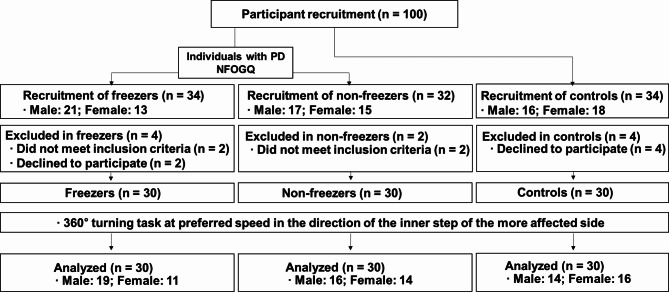
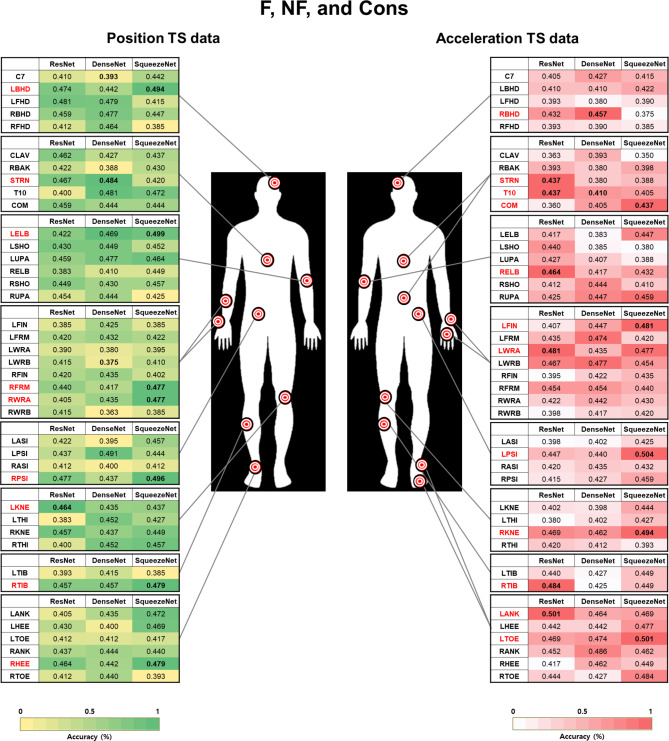
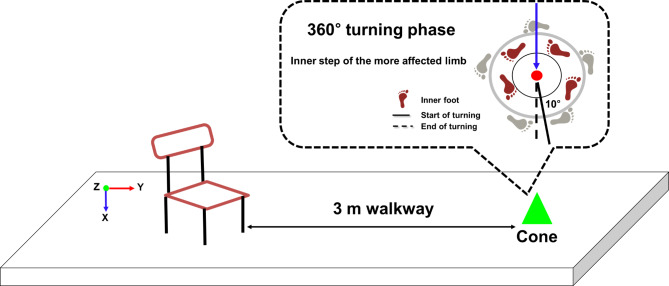
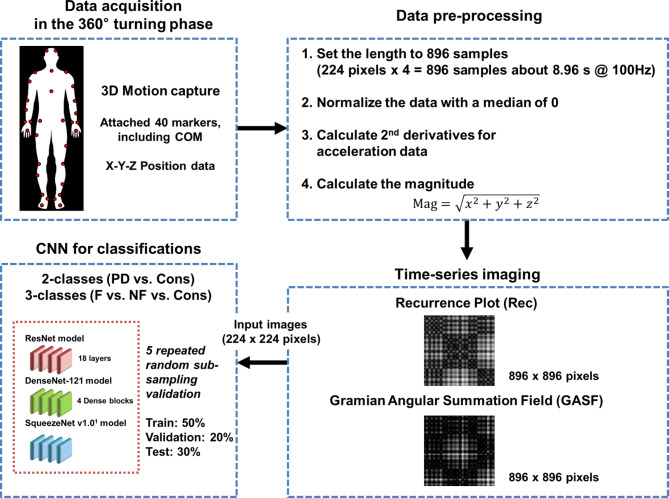
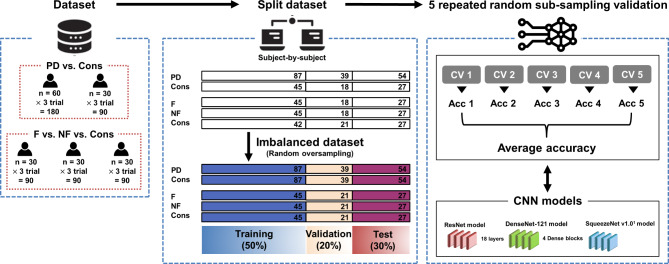
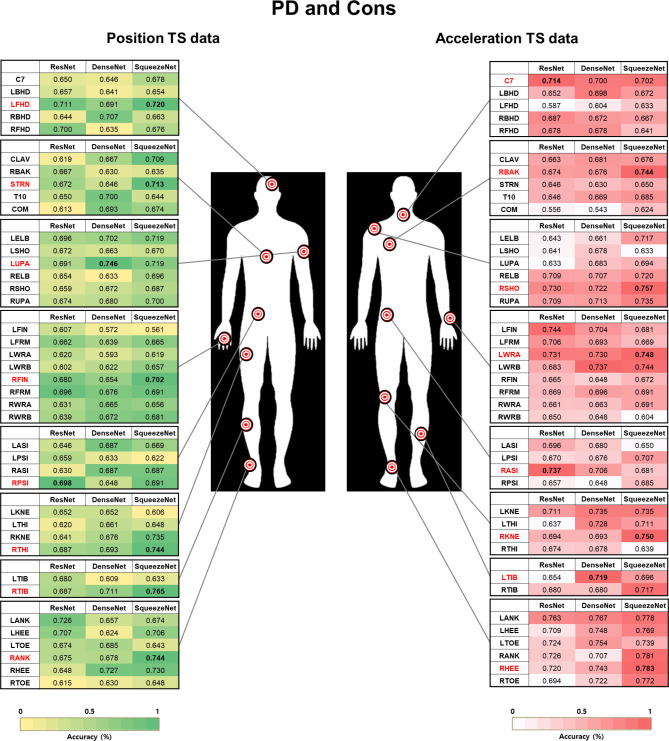
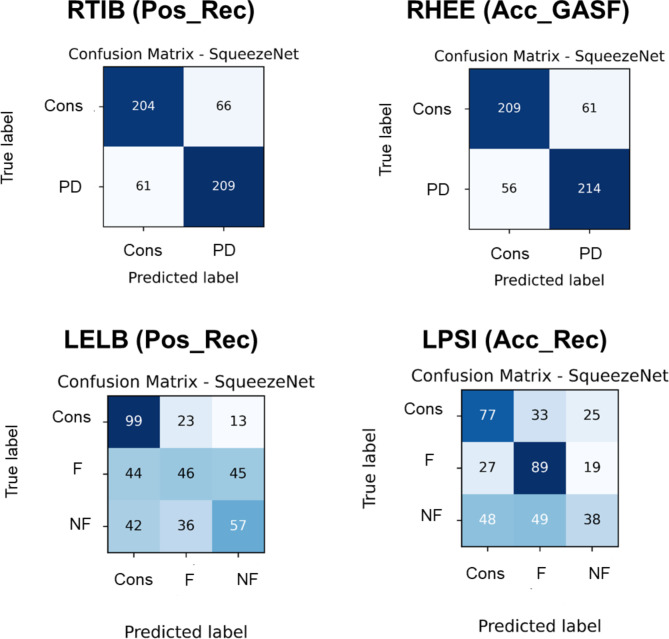
We proposed a deep learning method using a convolutional neural network on time-series (TS) images to detect and differentiate affected body parts in people with Parkinson's disease (PD) and freezing of gait (FOG) during 360° turning tasks. The 360° turning task was performed by 90 participants (60 people with PD [30 freezers and 30 nonfreezers] and 30 age-matched older adults (controls) at their preferred speed. The position and acceleration underwent preprocessing. The analysis was expanded from temporal to visual data using TS imaging methods. According to the PD vs. controls classification, the right lower third of the lateral shank (RTIB) on the least affected side (LAS) and the right calcaneus (RHEE) on the LAS were the most relevant body segments in the position and acceleration TS images. The RHEE marker exhibited the highest accuracy in the acceleration TS images. The identified markers for the classification of freezers vs. nonfreezers vs. controls were the left lateral humeral epicondyle (LELB) on the more affected side and the left posterior superior iliac spine (LPSI). The LPSI marker in the acceleration TS images displayed the highest accuracy. This approach could be a useful supplementary tool for determining PD severity and FOG.
我们提出了一种基于卷积神经网络的深度学习方法,用于检测和区分帕金森病(PD)患者和冻结步态(FOG)患者在 360°转身任务中受影响的身体部位。该 360°转身任务由 90 名参与者(60 名 PD 患者[30 名冻结者和 30 名非冻结者]和 30 名年龄匹配的老年人(对照组)以其偏好的速度完成。位置和加速度进行了预处理。使用时间序列成像方法将分析从时间扩展到视觉数据。根据 PD 与对照组的分类,受影响较小侧(LAS)的右侧小腿下部三分之一(RTIB)和 LAS 的右侧跟骨(RHEE)是位置和加速度时间序列图像中最相关的身体部位。RHEE 标志物在加速度时间序列图像中具有最高的准确性。用于区分冻结者、非冻结者和对照组的标记物是更受影响侧的左侧肱骨外上髁(LELB)和左侧髂后上棘(LPSI)。加速度时间序列图像中的 LPSI 标志物具有最高的准确性。该方法可能是确定 PD 严重程度和 FOG 的有用辅助工具。