Department of Obstetrics and Gynecology, Shanghai General Hospital, Shanghai Jiao Tong University School of Medicine, Shanghai, People's Republic of China.
Department of Obstetrics and Gynaecology, the First Affiliated Hospital of Guangzhou Medical University, Guangzhou, Guangdong, 510120, China.
BMC Cancer. 2024 Oct 10;24(1):1258. doi: 10.1186/s12885-024-12622-x.
The increasing problems of drug and radiotherapy resistance in cervical cancer underscores the need for novel methods for its management. Reports indicate that the expression of MPC1 may be associated with the tumor microenvironment and the occurrence of ferroptosis in cervical cancer. The objective of this study was to visually illustrate the prognostic significance and immunological characterization of MPC1 in cervical cancer.
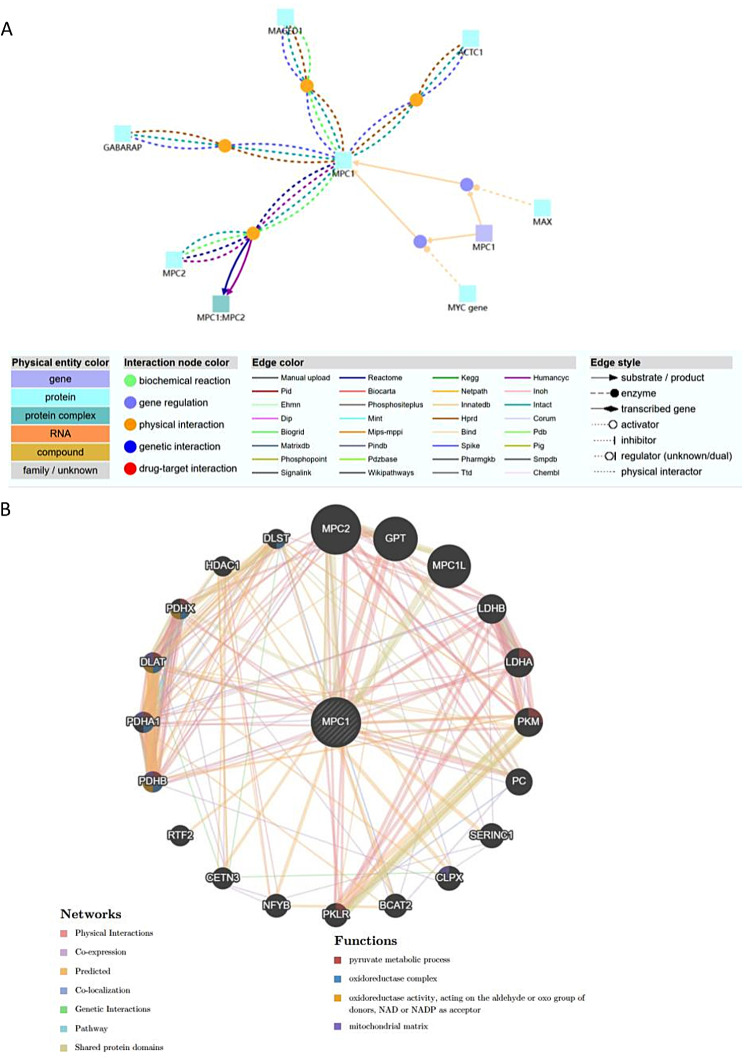
The expression profile and prognostic significance of MPC1 were analyzed using various databases, including UALCAN, TIMER2, GEPIA2, and Kaplan-Meier Plotter. TISIDB, TIMER2, and immunohistochemical analysis were used to investigate the correlation between MPC1 expression and immune infiltration. GO enrichment analysis, KEGG analysis, Reactome analysis, ConsensusPathDB, and GeneMANIA were used to visualize the functional enrichment of MPC1 and signaling pathways related to MPC1. The correlation analysis was carried out to examine the relationship between MPC1 and Ferroptosis gene in TIMER 2.0, ncFO, GEPIA Database and Kaplan-Meier Plotter.
We demonstrated that the expression levels of MPC1 in cervical cancer tissues were lower than those in normal cervical tissues. Kaplan-Meier survival curves showed shorter overall survival in cervical cancer patients with low levels of MPC1 expression. The expression of MPC1 was related to the infiltrating levels of tumor-infiltrating immune cells in cervical cancer. Moreover, MPC1 expression was associated with the iron-mediated cell death pathway, and several important ferroptosis genes were upregulated in cervical cancer cells. Furthermore, after knocking down MPC1 in HeLa cells, the expression of these genes decreased.
These findings indicate that MPC1 functions as a prognostic indicator and plays a role in the regulation of the ferroptosis pathway in cervical cancer.
宫颈癌的药物和放疗耐药问题日益严重,这凸显了寻找新的治疗方法的必要性。有报道表明,MPC1 的表达可能与肿瘤微环境和宫颈癌中发生的铁死亡有关。本研究旨在直观地展示 MPC1 在宫颈癌中的预后意义和免疫特征。
利用 UALCAN、TIMER2、GEPIA2 和 Kaplan-Meier Plotter 等数据库分析 MPC1 的表达谱和预后意义。利用 TISIDB、TIMER2 和免疫组化分析研究 MPC1 表达与免疫浸润的相关性。GO 富集分析、KEGG 分析、Reactome 分析、ConsensusPathDB 和 GeneMANIA 用于可视化 MPC1 的功能富集和与 MPC1 相关的信号通路。通过 TIMER2.0、ncFO、GEPIA 数据库和 Kaplan-Meier Plotter 中的相关性分析,研究 MPC1 与 Ferroptosis 基因的关系。
我们发现 MPC1 在宫颈癌组织中的表达水平低于正常宫颈组织。Kaplan-Meier 生存曲线显示,MPC1 低表达的宫颈癌患者总生存期较短。MPC1 的表达与宫颈癌肿瘤浸润免疫细胞的浸润水平有关。此外,MPC1 的表达与铁介导的细胞死亡途径有关,宫颈癌细胞中几个重要的 Ferroptosis 基因上调。进一步在 HeLa 细胞中敲低 MPC1 后,这些基因的表达下降。
这些发现表明,MPC1 作为一个预后指标,在宫颈癌中铁死亡途径的调控中发挥作用。