Integrated Bioanalysis, Clinical Pharmacology and Safety Sciences, R&D, AstraZeneca, South San Francisco, California 94080, United States.
Clinical Pharmacology and Quantitative Pharmacology, Clinical Pharmacology and Safety Sciences, R&D, AstraZeneca, Cambridge CB21 6GH, United Kingdom.
Anal Chem. 2024 Oct 22;96(42):16525-16533. doi: 10.1021/acs.analchem.4c02309. Epub 2024 Oct 11.
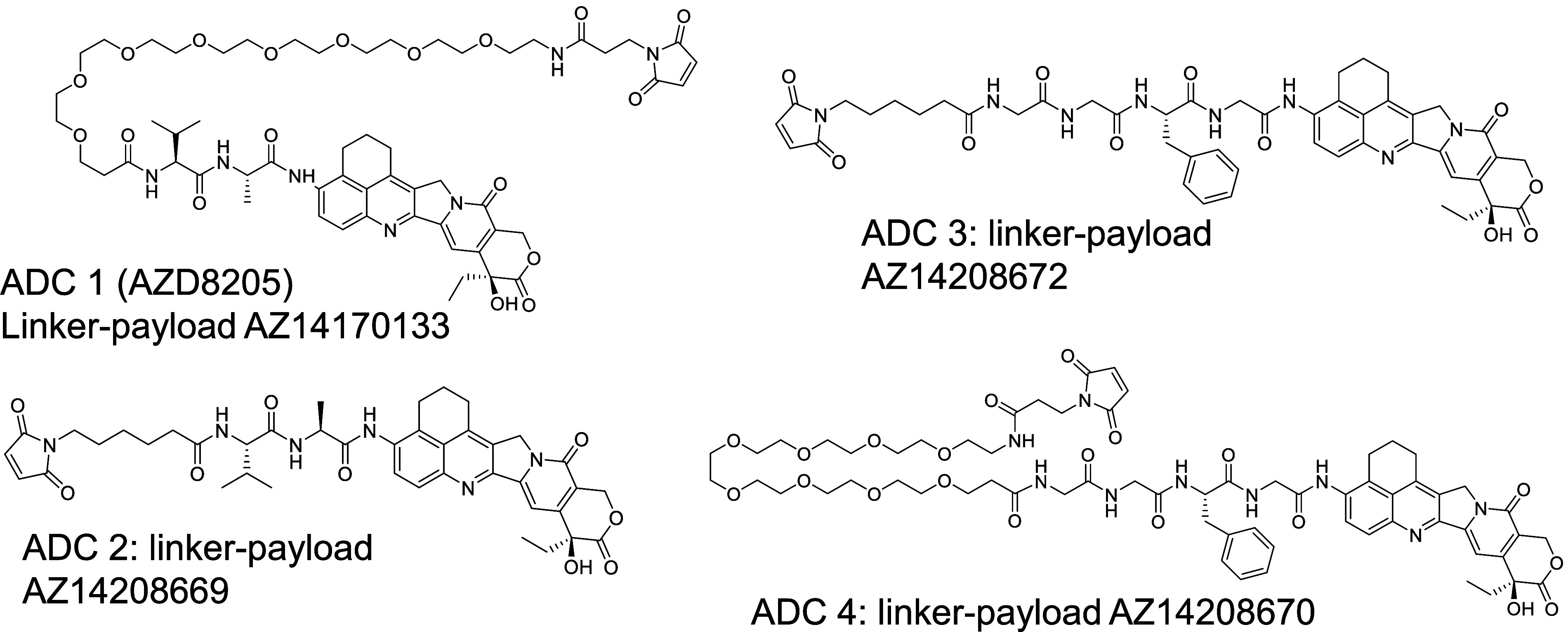
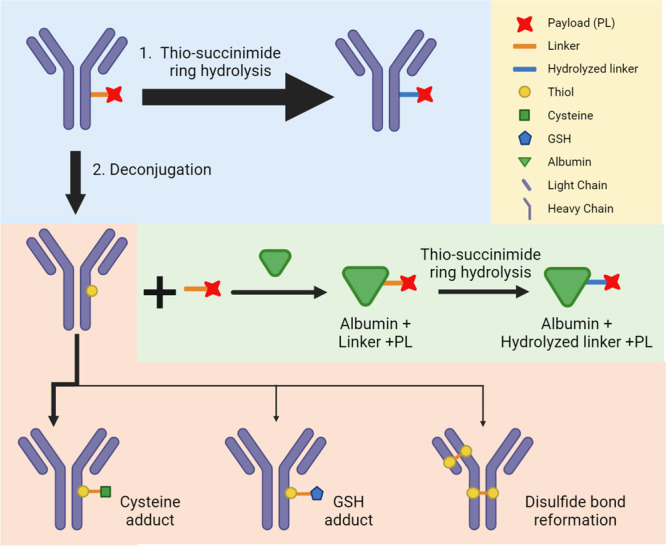
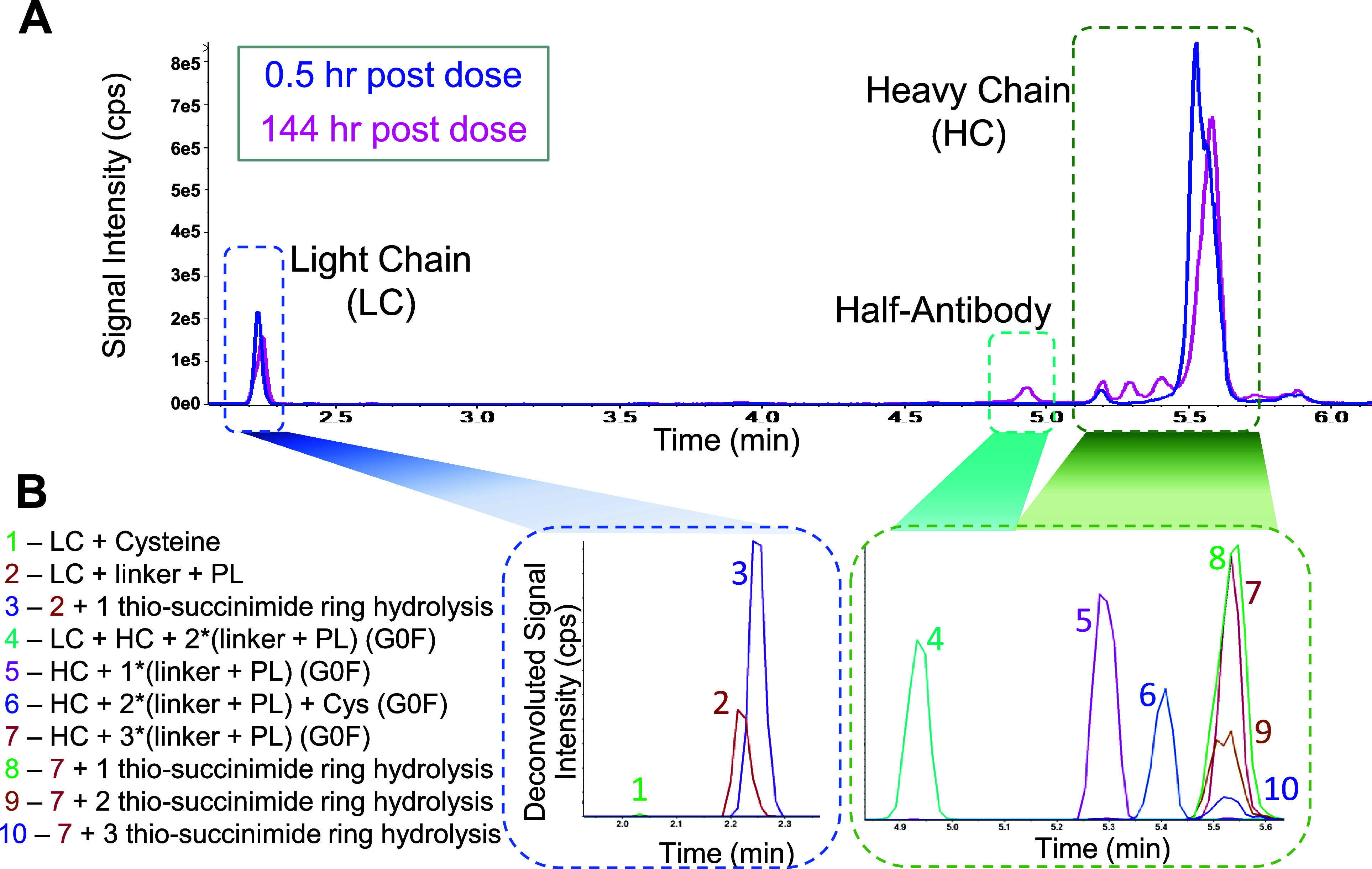
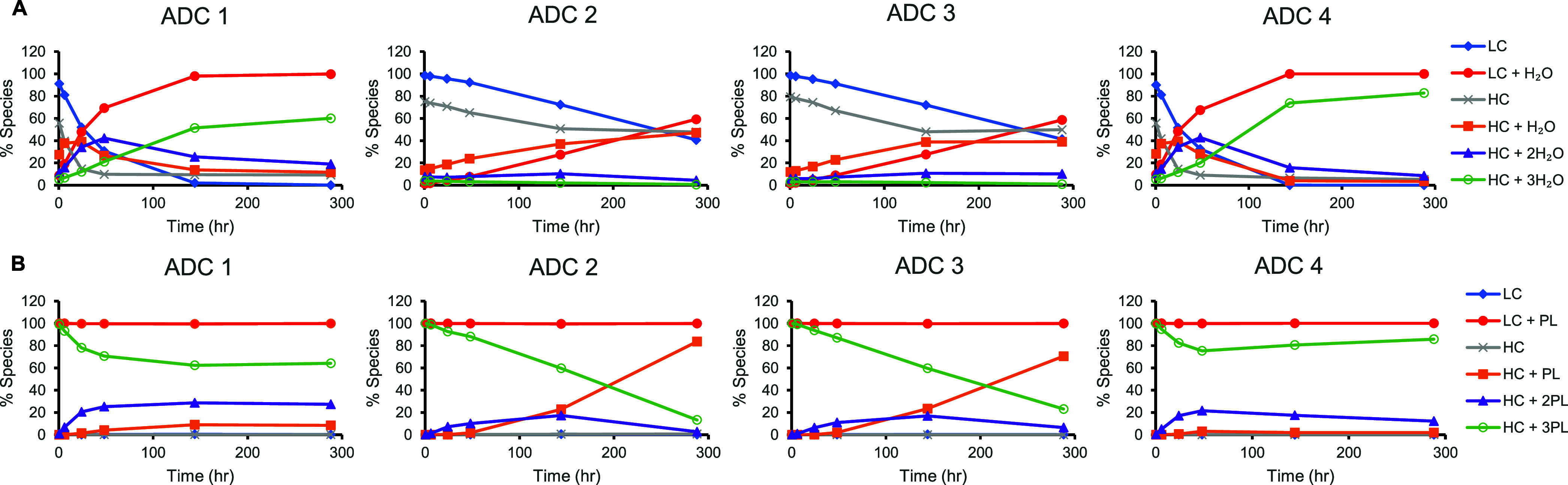
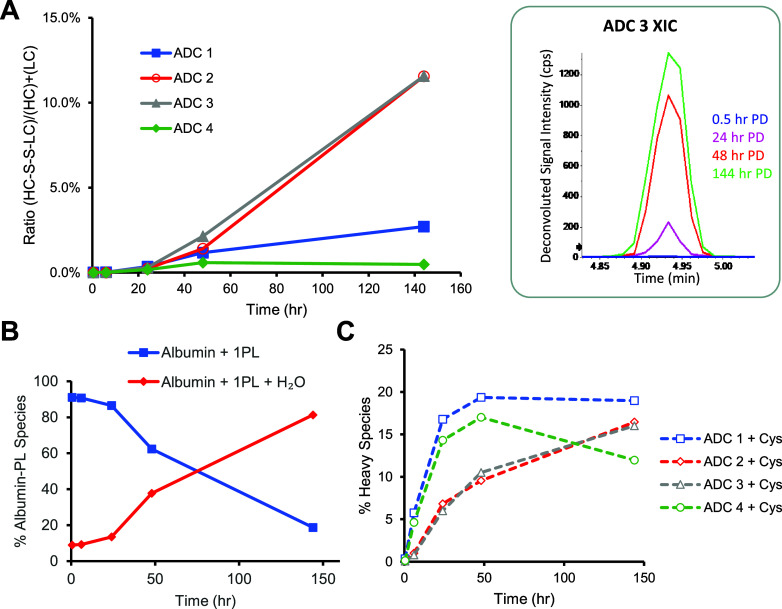
What happens to macromolecules ? What drives the structure-activity relationship and stability for antibody-drug conjugates (ADCs)? These interrelated questions are increasingly relevant due to the re-emerging importance of ADCs as an impactful therapeutic modality and the gaps that exist in our understanding of ADC structural determinants that underlie ADC stability. Complex macromolecules, such as ADCs, may undergo changes due to their intricate structure as biotransformations may occur on the linker, the payload, and/or at the modified conjugation site. Furthermore, the dissection of ADC metabolism presents a substantial analytical challenge due to the difficulty in the identification or quantification of minor changes on a large macromolecule. We employed immunocapture-LCMS methods to evaluate changes in the drug-antibody ratio (DAR) profile in four different lead ADCs. This comprehensive characterization revealed that a critical structural determinant contributing to the ADC design was the linker, and competition of the thio-succinimide hydrolysis reaction over retro-Michael deconjugation can result in superb conjugation stability in vivo. These data, in conjunction with additional factors, informed the selection of AZD8205, puxitatug samrotecan, a B7-H4-directed cysteine-conjugated ADC bearing a novel topoisomerase I inhibitor payload, with durable DAR, currently being studied in the clinic for the potential treatment of solid malignancies (NCT05123482). These results highlight the relevance of studying macromolecule biotransformation and elucidating the ADC structure- stability relationship. The comprehensive nature of this work increases our confidence in the understanding of these processes. We hope this analytical approach can inform future development of bioconjugate drug candidates.
大分子会发生什么变化? 抗体药物偶联物(ADC)的结构-活性关系和稳定性由什么驱动? 由于 ADC 作为一种有影响力的治疗模式的重要性重新显现,以及我们对构成 ADC 稳定性基础的 ADC 结构决定因素的理解存在差距,这些相互关联的问题变得越来越重要。 复杂的大分子,如 ADC,可能会发生变化,因为它们的结构复杂,生物转化可能发生在连接子、有效载荷和/或修饰的连接点上。 此外,由于在大分子上鉴定或定量少量变化具有很大的分析挑战,因此 ADC 代谢的剖析提出了实质性的分析挑战。 我们采用免疫捕获-LCMS 方法来评估四种不同的先导 ADC 中药物-抗体比(DAR)谱的变化。 这种全面的表征表明,一个关键的结构决定因素有助于 ADC 的设计,即连接子,并且硫代琥珀酰亚胺水解反应的竞争超过反迈克尔去共轭反应,可导致体内极好的连接稳定性。 这些数据与其他因素一起,为选择 AZD8205(puxitatug samrotecan)提供了信息,puxitatug samrotecan 是一种 B7-H4 定向半胱氨酸偶联 ADC,带有新型拓扑异构酶 I 抑制剂有效载荷,具有持久的 DAR,目前正在临床研究中用于治疗实体恶性肿瘤(NCT05123482)。 这些结果强调了研究大分子生物转化和阐明 ADC 结构-稳定性关系的相关性。 这项工作的全面性增加了我们对这些过程的理解的信心。 我们希望这种分析方法可以为生物缀合药物候选物的未来开发提供信息。