Department of Health Informatics, School of Public Health, College of Medicine and Health Sciences, Woldia University, PO Box 400, Woldia, Amhara, Ethiopia.
Department of Health Informatics, College of Medicine and Health Science, Wollo University, Desie, Ethiopia.
Sci Rep. 2024 Oct 11;14(1):23827. doi: 10.1038/s41598-024-75455-5.
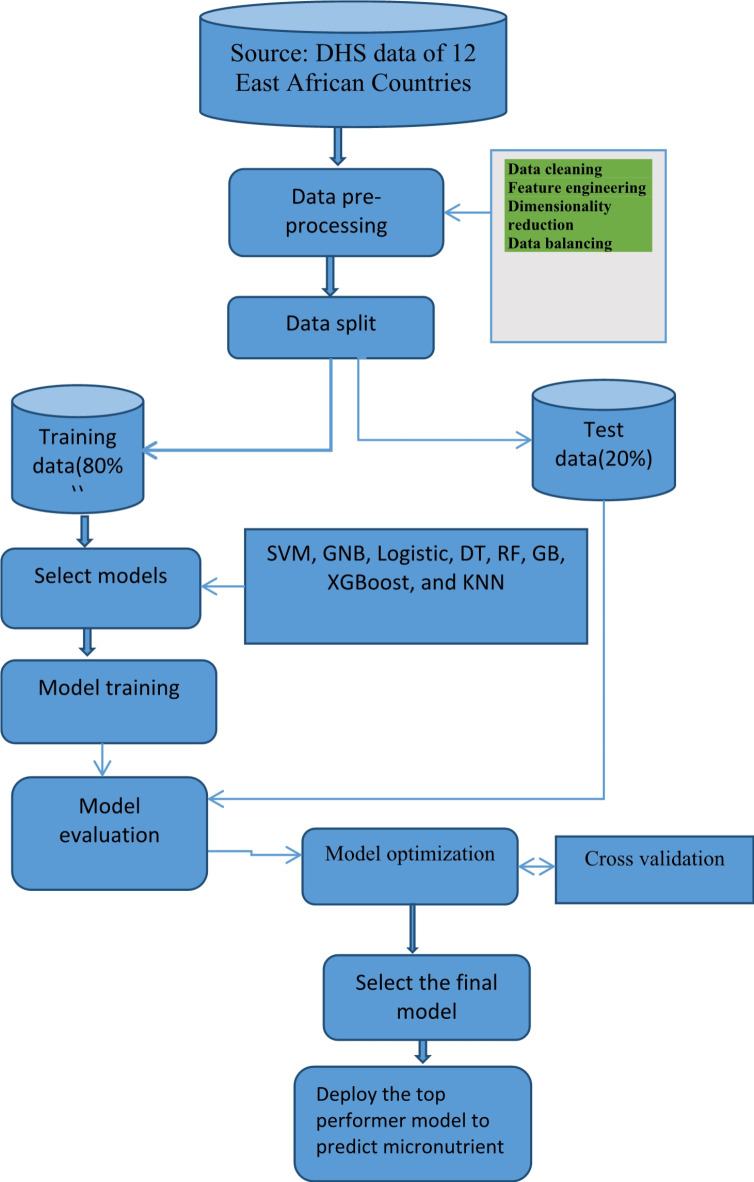
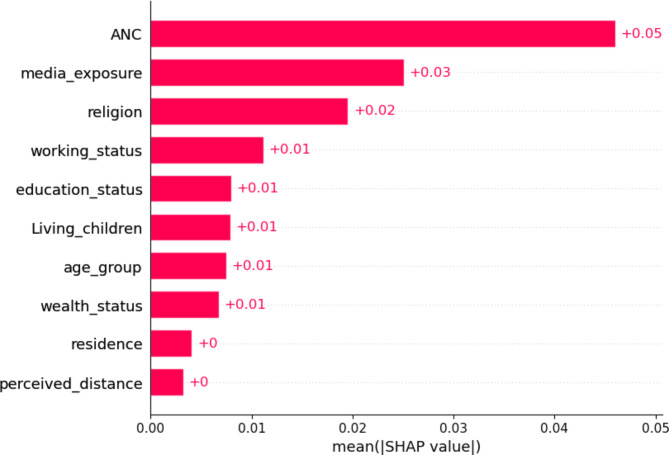
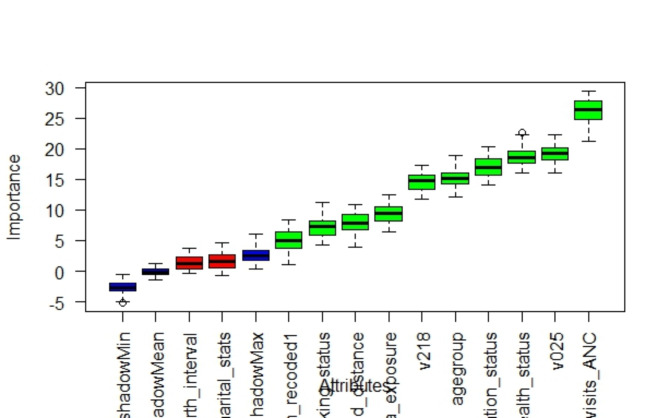
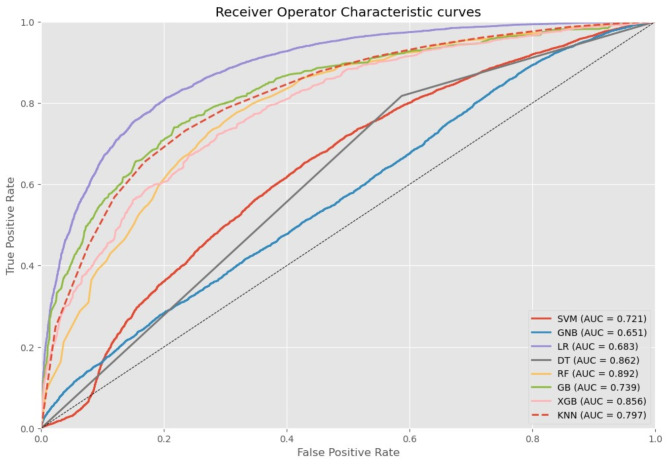
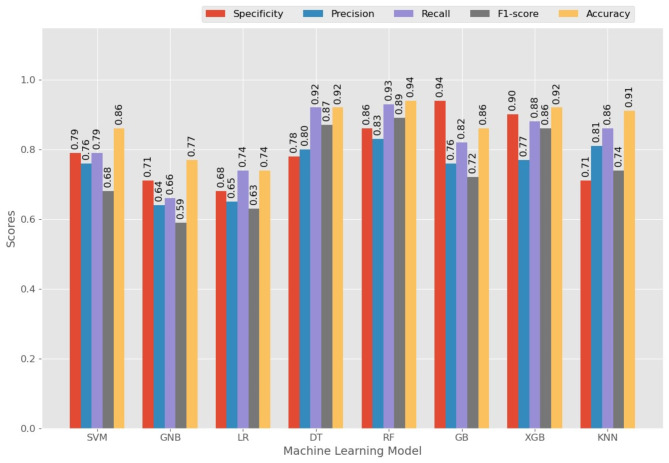
Micronutrient deficiencies, known as "hidden hunger" or "hidden malnutrition," pose a significant health risk to pregnant women, particularly in low-income countries like the East Africa region. This study employed eight advanced machine learning algorithms to predict the status of micronutrient supplementation among pregnant women in 12 East African countries, using recent demographic health survey (DHS) data. The analysis involved 138,426 study samples, and algorithm performance was evaluated using accuracy, area under the ROC curve (AUC), specificity, precision, recall, and F1-score. Among the algorithms tested, the random forest classifier emerged as the top performer in predicting micronutrient supplementation status, exhibiting excellent evaluation scores (AUC = 0.892 and accuracy = 94.0%). By analyzing mean SHAP values and performing association rule mining, we gained valuable insights into the importance of different variables and their combined impact, revealing hidden patterns within the data. Key predictors of micronutrient supplementation were the mother's education level, employment status, number of antenatal care (ANC) visits, access to media, number of children, and religion. By harnessing the power of machine learning algorithms, policymakers and healthcare providers can develop targeted strategies to improve the uptake of micronutrient supplementation. Key intervention components involve enhancing education, strengthening ANC services, and implementing comprehensive media campaigns that emphasize the importance of micronutrient supplementation. It is also crucial to consider cultural and religious sensitivities when designing interventions to ensure their effectiveness and acceptance within the specific population. Furthermore, researchers are encouraged to explore and experiment with various techniques to optimize algorithm performance, leading to the identification of the most effective predictors and enhanced accuracy in predicting micronutrient supplementation status.
微量营养素缺乏,又称“隐性饥饿”或“隐性营养不良”,对孕妇的健康构成重大威胁,尤其是在东非等低收入国家。本研究采用 8 种先进的机器学习算法,利用最近的人口健康调查(DHS)数据,预测 12 个东非国家孕妇的微量营养素补充状况。该分析涉及 138426 个研究样本,使用准确率、ROC 曲线下面积(AUC)、特异性、精度、召回率和 F1 评分评估算法性能。在测试的算法中,随机森林分类器在预测微量营养素补充状况方面表现最佳,评估得分优秀(AUC=0.892,准确率=94.0%)。通过分析平均 SHAP 值并进行关联规则挖掘,我们深入了解了不同变量的重要性及其综合影响,揭示了数据中的隐藏模式。微量营养素补充的关键预测因素包括母亲的教育水平、就业状况、产前护理(ANC)就诊次数、接触媒体的程度、子女数量和宗教信仰。通过利用机器学习算法的力量,政策制定者和医疗保健提供者可以制定有针对性的策略来提高微量营养素补充的采用率。关键干预措施包括加强教育、强化 ANC 服务以及实施全面的媒体宣传活动,强调微量营养素补充的重要性。在设计干预措施时,还必须考虑文化和宗教敏感性,以确保干预措施在特定人群中的有效性和可接受性。此外,鼓励研究人员探索和实验各种技术,以优化算法性能,从而确定最有效的预测因素,并提高预测微量营养素补充状况的准确性。