Liu Xiaoli, Ortega-Guerrero Andres, P Domingues Nency, Pougin Miriam Jasmin, Smit Berend, Hosta-Rigau Leticia, Oostenbrink Chris
DTU Health Tech, Center for Nanomedicine and Theranostics, Technical University of Denmark, Nils Koppels Allé, Building 423, Kgs. Lyngby 2800, Denmark.
Department of Pharmacy, Shanghai University of Medicine and Health Sciences, Zhouzhu Hwy 279, Shanghai 201318, China.
Langmuir. 2024 Oct 22;40(42):21976-21984. doi: 10.1021/acs.langmuir.4c01684. Epub 2024 Oct 12.
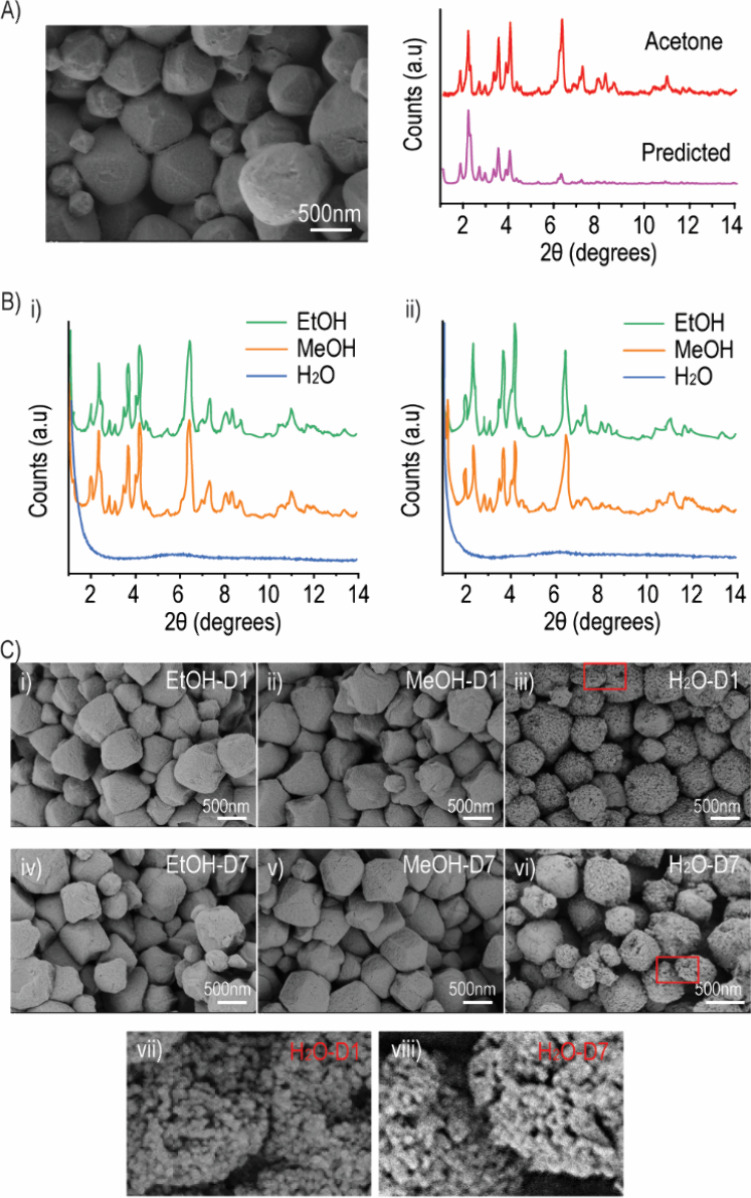
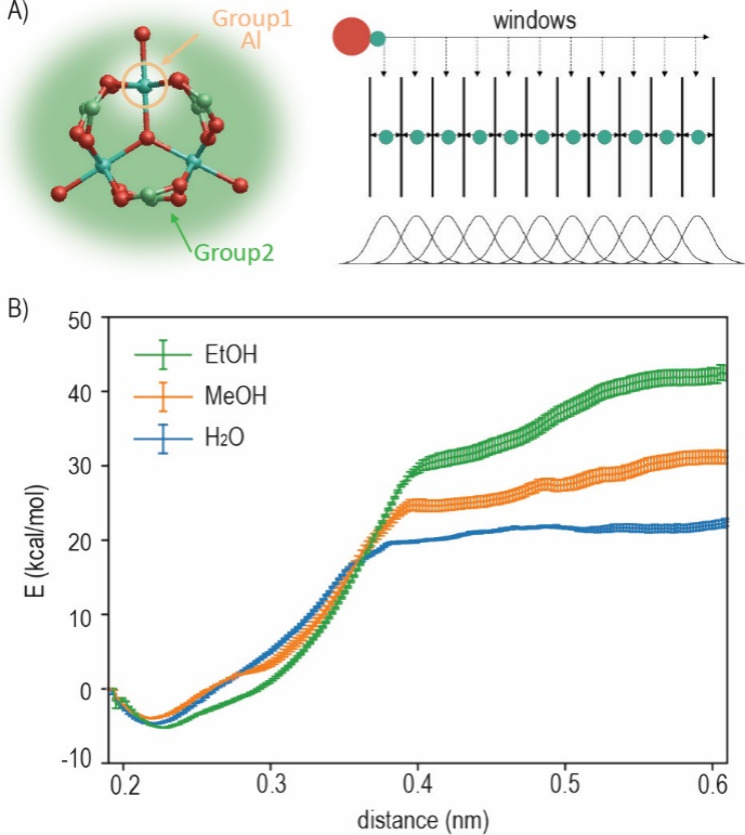
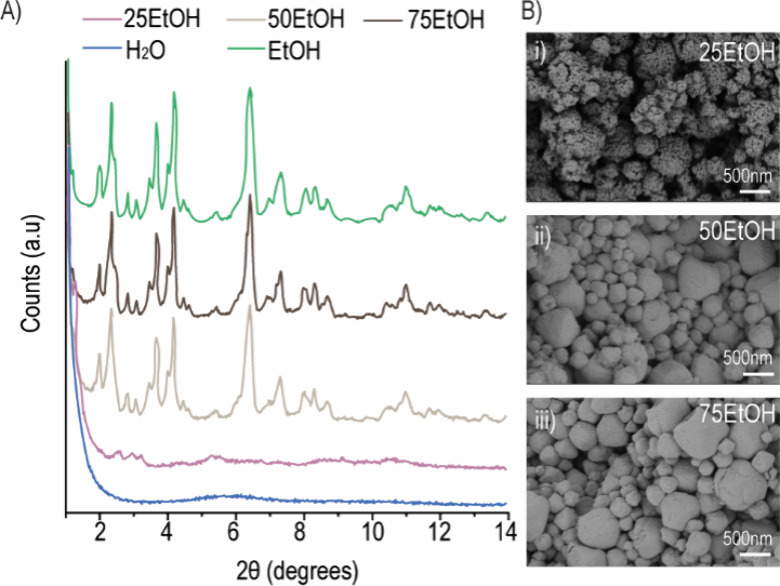
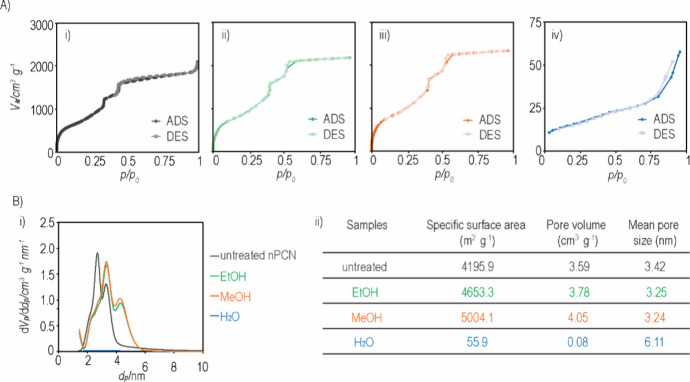
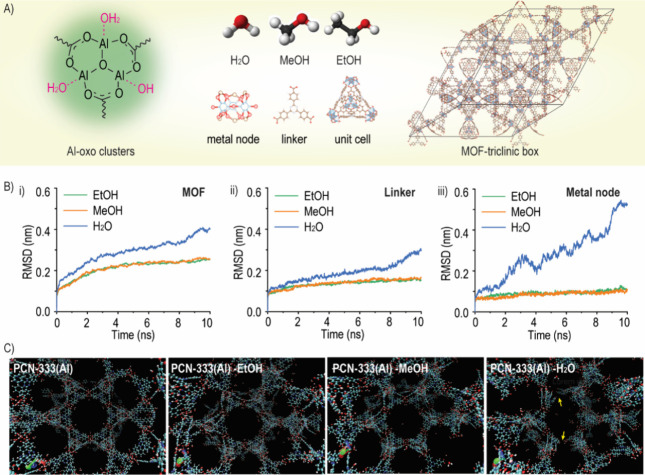
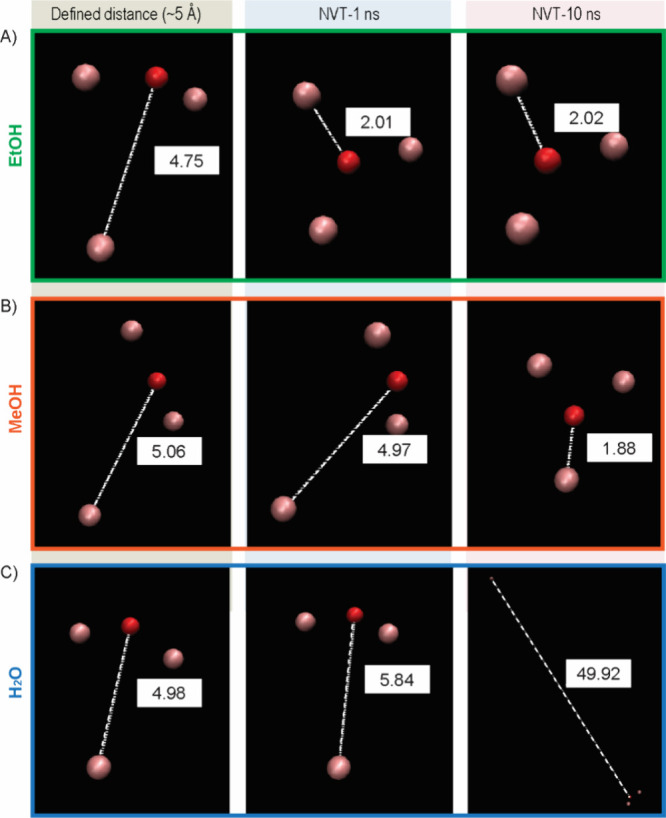
Mesoporous metal-organic frameworks (MOFs) have been recognized as powerful platforms for drug delivery, especially for biomolecules. Unfortunately, the application of MOFs is restricted due to their relatively poor stability in aqueous media, which is crucial for drug delivery applications. An exception is the porous coordination network (PCN)-series (e.g., PCN-333 and PCN-332), a series of MOFs with outstanding stability in aqueous media at the pH range from 3 to 9. In this study, we fabricate PCN-333 nanoparticles (nPCN) and investigate their stability in different solvents, including water, ethanol, and methanol. Surprisingly, the experimental characterizations in terms of X-ray diffraction, Brunauer-Emmett-Teller (BET), and scanning electron microscopy demonstrated that nPCN is not as stable in water as previously reported. Specifically, the crystalline structure of nPCN lost its typical octahedral shape and even decomposed into an irregular amorphous form when exposed to water for only 2 h, but not when ethanol and methanol were used. Meanwhile, the porosity of nPCN substantially diminished while being exposed to water, as demonstrated by the BET measurement. With the assistance of computational simulations, the mechanism behind the collapse of PCN-333 is illuminated. By molecular dynamics simulation and umbrella sampling, we elucidate that the degradation of PCN-333 occurs by hydrolysis, wherein polar solvent molecules initiate the attack and subsequent breakage of the metal-ligand reversible coordination bonds.
介孔金属有机框架材料(MOFs)已被公认为是药物递送的强大平台,尤其是用于生物分子的递送。不幸的是,MOFs的应用受到限制,因为它们在水性介质中的稳定性相对较差,而水性介质对于药物递送应用至关重要。多孔配位网络(PCN)系列(例如PCN-333和PCN-332)是个例外,这是一系列在pH值为3至9的水性介质中具有出色稳定性的MOFs。在本研究中,我们制备了PCN-333纳米颗粒(nPCN),并研究了它们在不同溶剂(包括水、乙醇和甲醇)中的稳定性。令人惊讶的是,X射线衍射、布鲁诺尔-埃米特-泰勒(BET)和扫描电子显微镜等实验表征表明,nPCN在水中并不像先前报道的那样稳定。具体而言,nPCN的晶体结构失去了其典型的八面体形状,甚至在仅暴露于水2小时后就分解成不规则的无定形形式,但在使用乙醇和甲醇时则不会。同时,BET测量表明,nPCN在暴露于水时其孔隙率大幅降低。借助计算模拟,阐明了PCN-333坍塌背后的机制。通过分子动力学模拟和伞形采样,我们阐明了PCN-333的降解是通过水解发生的,其中极性溶剂分子引发了金属-配体可逆配位键的攻击和随后的断裂。