Nanjing First Hospital, Nanjing Medical University, Nanjing, Jiangsu, China.
BMC Pregnancy Childbirth. 2024 Oct 12;24(1):665. doi: 10.1186/s12884-024-06846-9.
This study aims to assess the prognostic and diagnostic value of inflammatory indexes related to gestational diabetes mellitus (GDM) from the second trimester to the third trimester of pregnancy.
In this study, we randomly selected 65 pregnant women diagnosed with GDM at our hospital from December 2022 to June 2023 to form the GDM group (n = 65). Additionally, 65 pregnant women at the same gestational weeks without GDM were selected as the Normal group (n = 65). We collected gestational information and serum samples at 24 and 36 weeks of gestation from the participants. The levels of NLRP3, IL-1Ra, and TBP-2 were determined using enzyme-linked immunosorbent assay (ELISA) to explore their changes during pregnancy. Further, this study analyzed the changes in the levels of NLRP3, IL-1Ra, and TBP-2 at 24 and 36 weeks of gestation in GDM patients and their correlation with gestational diabetes mellitus.
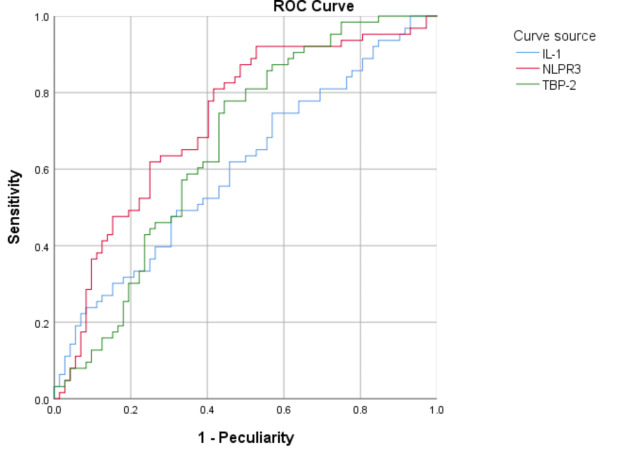
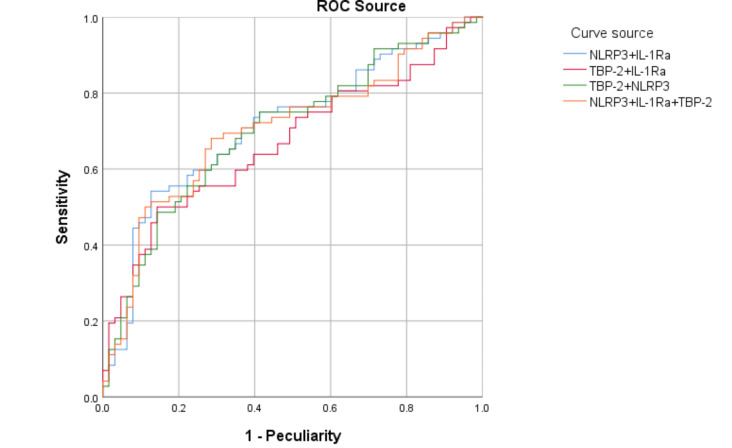
The study showed that pre-pregnancy body mass index (BMI), neonatal weight, gestational hypertension, and macrosomia are significantly associated with the occurrence of GDM (P < 0.05). Statistical analysis comparing the normal and GDM groups found no significant changes in the levels of NLRP3, IL-1Ra, and TBP-2 with the progression of gestation in the normal group. In contrast, in the GDM group, the levels of IL-1Ra in serum samples at 24 and 36 weeks were significantly increased (P < 0.05) while the levels of NLRP3 and TBP-2 were significantly reduced (P < 0.05). At 36 weeks, there was a positive correlation between the levels of NLRP3, IL-1Ra, and TBP-2. Compared to the normal group, the overall levels of NLRP3, IL-1Ra, and TBP-2 in the GDM group were lower (P < 0.05) and the weight of the newborns was significantly correlated with these three indicators (P < 0.05), specifically newborn weight increased with the levels of NLRP3 and TBP-2 but decreased with the increase of IL-1Ra (P < 0.05). Multifactorial logistic regression analysis further revealed that NLRP3 is an independent factor influencing GDM (P < 0.05). ROC curve analysis of the NLRP3 level at 24 weeks of gestation found that NLRP3 has a good value in predicting GDM (AUC = 0.720, 95%CI 0.630-0.809, P < 0.001) and the combined prediction of NLRP3, IL-1Ra, and TBP-2 also showed a good predictive value for GDM.
The changes in NLRP3, IL-1Ra, and TBP-2 persisted throughout the 24 to 36 weeks of gestation, playing an important role in predicting the occurrence of GDM and the weight of the newborn.
本研究旨在评估从妊娠中期到妊娠晚期与妊娠期糖尿病(GDM)相关的炎症指标的预后和诊断价值。
本研究随机选取了 2022 年 12 月至 2023 年 6 月在我院诊断为 GDM 的 65 名孕妇,组成 GDM 组(n=65)。此外,还选择了 65 名相同孕周且无 GDM 的孕妇作为正常组(n=65)。收集参与者在 24 周和 36 周的妊娠信息和血清样本。采用酶联免疫吸附试验(ELISA)测定 NLRP3、IL-1Ra 和 TBP-2 的水平,以探讨其在妊娠期间的变化。进一步分析 GDM 患者 24 周和 36 周时 NLRP3、IL-1Ra 和 TBP-2 水平的变化及其与妊娠期糖尿病的相关性。
研究表明,孕前体重指数(BMI)、新生儿体重、妊娠高血压和巨大儿与 GDM 的发生显著相关(P<0.05)。对正常组和 GDM 组的统计分析发现,正常组中 NLRP3、IL-1Ra 和 TBP-2 的水平随着妊娠的进展没有显著变化。相比之下,在 GDM 组中,血清样本中 24 周和 36 周时的 IL-1Ra 水平显著升高(P<0.05),而 NLRP3 和 TBP-2 的水平显著降低(P<0.05)。在 36 周时,NLRP3、IL-1Ra 和 TBP-2 之间存在正相关。与正常组相比,GDM 组中 NLRP3、IL-1Ra 和 TBP-2 的总体水平较低(P<0.05),新生儿体重与这三个指标均显著相关(P<0.05),具体表现为新生儿体重随着 NLRP3 和 TBP-2 的水平升高而增加,随着 IL-1Ra 的增加而降低(P<0.05)。多因素 logistic 回归分析进一步表明,NLRP3 是影响 GDM 的独立因素(P<0.05)。24 周时 NLRP3 水平的 ROC 曲线分析发现,NLRP3 对 GDM 具有良好的预测价值(AUC=0.720,95%CI 0.630-0.809,P<0.001),而 NLRP3、IL-1Ra 和 TBP-2 的联合预测对 GDM 也具有良好的预测价值。
NLRP3、IL-1Ra 和 TBP-2 的变化在 24 至 36 周的妊娠期间持续存在,对预测 GDM 的发生和新生儿体重起着重要作用。