Research Group Biomarkers for Infectious Diseases, TWINCORE Centre for Experimental and Clinical Infection Research-a joint venture of Hannover Medical School and the Helmholtz Centre for Infection Research, Hannover, Germany.
Research Group Biomarkers for Infectious Diseases, Helmholtz Centre for Infection Research, Brunswick, Germany.
Respir Res. 2024 Oct 12;25(1):369. doi: 10.1186/s12931-024-02988-8.
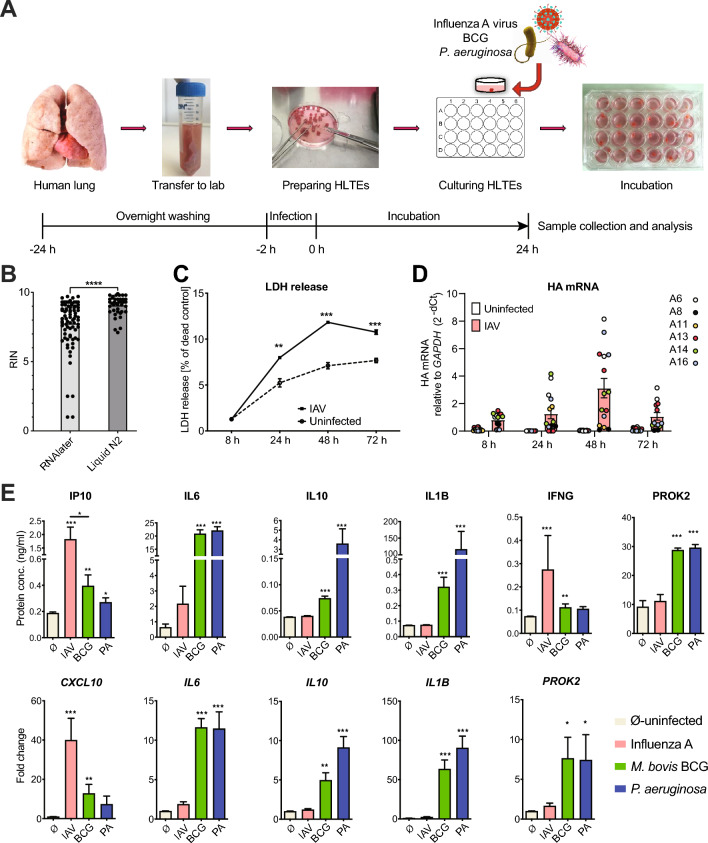
The first 24 h of infection represent a critical time window in interactions between pathogens and host tissue. However, it is not possible to study such early events in human lung during natural infection due to lack of clinical access to tissue this early in infection. We, therefore, applied RNA sequencing to ex vivo cultured human lung tissue explants (HLTE) from patients with emphysema to study global changes in small noncoding RNA, mRNA, and long noncoding RNA (lncRNA, lincRNA) populations during the first 24 h of infection with influenza A virus (IAV), Mycobacterium bovis Bacille Calmette-Guerin (BCG), and Pseudomonas aeruginosa.
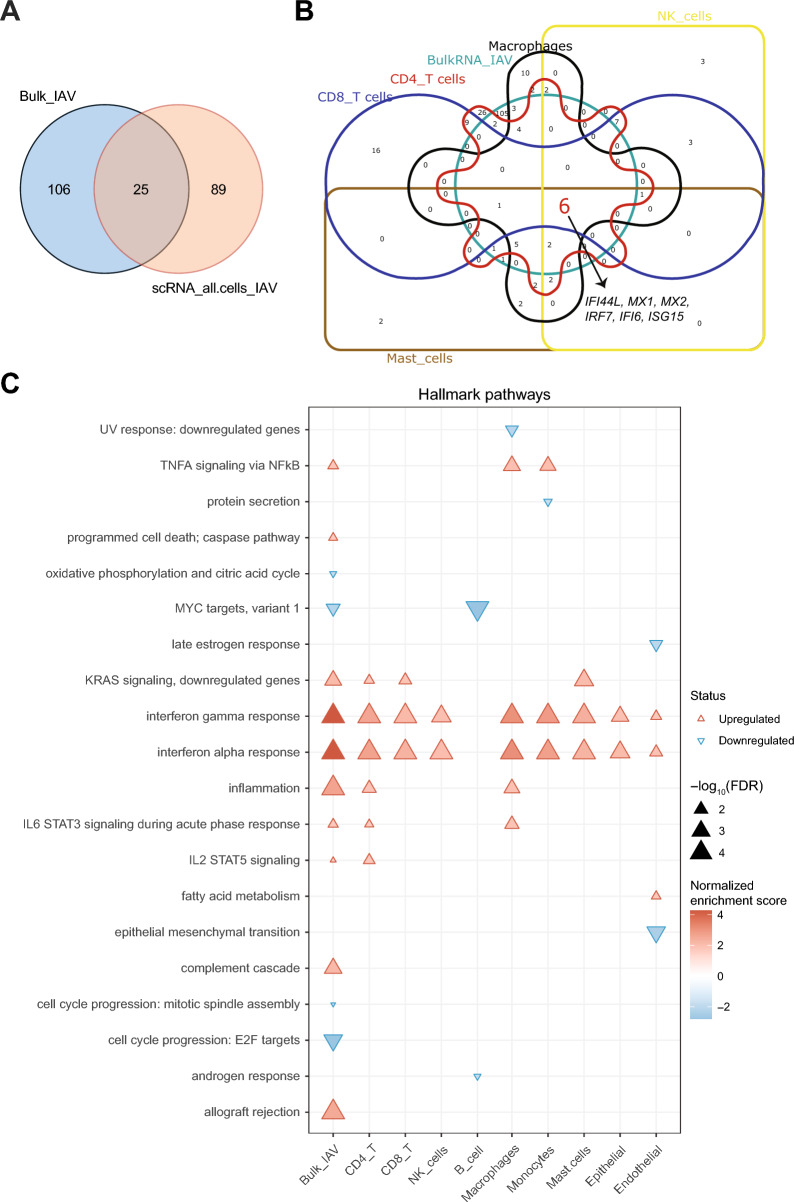
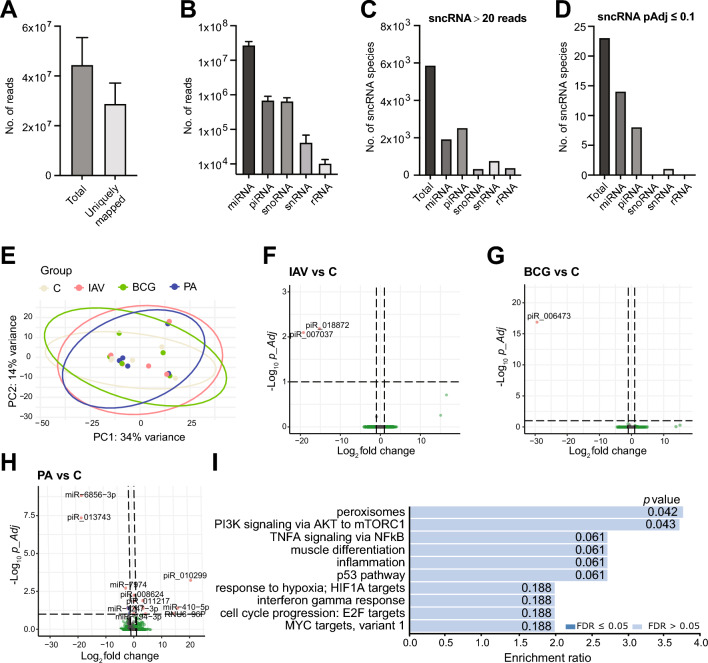
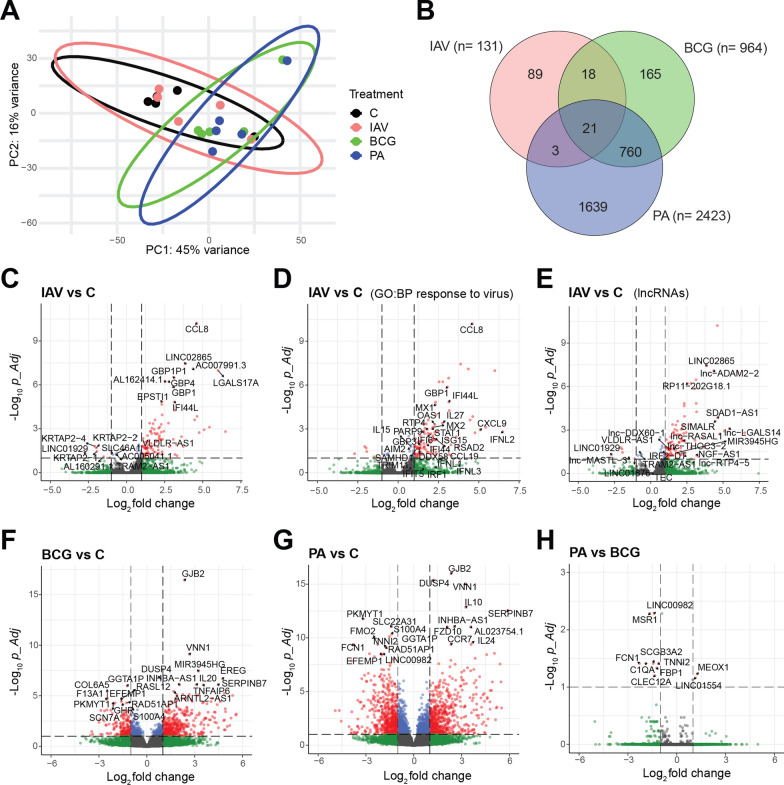
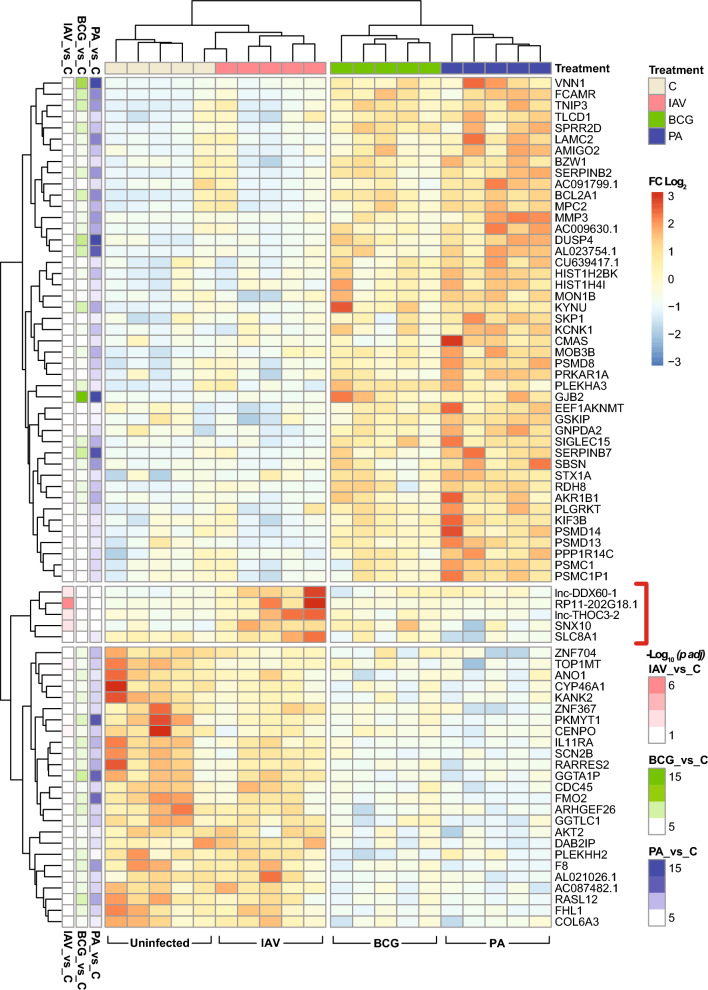
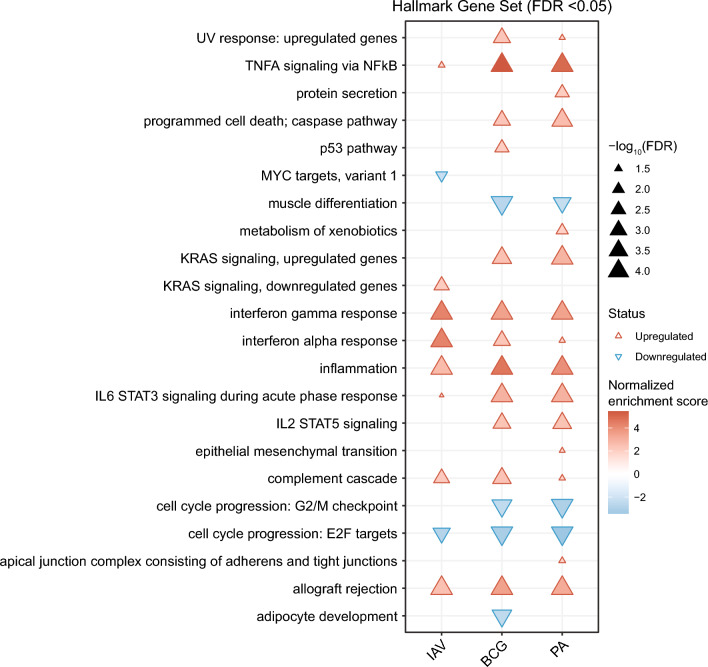
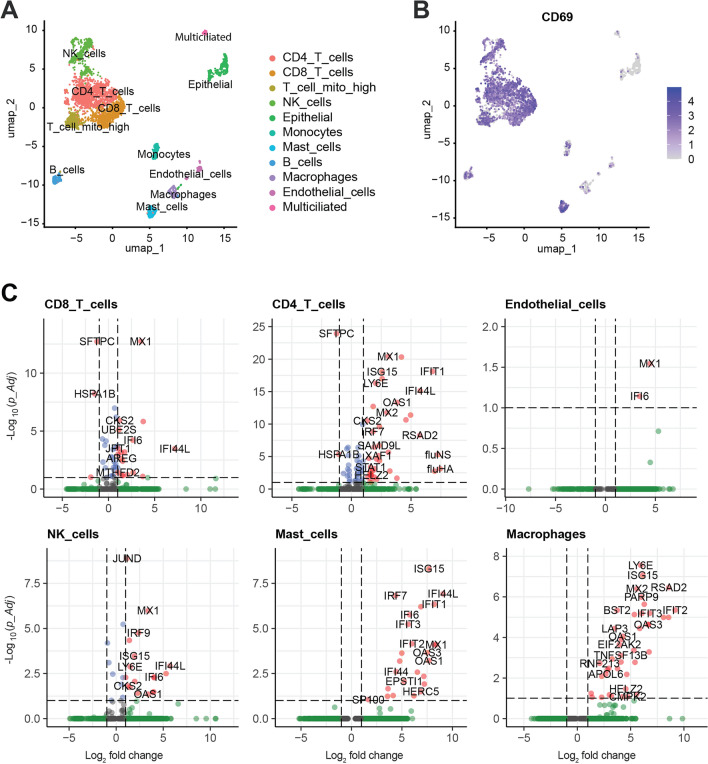
Pseudomonas aeruginosa caused the strongest expression changes and was the only pathogen that notably affected expression of microRNA and PIWI-associated RNA. The major classes of long RNAs (> 100 nt) were represented similarly among the RNAs that were differentially expressed upon infection with the three pathogens (mRNA 77-82%; lncRNA 15-17%; pseudogenes 4-5%), but lnc-DDX60-1, RP11-202G18.1, and lnc-THOC3-2 were part of an RNA signature (additionally containing SNX10 and SLC8A1) specifically associated with IAV infection. IAV infection induced brisk interferon responses, CCL8 being the most strongly upregulated mRNA. Single-cell RNA sequencing identified airway epithelial cells and macrophages as the predominant IAV host cells, but inflammatory responses were also detected in cell types expressing few or no IAV transcripts. Combined analysis of bulk and single-cell RNAseq data identified a set of 6 mRNAs (IFI6, IFI44L, IRF7, ISG15, MX1, MX2) as the core transcriptomic response to IAV infection. The two bacterial pathogens induced qualitatively very similar changes in mRNA expression and predicted signaling pathways, but the magnitude of change was greater in P. aeruginosa infection. Upregulation of GJB2, VNN1, DUSP4, SerpinB7, and IL10, and downregulation of PKMYT1, S100A4, GGTA1P, and SLC22A31 were most strongly associated with bacterial infection.
Human lung tissue mounted substantially different transcriptomic responses to infection by IAV than by BCG and P. aeruginosa, whereas responses to these two divergent bacterial pathogens were surprisingly similar. This HLTE model should prove useful for RNA-directed pathogenesis research and tissue biomarker discovery during the early phase of infections, both at the tissue and single-cell level.
感染的最初 24 小时是病原体与宿主组织相互作用的关键时间窗口。然而,由于无法在感染早期获得组织样本,因此无法在自然感染的人类肺部中研究此类早期事件。因此,我们应用 RNA 测序技术对肺气肿患者的离体培养人肺组织外植体(HLTE)进行研究,以研究流感病毒(IAV)、牛分枝杆菌卡介苗(BCG)和铜绿假单胞菌感染后 24 小时内小非编码 RNA、mRNA 和长非编码 RNA(lncRNA、lincRNA)群体的全球变化。
铜绿假单胞菌引起的表达变化最强,是唯一显著影响 microRNA 和 PIWI 相关 RNA 表达的病原体。三种病原体感染后差异表达的 RNA 中主要的长 RNA 类别(>100nt)相似(mRNA 77-82%;lncRNA 15-17%;假基因 4-5%),但 lnc-DDX60-1、RP11-202G18.1 和 lnc-THOC3-2 是与 IAV 感染特异性相关的 RNA 特征的一部分(还包含 SNX10 和 SLC8A1)。IAV 感染诱导迅速的干扰素反应,CCL8 是上调最明显的 mRNA。单细胞 RNA 测序鉴定出气道上皮细胞和巨噬细胞是 IAV 的主要宿主细胞,但在表达很少或没有 IAV 转录本的细胞类型中也检测到炎症反应。对批量和单细胞 RNAseq 数据的联合分析确定了一组 6 个 mRNA(IFI6、IFI44L、IRF7、ISG15、MX1、MX2)作为 IAV 感染的核心转录组反应。两种细菌病原体引起的 mRNA 表达和预测信号通路的变化性质非常相似,但铜绿假单胞菌感染引起的变化幅度更大。GJB2、VNN1、DUSP4、SerpinB7 和 IL10 的上调以及 PKMYT1、S100A4、GGTA1P 和 SLC22A31 的下调与细菌感染最密切相关。
与 BCG 和铜绿假单胞菌相比,人肺组织对 IAV 的感染产生了明显不同的转录组反应,而对这两种截然不同的细菌病原体的反应则惊人地相似。这种 HLTE 模型应在组织和单细胞水平上对感染早期的 RNA 导向发病机制研究和组织生物标志物发现很有用。