Qing Zhang, Jida Yang, Chengxiu Fu, Yanli Yang, Xia Liu, Sihe Deng
Yunnan Agricultural University, Plant Protection College, Kunming, Yunnan 650000, China.
Yunnan Academy of Agricultural Sciences, Agricultural Resources and Environment Institute, Kunming, Yunnan 650000, China.
Plant Pathol J. 2024 Oct;40(5):498-511. doi: 10.5423/PPJ.OA.06.2024.0086. Epub 2024 Oct 1.
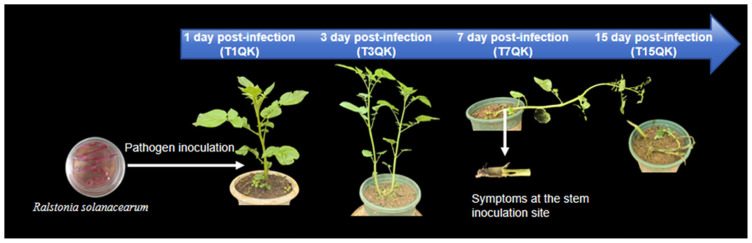
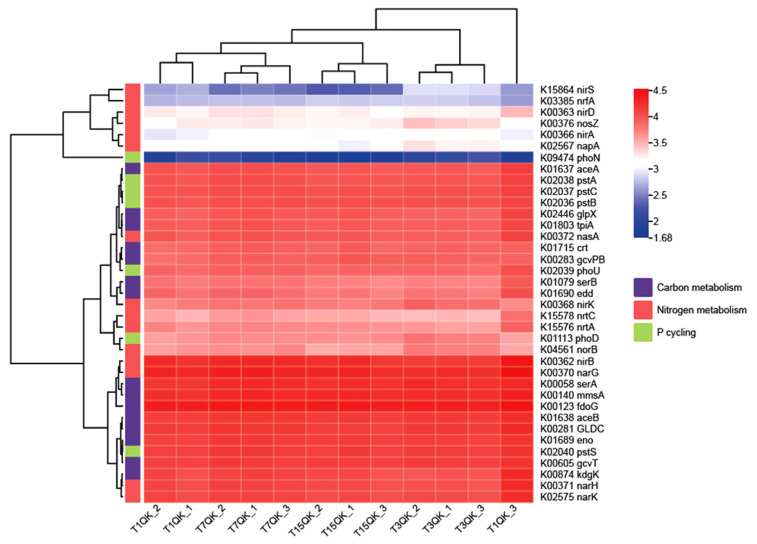
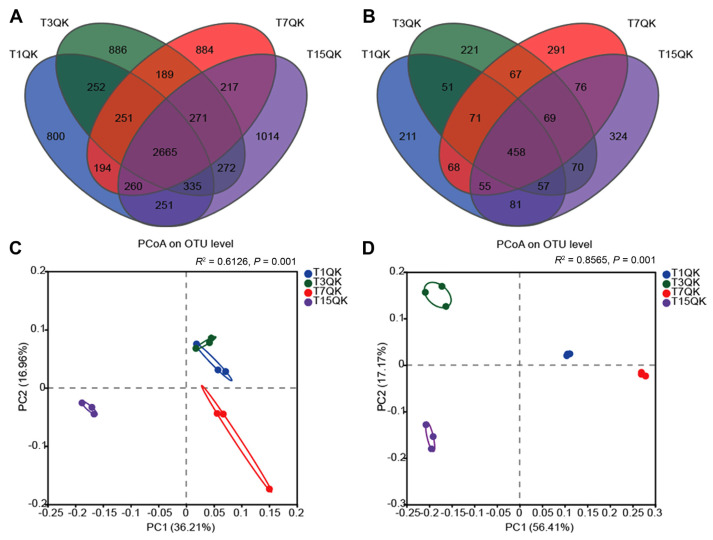
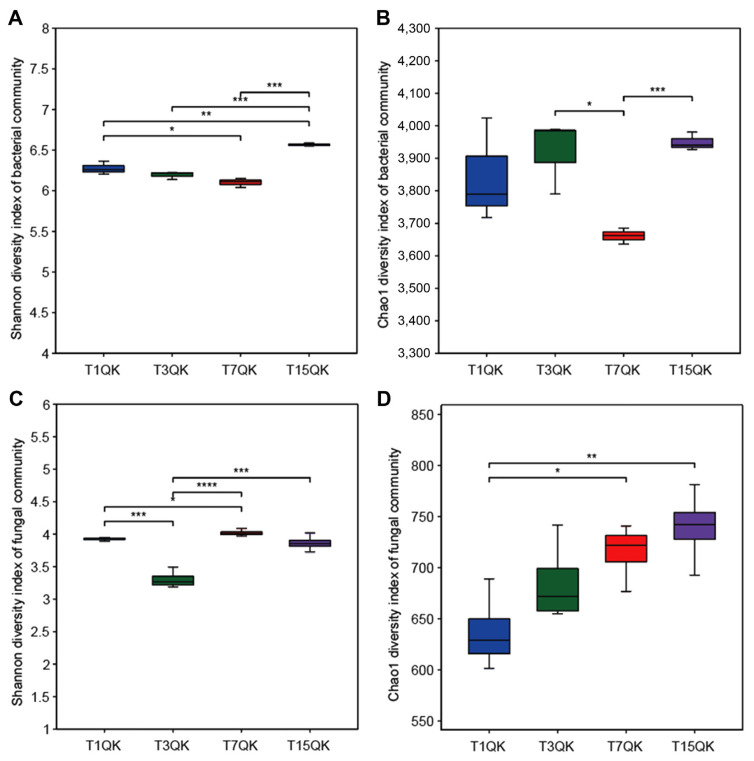
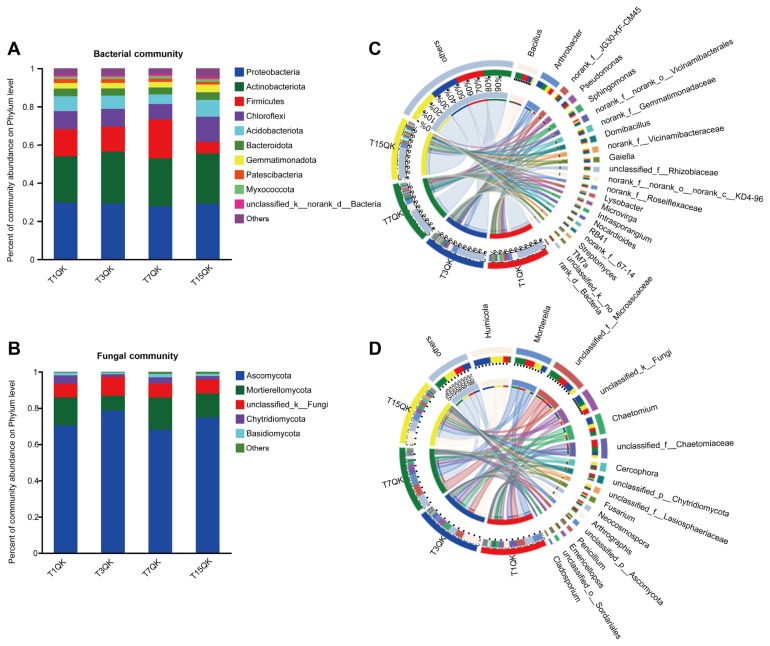
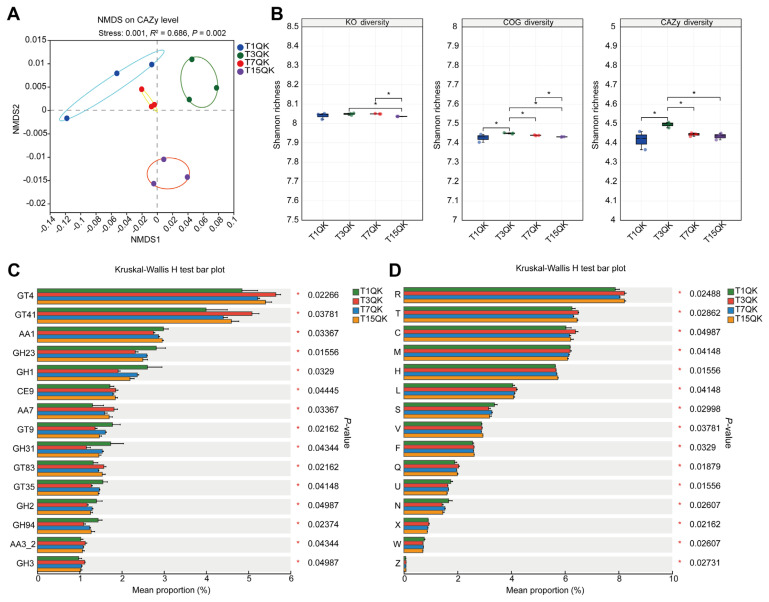
Bacterial wilt caused by Ralstonia solanacearum is a destructive disease that affects potato production, leading to severe yield losses. Currently, little is known about the changes in the assembly and functional adaptation of potato rhizosphere microbial communities during different stages of R. solanacearum infection. In this study, using amplicon and metagenomic sequencing approaches, we analyzed the changes in the composition and functions of bacterial and fungal communities in the potato rhizosphere across four stages of R. solanacearum infection. The results showed that R. solanacearum infection led to significant changes in the composition and functions of bacterial and fungal communities in the potato rhizosphere, with various microbial properties (including α,β-diversity, species composition, and community ecological functions) all being driven by R. solanacearum infection. The relative abundance of some beneficial microorganisms in the potato rhizosphere, including Firmicutes, Bacillus, Pseudomonas, and Mortierella, decreased as the duration of infection increased. Moreover, the related microbial communities played a significant role in basic metabolism and signal transduction; however, the functions involved in soil C, N, and P transformation weakened. This study provides new insights into the dynamic changes in the composition and functions of potato rhizosphere microbial communities at different stages of R. solanacearum infection to adapt to the growth promotion or disease suppression strategies of host plants, which may provide guidance for formulating future strategies to regulate microbial communities for the integrated control of soil-borne plant diseases.
由青枯雷尔氏菌引起的青枯病是一种影响马铃薯生产的毁灭性病害,会导致严重的产量损失。目前,对于青枯雷尔氏菌感染不同阶段马铃薯根际微生物群落的组装和功能适应性变化知之甚少。在本研究中,我们采用扩增子和宏基因组测序方法,分析了青枯雷尔氏菌感染四个阶段马铃薯根际细菌和真菌群落的组成及功能变化。结果表明,青枯雷尔氏菌感染导致马铃薯根际细菌和真菌群落的组成及功能发生显著变化,青枯雷尔氏菌感染驱动了各种微生物特性(包括α、β多样性、物种组成和群落生态功能)的改变。随着感染时间的延长,马铃薯根际一些有益微生物的相对丰度下降,包括厚壁菌门、芽孢杆菌属、假单胞菌属和被孢霉属。此外,相关微生物群落对基本代谢和信号转导起重要作用;然而,参与土壤碳、氮和磷转化的功能减弱。本研究为青枯雷尔氏菌感染不同阶段马铃薯根际微生物群落组成和功能的动态变化提供了新见解,以适应宿主植物的促生长或抑病策略,这可能为制定未来调控微生物群落以综合防治土传植物病害的策略提供指导。