Kountouri Ismini, Christidis Panagiotis, Christidis Georgios, Biniaris Georgios, Gougoulias Nikolaos
Department of General Surgery, General Hospital of Katerini, Katerini, GRC.
Department of Orthopedics and Traumatology, General Hospital of Katerini, Katerini, GRC.
Cureus. 2024 Sep 12;16(9):e69255. doi: 10.7759/cureus.69255. eCollection 2024 Sep.
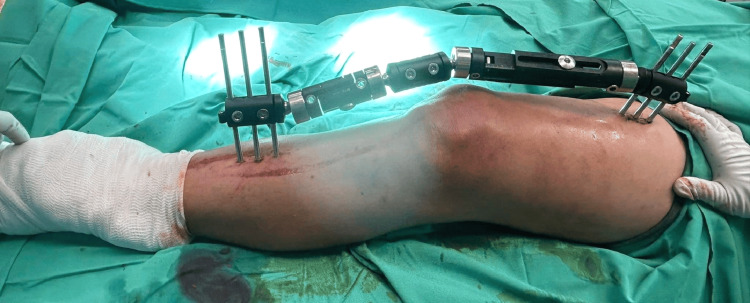
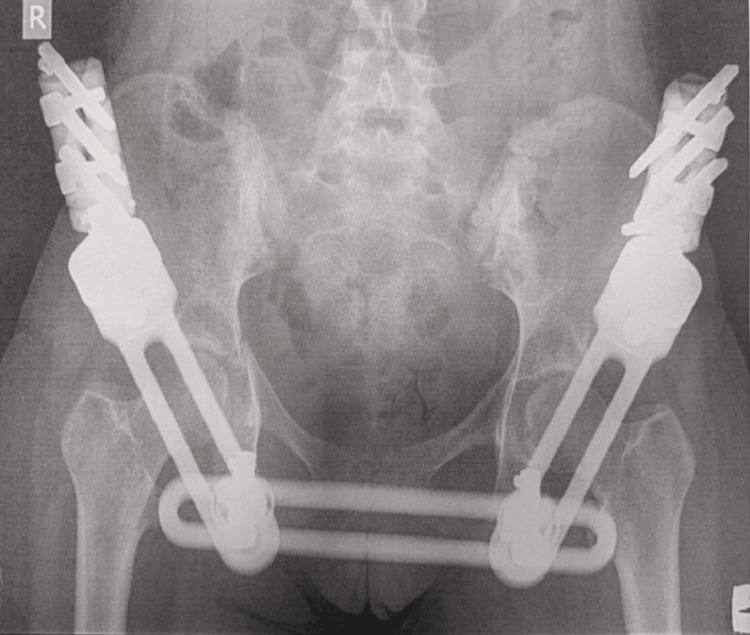
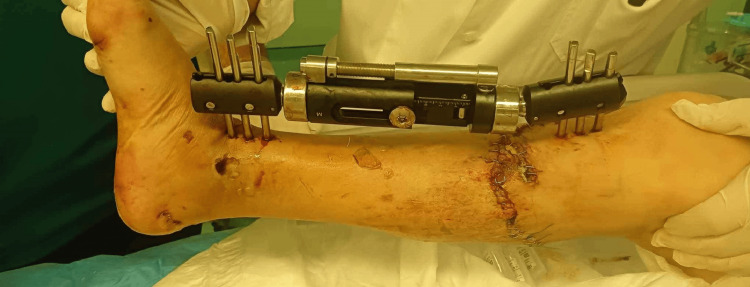
The purpose of this study is to explore the use of damage control techniques in the emergency surgical management of polytrauma patients - those with traumatic injuries affecting at least two anatomical regions - at a District General Hospital in Greece. We conducted a retrospective review of medical records from patients who visited the orthopedic emergency department between 2021 and 2024. From approximately 10,000 injured patients treated annually in our emergency department, we selected a sample of 29 polytrauma patients who required surgical intervention. We utilized the Injury Severity Score (ISS) to evaluate these patients. For 16 patients, the initial surgical intervention was also the definitive treatment, utilizing intramedullary nailing or internal osteosynthesis techniques. In the remaining 13 patients, damage control techniques, including external osteosynthesis (ExFix), were employed. The ISS was the primary criterion for deciding between definitive management and damage control procedures. Data on the 13 patients managed with damage control techniques were further analyzed and are presented in this study. External osteosynthesis was used to stabilize fractures and control bleeding, particularly in patients with multiple orthopedic injuries such as femoral or diaphyseal tibial fractures. This approach facilitated resuscitation and recovery. Our findings suggest that stabilizing long bone fractures with external fixation in patients with an ISS greater than 9 is both safe and likely contributes to overall recovery. This study demonstrates that a damage control approach for polytrauma patients with significant orthopedic trauma is effective for fracture stabilization and bleeding control. Additionally, in three cases, this approach also served as the definitive treatment.
本研究的目的是探讨在希腊一家地区综合医院,损伤控制技术在多发伤患者(即创伤累及至少两个解剖区域的患者)急诊手术管理中的应用。我们对2021年至2024年间就诊于骨科急诊科的患者病历进行了回顾性研究。在我们急诊科每年治疗的约10000名受伤患者中,我们选取了29名需要手术干预的多发伤患者样本。我们使用损伤严重程度评分(ISS)对这些患者进行评估。对于16名患者,初始手术干预也是确定性治疗,采用髓内钉固定或内固定技术。在其余13名患者中,采用了包括外固定术(ExFix)在内的损伤控制技术。ISS是决定采用确定性治疗还是损伤控制程序的主要标准。本研究进一步分析并呈现了13名采用损伤控制技术治疗患者的数据。外固定术用于稳定骨折和控制出血,特别是在患有多处骨科损伤(如股骨或胫骨干骨折)的患者中。这种方法有助于复苏和恢复。我们的研究结果表明,对于ISS大于9的患者,采用外固定稳定长骨骨折既安全又可能有助于整体恢复。本研究表明,对于有严重骨科创伤的多发伤患者,损伤控制方法在骨折稳定和出血控制方面是有效的。此外,在3例病例中,这种方法也作为确定性治疗。