Eibschutz Liesl, Lu Max Yang, Jannatdoust Payam, Judd Angela C, Justin Claire A, Fields Brandon K K, Demirjian Natalie L, Rehani Madan, Reddy Sravanthi, Gholamrezanezhad Ali
Department of Internal Medicine, University of Virginia Hospital, Charlottesville, VA, USA.
Department of Medicine, Yale School of Medicine, New Haven, CT, USA.
Emerg Radiol. 2024 Dec;31(6):851-866. doi: 10.1007/s10140-024-02284-4. Epub 2024 Oct 14.
Previous studies have demonstrated that radiologists and other providers perceive the teratogenic risks of radiologic imaging to be higher than they actually are. Thus, pregnant patients were less likely to receive ionizing radiation procedures. While it is imperative to minimize fetal radiation exposure, clinicians must remember that diagnostic studies should not be avoided due to fear of radiation, particularly if the imaging study can significantly impact patient care. Although guidelines do exist regarding how best to image pregnant patients, many providers are unaware of these guidelines and thus lack confidence when making imaging decisions for pregnant patients. This study aimed to gather information about current education, confidence in, and knowledge about emergency imaging of pregnant women among radiology, emergency medicine, and OB/GYN providers.
We created and distributed an anonymous survey to radiology, emergency medicine, and OB/GYN providers to evaluate their knowledge and confidence in imaging pregnant patients in the emergent setting. This study included a questionnaire with the intent of knowing the correct answers among physicians primarily across the United States (along with some international participation). We conducted subgroup analyses, comparing variables by specialty, radiology subspecialty, and training levels. Based on the survey results, we subsequently developed educational training videos.
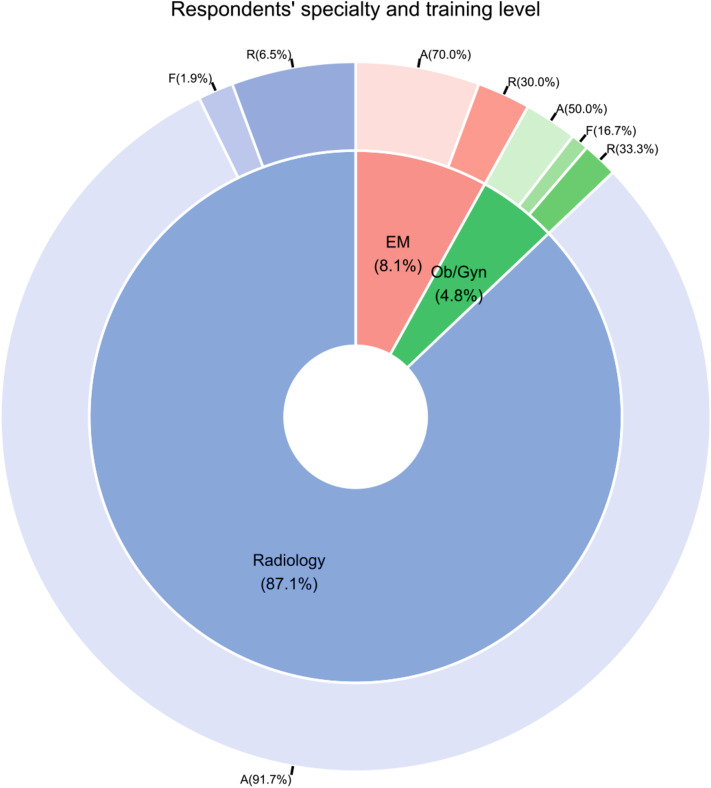
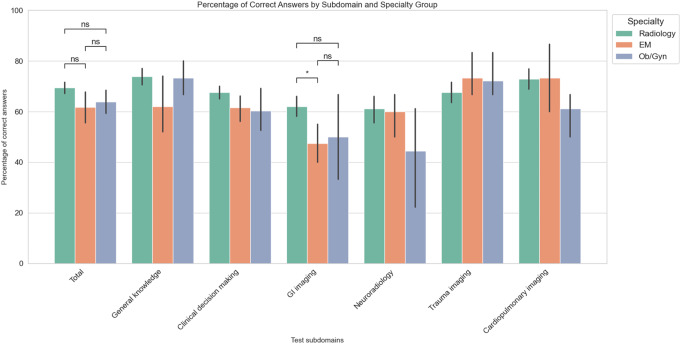
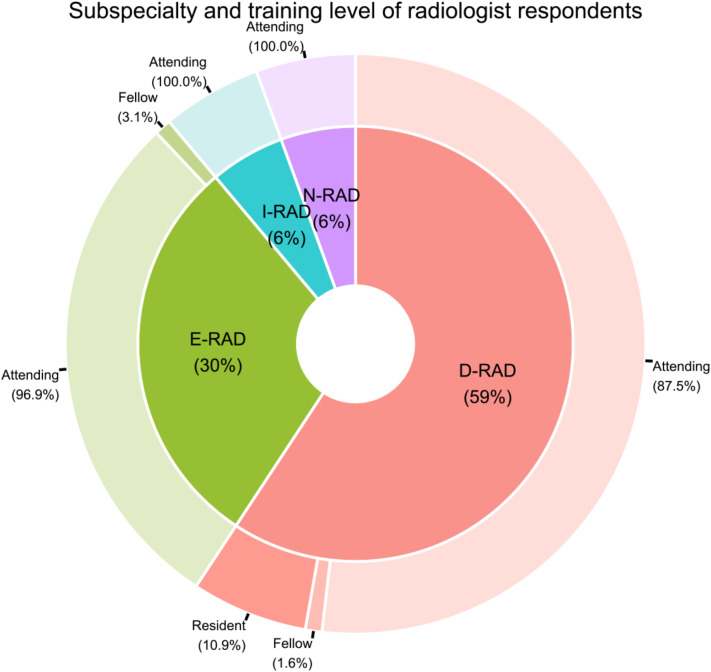
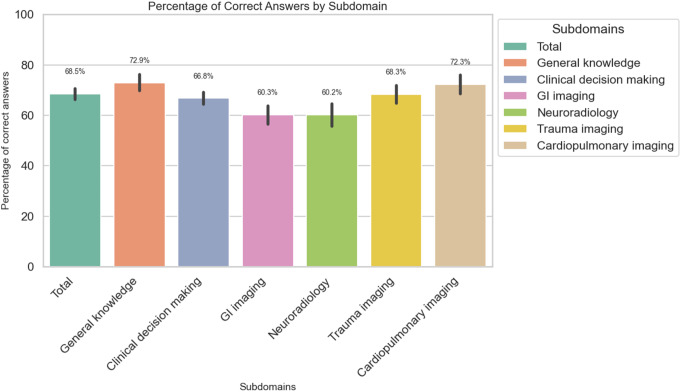
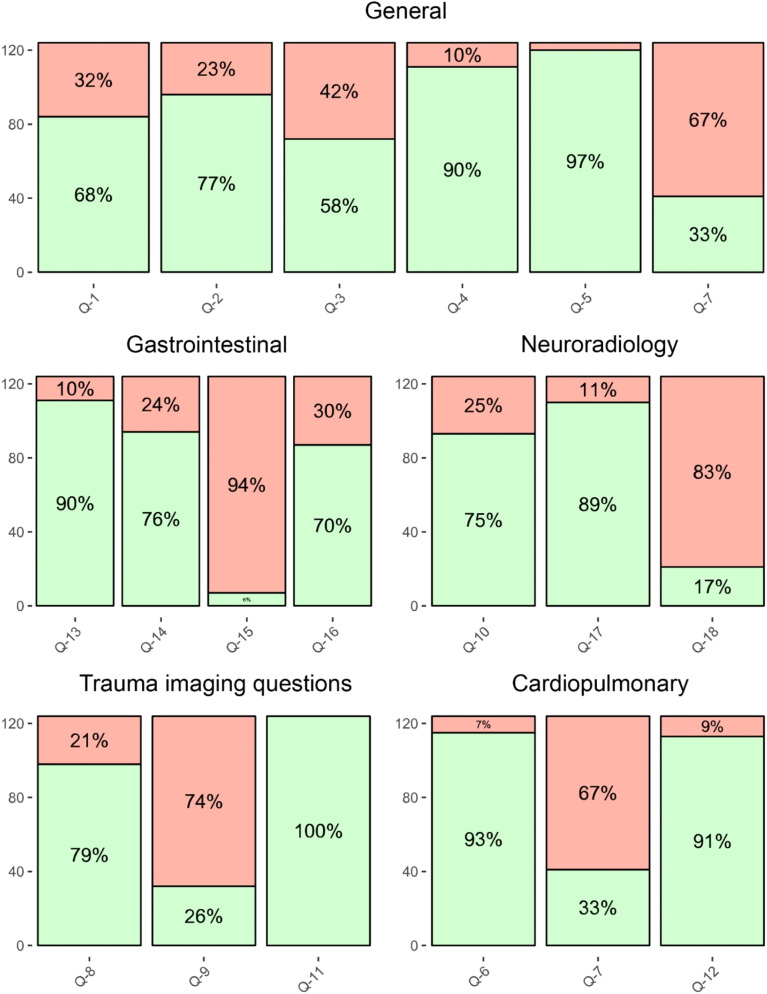
108 radiologists, of which 32 self-identified as emergency radiologists, ten emergency medicine providers and six OB/GYN clinicians completed the survey. The overall correct response rate was 68.5%, though performance across questions was highly variable. Within our 18-question survey, four questions had a correct response rate under 50%, while five questions had correct response rates over 90%. Most responding physicians identified themselves as either "fairly" (58/124, 47%) or "very" (51/124, 41%) confident. Amongst specialties, there were differences in performance concerning the knowledge assessment (p = 0.049), with the strongest performance from radiologists. There were no differences in knowledge by training level (p = 0.4), though confidence levels differed significantly between attending physicians and trainees (p < 0.001).
This study highlights deficiencies in knowledge to support appropriate decision-making surrounding the imaging of pregnant patients. Our results indicate the need for improved physician education and dissemination of standardized clinical guidelines.
先前的研究表明,放射科医生和其他医疗人员认为放射成像的致畸风险高于实际风险。因此,怀孕患者接受电离辐射检查的可能性较小。虽然尽量减少胎儿辐射暴露至关重要,但临床医生必须记住,不应因担心辐射而避免进行诊断性检查,特别是如果成像检查会对患者护理产生重大影响。尽管存在关于如何为怀孕患者进行最佳成像的指南,但许多医疗人员并不知晓这些指南,因此在为怀孕患者做出成像决策时缺乏信心。本研究旨在收集放射科、急诊科和妇产科医疗人员关于当前对孕妇急诊成像的教育、信心和知识的信息。
我们创建并向放射科、急诊科和妇产科医疗人员分发了一份匿名调查问卷,以评估他们在紧急情况下对怀孕患者成像的知识和信心。本研究包括一份问卷,旨在了解主要来自美国各地(以及一些国际参与者)的医生的正确答案。我们进行了亚组分析,按专业、放射科亚专业和培训水平比较变量。根据调查结果,我们随后制作了教育培训视频。
108名放射科医生(其中32名自我认定为急诊放射科医生)、10名急诊科医疗人员和6名妇产科临床医生完成了调查。总体正确回答率为68.5%,不过各问题的表现差异很大。在我们的18个问题的调查中,4个问题的正确回答率低于50%,而5个问题的正确回答率超过90%。大多数回答问题的医生认为自己“相当”(58/124,47%)或“非常”(51/124,41%)有信心。在各专业中,知识评估的表现存在差异(p = 0.049),放射科医生的表现最强。培训水平对知识没有影响(p = 0.4),但主治医师和实习生的信心水平差异显著(p < 0.001)。
本研究突出了在支持围绕怀孕患者成像做出适当决策的知识方面存在的不足。我们的结果表明需要改善医生教育并传播标准化临床指南。