School of Psychological Sciences, Tel Aviv University, Tel Aviv, Israel.
Department of Neurology, Thomas Jefferson University, Philadelphia, Pennsylvania, United States of America.
PLoS One. 2024 Oct 14;19(10):e0312042. doi: 10.1371/journal.pone.0312042. eCollection 2024.
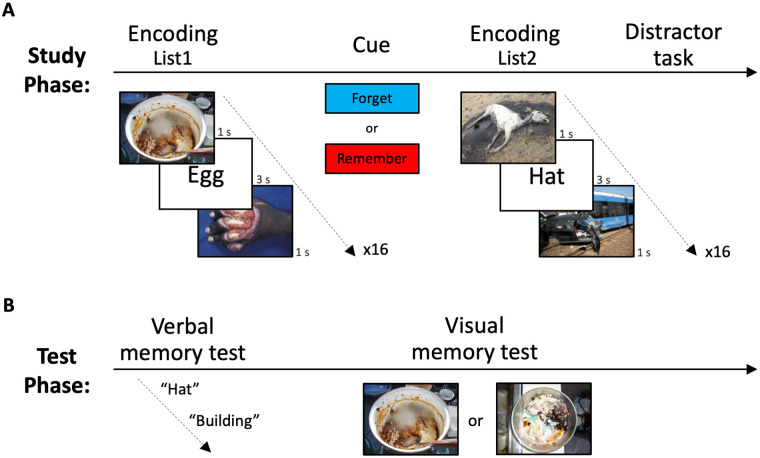
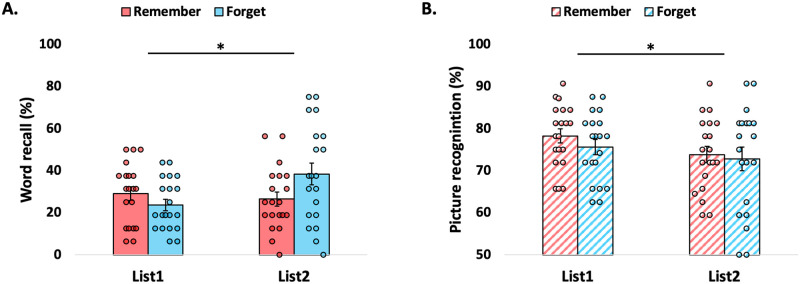
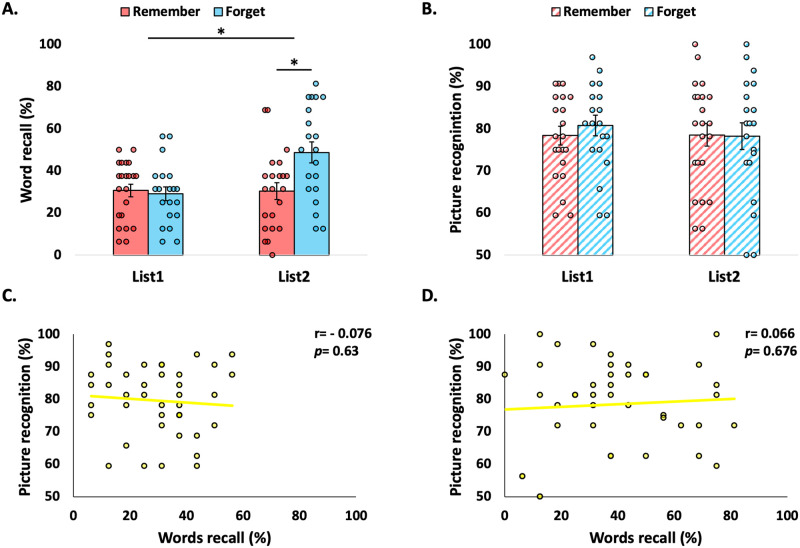
Neutral memories can be modulated via intentional memory control paradigms such as directed forgetting. In addition, previous studies have shown that neutral visual memories can be modulated indirectly, via remember and forget instructions towards competing verbal memories. Here we show that direct modulation of neutral verbal memory strength is impaired by negative visual context, and that negative visual context is resistant to indirect memory modulation. Participants were directly instructed to intentionally remember or forget newly encoded neutral verbal information. Importantly, this verbal information was interleaved with embedded negative visual context. Results showed that negative visual context eliminated the well-documented effect of direct instructions to intentionally remember verbal content. Furthermore, negative visual memory was highly persistent, overcoming its sensitivity to indirect modulation shown in previous studies. Finally, these memory effects persisted to the following day. These results demonstrate the dominance of negative visual context over neutral content, highlighting the challenges associated with memory modulation in psychopathologies involving maladaptive processing of negative visual memories.
中性记忆可以通过定向遗忘等有意记忆控制范式进行调节。此外,先前的研究表明,中性视觉记忆可以通过对竞争的言语记忆的“记住”和“忘记”指令进行间接调节。在这里,我们表明,中性言语记忆的直接调节会受到负性视觉背景的损害,而负性视觉背景则不受间接记忆调节的影响。参与者被直接指示有意记住或忘记新编码的中性言语信息。重要的是,这种言语信息与嵌入式负性视觉背景交错出现。结果表明,负性视觉背景消除了直接指令有意记住言语内容的众所周知的效果。此外,负性视觉记忆具有高度的持久性,克服了先前研究中显示的对间接调节的敏感性。最后,这些记忆效应持续到第二天。这些结果表明,负性视觉背景对中性内容具有主导地位,突出了与涉及对负性视觉记忆进行适应不良处理的心理病理学中的记忆调节相关的挑战。