Molecular Microbiology Department, Faculty of Biotechnology, University of Wroclaw, Wroclaw, Poland.
The John Innes Centre, Norwich Research Park, Norwich, NR4 7UH, UK.
Microb Cell Fact. 2024 Oct 14;23(1):275. doi: 10.1186/s12934-024-02549-0.
Streptomyces are sporulating soil bacteria with enormous potential for secondary metabolites biosynthesis. Regulatory networks governing Streptomyces coelicolor differentiation and secondary metabolites production are complex and composed of numerous regulatory proteins ranging from specific transcriptional regulators to sigma factors. Nucleoid-associated proteins (NAPs) are also believed to contribute to regulation of gene expression. Upon DNA binding, these proteins impact DNA accessibility. Among NAPs, HU proteins are the most widespread and abundant. Unlike other bacteria, the Streptomyces genomes encode two HU homologs: HupA and HupS, which differ in structure and expression profile. However, it remained unclear whether the functions of both homologs overlap. Additionally, although both proteins have been shown to bind the chromosome, their rolesin transcriptional regulation have not been studied so far.
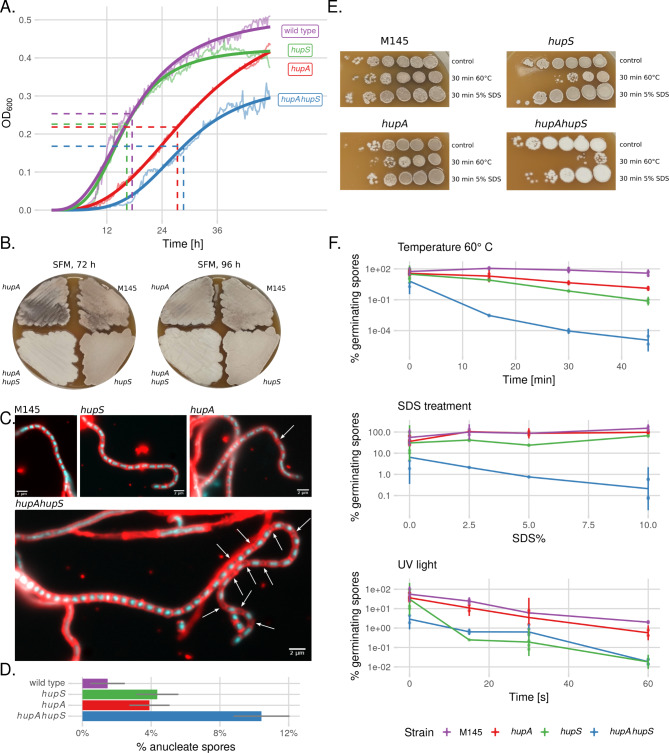
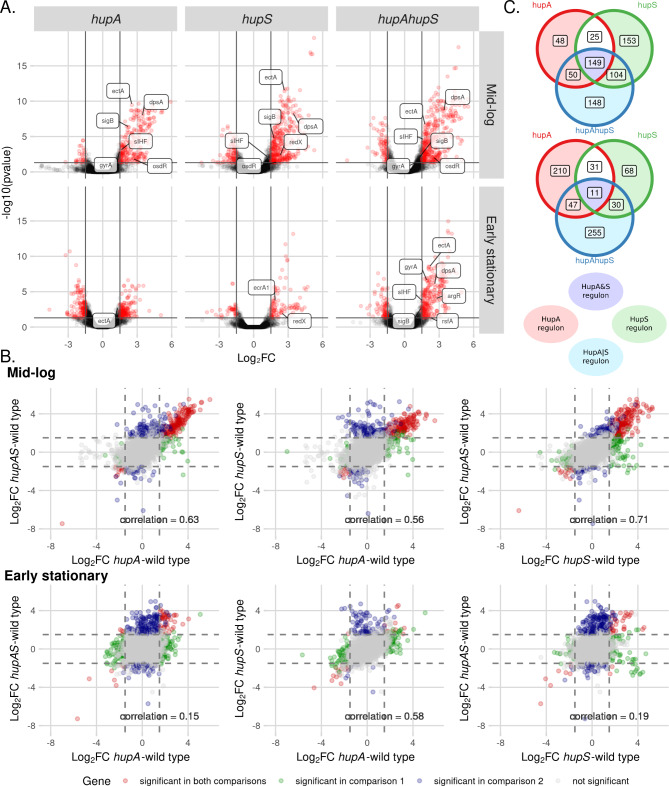
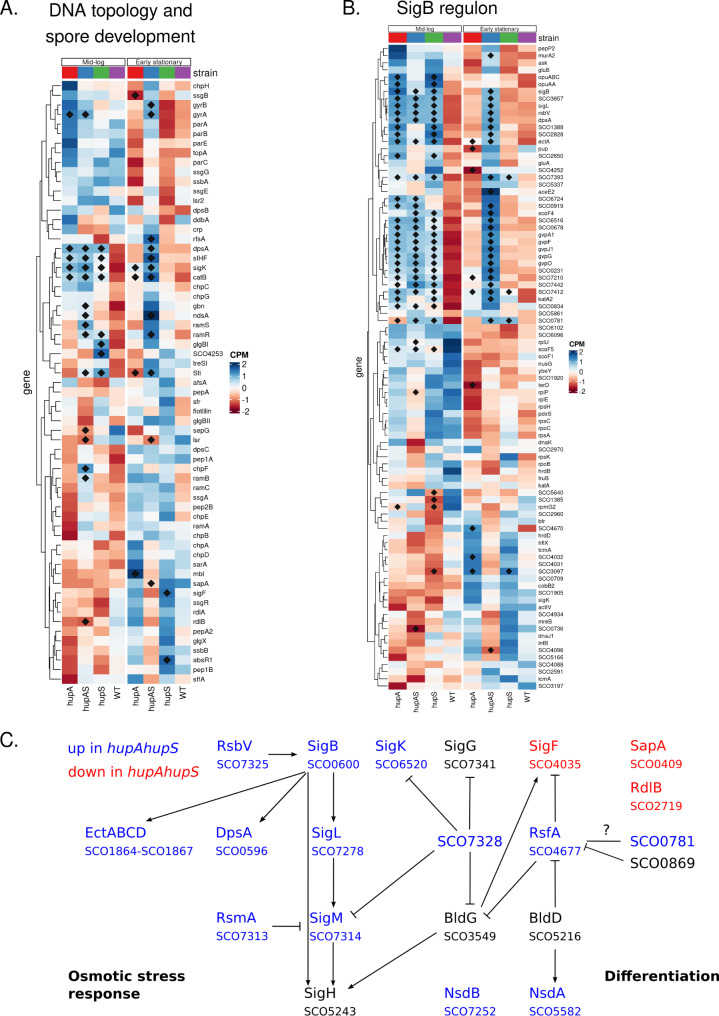
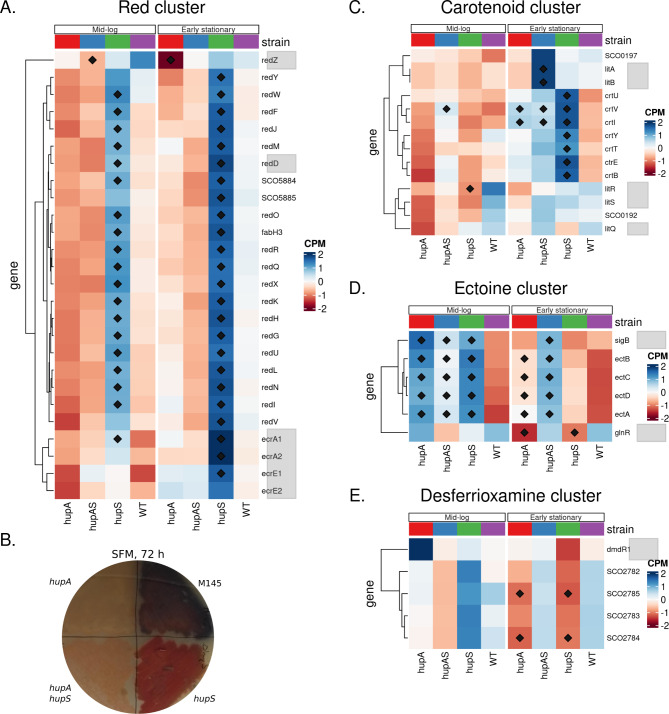
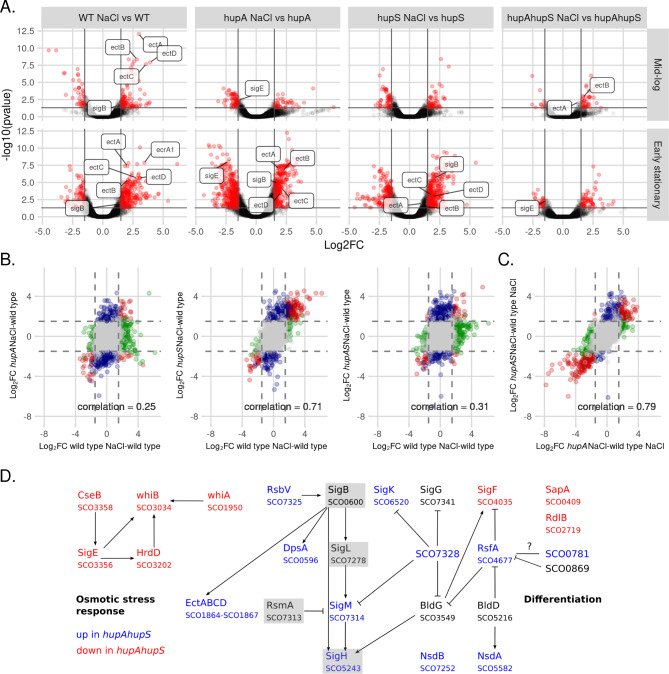
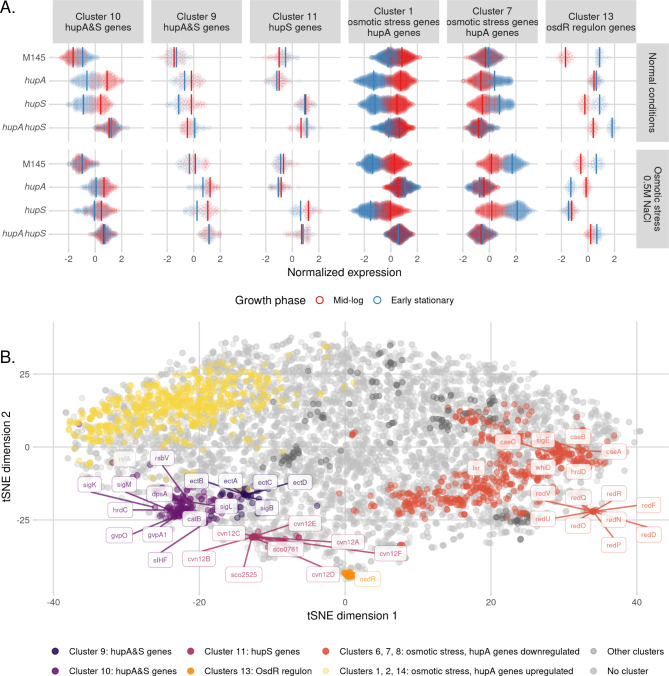
In this study, we explore whether HupA and HupS affect S. coelicolor growth under optimal and stressful conditions and how they control global gene expression. By testing both single and double mutants, we address the question of the complementarity of both HU homologs. We show that the lack of both hup genes led to growth and sporulation inhibition, as well as increased spore fragility. We also demonstrate that both HU homologs can be considered global transcriptional regulators, influencing expression of between 2% and 6% genes encoding among others proteins linked to global regulatory networks and secondary metabolite production.
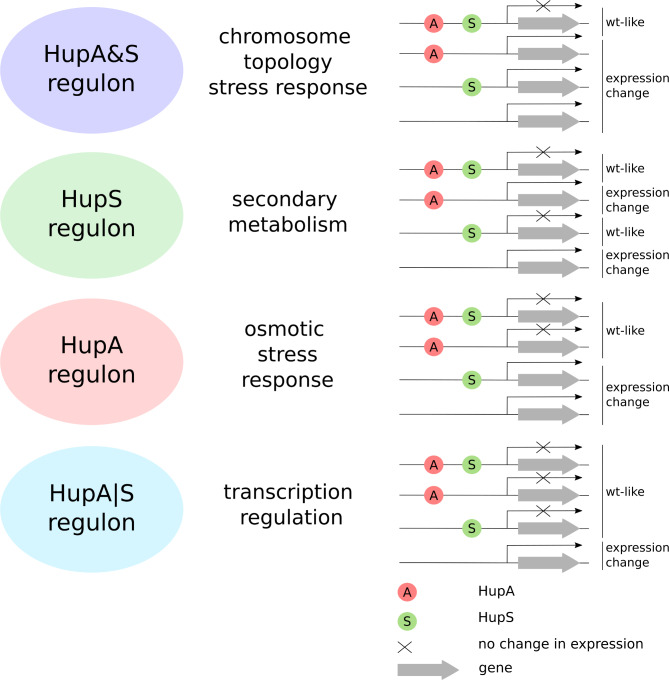
We identify the independent HupA and HupS regulons, as well as genes under the control of both HupA and HupS proteins. Our data indicate a partial overlap between the functions of HupA and HupS during S. coelicolor growth. HupA and HupS play important roles in Streptomyces regulatory network and impact secondary metabolite clusters.
链霉菌是一种具有巨大次生代谢产物生物合成潜力的产孢土壤细菌。调节链霉菌分化和次生代谢产物产生的调控网络非常复杂,由许多调节蛋白组成,范围从特定的转录调节因子到 sigma 因子。核小体相关蛋白(NAPs)也被认为有助于基因表达的调节。在与 DNA 结合后,这些蛋白会影响 DNA 的可及性。在 NAPs 中,HU 蛋白最为广泛和丰富。与其他细菌不同,链霉菌基因组编码两个 HU 同源物:HupA 和 HupS,它们在结构和表达谱上有所不同。然而,两个同源物的功能是否重叠尚不清楚。此外,尽管这两种蛋白都被证明可以结合染色体,但它们在转录调节中的作用尚未得到研究。
在这项研究中,我们探讨了 HupA 和 HupS 是否影响最佳和应激条件下的 S. coelicolor 的生长,以及它们如何控制全局基因表达。通过测试单个和双突变体,我们解决了两个 HU 同源物互补性的问题。结果表明,缺乏两个 hup 基因会导致生长和孢子形成受到抑制,以及孢子脆性增加。我们还表明,两个 HU 同源物都可以被认为是全局转录调节因子,影响编码与全局调控网络和次生代谢产物产生相关的蛋白质等基因的表达,占基因总数的 2%至 6%。
我们确定了独立的 HupA 和 HupS 调节子,以及受 HupA 和 HupS 蛋白控制的基因。我们的数据表明,在 S. coelicolor 生长过程中,HupA 和 HupS 的功能存在部分重叠。HupA 和 HupS 在链霉菌调控网络中发挥着重要作用,并影响次生代谢物簇。