Department of Respiratory Medicine, Xinhua Hospital, Shanghai Jiaotong University School of Medicine, Shanghai, China.
Department of Respiratory and Critical Care Medicine, The Second Hospital of Jilin University, Changchun, Jilin, China.
Front Immunol. 2024 Sep 30;15:1430899. doi: 10.3389/fimmu.2024.1430899. eCollection 2024.
During the Coronavirus Disease 2019 (COVID-19) epidemic, the massive spread of the disease has placed an enormous burden on the world's healthcare and economy. The early risk assessment system based on a variety of machine learning (ML) algorithms may be able to provide more accurate advice on the classification of COVID-19 patients, offering predictive, preventive, and personalized medicine (PPPM) solutions in the future.
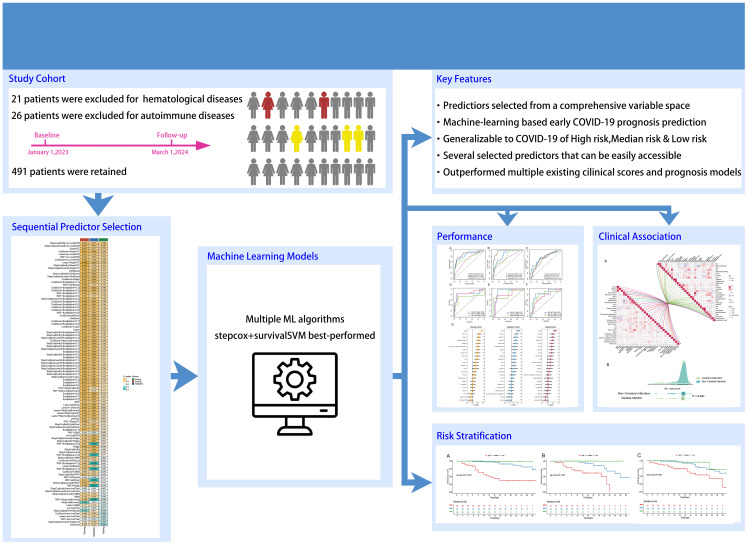
In this retrospective study, we divided a portion of the data into training and validation cohorts in a 7:3 ratio and established a model based on a combination of two ML algorithms first. Then, we used another portion of the data as an independent testing cohort to determine the most accurate and stable model and compared it with other scoring systems. Finally, patients were categorized according to risk scores and then the correlation between their clinical data and risk scores was studied.
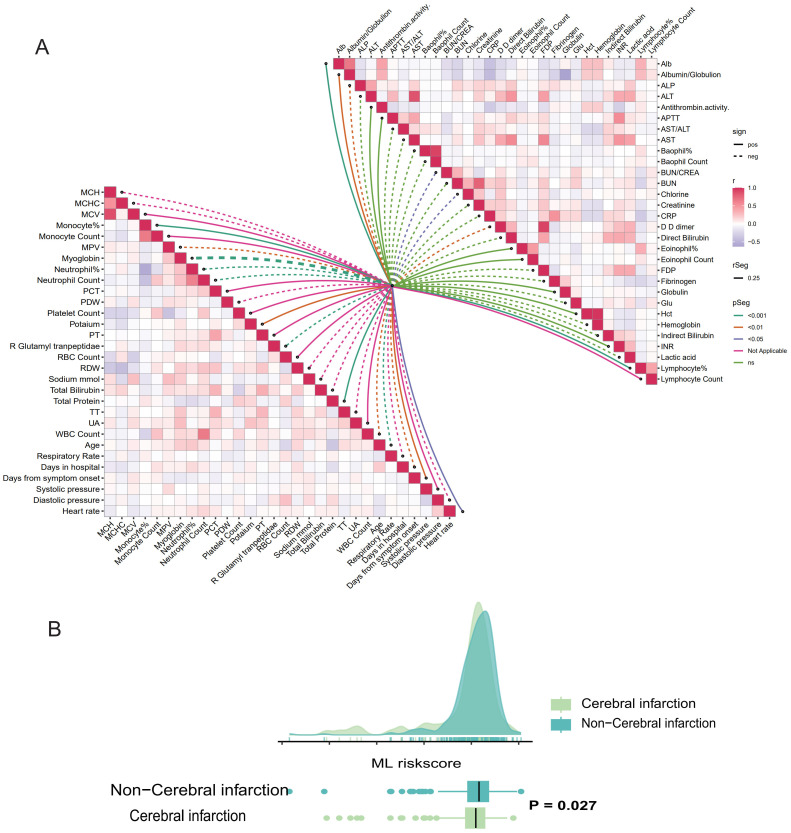
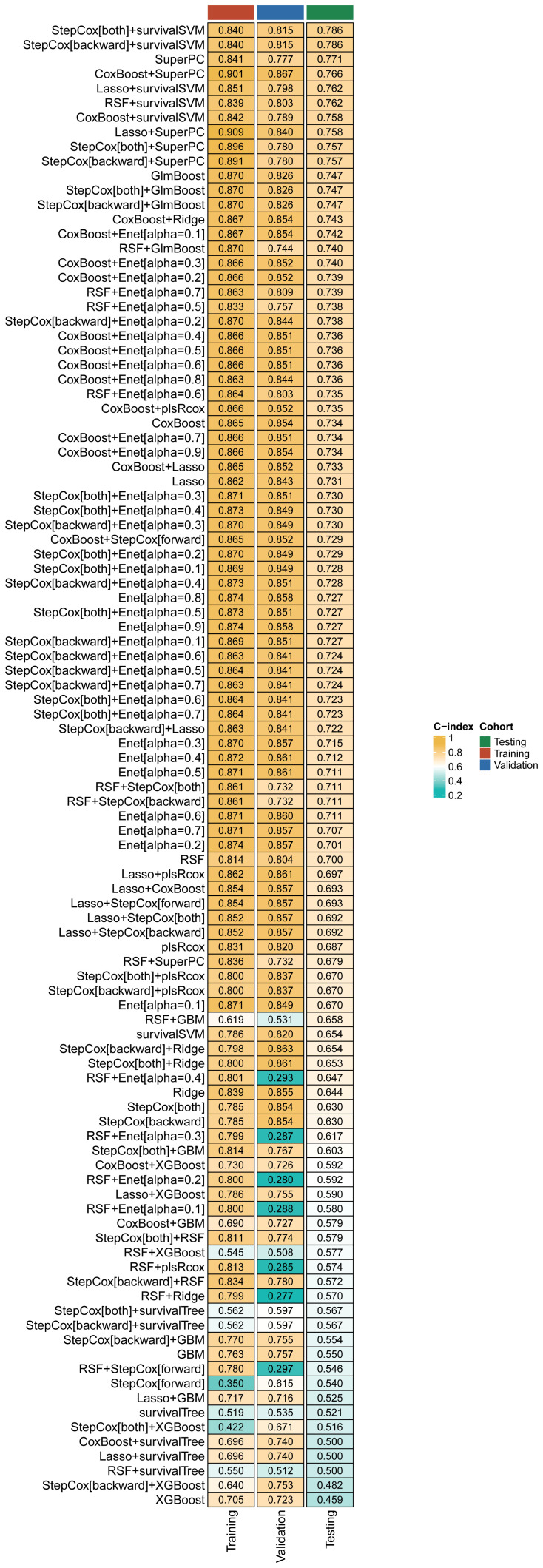
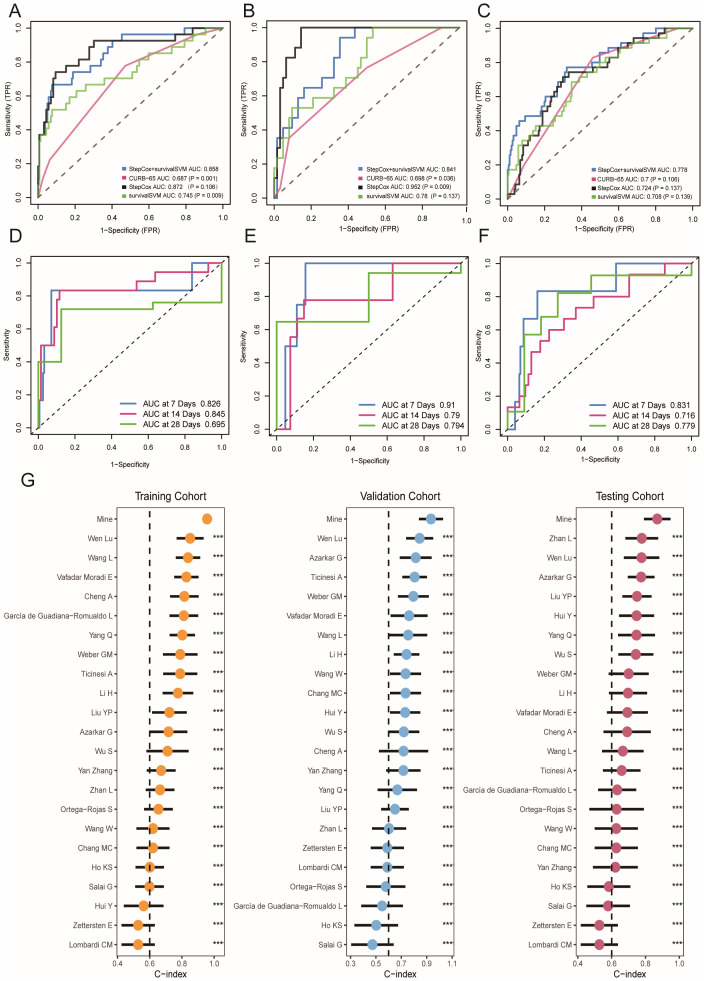
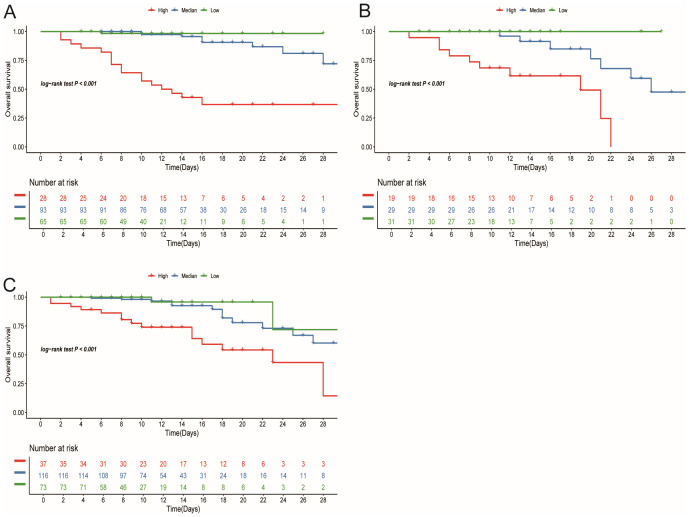
The elderly accounted for the majority of hospitalized patients with COVID-19. The C-index of the model constructed by combining the stepcox[both] and survivalSVM algorithms was 0.840 in the training cohort and 0.815 in the validation cohort, which was calculated to have the highest C-index in the testing cohort compared to the other 119 ML model combinations. Compared with current scoring systems, including the CURB-65 and several reported prognosis models previously, our model had the highest AUC value of 0.778, representing an even higher predictive performance. In addition, the model's AUC values for specific time intervals, including days 7,14 and 28, demonstrate excellent predictive performance. Most importantly, we stratified patients according to the model's risk score and demonstrated a difference in survival status between the high-risk, median-risk, and low-risk groups, which means a new and stable risk assessment system was built. Finally, we found that COVID-19 patients with a history of cerebral infarction had a significantly higher risk of death.
This novel risk assessment system is highly accurate in predicting the prognosis of patients with COVID-19, especially elderly patients with COVID-19, and can be well applied within the PPPM framework. Our ML model facilitates stratified patient management, meanwhile promoting the optimal use of healthcare resources.
在 2019 年冠状病毒病(COVID-19)疫情期间,该疾病的大规模传播给全球的医疗保健和经济带来了巨大的负担。早期基于各种机器学习(ML)算法的风险评估系统可能能够为 COVID-19 患者的分类提供更准确的建议,为未来提供预测、预防和个性化医疗(PPPM)解决方案。
在这项回顾性研究中,我们将一部分数据按 7:3 的比例分为训练和验证队列,并首先基于两种 ML 算法的组合建立了一个模型。然后,我们使用另一部分数据作为独立测试队列,以确定最准确和稳定的模型,并将其与其他评分系统进行比较。最后,根据风险评分对患者进行分类,并研究其临床数据与风险评分之间的相关性。
住院 COVID-19 患者以老年人为主。在训练队列中,由 stepcox[both]和 survivalSVM 算法组合构建的模型的 C 指数为 0.840,在验证队列中为 0.815,与其他 119 种 ML 模型组合相比,在测试队列中计算得出的 C 指数最高。与包括 CURB-65 和之前报道的几种预后模型在内的当前评分系统相比,我们的模型 AUC 值最高,为 0.778,代表了更高的预测性能。此外,该模型在 7、14 和 28 天等特定时间间隔的 AUC 值也表现出出色的预测性能。最重要的是,我们根据模型的风险评分对患者进行分层,并证明了高危、中危和低危组之间的生存状态存在差异,这意味着建立了一个新的、稳定的风险评估系统。最后,我们发现有脑梗死病史的 COVID-19 患者的死亡风险显著增加。
该新型风险评估系统在预测 COVID-19 患者的预后方面具有高度准确性,特别是 COVID-19 老年患者,可在 PPPM 框架内得到很好的应用。我们的 ML 模型便于对患者进行分层管理,同时促进了医疗资源的最佳利用。