Meenatchi Sundaram S, Naik Jayendra R, Natarajan Manikandan, Acharya K Aneesha
Department of Instrumentation and Control Engineering, Manipal Institute of Technology, Manipal Academy of Higher Education (MAHE), Manipal, India.
Department of Physiotherapy at Manipal College of Health Professions, Manipal Academy of Higher Education (MAHE), Manipal, India.
Front Digit Health. 2024 Sep 30;6:1339184. doi: 10.3389/fdgth.2024.1339184. eCollection 2024.
An immobile patient cannot be weighed on a stand-on weighing machine, i.e., a bathroom scale. They have to get weighed while lying, which is not easy. The main objective of this research is to design a medical apparatus that measures the patient's weight in a lying condition. To achieve this the apparatus is designed as a stretcher to carry the patient in and around the hospital.
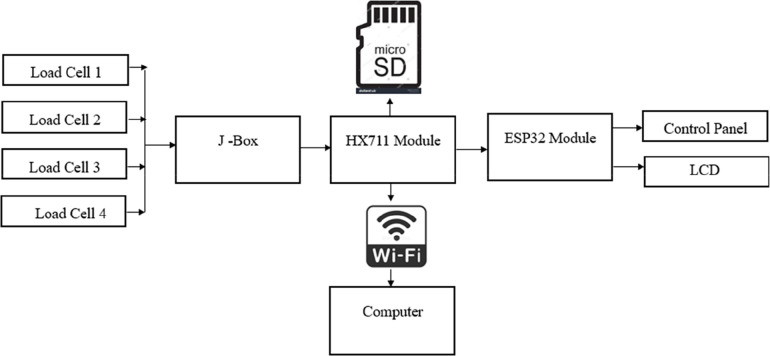
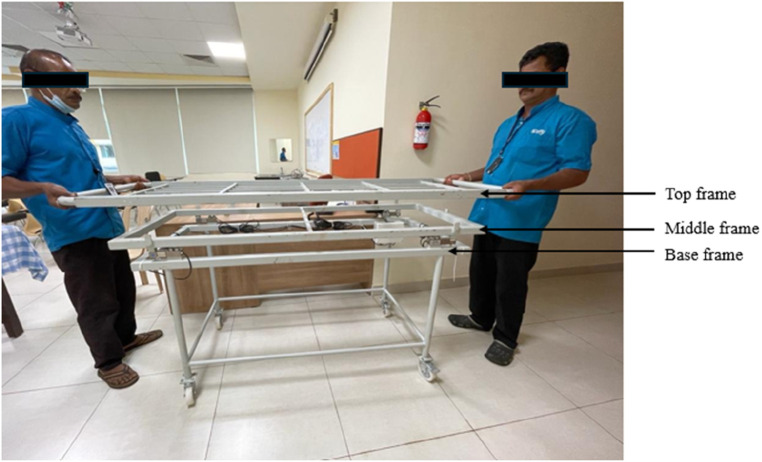
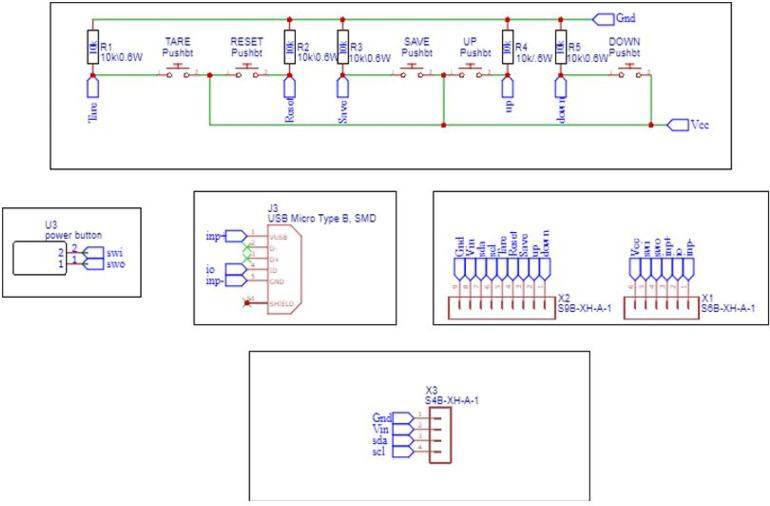
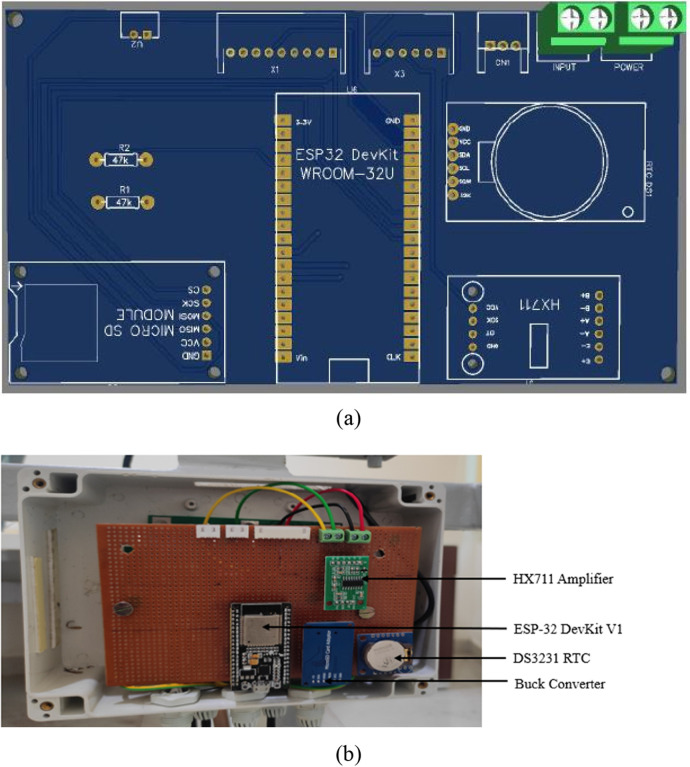
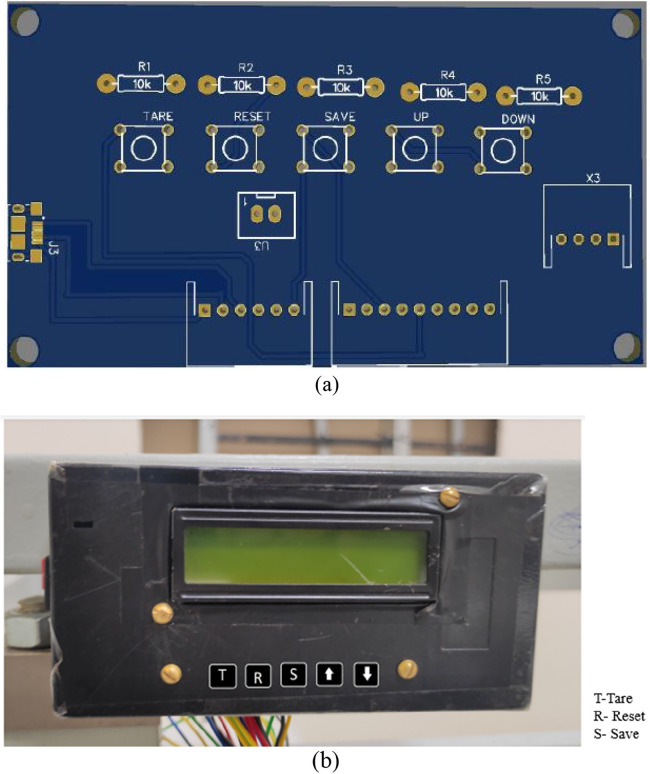
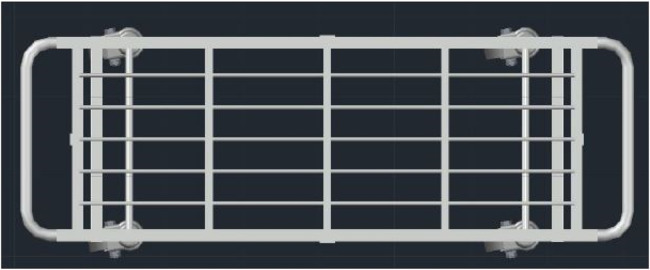
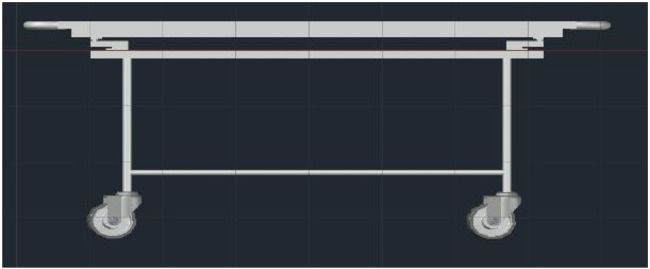
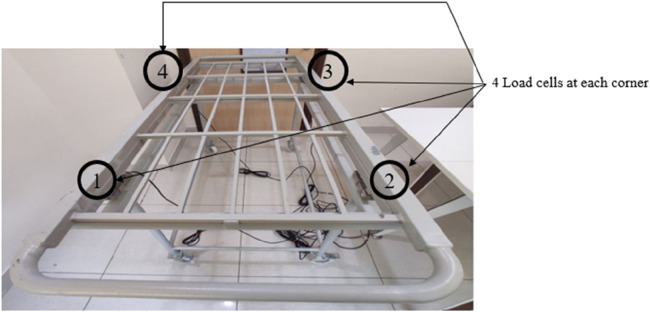
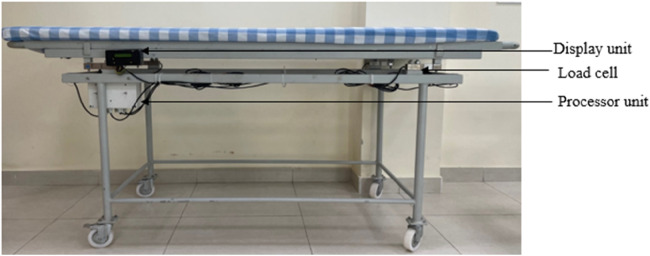
The stretcher has four load cells to measure the patient's weight; it can bear a weight of 500 kg and has a self-weight of 20 kg. A Microcontroller unit (MCU) is embedded into the apparatus to weigh the patient lying on it. The stretcher comprises the top frame, middle frame, and base frame. The top frame can be detached and mounted back to the middle frame; this will help the medical personnel shift the patients from a medical bed. The middle frame is a plate structure where the four load cells are mounted at the corners of the lower plate. The upper plate functions as a pressure plate on the load cell. The base plate has four heavy-duty wheels that can bear the load. The middle frame and base frame, together, form a single structure, giving mobility to the structure. A control panel is employed with reset, tare, and on-off buttons to control the embedded platform. The LCD panel on the side of the apparatus shows the weight when the patient is placed on top of the apparatus.
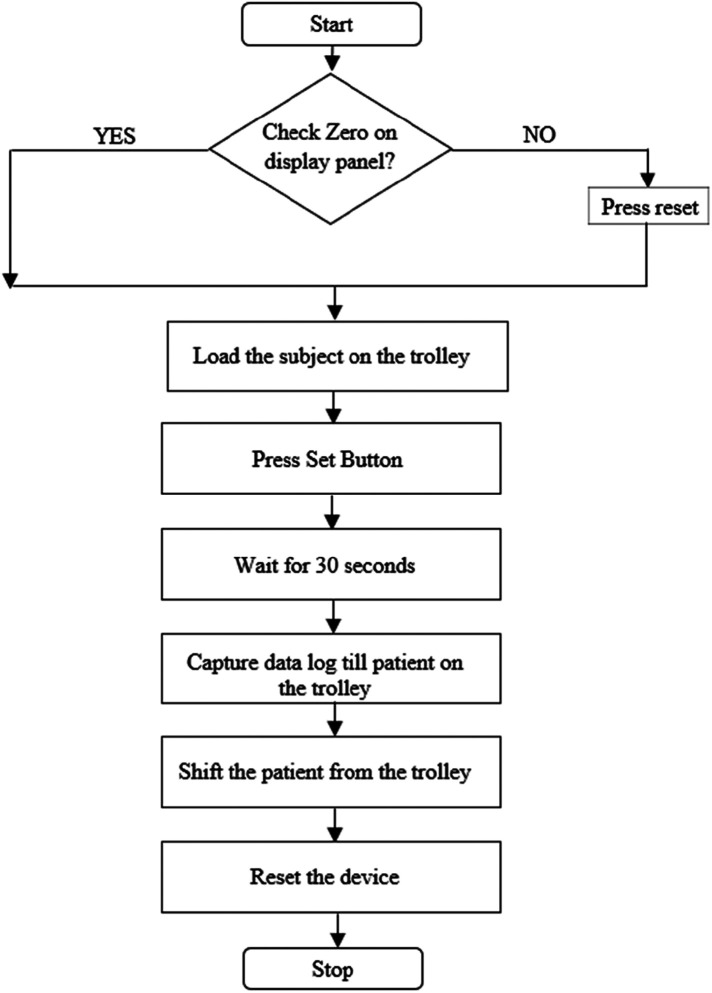
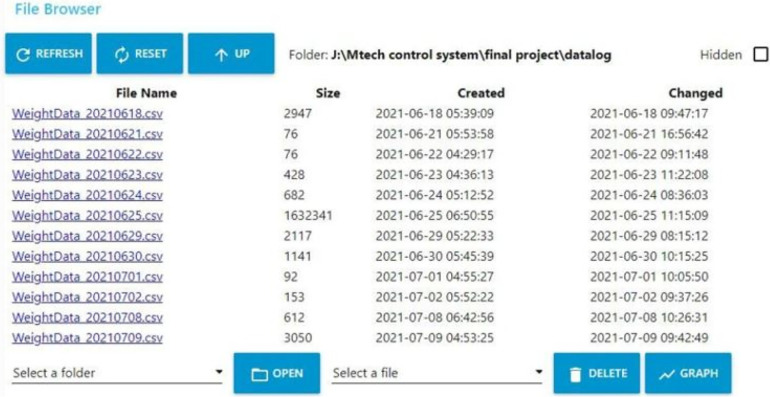
A prototype trolley equipped with a wireless data logging system was tested on 10 healthy participants. The device accurately measured weight within ±50 g across a scale range of 2-140 kg, with data captured every 30 s over a 5-min testing period. Wireless communication was successfully demonstrated over a 100-m range. The important add-on feature of this work is the apparatus is connected to the internet, transforming it into an IoT-based medical device.
无法自主活动的患者无法使用站立式称重机(即浴室秤)称重。他们必须躺着称重,这并非易事。本研究的主要目的是设计一种能在患者躺着的状态下测量其体重的医疗设备。为实现这一目标,该设备被设计成一张担架,用于在医院内及周边运送患者。
该担架有四个称重传感器来测量患者体重;它能承受500千克的重量,自身重量为20千克。一个微控制器单元(MCU)被嵌入该设备,用于称量躺在上面的患者。担架包括顶部框架、中间框架和底部框架。顶部框架可以拆卸并重新安装到中间框架上;这将有助于医护人员将患者从医疗床上转移。中间框架是一个平板结构,四个称重传感器安装在下部平板的角落。上部平板用作称重传感器上的压力板。底部平板有四个能承受负载的重型轮子。中间框架和底部框架共同构成一个单一结构,使该结构具有移动性。使用一个控制面板,带有复位、去皮和开/关按钮来控制嵌入式平台。设备侧面的液晶显示屏在患者放置在设备顶部时显示体重。
一个配备无线数据记录系统的原型手推车在10名健康参与者身上进行了测试。该设备在2至140千克的秤量范围内,能在±50克的精度内准确测量体重,在5分钟的测试期间每30秒采集一次数据。在100米的范围内成功演示了无线通信。这项工作的重要附加功能是该设备连接到互联网,将其转变为基于物联网的医疗设备。