Mergola Lucia, Carbone Luigi, Bloise Ermelinda, Lazzoi Maria Rosaria, Del Sole Roberta
Department of Engineering for Innovation, University of Salento, Via Monteroni, 73100 Lecce, Italy.
National Nanotechnology Laboratory (NNL), Institute of Nanoscience CNR, c/o Campus Ecotekne, Via Monteroni, 73100 Lecce, Italy.
Nanomaterials (Basel). 2024 Oct 8;14(19):1611. doi: 10.3390/nano14191611.
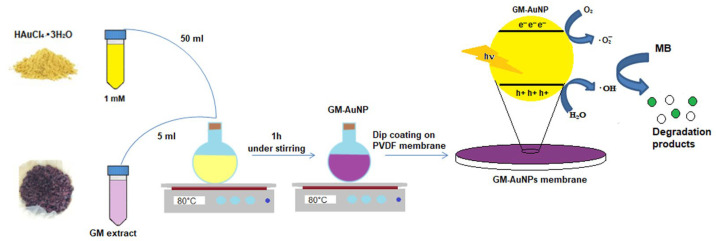
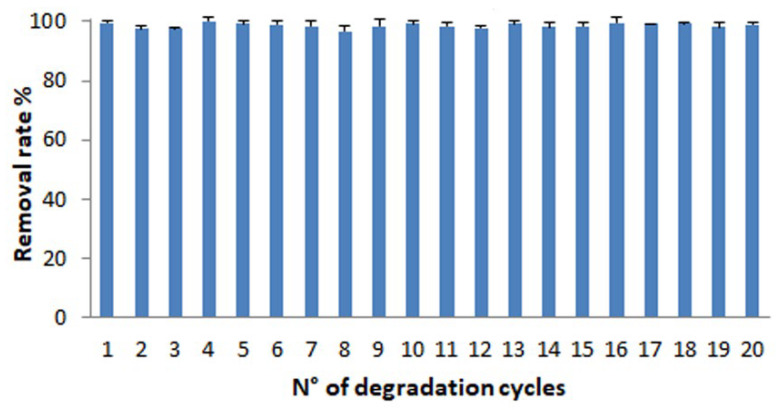
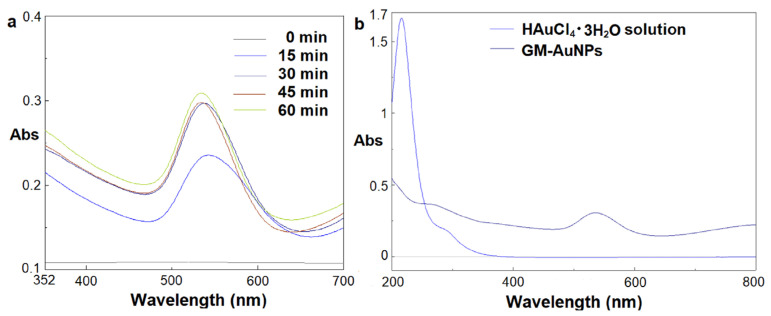
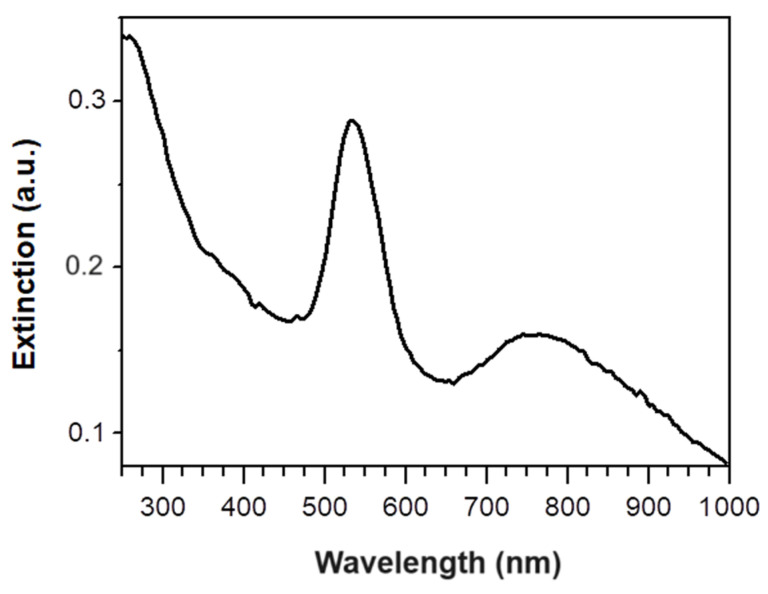
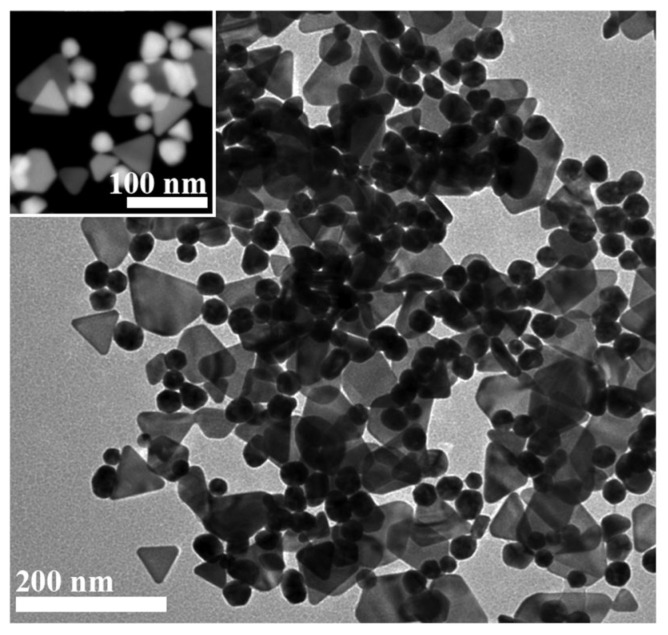
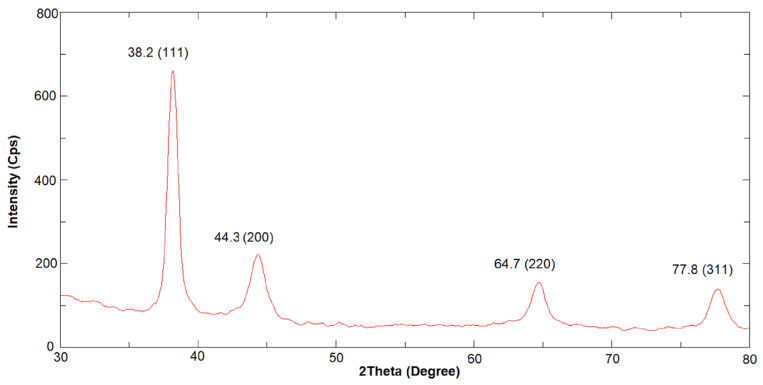
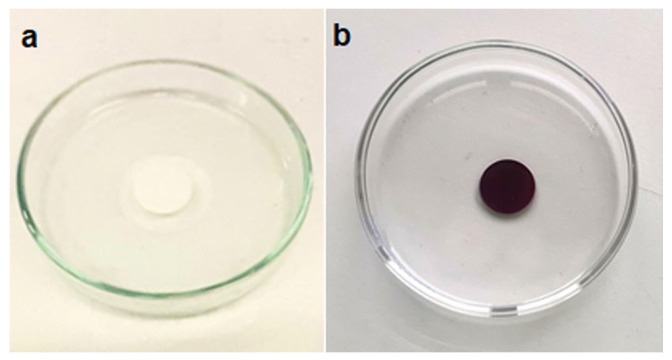
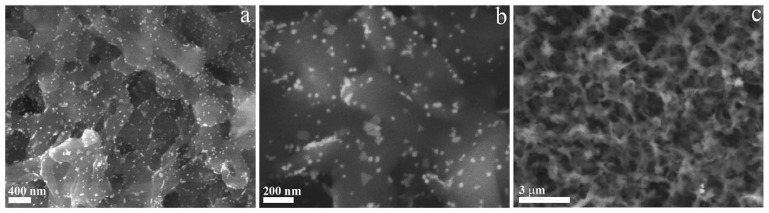
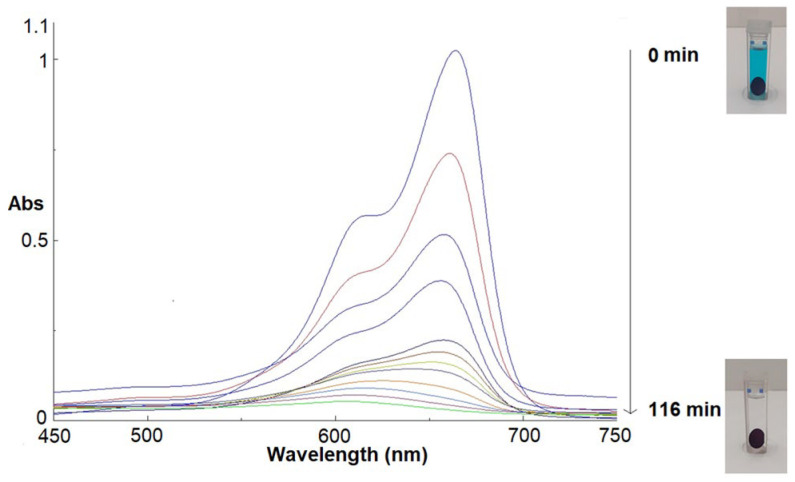
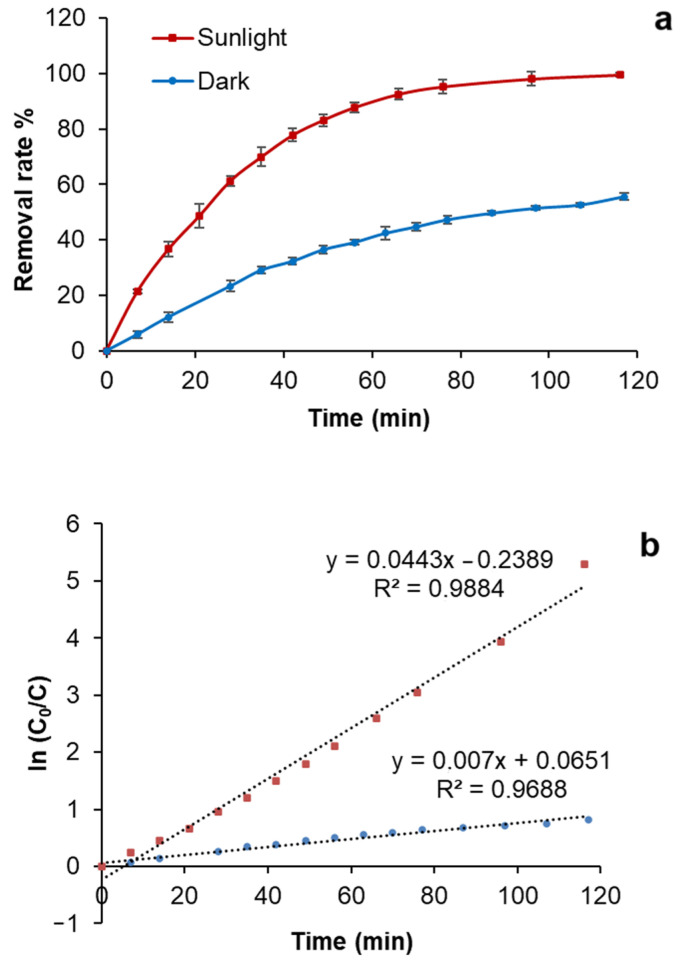
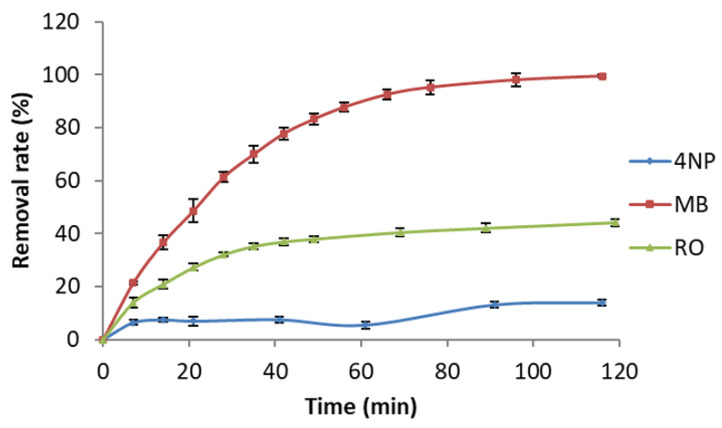
Methylene blue (MB) is a dye hazardous pollutant widely used in several industrial processes that represents a relevant source of water pollution. Thus, the research of new systems to avoid their environmental dispersion represents an important goal. In this work, an efficient and sustainable nanocomposite material based on green gold nanoparticles for MB water remediation was developed. Starting from the reducing and stabilizing properties of some compounds naturally present in Lambrusco winery waste (grape marc) extracts, green gold nanoparticles (GM-AuNPs) were synthesized and deposited on a supporting membrane to create an easy and stable system for water MB decontamination. GM-AuNPs, with a specific plasmonic band at 535 nm, and the modified membrane were first characterized by UV-vis spectroscopy, X-ray diffraction (XRD), and electron microscopy. Transmission electron microscopy analysis revealed the presence of two breeds of crystalline shapes, triangular platelets and round-shaped penta-twinned nanoparticles, respectively. The crystalline nature of GM-AuNPs was also confirmed from XRD analysis. The photocatalytic performance of the modified membrane was evaluated under natural sunlight radiation, obtaining a complete disappearance of MB (100%) in 116 min. The photocatalytic process was described from a pseudo-first-order kinetic with a rate constant (k) equal to 0.044 ± 0.010 min. The modified membrane demonstrated high stability since it was reused up to 20 cycles, without any treatment for 3 months, maintaining the same performance. The GM-AuNPs-based membrane was also tested with other water pollutants (methyl orange, 4-nitrophenol, and rhodamine B), revealing a high selectivity towards MB. Finally, the photocatalytic performance of GM-AuNPs-based membrane was also evaluated in real samples by using tap and pond water spiked with MB, obtaining a removal % of 99.6 ± 1.2% and 98.8 ± 1.9%, respectively.
亚甲基蓝(MB)是一种有害染料污染物,广泛应用于多个工业过程,是水污染的一个重要源头。因此,研发新系统以避免其在环境中的扩散是一个重要目标。在这项工作中,开发了一种基于绿色金纳米颗粒的高效可持续纳米复合材料,用于MB水污染修复。从兰布鲁斯科酒庄废弃物(葡萄皮渣)提取物中天然存在的一些化合物的还原和稳定特性出发,合成了绿色金纳米颗粒(GM-AuNPs)并沉积在支撑膜上,以创建一个用于水MB净化的简便且稳定的系统。首先通过紫外可见光谱、X射线衍射(XRD)和电子显微镜对具有535nm特定等离子体带的GM-AuNPs和改性膜进行了表征。透射电子显微镜分析分别揭示了两种晶体形状的存在,即三角形薄片和圆形五重孪晶纳米颗粒。XRD分析也证实了GM-AuNPs的晶体性质。在自然阳光辐射下评估了改性膜的光催化性能,在116分钟内MB完全消失(100%)。光催化过程用伪一级动力学描述,速率常数(k)等于0.044±0.010 min⁻¹。改性膜表现出高稳定性,因为它可以重复使用多达20次,在3个月内无需任何处理,性能保持不变。基于GM-AuNPs的膜还对其他水污染物(甲基橙、4-硝基苯酚和罗丹明B)进行了测试,显示出对MB具有高选择性。最后,通过使用添加了MB的自来水和池塘水对基于GM-AuNPs的膜在实际样品中的光催化性能进行了评估,去除率分别为99.6±1.2%和98.8±1.9%。