Division of Infectious Diseases, University of Colorado Anschutz Medical Campus, Aurora, Colorado, USA.
Center for ViroScience and Cure, Laboratory of Biochemical Pharmacology, Department of Pediatrics, Emory University School of Medicine, and Children's Healthcare of Atlanta, Atlanta, Georgia, USA.
mBio. 2024 Nov 13;15(11):e0046524. doi: 10.1128/mbio.00465-24. Epub 2024 Oct 15.
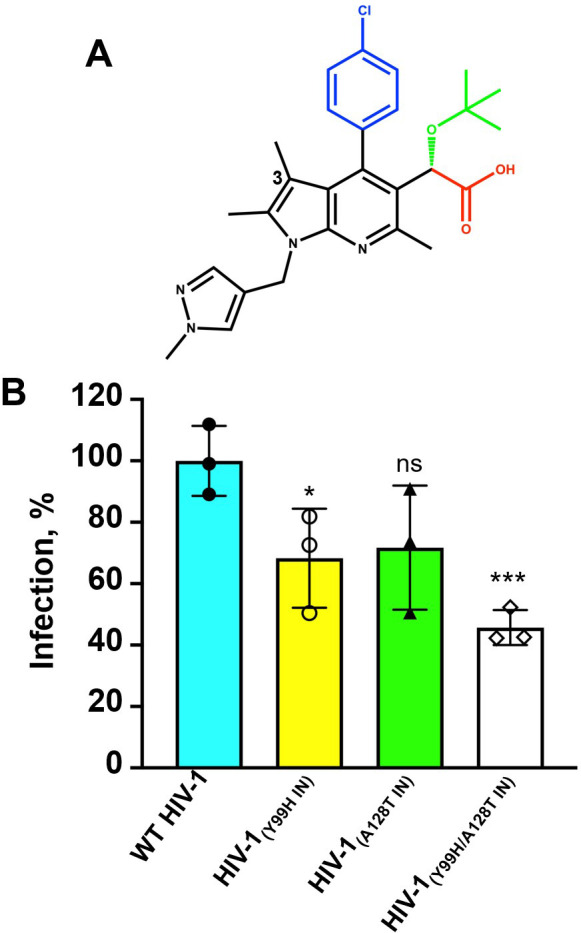
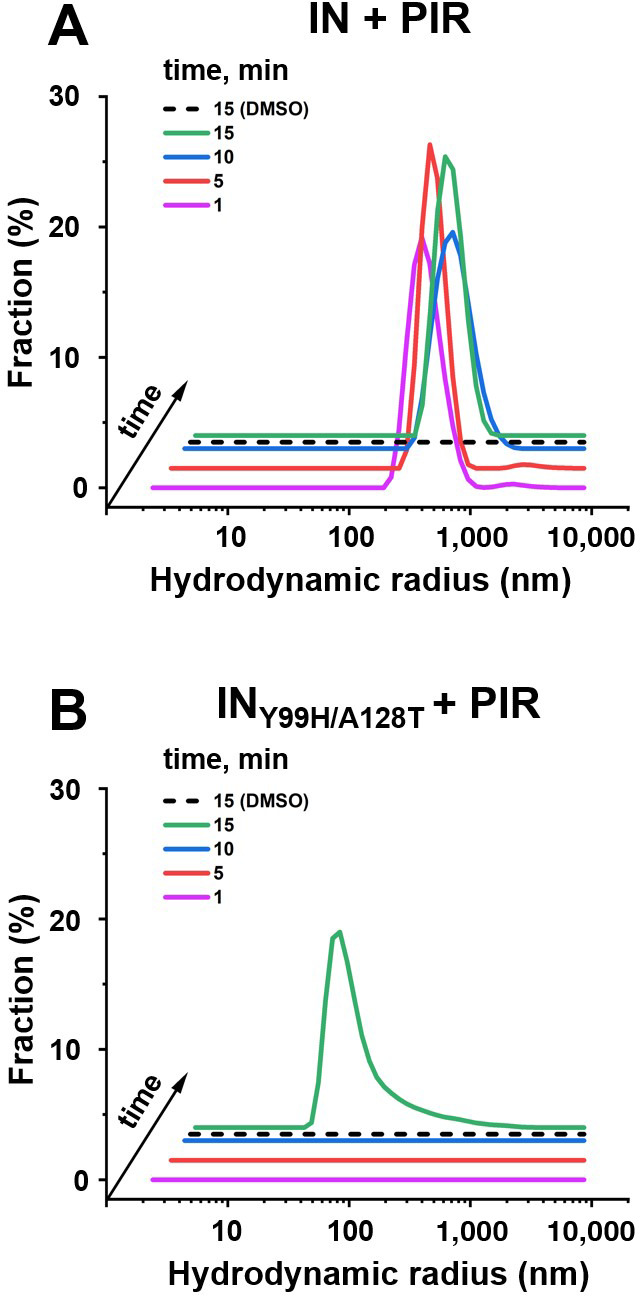
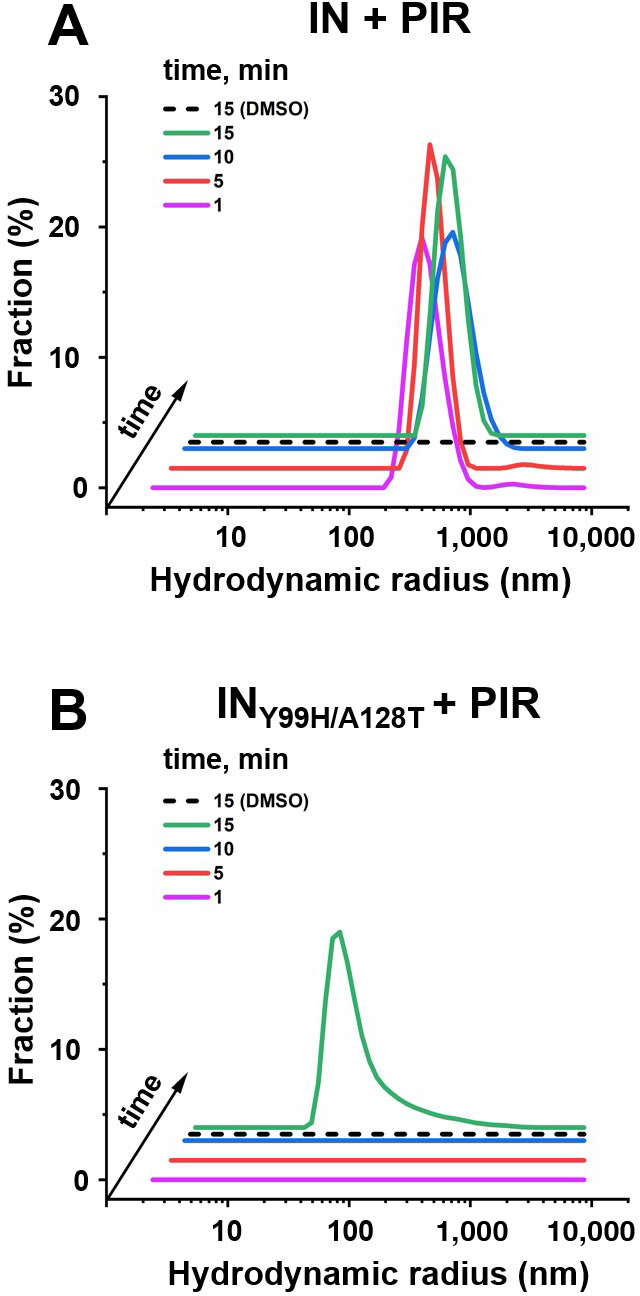
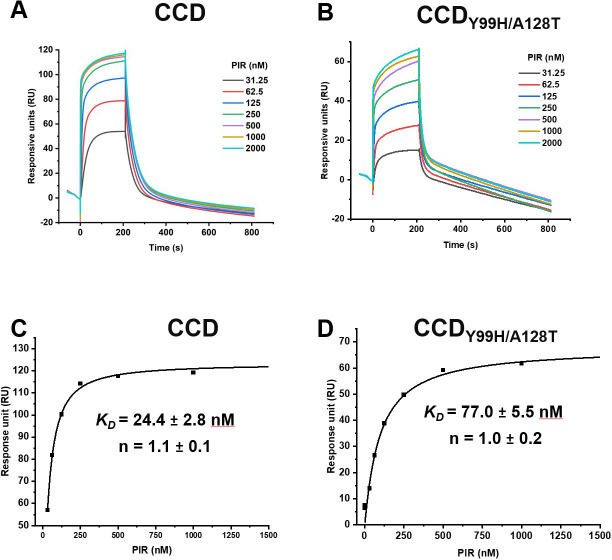
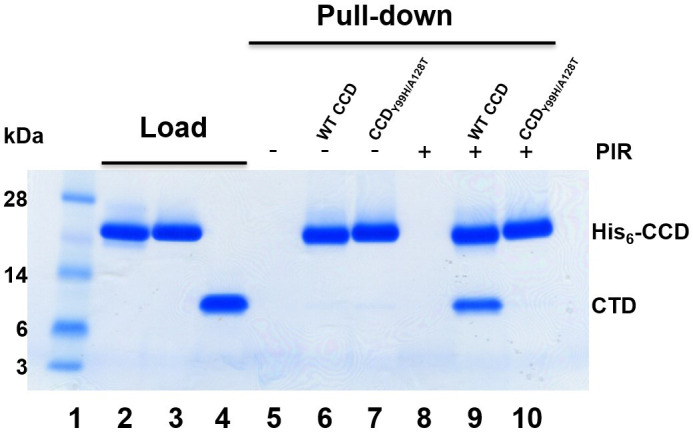
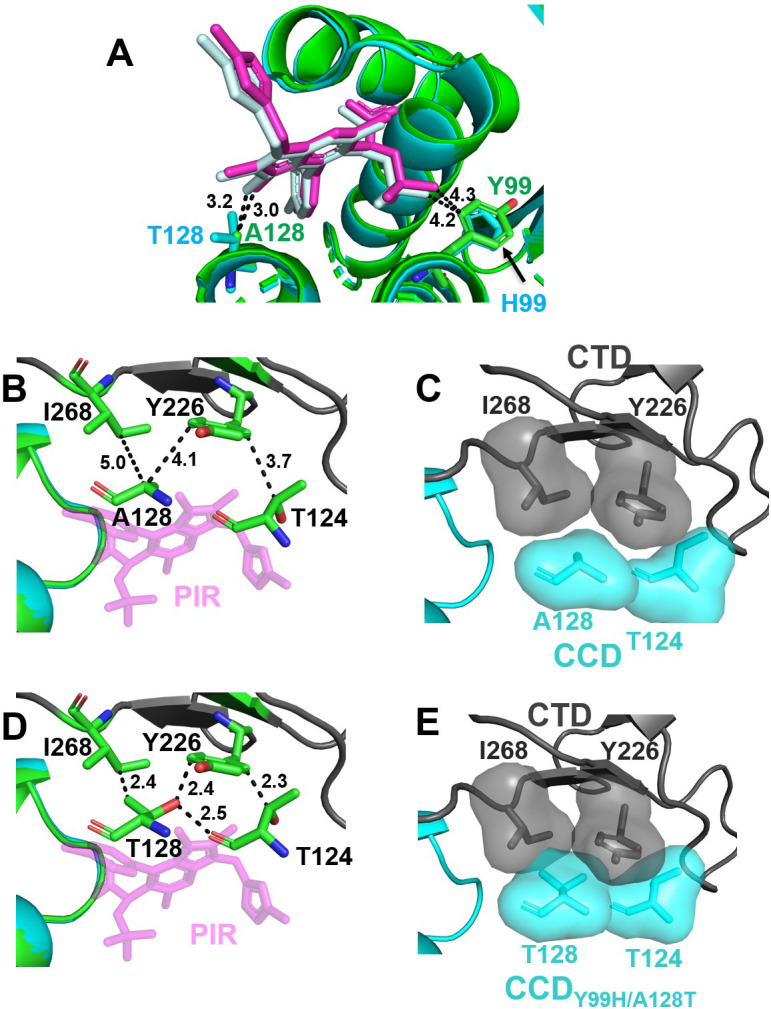
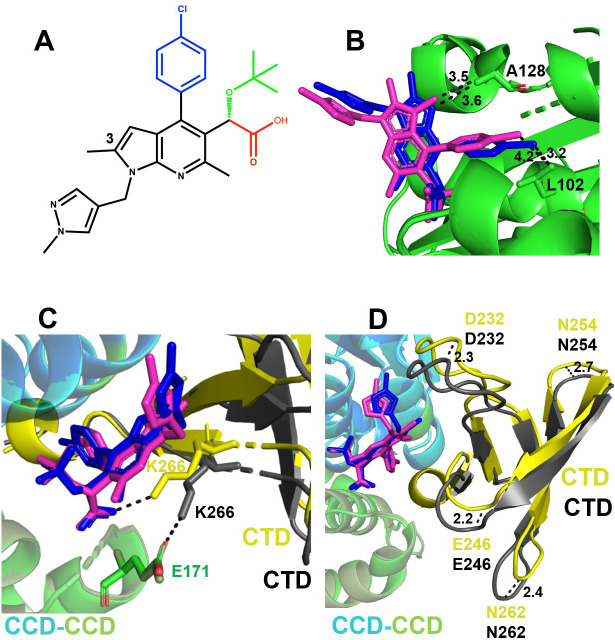
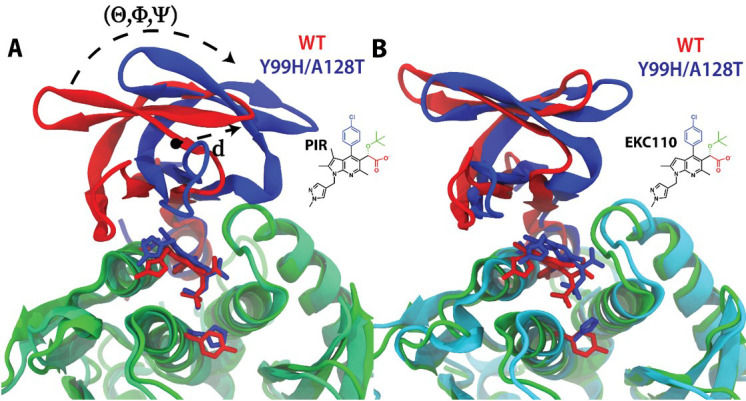
Allosteric HIV-1 integrase (IN) inhibitors (ALLINIs) are investigational antiretroviral agents that potently impair virion maturation by inducing hyper-multimerization of IN and inhibiting its interaction with viral genomic RNA. The pyrrolopyridine-based ALLINI pirmitegravir (PIR) has recently advanced into phase 2a clinical trials. Previous cell culture-based viral breakthrough assays identified the HIV-1 variant that confers substantial resistance to this inhibitor. Here, we have elucidated the unexpected mechanism of viral resistance to PIR. Although both Tyr99 and Ala128 are positioned within the inhibitor binding V-shaped cavity at the IN catalytic core domain (CCD) dimer interface, the Y99H/A128T IN mutations did not substantially affect the direct binding of PIR to the CCD dimer or functional oligomerization of full-length IN. Instead, the drug-resistant mutations introduced a steric hindrance at the inhibitor-mediated interface between CCD and C-terminal domain (CTD) and compromised CTD binding to the CCD + PIR complex. Consequently, full-length IN was substantially less susceptible to the PIR-induced hyper-multimerization than the WT protein, and HIV-1 conferred >150-fold resistance to the inhibitor compared with the WT virus. By rationally modifying PIR, we have developed its analog EKC110, which readily induced hyper-multimerization of IN and was ~14-fold more potent against HIV-1 than the parent inhibitor. These findings suggest a path for developing improved PIR chemotypes with a higher barrier to resistance for their potential clinical use.IMPORTANCEAntiretroviral therapies save the lives of millions of people living with HIV (PLWH). However, the evolution of multi-drug-resistant viral phenotypes is a major clinical problem, and there are limited or no treatment options for heavily treatment-experienced PLWH. Allosteric HIV-1 integrase inhibitors (ALLINIs) are a novel class of antiretroviral compounds that work by a unique mechanism of binding to the non-catalytic site on the viral protein and inducing aberrant integrase multimerization. Accordingly, ALLINIs potently inhibit both wild-type HIV-1 and all drug-resistant viral phenotypes that have so far emerged against currently used therapies. Pirmitegravir, a highly potent and safe investigational ALLINI, is currently advancing through clinical trials. Here, we have elucidated the structural and mechanistic bases behind the emergence of HIV-1 integrase mutations in infected cells that confer resistance to pirmitegravir. In turn, our findings allowed us to rationally develop an improved ALLINI with substantially enhanced potency against the pirmitegravir-resistant virus.
变构 HIV-1 整合酶(IN)抑制剂(ALLINIs)是一种研究中的抗逆转录病毒药物,通过诱导 IN 的超多聚化并抑制其与病毒基因组 RNA 的相互作用,有效地抑制病毒成熟。基于吡咯并吡啶的 ALLINI 抑制剂吡美莫司(PIR)最近已进入 2a 期临床试验。先前基于细胞培养的病毒突破测定法确定了赋予该抑制剂实质性耐药性的 HIV-1 变异体。在这里,我们阐明了病毒对 PIR 产生耐药性的意外机制。尽管 Tyr99 和 Ala128 都位于 IN 催化核心结构域(CCD)二聚体界面的抑制剂结合 V 形腔中,但 Y99H/A128T IN 突变并未显著影响 PIR 与 CCD 二聚体的直接结合或全长 IN 的功能性寡聚化。相反,耐药性突变在抑制剂介导的 CCD 和 C 端结构域(CTD)之间的界面上引入了空间位阻,并损害了 CTD 与 CCD+PIR 复合物的结合。因此,全长 IN 对 PIR 诱导的超多聚化的敏感性明显低于 WT 蛋白,并且与 WT 病毒相比,HIV-1 对抑制剂的耐药性提高了 150 倍以上。通过合理修饰 PIR,我们开发了其类似物 EKC110,它可轻易诱导 IN 的超多聚化,对 HIV-1 的活性比亲本抑制剂高 14 倍。这些发现为开发具有更高耐药性障碍的改良 PIR 化学型提供了一种途径,为其潜在的临床应用提供了一种途径。
重要性:抗逆转录病毒疗法挽救了数百万感染 HIV(PLWH)的人的生命。然而,多药耐药病毒表型的进化是一个主要的临床问题,并且对于经历过多重治疗的 PLWH,治疗选择有限或没有。变构 HIV-1 整合酶抑制剂(ALLINIs)是一类新型的抗逆转录病毒化合物,通过与病毒蛋白的非催化位点结合并诱导异常整合酶多聚化的独特机制发挥作用。因此,ALLINIs 可有效抑制野生型 HIV-1 和迄今为止针对现有治疗方法出现的所有耐药性病毒表型。吡美莫司是一种高效、安全的研究性 ALLINI,目前正在临床试验中进行。在这里,我们阐明了感染细胞中 HIV-1 整合酶突变的出现背后的结构和机制基础,这些突变赋予了对吡美莫司的耐药性。反过来,我们的发现使我们能够合理地开发出一种改良的 ALLINI,对耐药性病毒具有显著增强的效力。