Department of Radiology, and Functional and Molecular Imaging Key Laboratory of Sichuan Province, West China Hospital of Sichuan University, Chengdu, China.
Department of Psychiatry and Psychotherapy, and Center for Brain, Behavior and Metabolism, University of Lübeck, Lübeck, Germany; Institute for Translational Psychiatry and Otto-Creutzfeldt Center for Behavioral and Cognitive Neuroscience, University of Münster, Münster, Germany.
Neuroimage Clin. 2024;44:103686. doi: 10.1016/j.nicl.2024.103686. Epub 2024 Oct 10.
Measures of cortical topology are believed to characterize large-scale cortical networks. Previous studies used region of interest (ROI)-based approaches with predefined templates that limit analyses to linear pair-wise interactions between regions. As cortical topology is inherently complex, a non-linear dynamic model that measures the brain complexity at the voxel level is suggested to characterize topological complexities of brain regions and cortical folding.
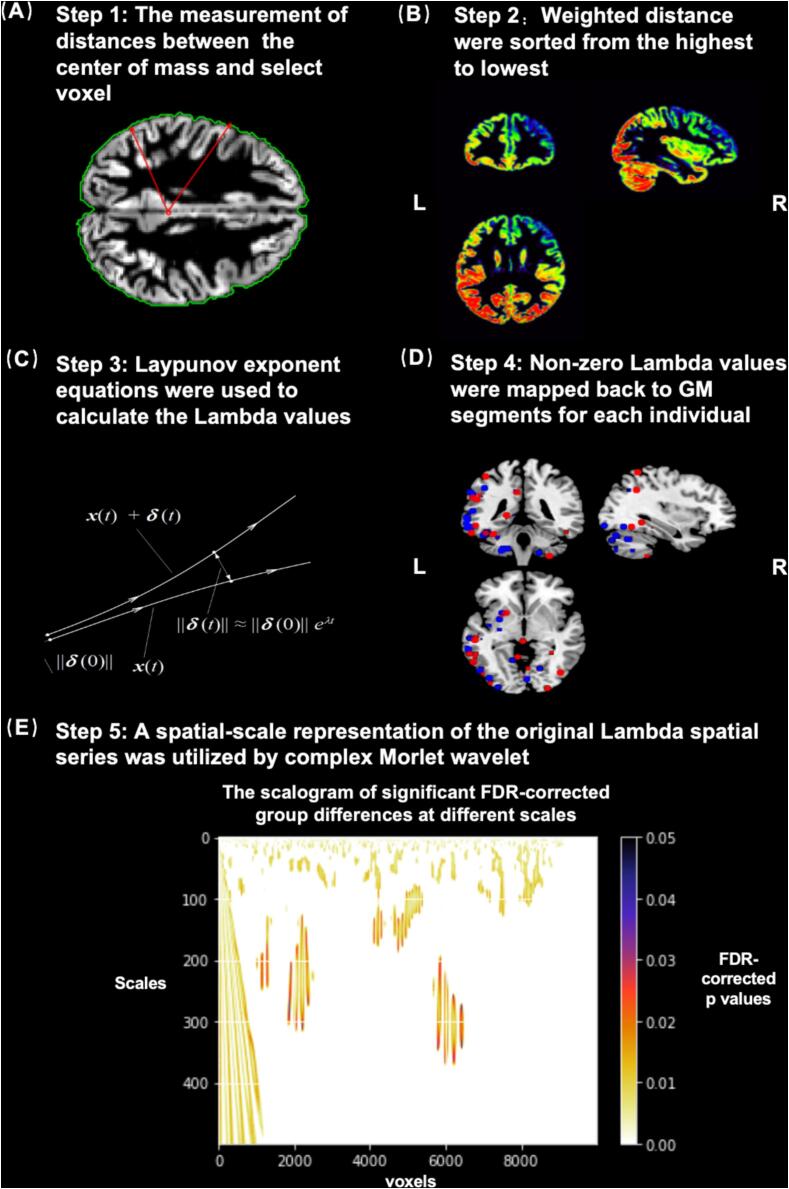
T1-weighted brain images of 150 first-episode antipsychotic-naïve schizophrenia (FES) patients and 161 healthy comparison participants (HC) were examined. The Chaos analysis approach was applied to detect alterations in brain structural complexity using the largest Lyapunov exponent (Lambda) as the key measure. Then, the Lambda spatial series was mapped in the frequency domain using the correlation of the Morlet wavelet to reflect cortical folding complexity.
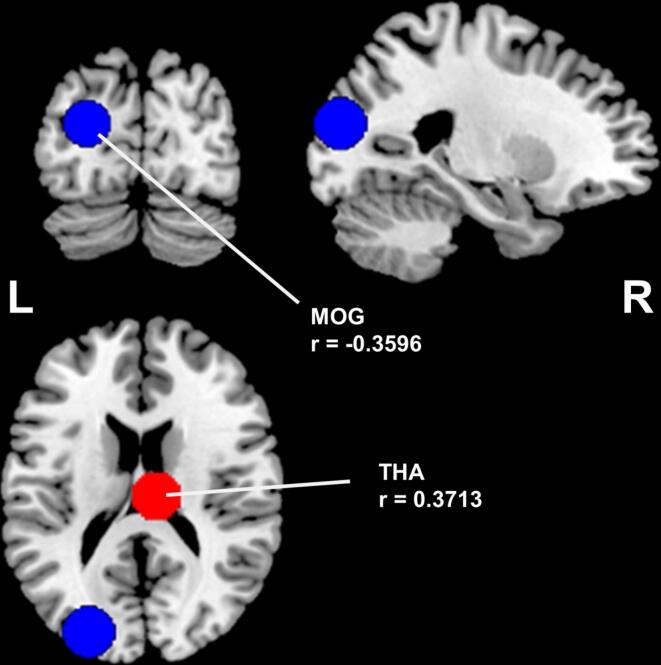
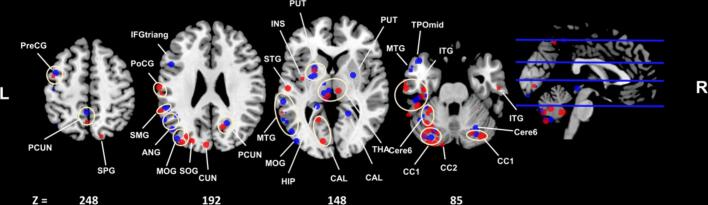
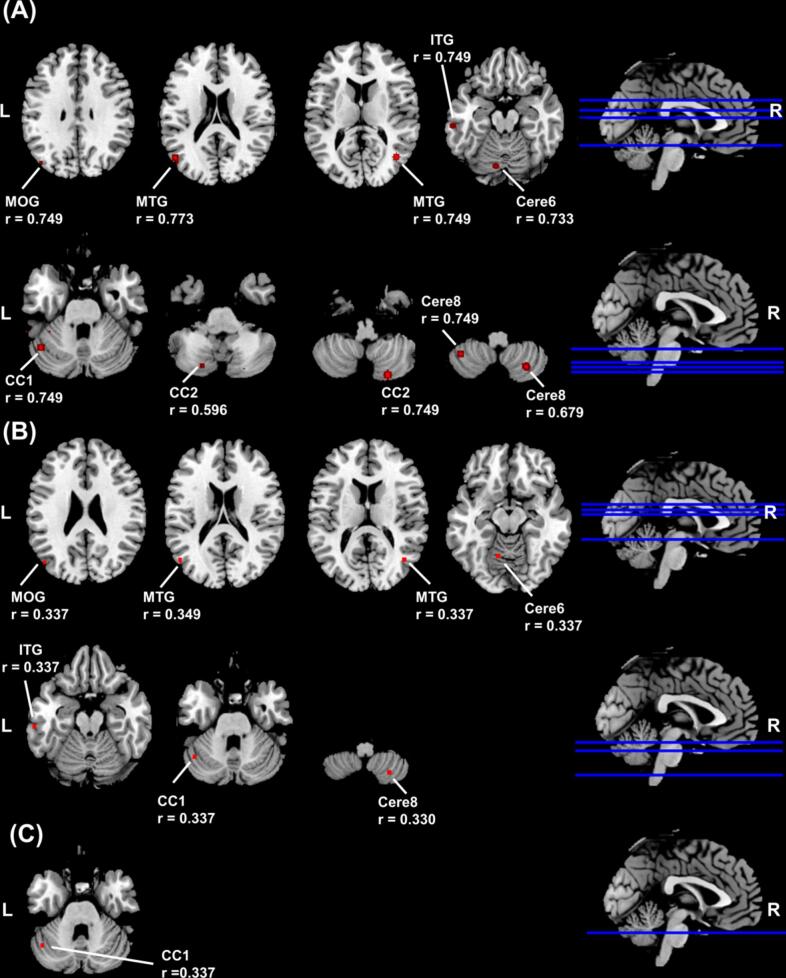
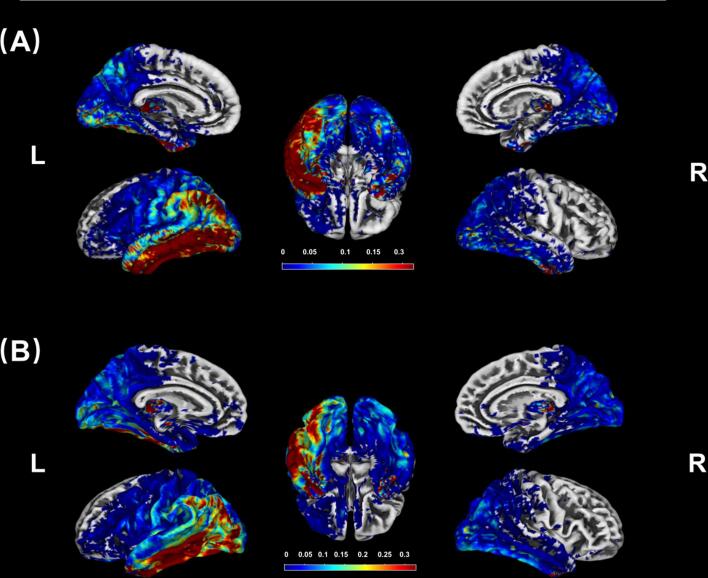
A widespread voxel-wise decrease in Lambda values in space and frequency domains was observed in FES, especially in frontal, parietal, temporal, limbic, basal ganglia, thalamic, and cerebellar regions. The widespread decrease indicates a general loss of brain topological complexity and cortical folding. An additional pattern of increased Lambda values in certain regions highlights the redistribution of complexity measures in schizophrenia at an early stage with potential progression as the illness advances. Strong correlations were found between the duration of untreated psychosis and Lambda values related to the cerebellum, temporal, and occipital gyri.
Our findings support the notion that defining brain complexity by non-linear dynamic analyses offers a novel approach for identifying structural brain alterations related to the early stages of schizophrenia.
皮质拓扑结构的测量方法被认为可以描述大脑皮质的大规模网络。以前的研究使用基于感兴趣区域(ROI)的方法,使用预定义的模板,将分析限制在区域之间的线性两两相互作用。由于皮质拓扑结构本质上很复杂,因此建议使用一种非线性动态模型,通过体素水平来测量大脑的复杂性,以描述大脑区域和皮质折叠的拓扑复杂性。
对 150 名首发抗精神病药物-naïve 精神分裂症(FES)患者和 161 名健康对照参与者(HC)的 T1 加权脑图像进行了检查。混沌分析方法用于通过最大 Lyapunov 指数(Lambda)作为关键测量值来检测脑结构复杂性的变化。然后,使用 Morlet 小波的相关性将 Lambda 空间序列映射到频域中,以反映皮质折叠的复杂性。
在 FES 中,尤其是在前额、顶叶、颞叶、边缘叶、基底节、丘脑和小脑区域,观察到空间和频域中广泛的 Lambda 值降低。广泛的降低表明大脑拓扑复杂性和皮质折叠的普遍丧失。在某些区域增加的 Lambda 值的附加模式突出了精神分裂症早期复杂性测量值的重新分配,随着疾病的进展,可能会有进展。在未治疗的精神病持续时间和与小脑、颞叶和枕叶回相关的 Lambda 值之间发现了强烈的相关性。
我们的研究结果支持这样一种观点,即通过非线性动态分析来定义大脑复杂性为识别与精神分裂症早期阶段相关的结构脑改变提供了一种新方法。