College of Agronomy, Gansu Agricultural University, Lanzhou 730070, China.
Gansu Provincial Key Laboratory of Aridland Crop Science, Gansu Agricultural University, Lanzhou 730070, China.
Int J Mol Sci. 2024 Sep 29;25(19):10505. doi: 10.3390/ijms251910505.
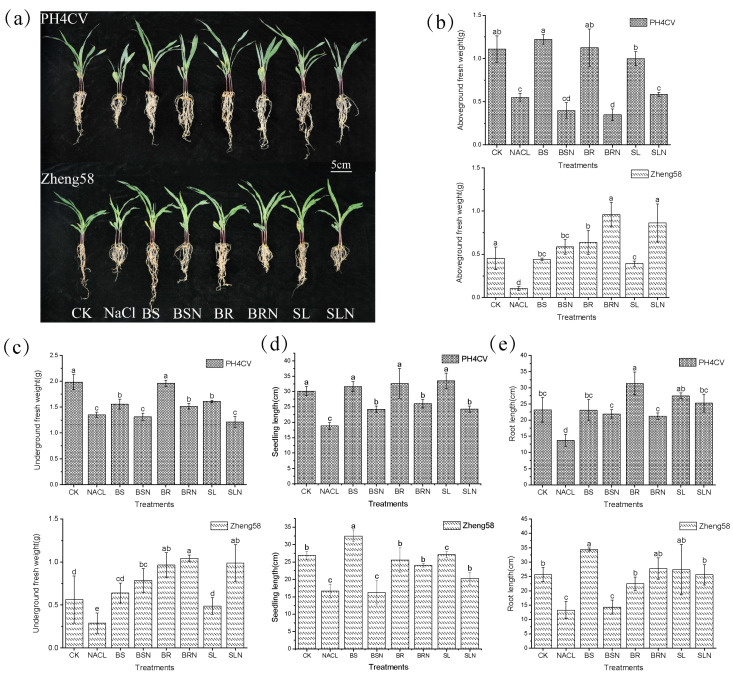
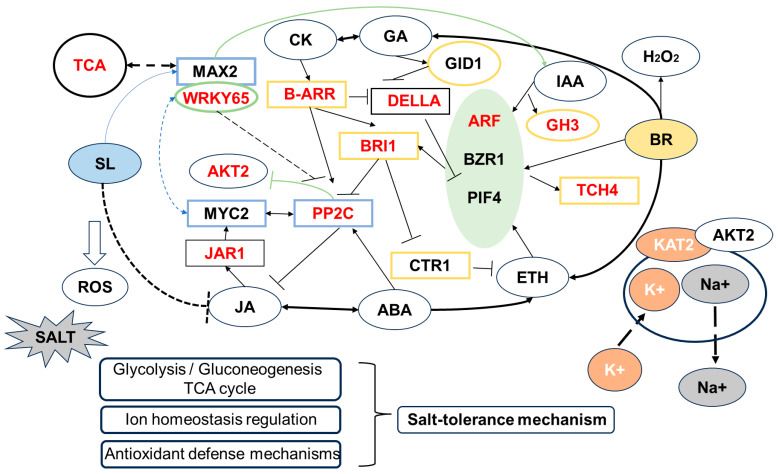
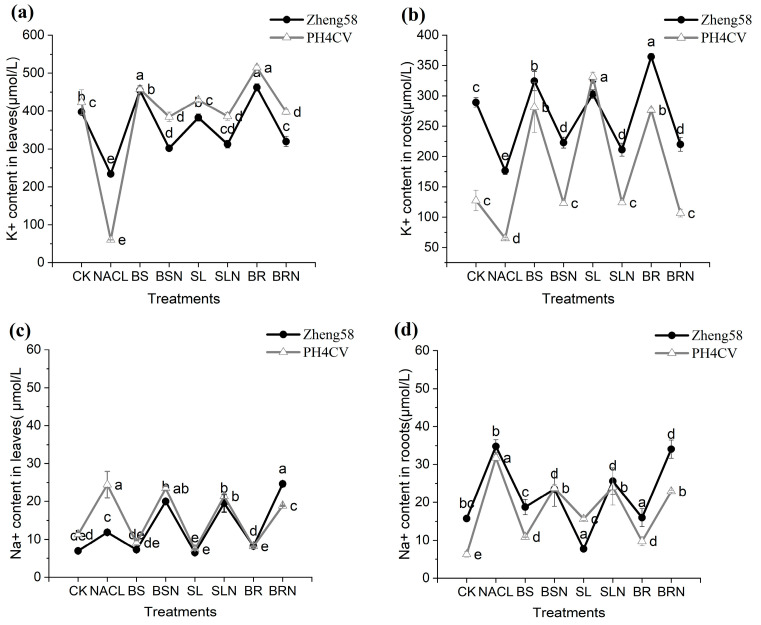
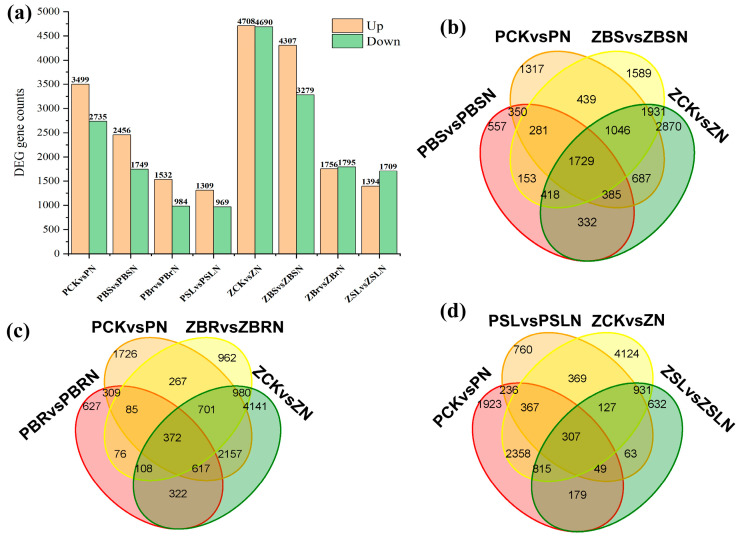
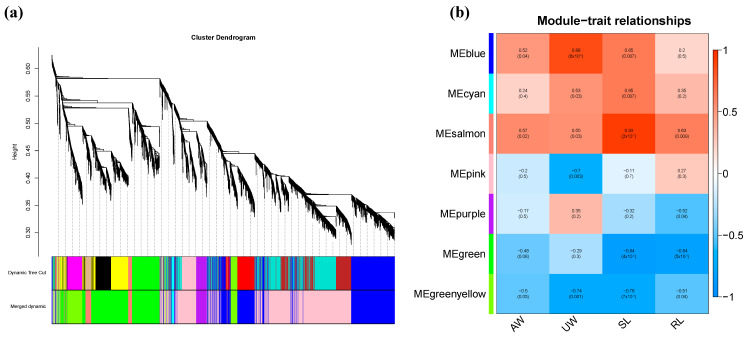
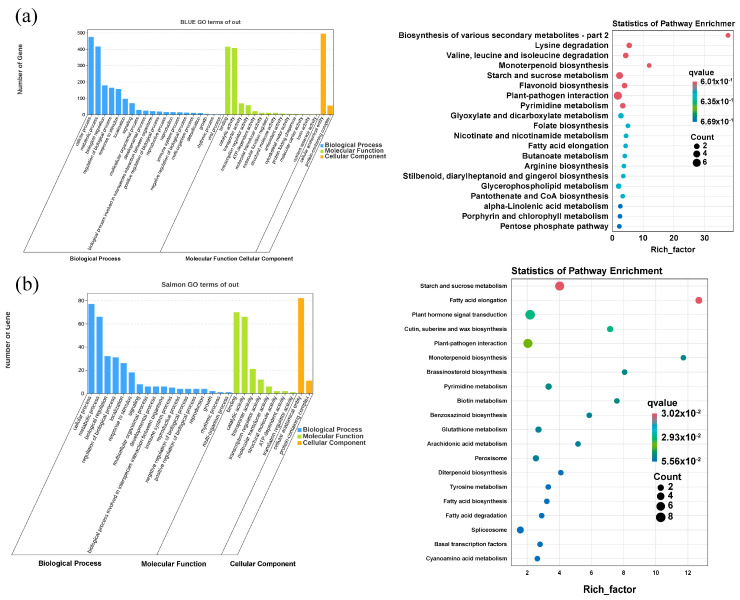
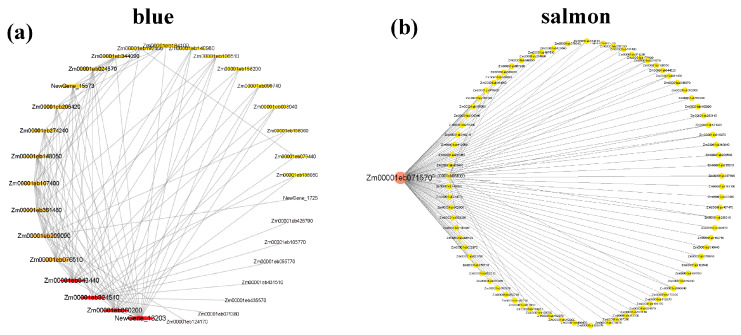
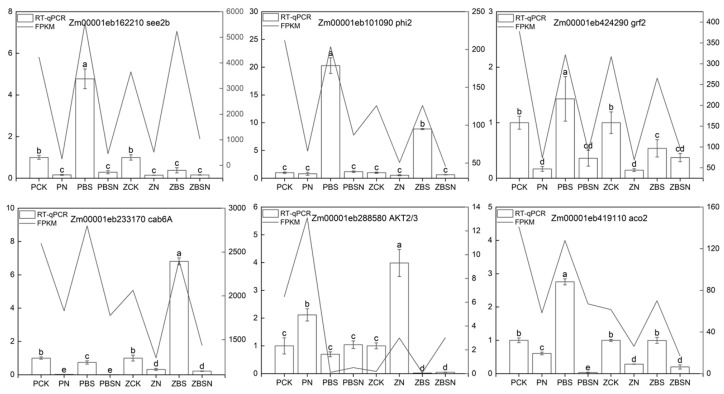
Exogenous brassinolide (BR) and strigolactones (SLs) play an important role in alleviating salt stress in maize. We studied the morphological and physiological responses of the salt-sensitive genotype PH4CV and salt-tolerant genotype Zheng58 to BR (1.65 nM), SL (1 µM), and BS (1.65 nM BR + 1 µM SL) under salt stress. Phenotypic analysis showed that salt stress significantly inhibited the growth of maize seedlings and significantly increased the content of Na in the roots. Exogenous hormones increased oxidase activity and decreased Na content in the roots and mitigated salt stress. Transcriptome analysis showed that the interaction of BR and SL is involved in photosynthesis-antenna proteins, the TCA cycle, and plant hormone signal transduction pathways. This interaction influences the expression of chlorophyll a/b-binding protein and glucose-6-phosphate isomerase 1 chloroplastic, and aconitase genes are affected. Furthermore, the application of exogenous hormones regulates the expression of genes associated with the signaling pathways of cytokinin (CK), gibberellins (GA), auxin (IAA), brassinosteroid (BR), abscisic acid (ABA), and jasmonic acid (JA). Additionally, exogenous hormones inhibit the expression of the AKT2/3 genes, which are responsible for regulating ion transduction and potassium ion influx. Four candidate genes that may regulate the seedling length of maize were screened out through WGCNA. Respective KOG notes concerned inorganic ion transport and metabolism, signal transduction mechanisms, energy production and conversion, and amino acid transport and metabolism. The findings of this study provide a foundation for the proposition that BR and SL can be employed to regulate salt stress alleviation in maize.
外源油菜素内酯(BR)和独脚金内酯(SL)在缓解玉米盐胁迫中起着重要作用。我们研究了盐敏感基因型 PH4CV 和盐耐受基因型 Zheng58 对 BR(1.65 nM)、SL(1 μM)和 BS(1.65 nM BR+1 μM SL)在盐胁迫下的形态和生理响应。表型分析表明,盐胁迫显著抑制玉米幼苗的生长,显著增加根部 Na 的含量。外源激素增加氧化酶活性,降低根部 Na 含量,缓解盐胁迫。转录组分析表明,BR 和 SL 的相互作用参与了光合作用天线蛋白、三羧酸循环和植物激素信号转导途径。这种相互作用影响叶绿素 a/b 结合蛋白和葡萄糖-6-磷酸异构酶 1 叶绿体的表达,并受 aconitase 基因的影响。此外,外源激素调节与细胞分裂素(CK)、赤霉素(GA)、生长素(IAA)、油菜素内酯(BR)、脱落酸(ABA)和茉莉酸(JA)信号通路相关的基因表达。此外,外源激素抑制 AKT2/3 基因的表达,该基因负责调节离子转导和钾离子内流。通过 WGCNA 筛选出 4 个可能调节玉米幼苗长度的候选基因。各自的 KOG 注释涉及无机离子运输和代谢、信号转导机制、能量产生和转化以及氨基酸运输和代谢。本研究的结果为 BR 和 SL 可用于调节玉米盐胁迫缓解提供了依据。