Joint International Research Laboratory of Metabolic & Developmental Sciences, State Key Laboratory of Hybrid Rice, School of Life Sciences and Biotechnology, Shanghai Jiao Tong University, Shanghai 200240, China.
Department of Plant & Environmental Sciences, Copenhagen Plant Science Center, University of Copenhagen, 1871 Frederiksberg, Denmark.
Int J Mol Sci. 2024 Sep 30;25(19):10543. doi: 10.3390/ijms251910543.
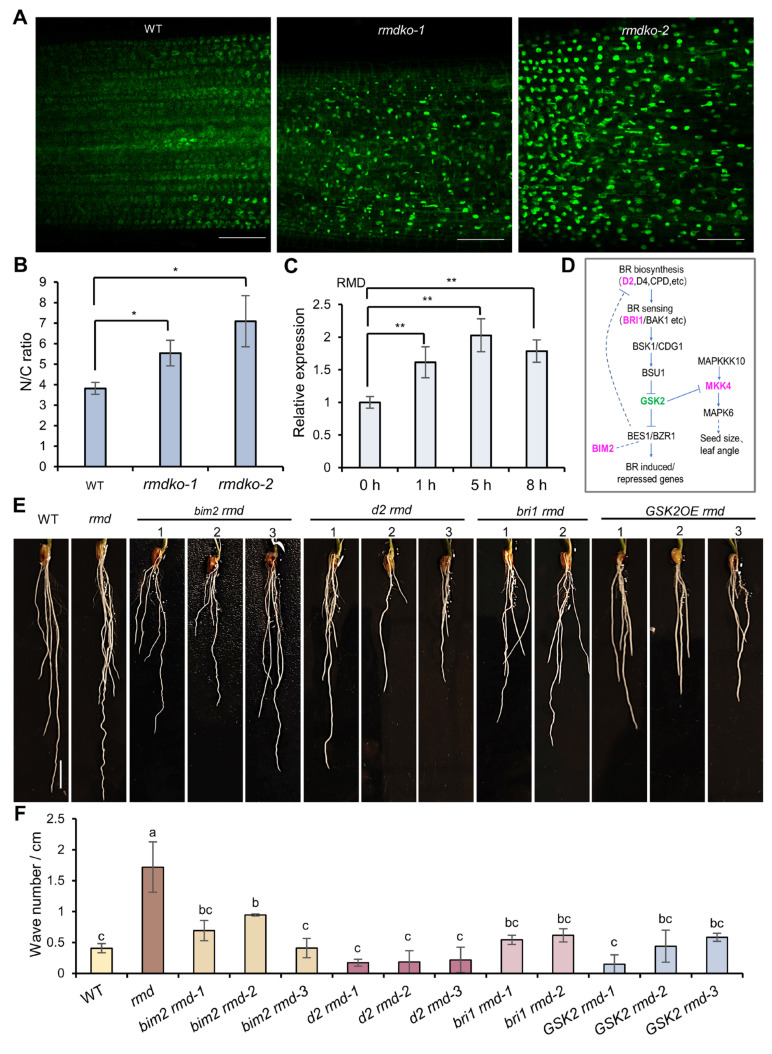
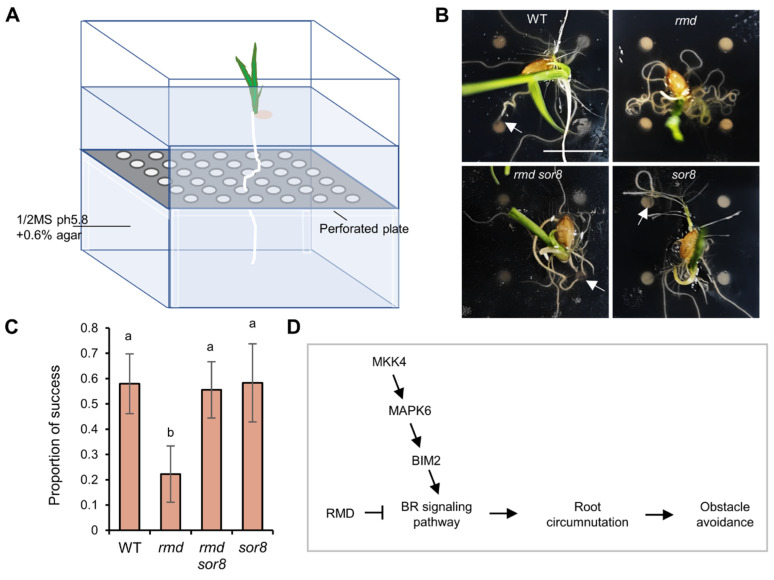
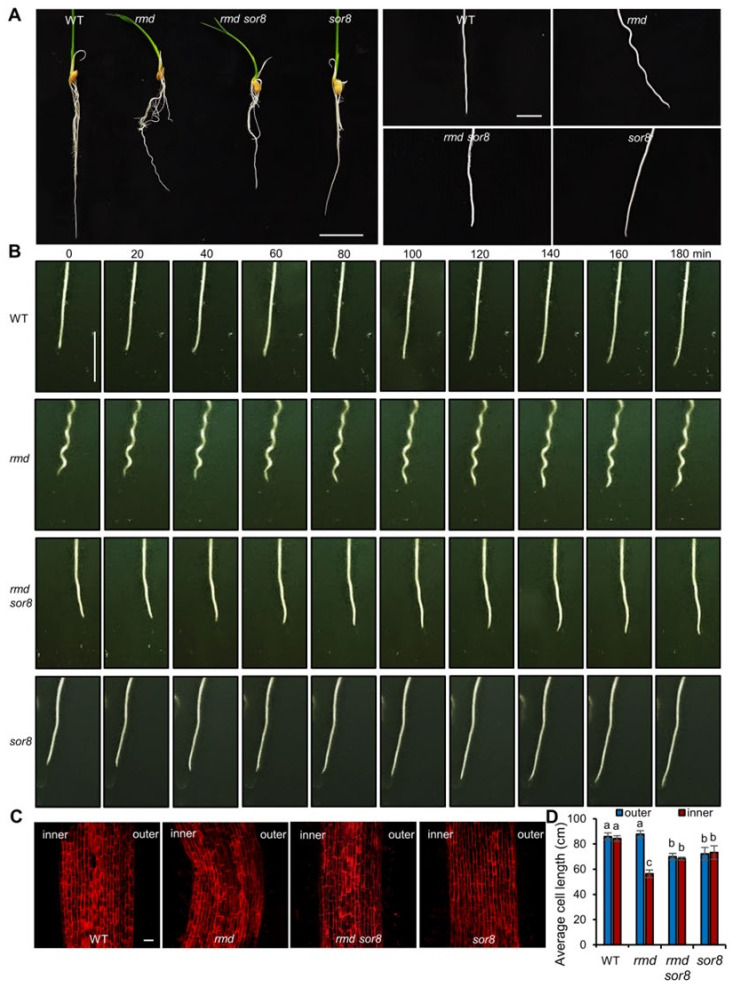
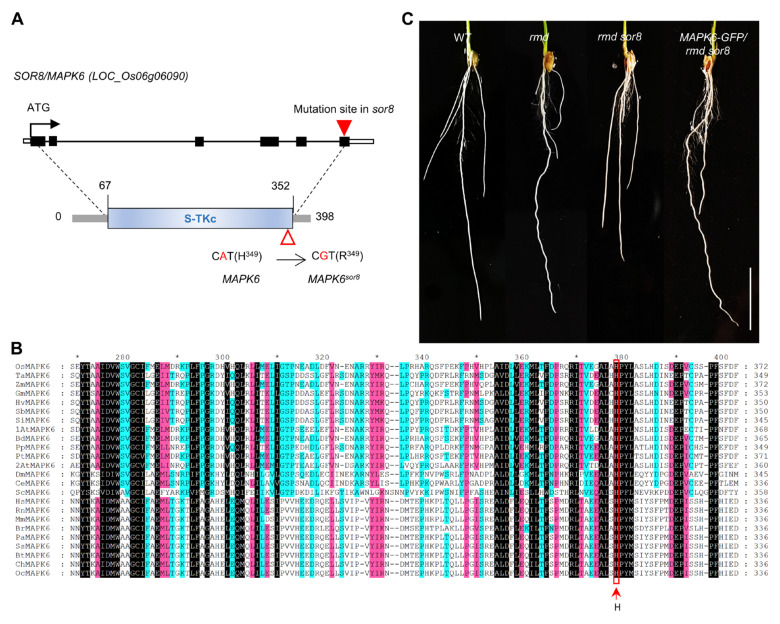
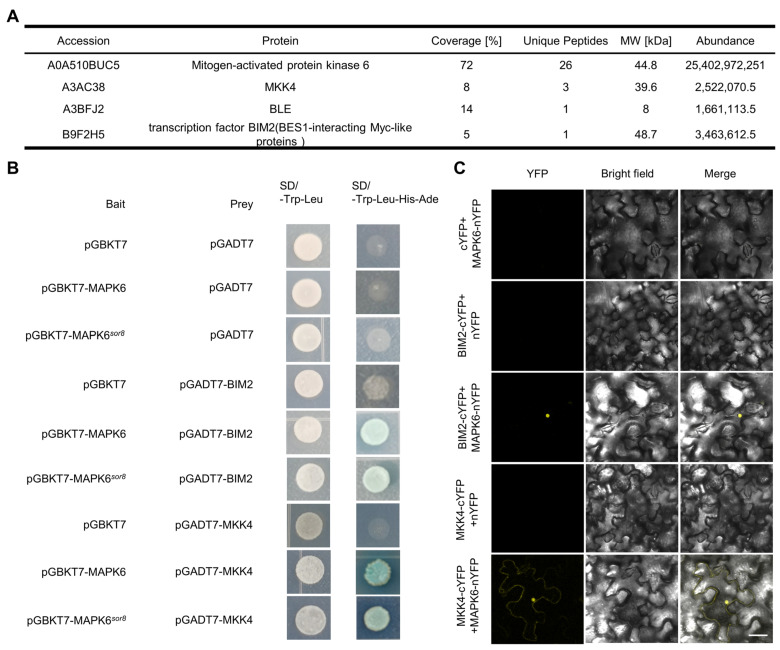
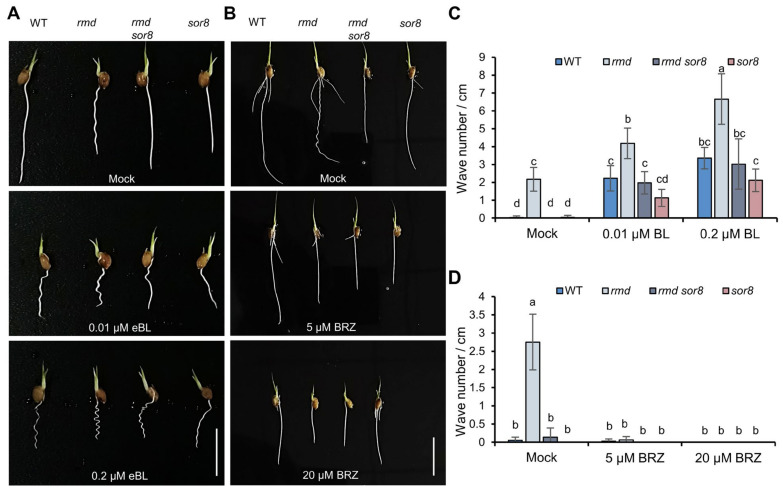
Helical growth of the root tip (circumnutation) that permits surface exploration facilitates root penetration into soil. Here, we reveal that rice actin-binding protein RMD aids in root circumnutation, manifested by wavy roots as well as compromised ability to efficiently explore and avoid obstacles in mutants. We demonstrate that root circumnutation defects in depend on brassinosteroid (BR) signaling, which is elevated in mutant roots. Suppressing BR signaling via pharmacological (BR inhibitor) or genetic (knockout of BR biosynthetic or signaling components) manipulation rescues root defects in . We further reveal that mutations in suppress BR signaling and restore normal root circumnutation in , which may be mediated by the interaction between MAPK6, MAPKK4 and BR signaling factor BIM2. Our study thus demonstrates that RMD and MAPK6 control root circumnutation by modulating BR signaling to facilitate early root growth.
根端的螺旋生长(回旋运动)允许表面探索,从而促进根穿透土壤。在这里,我们揭示了水稻肌动蛋白结合蛋白 RMD 有助于根回旋运动,表现为波浪形的根以及在突变体中降低了有效探索和避免障碍物的能力。我们证明,突变体中的根回旋运动缺陷依赖于油菜素内酯(BR)信号,突变体根中的 BR 信号升高。通过药理学(BR 抑制剂)或遗传学(BR 生物合成或信号转导成分的敲除)操作抑制 BR 信号可挽救突变体中的根缺陷。我们进一步揭示,突变体中的突变抑制 BR 信号并恢复突变体中的正常根回旋运动,这可能是由 MAPK6、MAPKK4 和 BR 信号因子 BIM2 之间的相互作用介导的。因此,我们的研究表明,RMD 和 MAPK6 通过调节 BR 信号来控制根回旋运动,从而促进早期根生长。