Yuan Shiqing, Yang Chengkun, Zheng Bin, Ni Junbei, Zhou Kaibing, Qian Minjie, Wu Hongxia
Sanya Institute of Breeding and Multiplication & Key Laboratory of Quality Regulation of Tropical Horticultural Crop in Hainan Province, School of Tropical Agriculture and Forestry, Hainan University, Haikou 570228, China.
Key Laboratory of Tropical Fruit Biology, Ministry of Agriculture and Rural Affairs, South Subtropical Crops Research Institute, Chinese Academy of Tropical Agricultural Sciences, Zhanjiang 524013, China.
Plants (Basel). 2024 Sep 29;13(19):2726. doi: 10.3390/plants13192726.
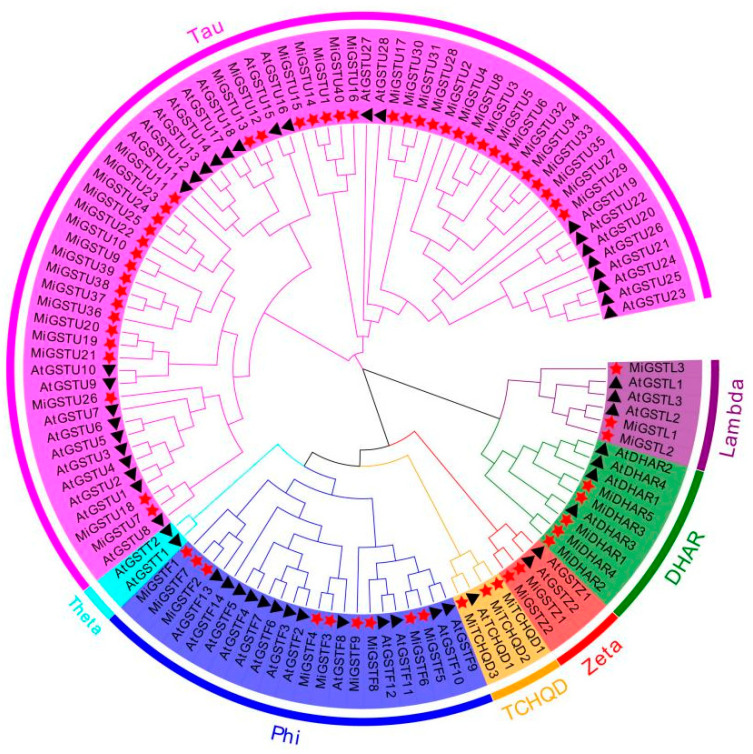
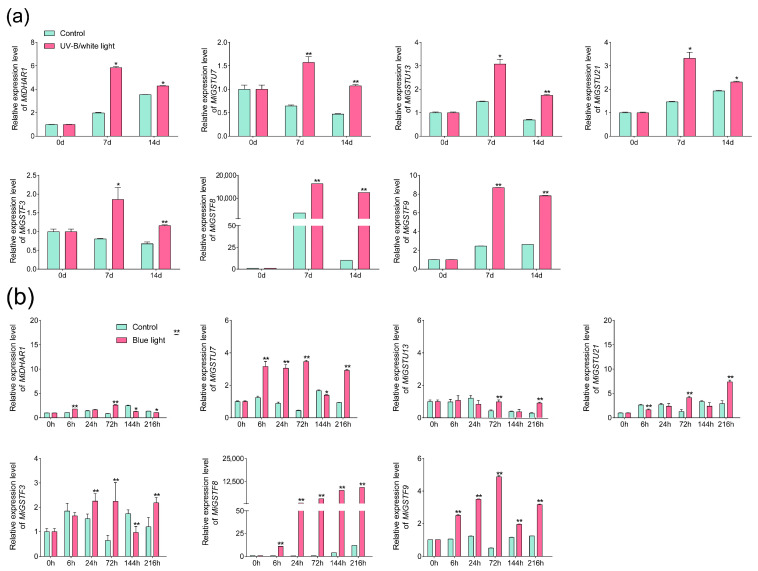
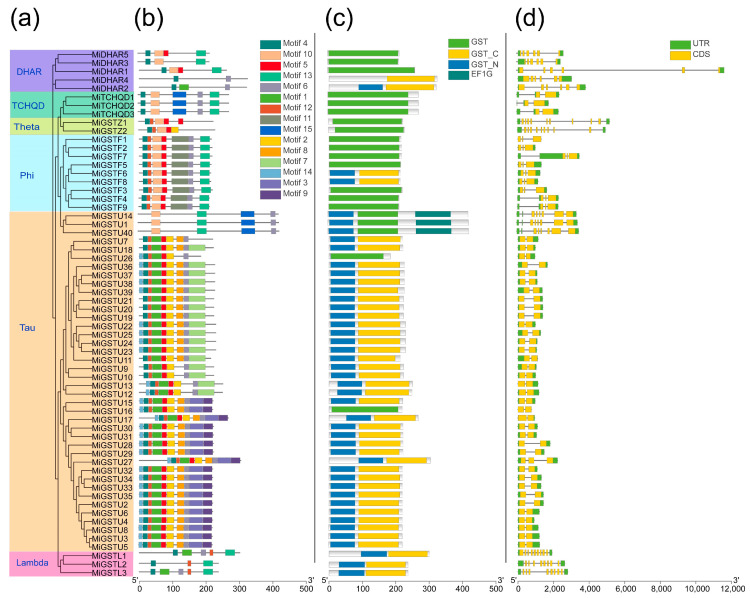
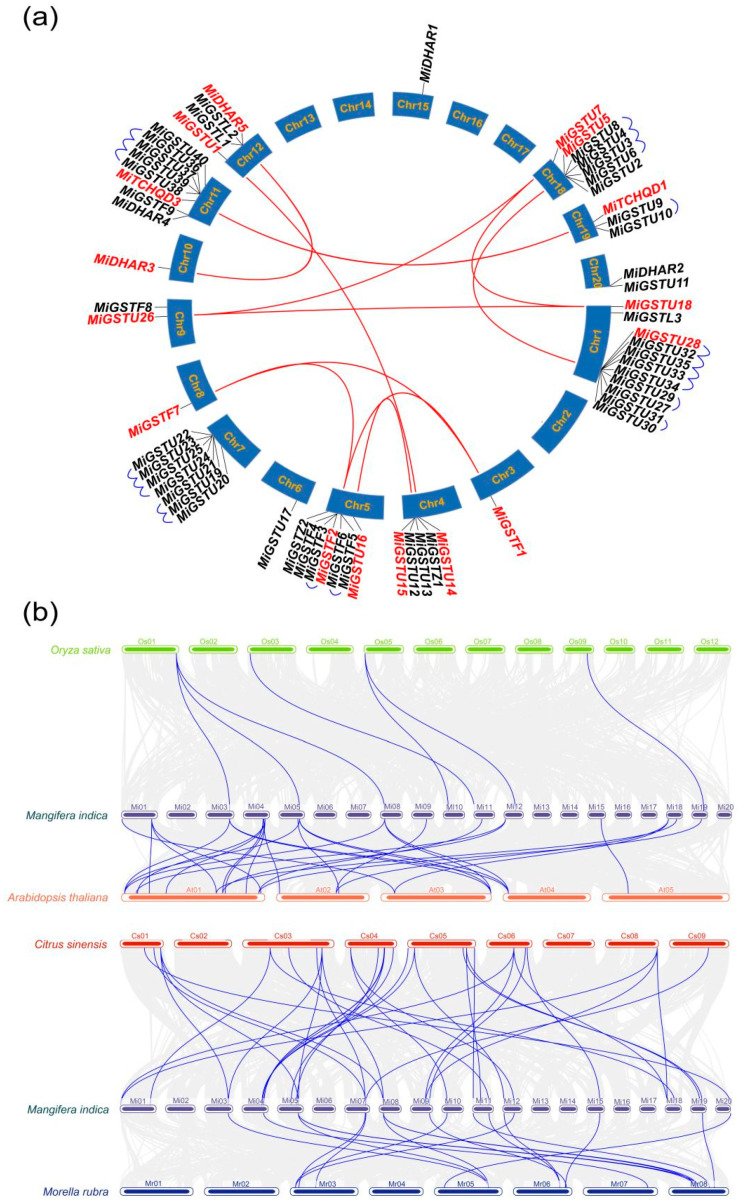
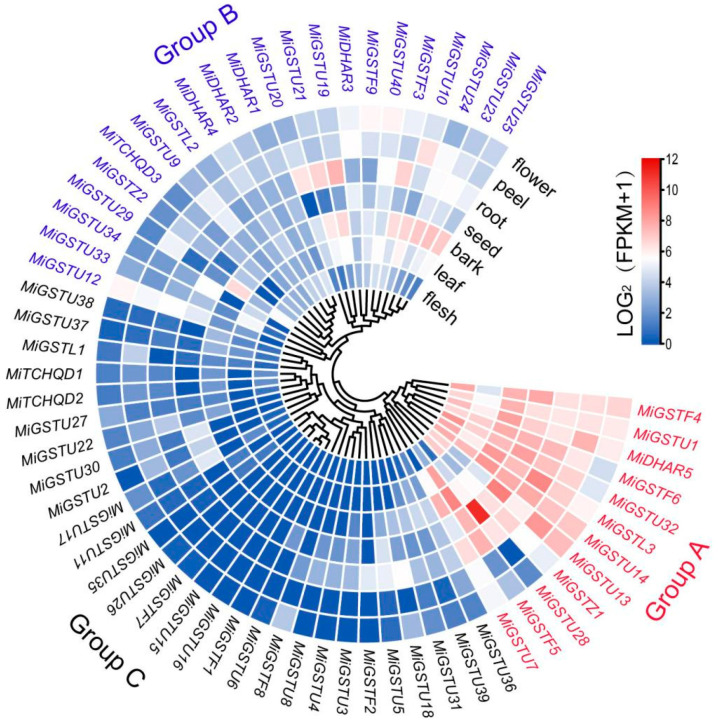
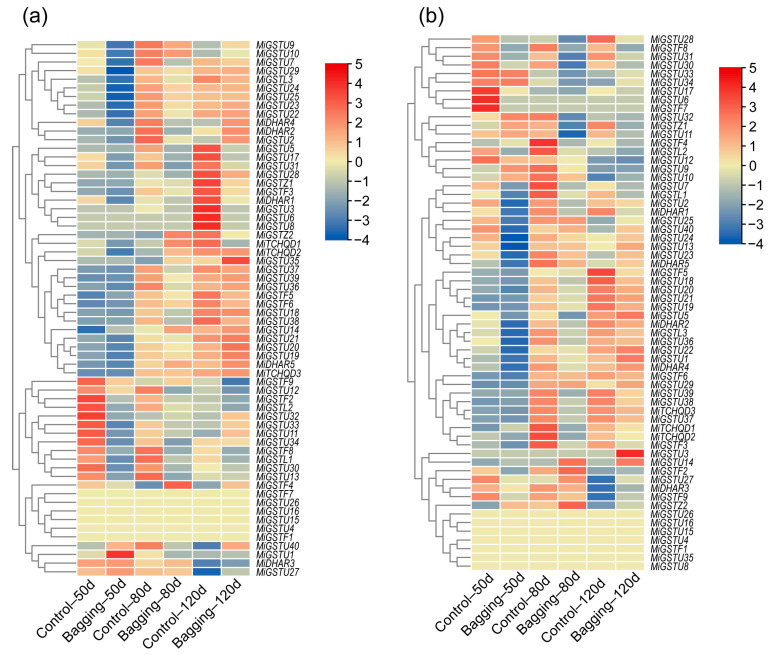
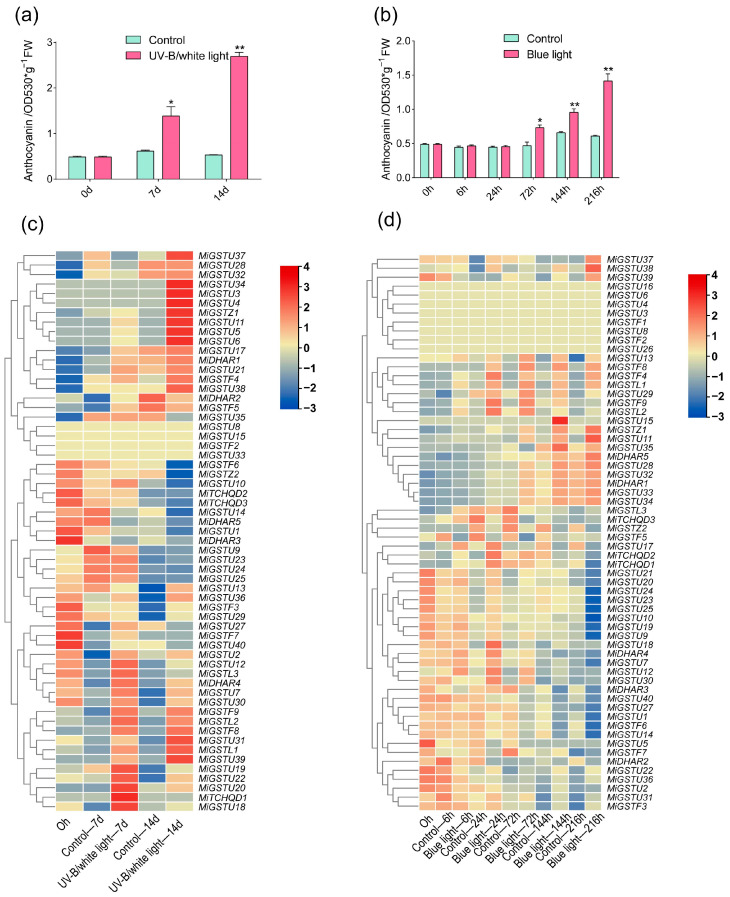
Anthocyanins are important secondary metabolites contributing to the red coloration of fruits, the biosynthesis of which is significantly affected by light. Glutathione S-transferases (GSTs) play critical roles in the transport of anthocyanins from the cytosol to the vacuole. Despite their importance, genes in mango have not been extensively characterized. In this study, 62 mango genes were identified and further divided into six subfamilies. displayed high similarity in their exon/intron structure and motif and domain composition within the same subfamilies. The mango genome harbored eleven pairs of segmental gene duplications and ten sets of tandemly duplicated genes. Orthologous analysis identified twenty-nine, seven, thirty-four, and nineteen pairs of orthologous genes among mango genes and their counterparts in Arabidopsis, rice, citrus, and bayberry, respectively. Tissue-specific expression profiling highlighted tissue-specific expression patterns for genes. RNA-seq and qPCR analyses revealed elevated expression levels of seven including , , , , , , and during light-induced anthocyanin accumulation in mango. This study establishes a comprehensive genetic framework of MiGSTs in mango fruit and their potential roles in regulating anthocyanin accumulation, which is helpful in developing -derived molecular markers and speeding up the process of breeding new red-colored mango cultivars.
花青素是重要的次生代谢产物,有助于果实呈现红色,其生物合成受光照的显著影响。谷胱甘肽S-转移酶(GSTs)在花青素从细胞质转运到液泡的过程中起关键作用。尽管它们很重要,但芒果中的基因尚未得到广泛表征。在本研究中,鉴定出62个芒果基因,并进一步分为六个亚家族。同一亚家族内的基因在外显子/内含子结构以及基序和结构域组成上表现出高度相似性。芒果基因组包含11对片段重复基因和10组串联重复基因。直系同源分析分别在芒果基因与其在拟南芥、水稻、柑橘和杨梅中的对应基因中鉴定出29对、7对、34对和19对直系同源基因。组织特异性表达谱突出了基因的组织特异性表达模式。RNA测序和定量PCR分析表明,在芒果光诱导花青素积累过程中,包括、、、、、和在内的7个基因表达水平升高。本研究建立了芒果果实中MiGSTs的综合遗传框架及其在调节花青素积累中的潜在作用,这有助于开发基于MiGSTs的分子标记并加速培育新的红色芒果品种的进程。