Lordick Florian, Rha Sun Young, Muro Kei, Yong Wei Peng, Lordick Obermannová Radka
Department of Medicine (Oncology, Gastroenterology, Hepatology, Pulmonology), University of Leipzig Medical Center, Cancer Center Central Germany, 04103 Leipzig, Germany.
Department of Internal Medicine, Yonsei Cancer Center, Yonsei University College of Medicine, Seoul 03722, Republic of Korea.
Cancers (Basel). 2024 Sep 29;16(19):3337. doi: 10.3390/cancers16193337.
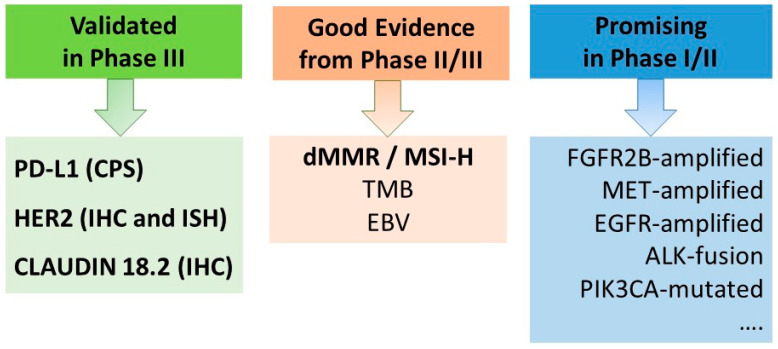
The prognosis of patients diagnosed with locally advanced and metastatic gastric and esophago-gastric junction cancer is critical. The optimal choice of systemic therapy is essential to optimize survival outcomes. : A comprehensive literature review via PubMed and analysis of major oncology congresses (European Society for Medical Oncology and American Society of Clinical Oncology websites) were conducted to ascertain the current status and latest developments in the systemic treatment of patients with localized or advanced gastric and esophago-gastric junction adenocarcinoma. : While neoadjuvant and perioperative chemotherapy for localized tumor stages is the preferred approach in the Western Hemisphere, adjuvant chemotherapy remains the preferred course of action in East Asia. The administration of chemotherapy, typically in the form of combinations comprising platinum and fluoropyrimidine compounds in combination with docetaxel, represents a standard of care. Investigations are underway into the potential of immunotherapy and other biologically targeted agents in the perioperative setting. To select the most appropriate therapy for advanced gastric cancer, including adenocarcinoma of the esophago-gastric junction, it is essential to determine biomarkers such as HER2 expression, PD-L1 combined positive score (CPS) (combined positive score), Claudin 18.2, and microsatellite instability (MSI). In the present clinical context, the standard first-line therapy is a combination of fluoropyrimidine and a platinum derivative. The selection of chemotherapy in combination with antibodies is contingent upon the specific biomarker under consideration. : This article reviews the current state of the art based on recent clinical trial results and provides an outlook on the future of systemic therapy.
被诊断为局部晚期和转移性胃癌及食管胃交界癌患者的预后至关重要。系统治疗的最佳选择对于优化生存结果至关重要。通过PubMed进行全面的文献综述,并分析主要肿瘤学大会(欧洲医学肿瘤学会和美国临床肿瘤学会网站),以确定局部或晚期胃及食管胃交界腺癌患者系统治疗的现状和最新进展。在西半球,对于局部肿瘤分期,新辅助和围手术期化疗是首选方法,而在东亚,辅助化疗仍是首选的治疗方案。化疗给药通常采用铂类和氟嘧啶类化合物联合多西他赛的组合形式,这是一种标准治疗。免疫疗法和其他生物靶向药物在围手术期的潜力正在研究中。为了为晚期胃癌(包括食管胃交界腺癌)选择最合适的治疗方法,确定生物标志物如HER2表达、PD-L1联合阳性评分(CPS)、Claudin 18.2和微卫星不稳定性(MSI)至关重要。在当前临床背景下,标准一线治疗是氟嘧啶和铂衍生物的联合。联合抗体的化疗选择取决于所考虑的特定生物标志物。本文基于近期临床试验结果综述了当前的技术水平,并对系统治疗的未来进行了展望。