Pinheiro Larissa, Verhagen Evert, Ocarino Juliana, Fagher Kristina, Ahmed Osman Hassan, Dalton Kristine, Mann David L, Weiler Richard, Akinyi Okoth Carole, Blauwet Cheri A, Lexell Jan, Derman Wayne, Webborn Nick, Silva Andressa, Resende Renan
School of Physical Education, Physical Therapy and Occupational Therapy, Department of Physical Therapy, Graduate Program in Rehabilitation Sciences, Universidade Federal de Minas Gerais, Belo Horizonte, Minas Gerais, Brazil.
Amsterdam Collaboration on Health & Safety in Sports, Department of Public and Occupational Health, Amsterdam Movement Sciences, Amsterdam University Medical Centers, Location VU University Medical Center, Amsterdam, The Netherlands.
BMJ Open Sport Exerc Med. 2024 Oct 9;10(4):e001946. doi: 10.1136/bmjsem-2024-001946. eCollection 2024.
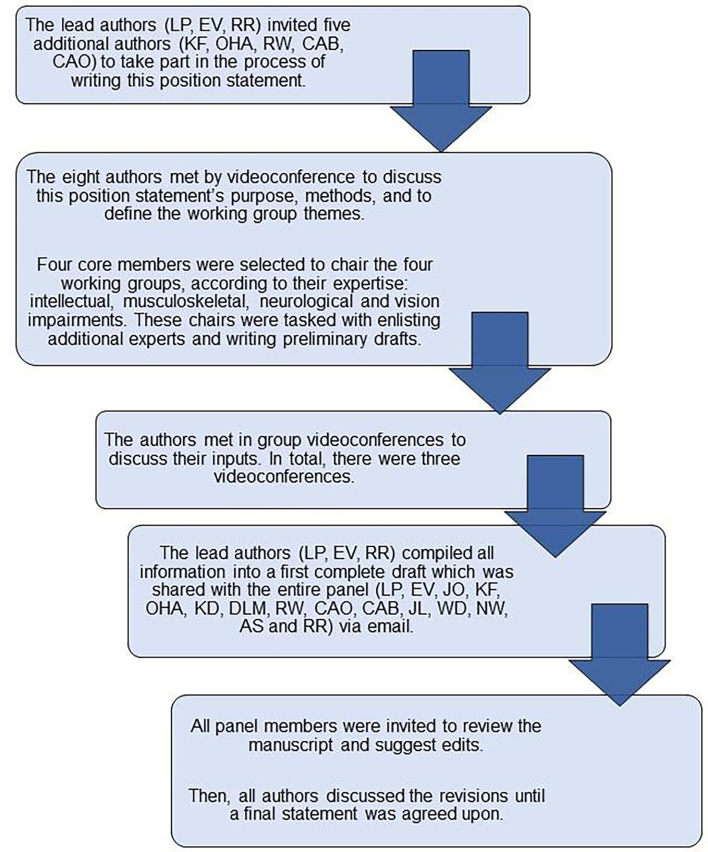
Para athletes present a broad range of sports-related injuries and illnesses, frequently encountering barriers when accessing healthcare services. The periodic health evaluation (PHE) is a valuable tool for continuously monitoring athletes' health, screening for health conditions, assisting in the surveillance of health problems by establishing baseline information and identifying barriers to athlete's performance. This position statement aims to guide sports healthcare providers in the PHE for Para athletes across key impairment categories: intellectual, musculoskeletal, neurological and vision. A panel of 15 international experts, including epidemiologists, physiotherapists, optometrists and physicians with expertise in Para athlete health, convened via videoconferences to discuss the position statement's purpose, methods and themes. They formed working groups to address clinical, cardiorespiratory, neuromusculoskeletal, nutritional status, mental and sleep health, concussion and female Para athlete health assessment considerations. The PHE's effectiveness lies in its comprehensive approach. Health history review can provide insights into factors impacting Para athlete health, inform physical assessments and help healthcare providers understand each athlete's needs. During the PHE, considerations should encompass the specific requirements of the sport modality and the impairment itself. These evaluations can help mitigate the common tendency of Para athletes to under-report health issues. They also enable early interventions tailored to the athlete's health history. Moreover, the PHE serves as an opportunity to educate Para athletes on preventive strategies that can be integrated into their training routines, enhancing their performance and overall health. This position statement can potentially enhance clinical translation into practice and improve the healthcare quality for Para athletes.
残疾运动员存在广泛的与运动相关的损伤和疾病,在获得医疗服务时经常遇到障碍。定期健康评估(PHE)是持续监测运动员健康、筛查健康状况、通过建立基线信息协助监测健康问题以及识别影响运动员表现的障碍的宝贵工具。本立场声明旨在指导体育医疗服务提供者对不同关键损伤类别的残疾运动员进行定期健康评估,这些类别包括智力、肌肉骨骼、神经和视力方面。一个由15名国际专家组成的小组,包括流行病学家、物理治疗师、验光师和在残疾运动员健康方面具有专业知识的医生,通过视频会议召集起来,讨论立场声明的目的、方法和主题。他们成立了工作组,以处理临床、心肺、神经肌肉骨骼、营养状况、心理和睡眠健康、脑震荡以及女性残疾运动员健康评估等方面的考虑因素。定期健康评估的有效性在于其全面的方法。健康史回顾可以深入了解影响残疾运动员健康的因素,为身体评估提供信息,并帮助医疗服务提供者了解每个运动员的需求。在定期健康评估期间,考虑因素应包括运动方式的具体要求和损伤本身。这些评估有助于减轻残疾运动员少报健康问题这一常见倾向。它们还能根据运动员的健康史进行早期干预。此外,定期健康评估为向残疾运动员传授可融入其训练日常的预防策略提供了契机,从而提高他们的表现和整体健康水平。本立场声明有可能促进临床实践转化,并提高残疾运动员的医疗质量。