Department of Public Health and Community Medicine, Faculty of Medicine, Assiut University, Assiut, Egypt.
Egyptian Family Health Society, Cairo, Egypt.
BMC Public Health. 2024 Oct 16;24(1):2852. doi: 10.1186/s12889-024-20239-9.
Chlamydia trachomatis (CT) and Neisseria gonorrhoeae (NG) are widespread, treatable sexually transmitted infections (STIs) of global significance, affecting millions annually. Left untreated, they pose significant risks, including pelvic inflammatory disease (PID), infertility, and complications during pregnancy. The U.S. Centers for Disease Control recommends annual chlamydial screening for sexually active women to address these risks. Responding to this global challenge, the World Health Organization (WHO) has formulated a global health sector strategy on sexually transmitted infections, outlining priority actions to strengthen STI responses in countries. However, STI epidemiological studies encounter challenges in developing nations like Egypt due to socio-cultural factors, poverty, and limited diagnostic facilities. In Egypt, STI diagnosis primarily relies on clinical presentations, lacking structured screening programs for CT and NG. This study's main objective is to estimate the prevalence of Chlamydial and gonorrheal infections, advocating for supportive STI strategies in Egypt. Additionally, the study aims to provide a foundation for national prevalence estimates of CT and NG infections.
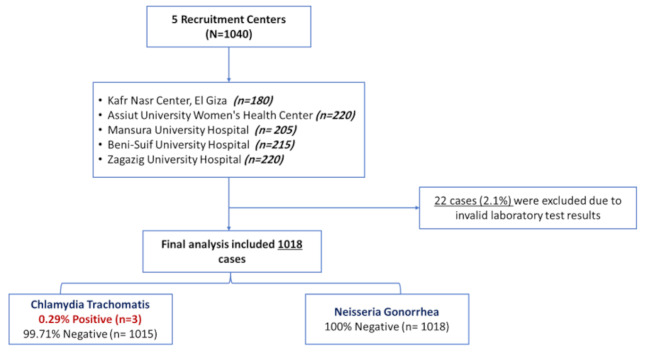
A cross-sectional study encompassed five antenatal clinics in different regions of Egypt. A total of 1040 pregnant women attending these clinics were consecutively sampled. Data collection involved structured questionnaires, and urine samples were subjected to the GeneXpert CT/NG qualitative real-time PCR test.
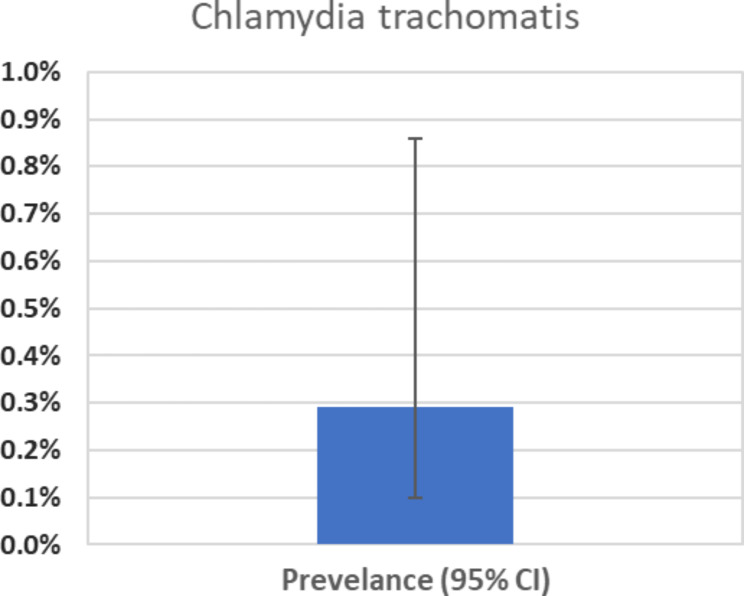
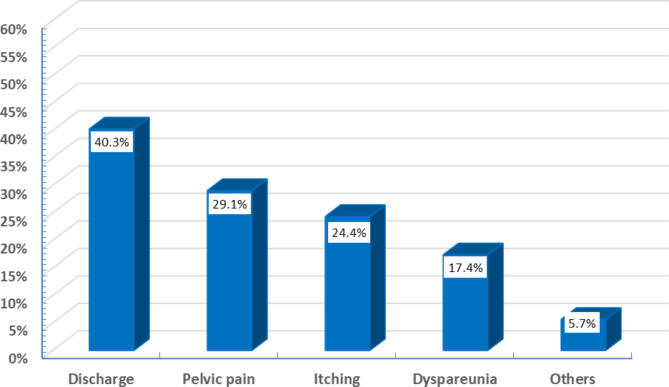
The prevalence of CT infections was 0.29% (95% CI, 0.10-0.86%), with no detected NG infections. The three CT-positive cases were distributed across different recruitment centers, with no statistically significant differences observed between infected and non-infected participants. Notably, 40.3% of recruited women reported gynecological symptoms, primarily discharge. Additionally, 9.6% had undergone previous testing for sexually transmitted infections, with 8.2% receiving positive results.
This study provides valuable data on the prevalence of CT and NG infections among pregnant women attending ANC clinics in Egypt. The findings underscore the importance of ongoing surveillance, routine screening, and targeted interventions to ensure the reproductive health and well-being of pregnant women and their infants. Further research is warranted to explore the broader implications of STIs in different populations and to inform evidence-based guidelines for screening and management in diverse settings.
IRB no.: 17,400,017; WHO ERC Protocol Id. A66005.
沙眼衣原体(CT)和淋病奈瑟菌(NG)是广泛存在且可治疗的具有全球意义的性传播感染(STI),每年影响数百万人。如果不加以治疗,它们会带来重大风险,包括盆腔炎(PID)、不孕以及妊娠并发症。美国疾病控制中心建议对有性行为的活跃女性进行年度衣原体筛查,以应对这些风险。为应对这一全球挑战,世界卫生组织(WHO)制定了性传播感染全球卫生部门战略,概述了加强各国 STI 应对措施的优先行动。然而,由于社会文化因素、贫困和有限的诊断设施,性传播感染的流行病学研究在埃及等发展中国家面临挑战。在埃及,STI 诊断主要依赖临床表现,缺乏针对 CT 和 NG 的结构化筛查计划。本研究的主要目的是评估埃及沙眼衣原体和淋病奈瑟菌感染的流行率,倡导在埃及支持 STI 策略。此外,该研究旨在为埃及 CT 和 NG 感染的国家流行率估计提供基础。
一项横断面研究包括埃及五个不同地区的五个产前诊所。连续抽取了 1040 名在这些诊所就诊的孕妇。数据收集包括结构化问卷,尿液样本采用 GeneXpert CT/NG 定性实时 PCR 检测。
CT 感染的流行率为 0.29%(95%CI,0.10-0.86%),未检出 NG 感染。三个 CT 阳性病例分布在不同的招募中心,感染和未感染参与者之间无统计学差异。值得注意的是,40.3%的招募女性报告有妇科症状,主要是分泌物。此外,9.6%的人曾接受过性传播感染的检测,其中 8.2%的人检测结果呈阳性。
本研究提供了埃及 ANC 诊所就诊孕妇中 CT 和 NG 感染流行率的有价值数据。研究结果强调了持续监测、常规筛查和针对性干预的重要性,以确保孕妇及其婴儿的生殖健康和福祉。需要进一步研究来探索 STI 在不同人群中的更广泛影响,并为不同环境下的筛查和管理提供循证指南。
IRB 编号:17,400,017;世卫组织 ERC 方案编号 A66005。