Lo Katherine C, Petersen Christian P
Department of Molecular Biosciences, Northwestern University.
bioRxiv. 2024 Oct 12:2024.10.11.617745. doi: 10.1101/2024.10.11.617745.
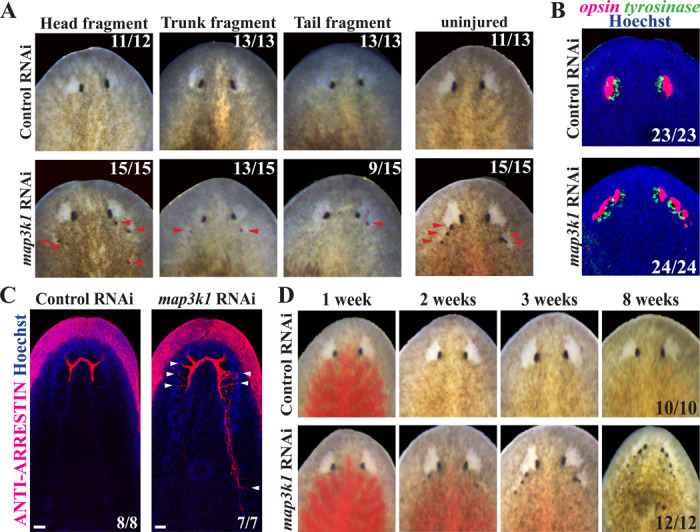
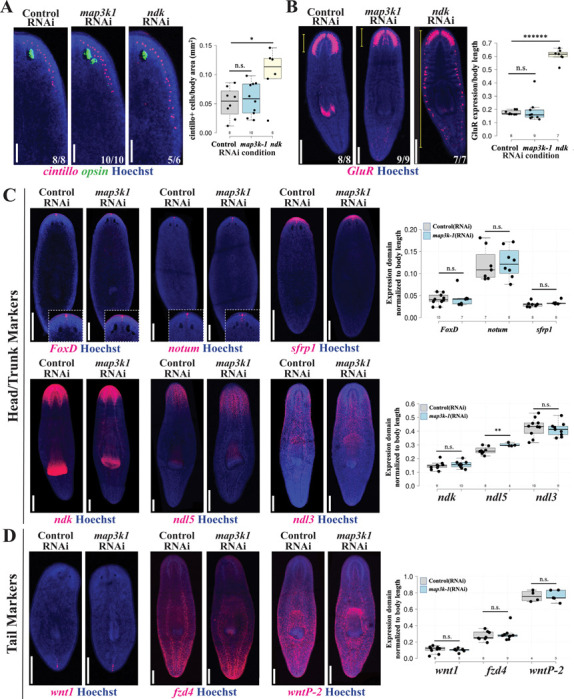
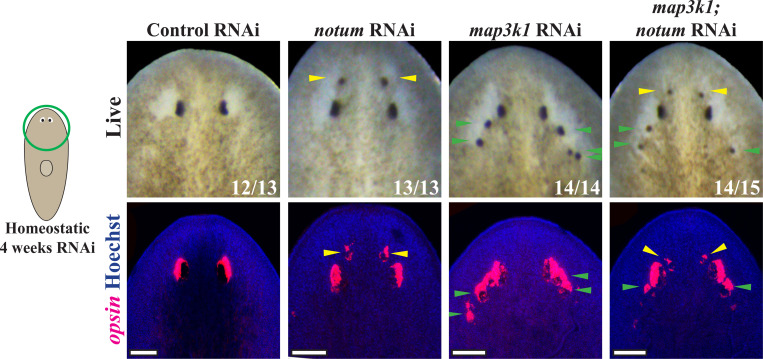
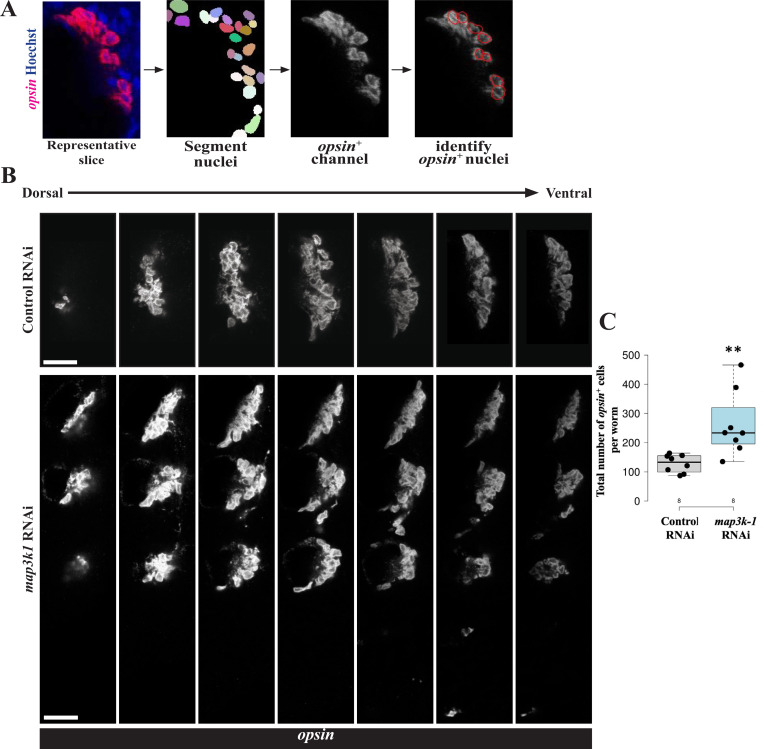
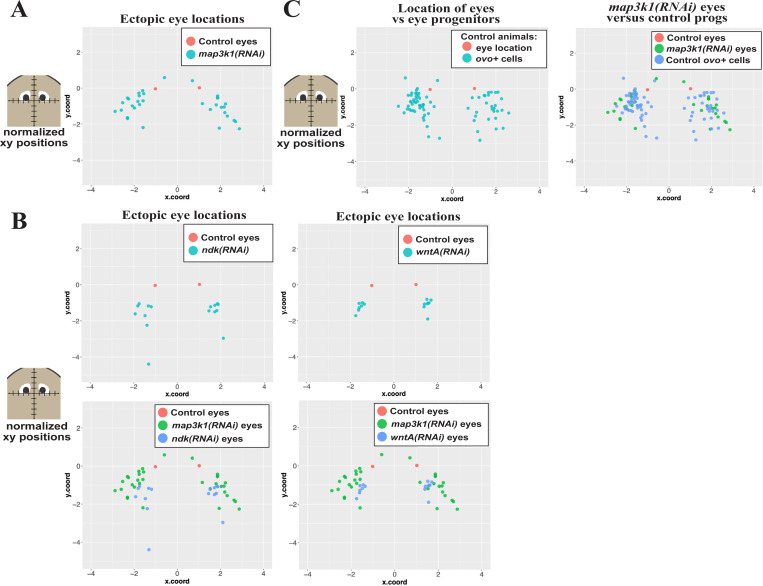
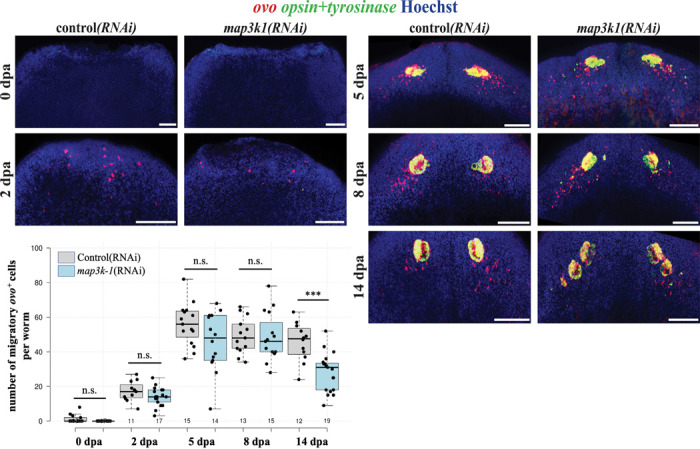
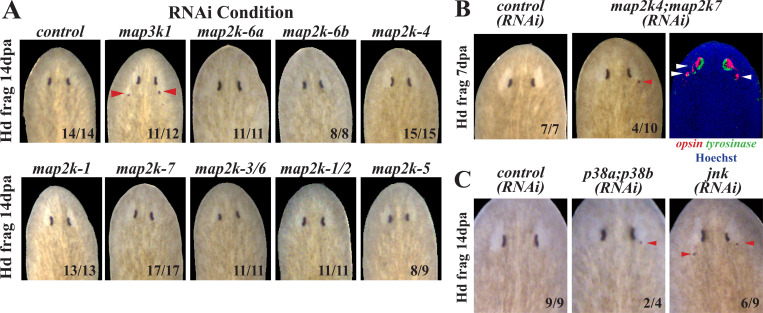
Proper stem cell targeting and differentiation is necessary for regeneration to succeed. In organisms capable of whole body regeneration, considerable progress has been made identifying wound signals initiating this process, but the mechanisms that control the differentiation of progenitors into mature organs are not fully understood. Using the planarian as a model system, we identify a novel function for , a MAP3K family member possessing both kinase and ubiquitin ligase domains, to negatively regulate terminal differentiation of stem cells during eye regeneration. Inhibition of caused the formation of multiple ectopic eyes within the head, but without controlling overall head, brain, or body patterning. By contrast, other known regulators of planarian eye patterning like and also regulate head regionalization, suggesting acts distinctly. Eye resection and regeneration experiments suggest that unlike Wnt signaling perturbation, inhibition did not shift the target destination of eye formation in the animal. Instead, ectopic eyes emerge in the regions normally occupied by migratory eye progenitors, and the onset of ectopic eyes after inhibition coincides with a reduction to eye progenitor numbers. Furthermore, RNAi dosing experiments indicate that progenitors closer to their normal target are relatively more sensitive to the effects of , implicating this factors in controlling the site of terminal differentiation. Eye phenotypes were also observed after inhibition of , and , identifying a putative pathway through which prevents differentiation. Together, these results suggest that regulates a novel control point in the eye regeneration pathway which suppresses the terminal differentiation of progenitors during their migration to target destinations.
恰当的干细胞靶向和分化是再生成功所必需的。在能够进行全身再生的生物体中,在确定启动这一过程的伤口信号方面已取得了相当大的进展,但控制祖细胞分化为成熟器官的机制尚未完全了解。利用涡虫作为模型系统,我们确定了一个具有激酶和泛素连接酶结构域的MAP3K家族成员的新功能,即在眼睛再生过程中对干细胞的终末分化起负调控作用。抑制该基因导致头部形成多个异位眼,但不影响整体头部、大脑或身体的模式形成。相比之下,其他已知的涡虫眼睛模式形成调节因子,如和,也调节头部区域化,这表明该基因的作用方式不同。眼睛切除和再生实验表明,与Wnt信号扰动不同,抑制该基因并没有改变动物体内眼睛形成的目标位置。相反,异位眼出现在正常情况下由迁移的眼祖细胞占据的区域,抑制该基因后异位眼的出现与眼祖细胞数量的减少同时发生。此外,RNA干扰剂量实验表明,距离其正常目标较近的祖细胞对该基因的影响相对更敏感,这表明该因子在控制终末分化位点方面发挥作用。抑制和后也观察到眼睛表型,从而确定了一条该基因阻止分化的假定途径。总之,这些结果表明,该基因在眼睛再生途径中调节一个新的控制点,在祖细胞迁移到目标位置的过程中抑制其终末分化。