Kim Kyungho, Castillo Cesar, Jang Gyoung G, Zhang Yuxuan, Tsouris Costas, Chellam Shankararaman
Department of Civil & Environmental Engineering, Texas A&M University, College Station, Texas 77843, United States.
Manufacturing Science Division, Oak Ridge National Laboratory (ORNL), Oak Ridge, Tennessee 37831, United States.
ACS ES T Eng. 2024 Sep 23;4(10):2573-2584. doi: 10.1021/acsestengg.4c00317. eCollection 2024 Oct 11.
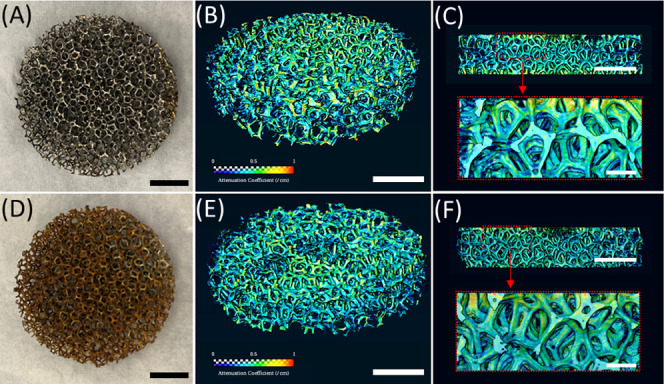
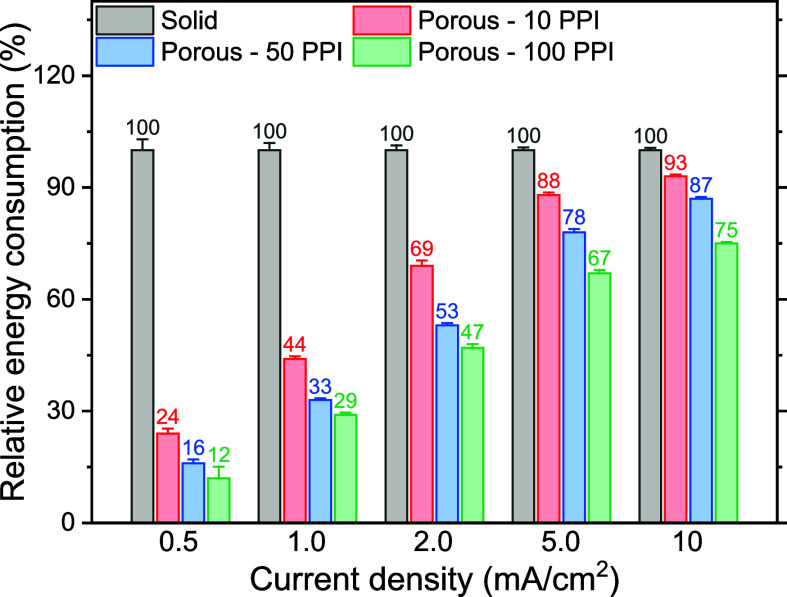
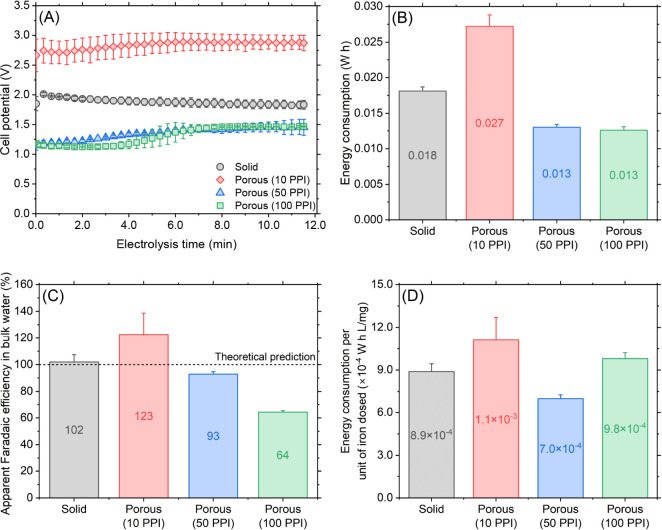
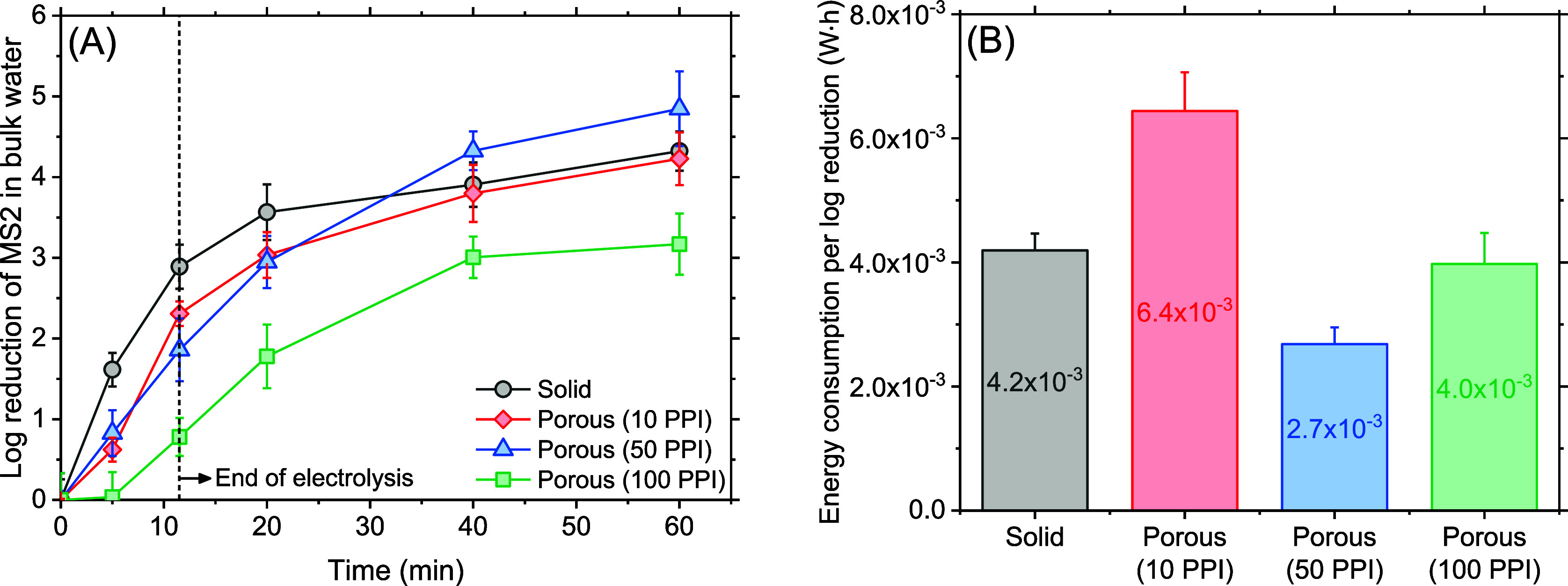
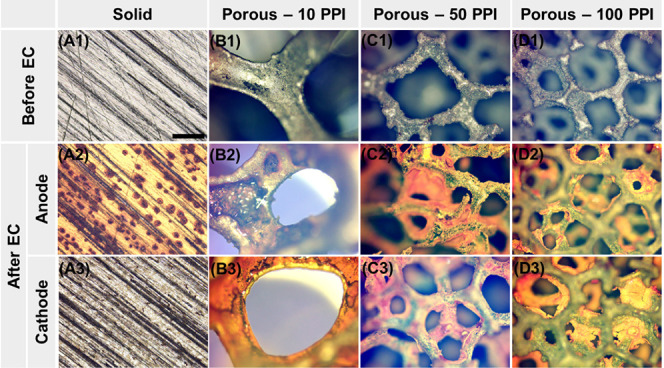
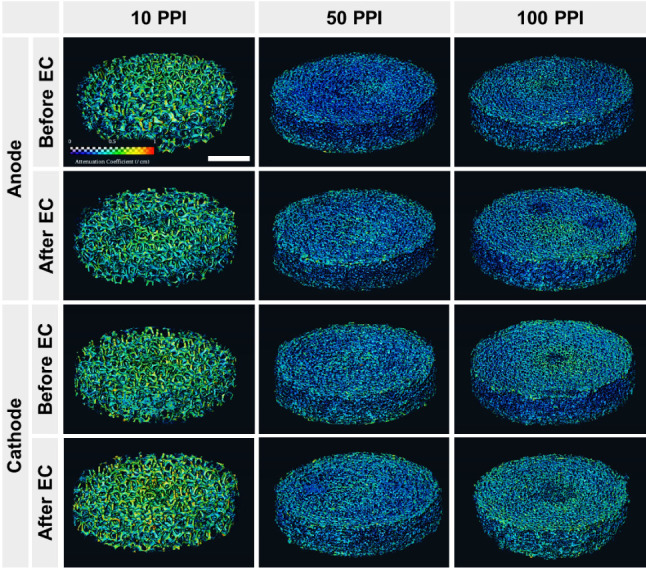
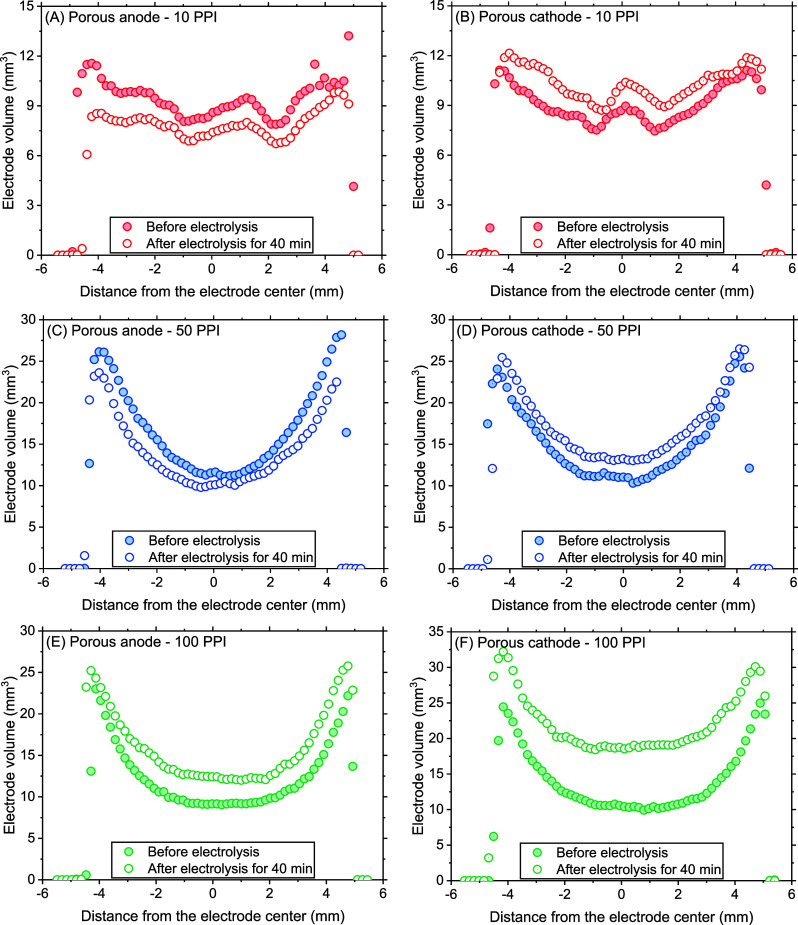
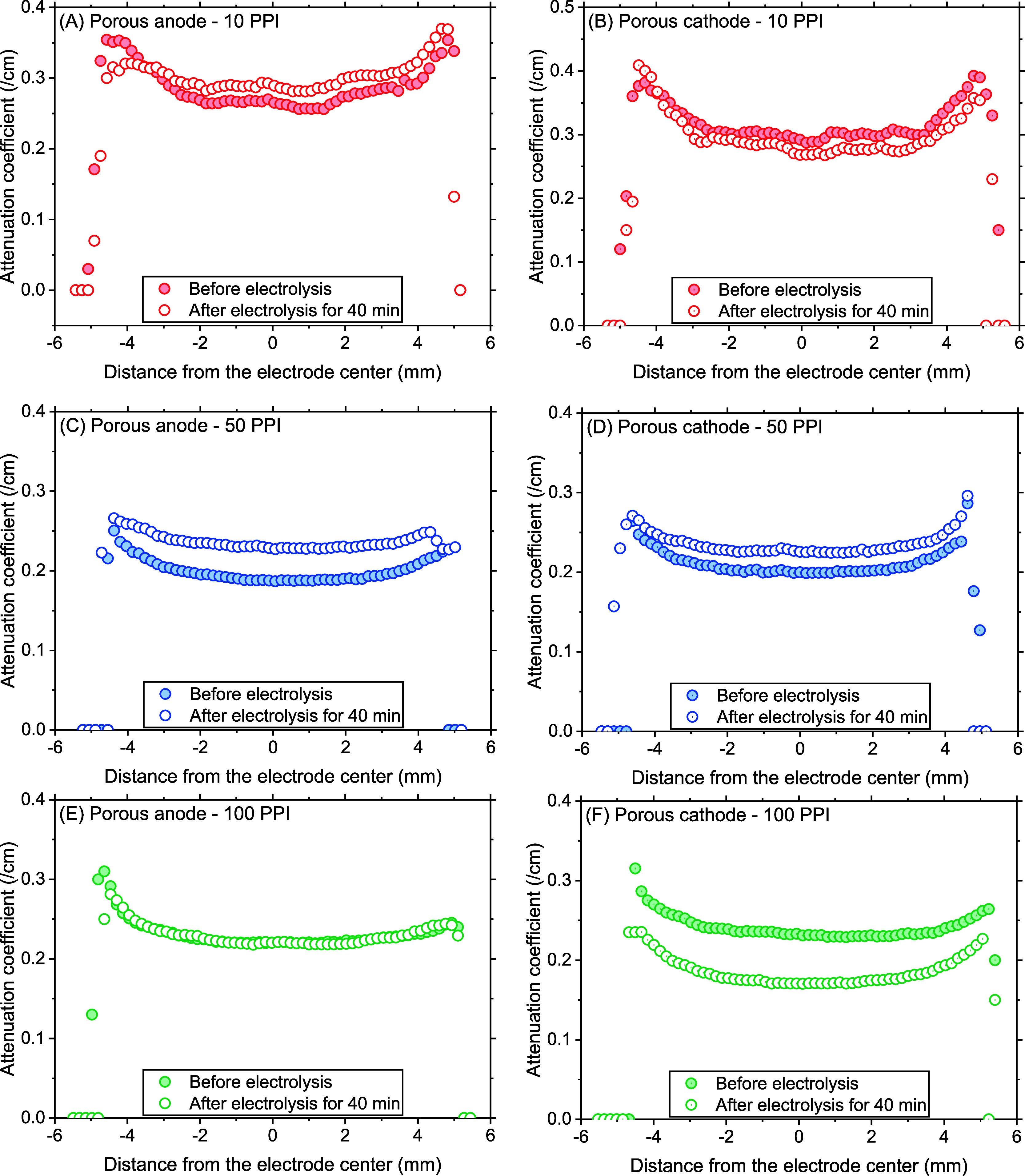
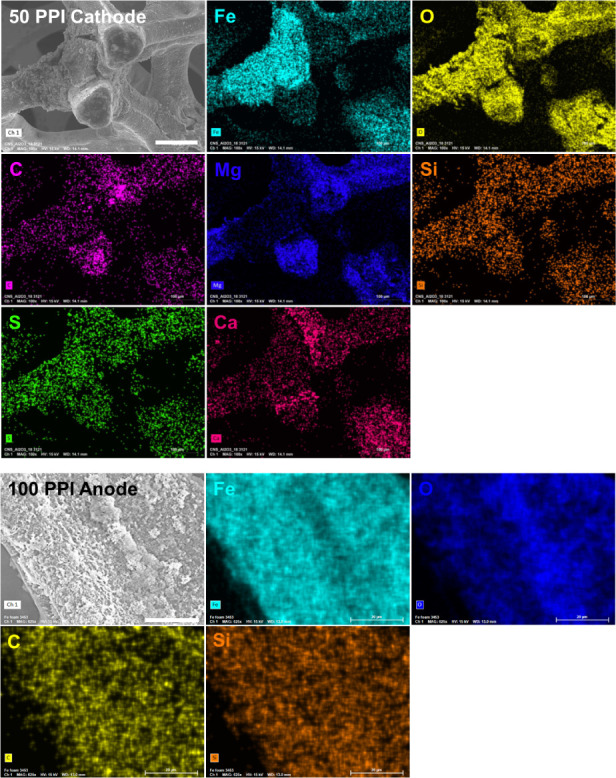
Electrocoagulation has attracted significant attention as an alternative to conventional chemical coagulation because it is capable of removing a wide range of contaminants and has several potential advantages. In contrast to most electrocoagulation research that has been performed with nonporous electrodes, in this study, we demonstrate energy-efficient iron electrocoagulation using porous electrodes. In batch operation, investigation of the external pore structures through optical microscopy suggested that a low porosity electrode with sparse connection between pores may lead to mechanical failure of the pore network during electrolysis, whereas a high porosity electrode is vulnerable to pore clogging. Electrodes with intermediate porosity, instead, only suffered a moderate surface deposition, leading to electrical energy savings of 21% and 36% in terms of electrocoagulant delivery and unit log virus reduction, respectively. Neutron computed tomography revealed the critical role of electrode porosity in utilizing the electrode's internal surface for electrodissolution and effective delivery of electrocoagulant to the bulk. Energy savings of up to 88% in short-term operation were obtained with porous electrodes in a continuous flow-through system. Further investigation on the impact of current density and porosity in long-term operation is desired as well as the capital cost of porous electrodes.
电凝作为传统化学混凝的替代方法已引起广泛关注,因为它能够去除多种污染物且具有若干潜在优势。与大多数使用无孔电极进行的电凝研究不同,在本研究中,我们展示了使用多孔电极的节能型铁电凝过程。在间歇操作中,通过光学显微镜对外部孔隙结构的研究表明,孔隙间连接稀疏的低孔隙率电极在电解过程中可能导致孔隙网络的机械故障,而高孔隙率电极则易受孔隙堵塞影响。相反,具有中等孔隙率的电极仅遭受适度的表面沉积,分别在电凝剂输送和单位对数病毒减少方面实现了21%和36%的电能节省。中子计算机断层扫描揭示了电极孔隙率在利用电极内表面进行电溶解以及将电凝剂有效输送到主体中的关键作用。在连续流通系统中,使用多孔电极在短期操作中可实现高达88%的节能。还需要进一步研究长期操作中电流密度和孔隙率的影响以及多孔电极的资本成本。