Human Biomonitoring Research Unit, Department of Precision Health, Luxembourg Institute of Health, Strassen, Luxembourg.
L'Oréal Research and Innovation, Aulnay sous Bois, France.
Environ Health Perspect. 2024 Oct;132(10):107005. doi: 10.1289/EHP14378. Epub 2024 Oct 18.
Some pesticides have been shown to interfere with thyroid functions through changes in thyroid hormone (TH) levels. However, few human studies have explored associations between TH levels and environmental exposure to currently used pesticides, including neonicotinoids, phenylpyrazoles, phenoxy acids, and azoles. Moreover, such studies often measure biomarkers of exposure in urine or blood, and thus reveal only recent exposure. In contrast, hair has been demonstrated to be a suitable matrix for assessing chronic exposure to both persistent and nonpersistent organic pollutants.
We investigated 54 biomarkers of pollutant exposure in relation to tetraiodothyronine (T4), 3,3',5-triiodothyronine (T3), 3,3',5'-triiodothyronine (rT3), and 3,3'-diiodothyronine (T2).
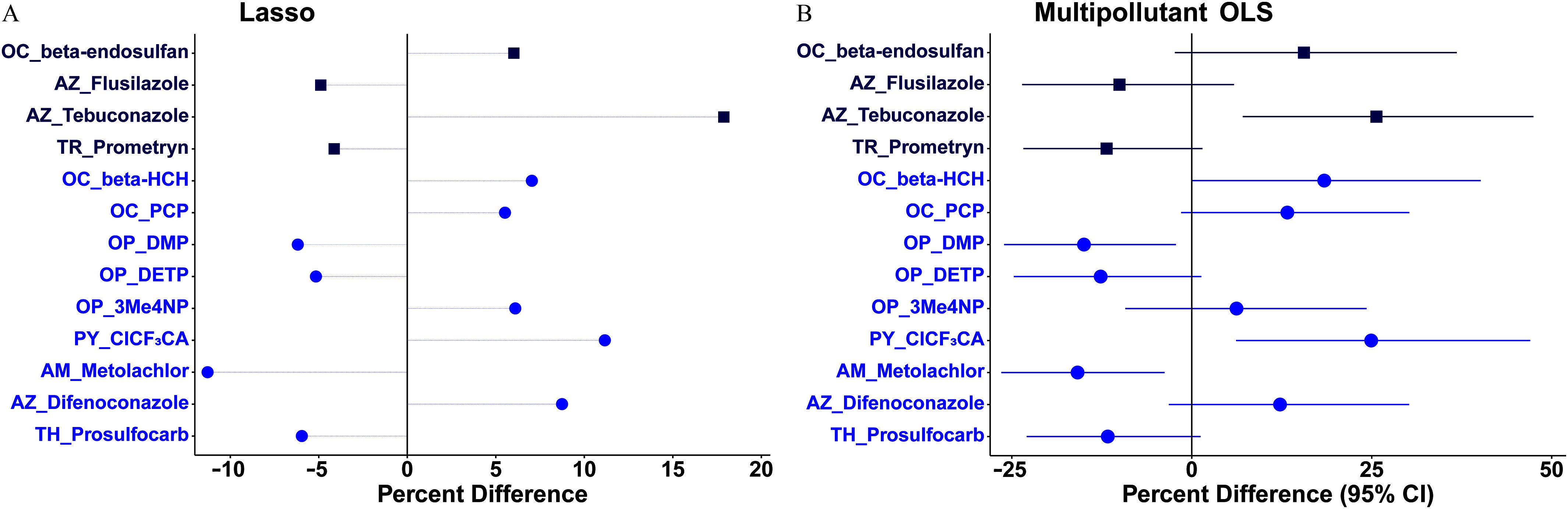
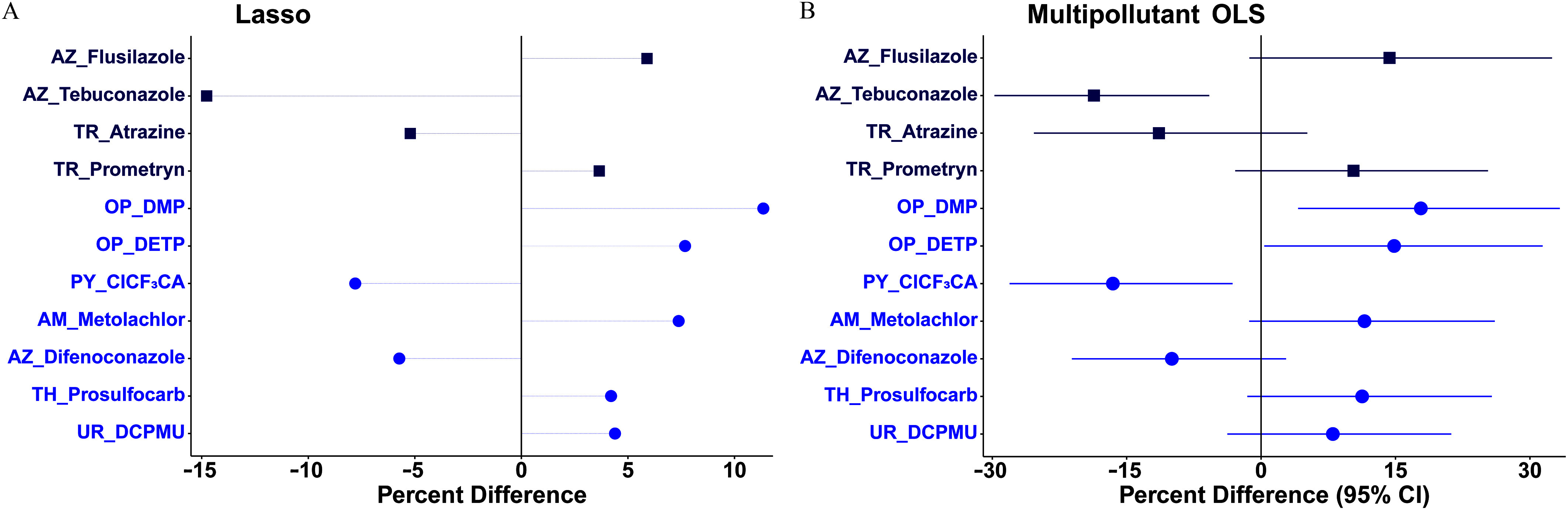
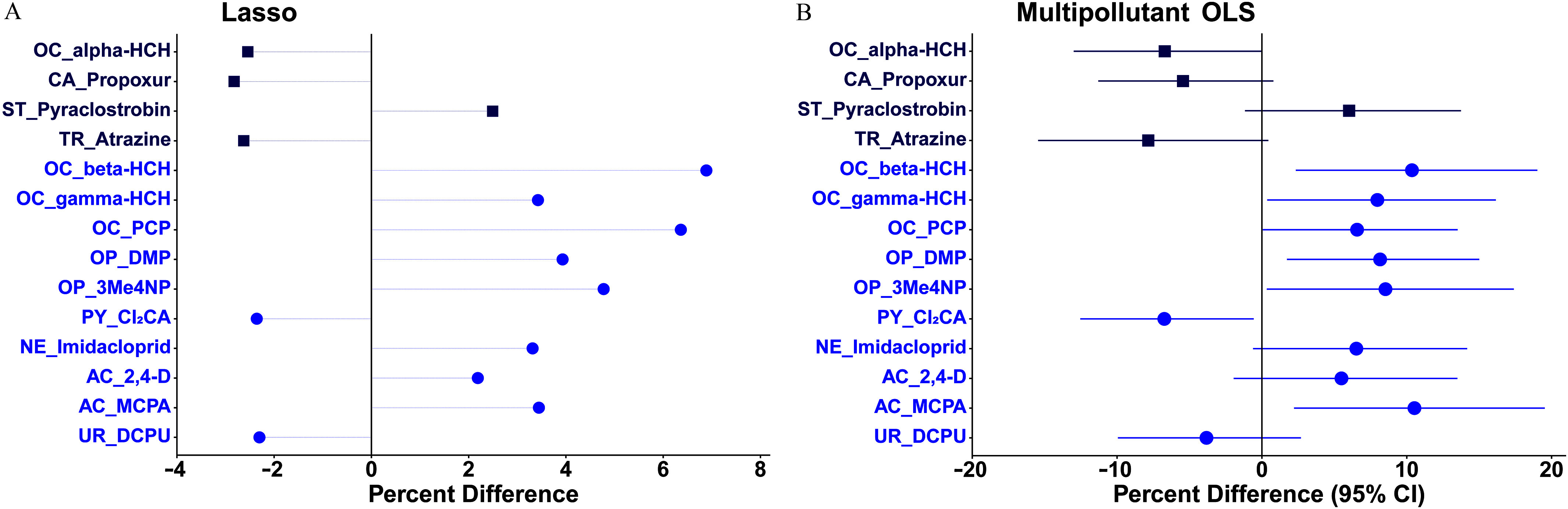
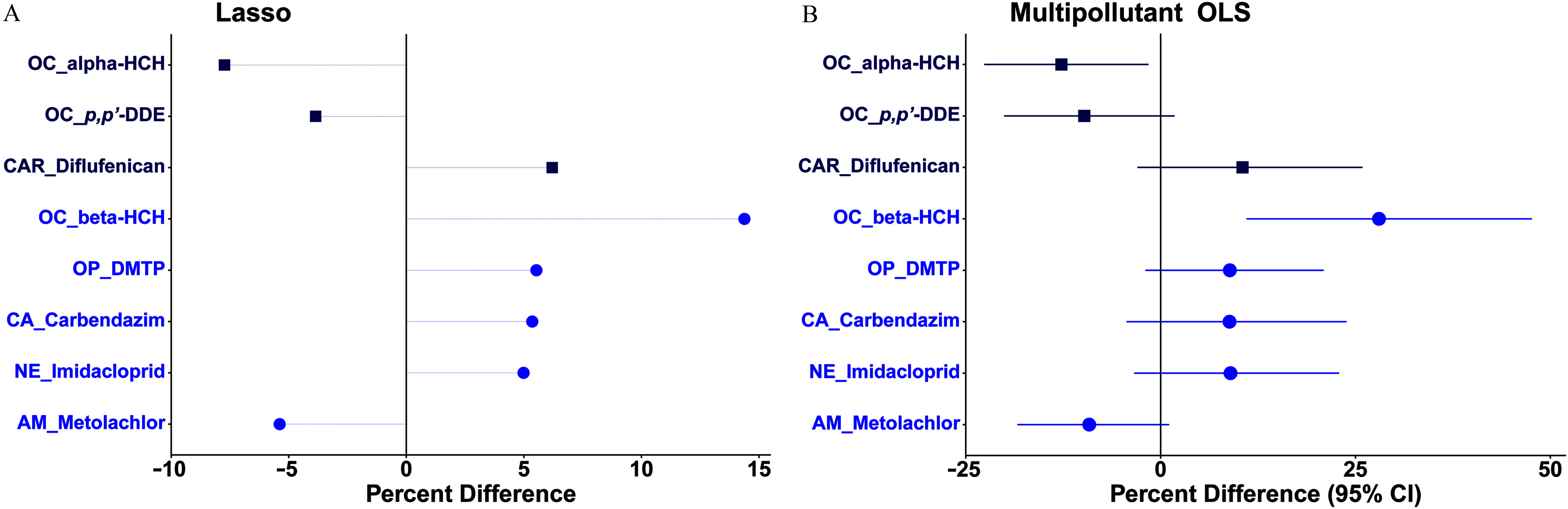
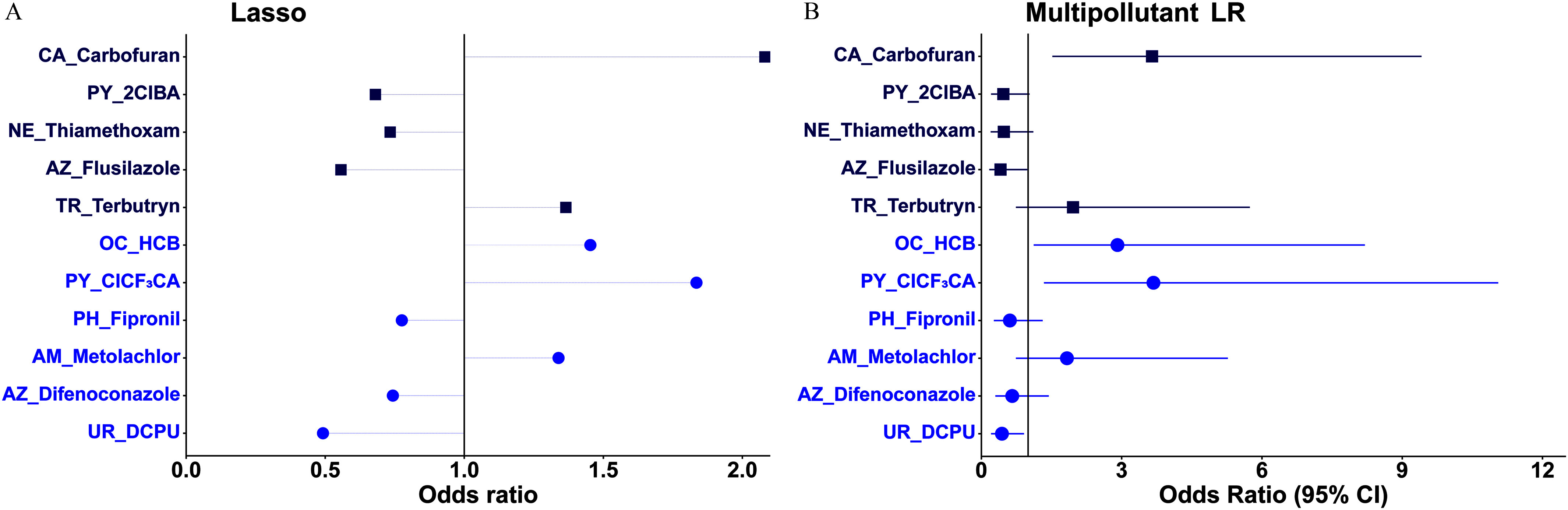
In a cross-sectional study of 196 healthy Chinese women of reproductive age (25-45 years of age), concentrations of both pollutants and THs were analyzed in the first (starting from the scalp) of the hair matrix, collected in 2016. Associations between pollutants and TH levels were explored using stability-enhanced least absolute shrinkage and selection operator (lasso) by regressing all exposures against each outcome of interest, adjusted for age, body mass index, and city.
Each TH was associated with the mixture of at least eight of the examined pesticides. We found associations of -HCH, PCP, DMP, DETP, 3Me4NP, carbofuran, , imidacloprid, 2,4-D, metolachlor, difenoconazole, and tebuconazole with THs. For example, a 2-standard deviation (SD) increase in -transformed hair DMP concentration was associated with lower hair T4 concentration [ (95% CI: , )] and higher hair T3 concentration [8.16% (95% CI: 1.73, 15.0%)] in the adjusted unpenalized regression models. We also found associations of some pesticides with T3/T4, rT3/T4, and rT3/T3 molar ratios, including PCP, DMP, 2,4-D, metolachlor, difenoconazole, and tebuconazole.
Our results suggest that exposure to the low levels of pesticides examined here may disrupt thyroid homeostasis in humans. Further studies are needed to confirm our results and to evaluate the long-term consequences of these subtle interferences. https://doi.org/10.1289/EHP14378.
一些农药已被证明会通过改变甲状腺激素(TH)水平来干扰甲状腺功能。然而,很少有人体研究探讨过 TH 水平与目前使用的农药(包括新烟碱类、苯并吡唑类、苯氧羧酸类和唑类)环境暴露之间的关系。此外,这些研究通常在尿液或血液中测量暴露的生物标志物,因此仅揭示近期的暴露情况。相比之下,头发已被证明是评估持久性和非持久性有机污染物的慢性暴露的合适基质。
我们研究了与甲状腺素(T4)、三碘甲状腺原氨酸(T3)、3,3',5-三碘甲状腺原氨酸(rT3)和 3,3'-二碘甲状腺原氨酸(T2)相关的 54 种污染物暴露生物标志物。
在一项横断面研究中,我们分析了 196 名健康的中国育龄妇女(25-45 岁)的头发基质中的污染物和 TH 浓度,这些头发是在 2016 年采集的(从头皮开始)。我们使用稳定增强的最小绝对收缩和选择算子(lasso)回归分析,通过回归每个感兴趣的结果来探索污染物与 TH 水平之间的关联,调整了年龄、体重指数和城市因素。
每种 TH 都与至少八种被检查的农药混合物有关。我们发现 -HCH、PCP、DMP、DETP、3Me4NP、carbofuran、, imidacloprid、2,4-D、metolachlor、difenoconazole 和 tebuconazole 与 THs 有关。例如,在调整后的非惩罚性回归模型中,头发中二甲基甲氧基磷(DMP)浓度每增加 2 个标准差(SD),与头发 T4 浓度降低[(95%CI:,)]和头发 T3 浓度升高[8.16%(95%CI:1.73,15.0%)]有关。我们还发现了一些农药与 T3/T4、rT3/T4 和 rT3/T3 摩尔比之间的关联,包括 PCP、DMP、2,4-D、metolachlor、difenoconazole 和 tebuconazole。
我们的结果表明,接触此处检查的低水平农药可能会破坏人体甲状腺的内稳态。需要进一步的研究来证实我们的结果,并评估这些微妙干扰的长期后果。https://doi.org/10.1289/EHP14378.